Dr N Sai Bhaskar Reddy
saibhaskarnakka@gmail.com
http://saibhaskar.com
MAKING CRITICAL INFRASTRUCTURE
SYSTEMS RESILIENT
Proposed interventions and strategy
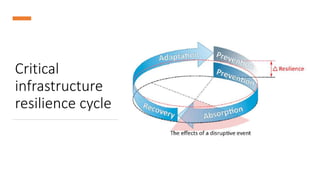
Critical
infrastructure
resilience cycle
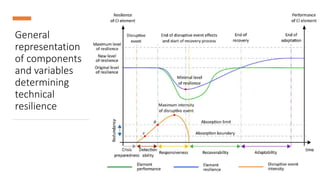
General
representation
of components
and variables
determining
technical
resilience
Transportation
• Airports
• Roads
• Railways
• Water Ways
• Piped
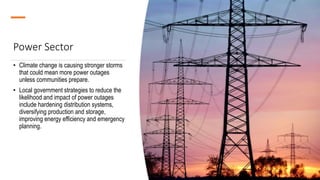
Power Sector
• Climate change is causing stronger storms
that could mean more power outages
unless communities prepare.
• Local government strategies to reduce the
likelihood and impact of power outages
include hardening distribution systems,
diversifying production and storage,
improving energy efficiency and emergency
planning.
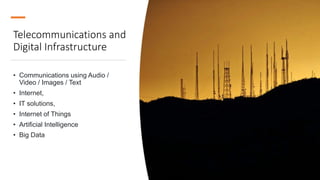
Telecommunications and
Digital Infrastructure
• Communications using Audio /
Video / Images / Text
• Internet,
• IT solutions,
• Internet of Things
• Artificial Intelligence
• Big Data
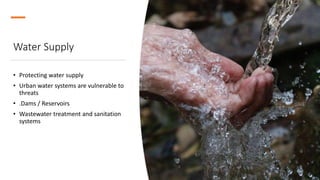
Water Supply
• Protecting water supply
• Urban water systems are vulnerable to
threats
• .Dams / Reservoirs
• Wastewater treatment and sanitation
systems
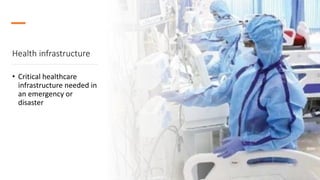
Health infrastructure
• Critical healthcare
infrastructure needed in
an emergency or
disaster
Achieving common global commitments
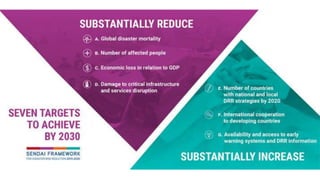
Sendai Framework for DRR
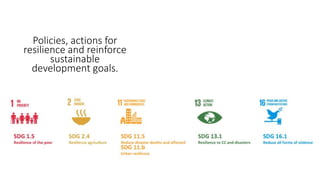
Sustainable Development Goals
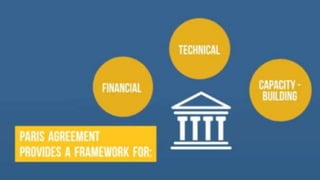
Paris Agreement on Climate Change 2016 (UNFCCC - COP 26, 2021)
The United Nations decade on Ecosystem Restoration began on World Environment Day, 5
June 2021
The New Urban Agenda was adopted at the United Nations Conference on Housing and
Sustainable Urban Development (Habitat III) in Quito, Ecuador, on 20 October 2016.
Policies, actions for
resilience and reinforce
sustainable
development goals.
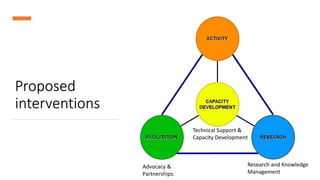
Proposed
interventions
Technical Support &
Capacity Development
Research and Knowledge
Management
Advocacy &
Partnerships:
Governance and Policy
• Earth System Governance - Leadership – Political will and Change
• Integration of disaster and climate resilience concepts
• Compliance and Regulatory approaches for disaster resilient infrastructure
• Preparation of national CI resilient action plans and budgetary allocations
Risk Identification & Estimation
• Identification of Natural Hazards - Hydro-met, Geological, etc., data analysis - design
resilience plans
• National risk and resilience assessments across geographies.
(Tools / Methods - Historic data - Data Poor | Reliability of data - Monitoring and
Management of data – Big Data
Scenarios using Models – Animation – simulations – 3d models.
Spatial temporal - Remote Sensing / GIS – imageries – LiDAR survey – aerial photography
– Drones – Kytoons - Other latest survey methods
Sensors – IP cameras – Open-source hardware and software)
Standards and Certification
• Conducting Professional Certificate courses in Critical Infrastructure Resilience
• Compliance of country specific standards and codes
• Facilitating improvement in the country specific standards and certification as per the
scientific standards.
• Assessment of the existing infrastructure for resilience to disasters
• Knowledge transfer and processes for improving the standards and certifications
• CDRI clearinghouse of standards and certification processes to ensure disaster and
climate resilience of infrastructure worldwide.
• Insurance mechanisms based on certification for Infrastructure
Capacity Building
• Share scientifically accurate knowledge for building resilience of infrastructure systems
• Capacity development for Preparedness and post-disaster reconstruction
• Awareness and sensitization
• Trainings
• Exposure
• Institution building / Organisation
• Networking and engagement
• Communications
• Online e-courses, MOOCs
• Webinars / Meetings / Seminars / Conferences / Conventions
• Knowledge management - Publications and Knowledge sharing - generate knowledge products as evidence for
policy-making process - Open Data
Innovation & Emerging Technology
• Big data - data mining
• Models – Predictions, Projections and scenarios – GCM
• Cloud Computing
• Social networks for disaster prevention and response – cloud sourced
• Machine learning (BBN)
• Artificial Intelligence
• Augmented reality
• Drones
• Robotics
• GIS, GPS,
• Advance materials –
• Geoengineering
• Internet of things (IOT)
Innovation: Wireless power supply (Tesla)
Recovery &
Reconstruction
• Recovery, rehabilitation and
reconstruction of CI for integrating
disaster risk reduction measures into the
restoration of physical infrastructure and
societal systems.
• “Build back better” within
infrastructure recovery and
reconstruction.
Disaster Risk
Reduction actors
Sustainable
Development actors
Humanitarian
actors
Disaster
Finance
• Risk financing strategies
• Partnerships (Co-financing models, legal agreements, PPP and CSR frameworks,
Convergence with other projects/programs, Bonds, Anticipatory value enhancement)
• Implementing a comprehensive disaster risk financing (DRF) framework
• Government – National, State and Local Budget allocations
• Financing from multilateral agencies – World Bank, ADB, EU, etc
Community-based Approaches
• Community Energy Infrastructure. Distributed systems (e.g. energy mini-grids) can result
in more sustainable and resilient infrastructure
• Community Water Infrastructure
• Community-Based Intelligent Systems for response / recovery
CI resilience strategies
• Strengthen global Sendai Framework implementation
• Policy advice and advocacy on issues relating to CI resilience - Improve communication and global
advocacy
• Increased understanding and awareness of strategic issues and trends; and their impact on the
operating environment of critical infrastructure - Conference, Cross-sectoral Interest Groups,
workshops and exercises - civil society, academia, government, and private sector
• Prioritize specific measures for CI resilience
• Implementation/operationalization and enforcement of legal and regulatory provisions –
Compliance and incentives – codes, standards – certification.
• Sharing Guidance and implementation support plans for CI Resilience - Improve decision making
• Respective National legislative and policy priority for integration of CI resilience into national,
local and sectoral development planning and budgeting.
CI resilience strategies
• Coordinate with respective stakeholders for effective preparedness, early warning and
response
• Build/strengthen Institutions for resilience
• Institution building and organization - Strengthened organisational performance -
Designate CI Resilience mandates, roles and responsibilities.
• Engage individuals, organizations, public, private sectors for CI resilience measures to
ensure minimum disaster risk
• Monitor and review of CI resilience in the member countries
• Facilitate open knowledge management - Create Knowledge Hub on Infrastructure
Resilience - sharing– share CI resilience information for effective decision making by
stakeholders. - CDRI knowledge partnerships
CI resilience strategies
• Promote a broad stakeholder engagement, participation and representation of groups
from across society, including women, youth, the impoverished, and the disabled.
• Nature based solutions - Ecosystem-based Adaptation - Environmental protection and
strengthening ecosystems
• Facilitate appropriate financing – organise meetings with stakeholders and finance
agencies
• Innovative finance investment mechanisms in both public and private-sector for CI
resilience measures at all levels
• Redirection of current investments to minimize existing and potential CI risks.
Thank you

Critical Infrastructure Systems Resilient Interventions and Strategy

  • 1.
    Dr N SaiBhaskar Reddy saibhaskarnakka@gmail.com http://saibhaskar.com MAKING CRITICAL INFRASTRUCTURE SYSTEMS RESILIENT Proposed interventions and strategy
  • 2.
  • 3.
  • 4.
    Transportation • Airports • Roads •Railways • Water Ways • Piped
  • 5.
    Power Sector • Climatechange is causing stronger storms that could mean more power outages unless communities prepare. • Local government strategies to reduce the likelihood and impact of power outages include hardening distribution systems, diversifying production and storage, improving energy efficiency and emergency planning.
  • 6.
    Telecommunications and Digital Infrastructure •Communications using Audio / Video / Images / Text • Internet, • IT solutions, • Internet of Things • Artificial Intelligence • Big Data
  • 7.
    Water Supply • Protectingwater supply • Urban water systems are vulnerable to threats • .Dams / Reservoirs • Wastewater treatment and sanitation systems
  • 8.
    Health infrastructure • Criticalhealthcare infrastructure needed in an emergency or disaster
  • 10.
    Achieving common globalcommitments Sendai Framework for DRR Sustainable Development Goals Paris Agreement on Climate Change 2016 (UNFCCC - COP 26, 2021) The United Nations decade on Ecosystem Restoration began on World Environment Day, 5 June 2021 The New Urban Agenda was adopted at the United Nations Conference on Housing and Sustainable Urban Development (Habitat III) in Quito, Ecuador, on 20 October 2016.
  • 12.
    Policies, actions for resilienceand reinforce sustainable development goals.
  • 14.
    Proposed interventions Technical Support & CapacityDevelopment Research and Knowledge Management Advocacy & Partnerships:
  • 15.
    Governance and Policy •Earth System Governance - Leadership – Political will and Change • Integration of disaster and climate resilience concepts • Compliance and Regulatory approaches for disaster resilient infrastructure • Preparation of national CI resilient action plans and budgetary allocations
  • 16.
    Risk Identification &Estimation • Identification of Natural Hazards - Hydro-met, Geological, etc., data analysis - design resilience plans • National risk and resilience assessments across geographies. (Tools / Methods - Historic data - Data Poor | Reliability of data - Monitoring and Management of data – Big Data Scenarios using Models – Animation – simulations – 3d models. Spatial temporal - Remote Sensing / GIS – imageries – LiDAR survey – aerial photography – Drones – Kytoons - Other latest survey methods Sensors – IP cameras – Open-source hardware and software)
  • 17.
    Standards and Certification •Conducting Professional Certificate courses in Critical Infrastructure Resilience • Compliance of country specific standards and codes • Facilitating improvement in the country specific standards and certification as per the scientific standards. • Assessment of the existing infrastructure for resilience to disasters • Knowledge transfer and processes for improving the standards and certifications • CDRI clearinghouse of standards and certification processes to ensure disaster and climate resilience of infrastructure worldwide. • Insurance mechanisms based on certification for Infrastructure
  • 18.
    Capacity Building • Sharescientifically accurate knowledge for building resilience of infrastructure systems • Capacity development for Preparedness and post-disaster reconstruction • Awareness and sensitization • Trainings • Exposure • Institution building / Organisation • Networking and engagement • Communications • Online e-courses, MOOCs • Webinars / Meetings / Seminars / Conferences / Conventions • Knowledge management - Publications and Knowledge sharing - generate knowledge products as evidence for policy-making process - Open Data
  • 19.
    Innovation & EmergingTechnology • Big data - data mining • Models – Predictions, Projections and scenarios – GCM • Cloud Computing • Social networks for disaster prevention and response – cloud sourced • Machine learning (BBN) • Artificial Intelligence • Augmented reality • Drones • Robotics • GIS, GPS, • Advance materials – • Geoengineering • Internet of things (IOT) Innovation: Wireless power supply (Tesla)
  • 20.
    Recovery & Reconstruction • Recovery,rehabilitation and reconstruction of CI for integrating disaster risk reduction measures into the restoration of physical infrastructure and societal systems. • “Build back better” within infrastructure recovery and reconstruction. Disaster Risk Reduction actors Sustainable Development actors Humanitarian actors Disaster
  • 21.
    Finance • Risk financingstrategies • Partnerships (Co-financing models, legal agreements, PPP and CSR frameworks, Convergence with other projects/programs, Bonds, Anticipatory value enhancement) • Implementing a comprehensive disaster risk financing (DRF) framework • Government – National, State and Local Budget allocations • Financing from multilateral agencies – World Bank, ADB, EU, etc
  • 22.
    Community-based Approaches • CommunityEnergy Infrastructure. Distributed systems (e.g. energy mini-grids) can result in more sustainable and resilient infrastructure • Community Water Infrastructure • Community-Based Intelligent Systems for response / recovery
  • 23.
    CI resilience strategies •Strengthen global Sendai Framework implementation • Policy advice and advocacy on issues relating to CI resilience - Improve communication and global advocacy • Increased understanding and awareness of strategic issues and trends; and their impact on the operating environment of critical infrastructure - Conference, Cross-sectoral Interest Groups, workshops and exercises - civil society, academia, government, and private sector • Prioritize specific measures for CI resilience • Implementation/operationalization and enforcement of legal and regulatory provisions – Compliance and incentives – codes, standards – certification. • Sharing Guidance and implementation support plans for CI Resilience - Improve decision making • Respective National legislative and policy priority for integration of CI resilience into national, local and sectoral development planning and budgeting.
  • 24.
    CI resilience strategies •Coordinate with respective stakeholders for effective preparedness, early warning and response • Build/strengthen Institutions for resilience • Institution building and organization - Strengthened organisational performance - Designate CI Resilience mandates, roles and responsibilities. • Engage individuals, organizations, public, private sectors for CI resilience measures to ensure minimum disaster risk • Monitor and review of CI resilience in the member countries • Facilitate open knowledge management - Create Knowledge Hub on Infrastructure Resilience - sharing– share CI resilience information for effective decision making by stakeholders. - CDRI knowledge partnerships
  • 25.
    CI resilience strategies •Promote a broad stakeholder engagement, participation and representation of groups from across society, including women, youth, the impoverished, and the disabled. • Nature based solutions - Ecosystem-based Adaptation - Environmental protection and strengthening ecosystems • Facilitate appropriate financing – organise meetings with stakeholders and finance agencies • Innovative finance investment mechanisms in both public and private-sector for CI resilience measures at all levels • Redirection of current investments to minimize existing and potential CI risks.
  • 26.

Editor's Notes

  • #3 Adaptation is determined by the internal processes of an organization focused on the strengthening of resilience.
  • #6  Power Outage – Texas Power due to cold (framework to ‘build back better’ and more resilient. It will raise awareness and increase understanding of risk management among the power sector stakeholders. This will strengthen their capacity to take adaptive actions to mitigate these risks and cope with the impacts of future disasters) - uprooted electric poles and damaged transformers and accessories
  • #7 The science and technology of transmitting voice, audio, facsimile, image, video, computer data, and multimedia information over significant distances by the use of electromagnetic energy in the form of electricity, radio, or optics.
  • #10 Sendai Framework for DRR - The substantial reduction of disaster risk and losses in lives, livelihoods and health and in the economic, physical, social, cultural and environmental assets of persons, businesses, communities and countries
  • #12 https://www.preventionweb.net/sendai-framework/sendai-framework-for-drr/at-a-glance
  • #14 The Paris Agreement is a legally binding international treaty on climate change. It was adopted by 196 Parties at COP 21 in Paris, on 12 December 2015 and entered into force on 4 November 2016. Its goal is to limit global warming to well below 2, preferably to 1.5 degrees Celsius, compared to pre-industrial levels. By 2020, countries submit their plans for climate action known as nationally determined contributions (NDCs). National Adaptation Plans power and  transport sectors 
  • #26 http://cdri.world https://www.c2es.org/document/resilience-strategies-for-power-outages/ Resilience of Critical Infrastructure Elements and Its Main Factors David Rehak * ID , Pavel Senovsky ID and Simona Slivkova Faculty of Safety Engineering, VSB—Technical University of Ostrava, 700 30 Ostrava, Czech Republic; pavel.senovsky@vsb.cz (P.S.); simona.slivkova@vsb.cz (S.S.)