RESEARCH PROBLEM
Introduction
 The term problem originates from a Greek
word “Proballein”
 Meaning
anything thrown forward,
a question proposed for solution,
a matter stated for examination.
Definition
 “a situation for which we have no ready and
successful response by previously acquired
habit”-by R.S.Woodworth.
 In other words it means a situation in which a
ready solution is not available. The solution
can be found out only after an investigation.
Selection of a Research Problem
 Is the problem relevant and important.
 Does the subject area suits to his interest.
 Does it contain originality and creativeness.
 Does the problem requires extension of
knowledge.
Cont..,
 Is the problem feasible with respect to time
and date required in its solution.
 Is the study reveal some new ideas.
 Is the study practically fulfill the objectives.
 Is the problem of investigation is too narrow
or too broad.
Steps involved in Research
 Choice of a topic.
 Data collection.
 Formation of Hypothesis.
 Verification.
 Writing the thesis.
Choice of Research Problem
 The interest of the research scholar in the
research work.
 Technological change.
 The unexplored area.
 The available publications on specialised
area of his interest.
 The dialogue or discussion with the
supervisor.
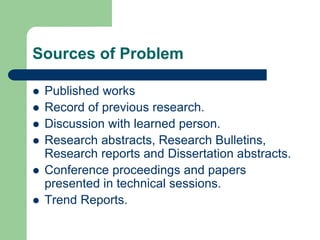
Sources of Problem
 Published works
 Record of previous research.
 Discussion with learned person.
 Research abstracts, Research Bulletins,
Research reports and Dissertation abstracts.
 Conference proceedings and papers
presented in technical sessions.
 Trend Reports.
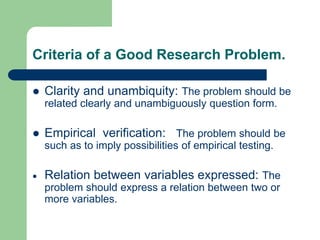
Criteria of a Good Research Problem.
 Clarity and unambiquity: The problem should be
related clearly and unambiguously question form.
 Empirical verification: The problem should be
such as to imply possibilities of empirical testing.
 Relation between variables expressed: The
problem should express a relation between two or
more variables.
Cont…,
 Novelty: fundamental qualities needed for a
research problem. Duplication of work is avoided
 Interest: The problem should be interesting for the
investigator himself. If he is not interested in it, he
will not be able to take and overcome the obstacle
which comes at every step of research.
 Importance: It should be significant enough and
involves an important principle or practice.
.
Cont…,
 Empirical verification: The problem should
be such as to imply possibilities of empirical
testing.
 Availability of Guidance: Every research activity
needs the patronage of guide and approval and
sanction of a competence authority.
Cont…,
 Experience and creativity: Good research
problem stem form a clear understanding of the
theoretical empirical and practical aspects of the
subject derived from personal experience and from a
thorough review of the literature.
 Level of Research: It is another criterion to help in
the selection of a problem. The nature and scope of
a study will be determined.
Cont…,
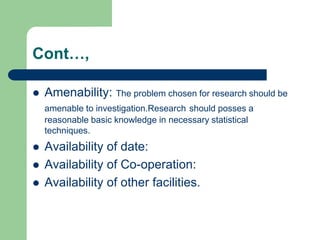
 Amenability: The problem chosen for research should be
amenable to investigation.Research should posses a
reasonable basic knowledge in necessary statistical
techniques.
 Availability of date:
 Availability of Co-operation:
 Availability of other facilities.

RESEARCH PROBLEM.ppt

  • 1.
  • 2.
    Introduction  The termproblem originates from a Greek word “Proballein”  Meaning anything thrown forward, a question proposed for solution, a matter stated for examination.
  • 3.
    Definition  “a situationfor which we have no ready and successful response by previously acquired habit”-by R.S.Woodworth.  In other words it means a situation in which a ready solution is not available. The solution can be found out only after an investigation.
  • 4.
    Selection of aResearch Problem  Is the problem relevant and important.  Does the subject area suits to his interest.  Does it contain originality and creativeness.  Does the problem requires extension of knowledge.
  • 5.
    Cont..,  Is theproblem feasible with respect to time and date required in its solution.  Is the study reveal some new ideas.  Is the study practically fulfill the objectives.  Is the problem of investigation is too narrow or too broad.
  • 6.
    Steps involved inResearch  Choice of a topic.  Data collection.  Formation of Hypothesis.  Verification.  Writing the thesis.
  • 7.
    Choice of ResearchProblem  The interest of the research scholar in the research work.  Technological change.  The unexplored area.  The available publications on specialised area of his interest.  The dialogue or discussion with the supervisor.
  • 8.
    Sources of Problem Published works  Record of previous research.  Discussion with learned person.  Research abstracts, Research Bulletins, Research reports and Dissertation abstracts.  Conference proceedings and papers presented in technical sessions.  Trend Reports.
  • 9.
    Criteria of aGood Research Problem.  Clarity and unambiquity: The problem should be related clearly and unambiguously question form.  Empirical verification: The problem should be such as to imply possibilities of empirical testing.  Relation between variables expressed: The problem should express a relation between two or more variables.
  • 10.
    Cont…,  Novelty: fundamentalqualities needed for a research problem. Duplication of work is avoided  Interest: The problem should be interesting for the investigator himself. If he is not interested in it, he will not be able to take and overcome the obstacle which comes at every step of research.  Importance: It should be significant enough and involves an important principle or practice. .
  • 11.
    Cont…,  Empirical verification:The problem should be such as to imply possibilities of empirical testing.  Availability of Guidance: Every research activity needs the patronage of guide and approval and sanction of a competence authority.
  • 12.
    Cont…,  Experience andcreativity: Good research problem stem form a clear understanding of the theoretical empirical and practical aspects of the subject derived from personal experience and from a thorough review of the literature.  Level of Research: It is another criterion to help in the selection of a problem. The nature and scope of a study will be determined.
  • 13.
    Cont…,  Amenability: Theproblem chosen for research should be amenable to investigation.Research should posses a reasonable basic knowledge in necessary statistical techniques.  Availability of date:  Availability of Co-operation:  Availability of other facilities.