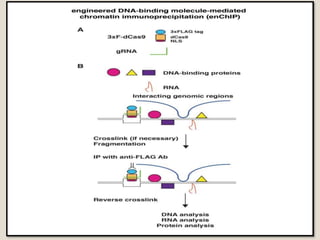
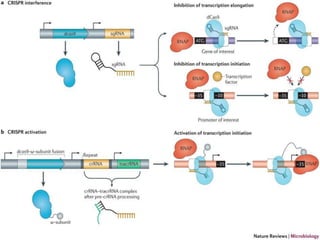
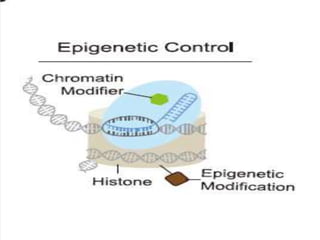
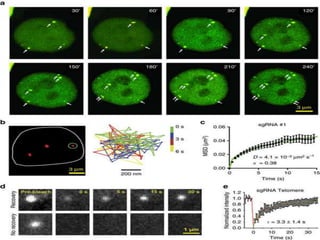
A art of genome
editing
Presented by
SARBANI BANIK
05ABT/15
CREDIT SEMINAR-599
CRISPR-CAS9
CONTENTS
 GENOME EDITING
 HISTORY OF GENOME EDITING
 TYPES OF MOLECULAR SCISCCORS
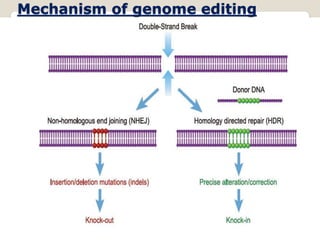
 MECHANISM OF GENOME EDITING
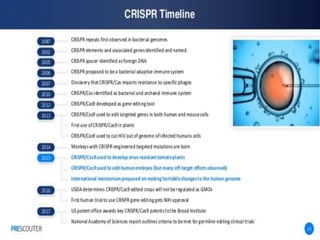
 CRISPER TIMELINE
 DISCOVERY ISSUES
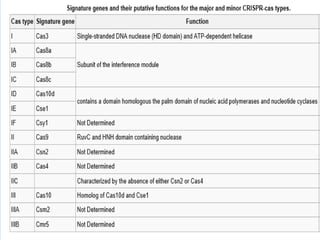
 WHAT IS CRISPR CAS9?
 KEY COMPONENTS OF CRISPER
 NATURAL CRISPR SYSTEM
 CRISPR AS A GENOMIC TOOL
 GENERAL PROTOCOL
 RECENT ADVANCES
 CRISPR IN AGRICUTURE
 ADVANTAGES
 LIMITATIONS
 ETHICAL ISSUES
 CASE STUDIES
 FUTURE PROSPECTS
 CONCLUSION
 REFERENCES
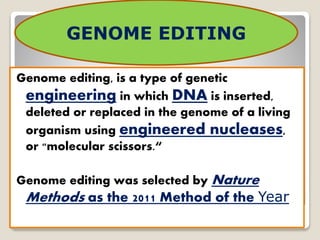
Genome editing, is a type of genetic
engineering in which DNA is inserted,
deleted or replaced in the genome of a living
organism using engineered nucleases,
or "molecular scissors.“
Genome editing was selected by Nature
Methods as the 2011 Method of the Year
GENOME EDITING
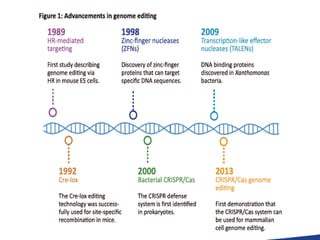
 Evolution of genome editing techniques
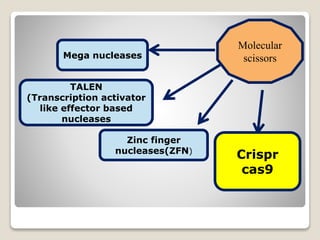
Molecular
scissorsMega nucleases
TALEN
(Transcription activator
like effector based
nucleases
Crispr
cas9
Zinc finger
nucleases(ZFN)
Mechanism of genome editing
CRISPR-CAS9
TECHNOLOGY
 Discovery of crisper technology
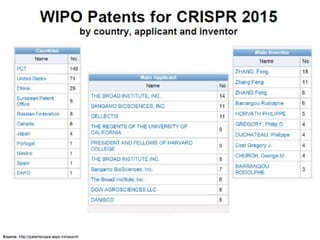
Patent
war
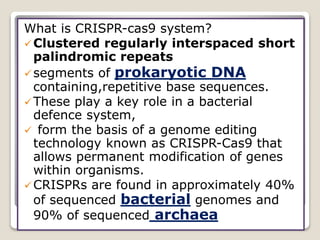
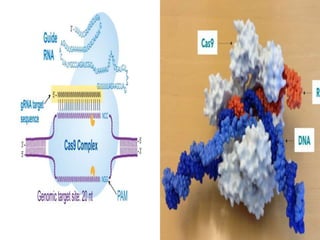
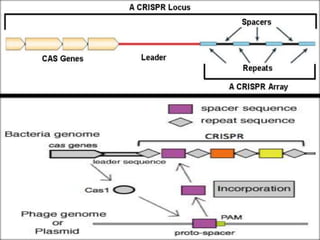
What is CRISPR-cas9 system?
Clustered regularly interspaced short
palindromic repeats
segments of prokaryotic DNA
containing,repetitive base sequences.
These play a key role in a bacterial
defence system,
 form the basis of a genome editing
technology known as CRISPR-Cas9 that
allows permanent modification of genes
within organisms.
CRISPRs are found in approximately 40%
of sequenced bacterial genomes and
90% of sequenced archaea
.
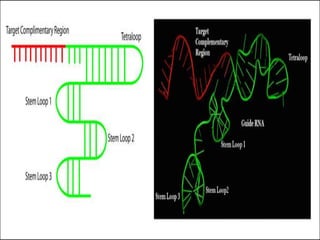
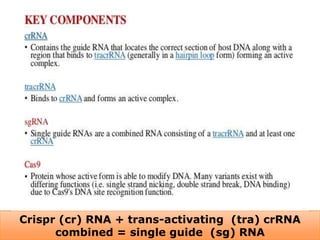
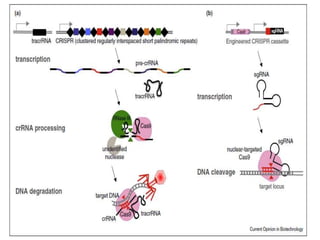
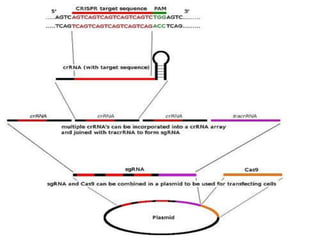
Crispr (cr) RNA + trans-activating (tra) crRNA
combined = single guide (sg) RNA
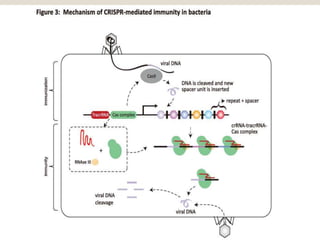
Discovery of CRISPR in bacterial
immune system
 It was first observed in Escherichia coli by Osaka University
researcher Yoshizumi Ishino in 1987.
ENEMIES
FIGHTING FOR
EXISTANCE
Natural defense
mechanism
High throughput genome
engineering technology
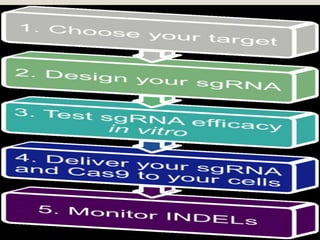
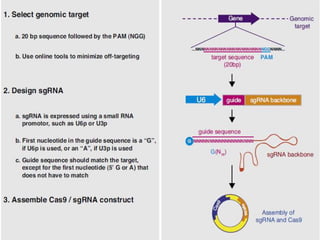
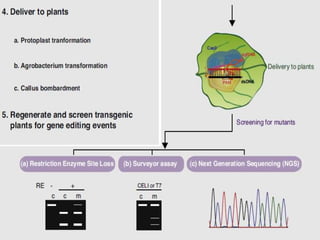
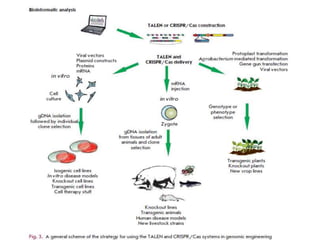
General protocol of
CRISPR-CAS9
27
28
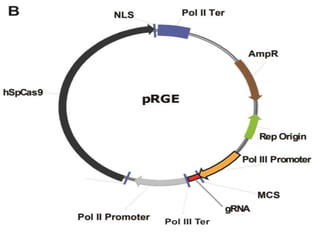
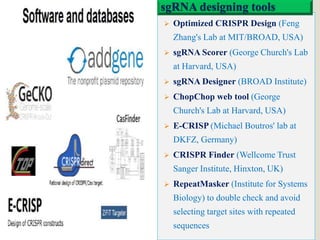
 Optimized CRISPR Design (Feng
Zhang's Lab at MIT/BROAD, USA)
 sgRNA Scorer (George Church's Lab
at Harvard, USA)
 sgRNA Designer (BROAD Institute)
 ChopChop web tool (George
Church's Lab at Harvard, USA)
 E-CRISP (Michael Boutros' lab at
DKFZ, Germany)
 CRISPR Finder (Wellcome Trust
Sanger Institute, Hinxton, UK)
 RepeatMasker (Institute for Systems
Biology) to double check and avoid
selecting target sites with repeated
sequences
sgRNA designing tools
RECENT ADVANCES
Expanding CRISPR-CAS9
recognition sequence
Improving cleavage specificity
of the CRISPR-CAS9 system
Inducible cas9 expression
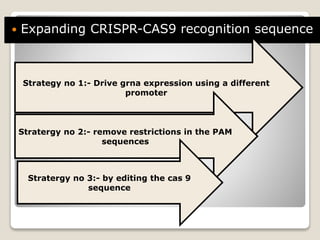
 Expanding CRISPR-CAS9 recognition sequence
Strategy no 1:- Drive grna expression using a different
promoter
Stratergy no 2:- remove restrictions in the PAM
sequences
Stratergy no 3:- by editing the cas 9
sequence
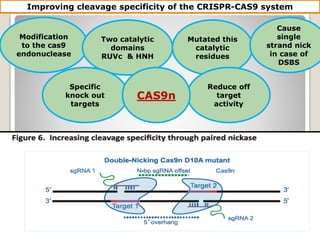
Modification
to the cas9
endonuclease
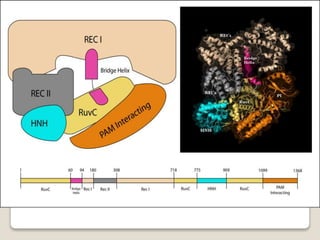
Two catalytic
domains
RUVc & HNH
Mutated this
catalytic
residues
Cause
single
strand nick
in case of
DSBS
Reduce off
target
activity
Specific
knock out
targets
CAS9n
Improving cleavage specificity of the CRISPR-CAS9 system
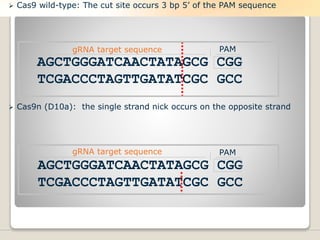
 Cas9 wild-type: The cut site occurs 3 bp 5’ of the PAM sequence
 Cas9n (D10a): the single strand nick occurs on the opposite strand
AGCTGGGATCAACTATAGCG CGG
TCGACCCTAGTTGATATCGC GCC
gRNA target sequence PAM
AGCTGGGATCAACTATAGCG CGG
TCGACCCTAGTTGATATCGC GCC
gRNA target sequence PAM
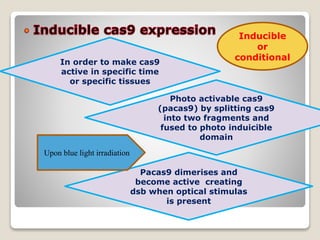
Pacas9 dimerises and
become active creating
dsb when optical stimulas
is present
Photo activable cas9
(pacas9) by splitting cas9
into two fragments and
fused to photo induicible
domain
In order to make cas9
active in specific time
or specific tissues
Inducible
or
conditional
Upon blue light irradiation
Applications….
An effective technique
that will allow scientists
to adequately edit genes
to cure diseases. The case
is similar for plant
species.
Where scientists desire
to knock‐out a gene
that will result in an
increase in a particular
nutritional content or
in increased drought
and/or pest resistance.
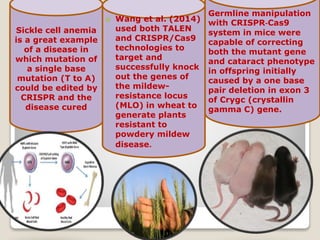
Cont…Sickle cell anemia
is a great example
of a disease in
which mutation of
a single base
mutation (T to A)
could be edited by
CRISPR and the
disease cured
 Wang et al. (2014)
used both TALEN
and CRISPR/Cas9
technologies to
target and
successfully knock
out the genes of
the mildew-
resistance locus
(MLO) in wheat to
generate plants
resistant to
powdery mildew
disease.
Germline manipulation
with CRISPR‐Cas9
system in mice were
capable of correcting
both the mutant gene
and cataract phenotype
in offspring initially
caused by a one base
pair deletion in exon 3
of Crygc (crystallin
gamma C) gene.
Cont…
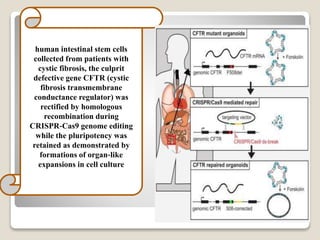
 Inhuman intestinal stem cells
collected from patients with
cystic fibrosis, the culprit
defective gene CFTR (cystic
fibrosis transmembrane
conductance regulator) was
rectified by homologous
recombination during
CRISPR‐Cas9 genome editing
while the pluripotency was
retained as demonstrated by
formations of organ‐like
expansions in cell culture
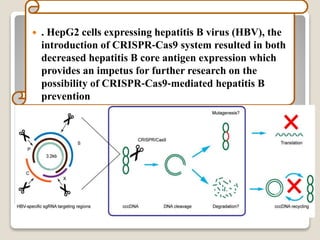
 . HepG2 cells expressing hepatitis B virus (HBV), the
introduction of CRISPR‐Cas9 system resulted in both
decreased hepatitis B core antigen expression which
provides an impetus for further research on the
possibility of CRISPR‐Cas9‐mediated hepatitis B
prevention
Cont…

 .
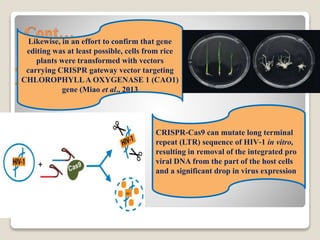
CRISPR‐Cas9 can mutate long terminal
repeat (LTR) sequence of HIV‐1 in vitro,
resulting in removal of the integrated pro
viral DNA from the part of the host cells
and a significant drop in virus expression.
Likewise, in an effort to confirm that gene
editing was at least possible, cells from rice
plants were transformed with vectors
carrying CRISPR gateway vector targeting
CHLOROPHYLLA OXYGENASE 1 (CAO1)
gene (Miao et al., 2013
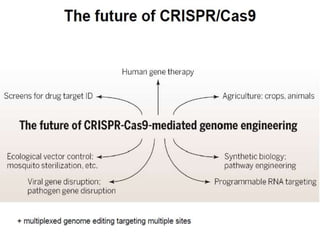
 FUTURE PROSPECTS
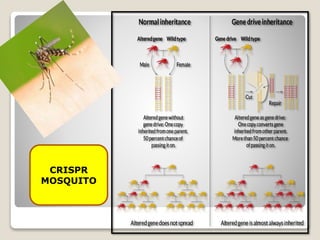
CRISPR
MOSQUITO
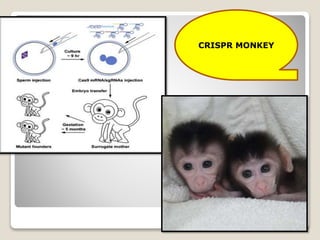
CRISPR MONKEY
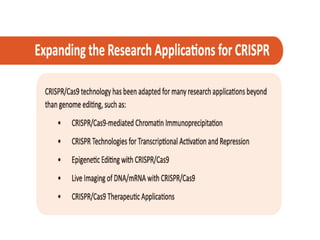
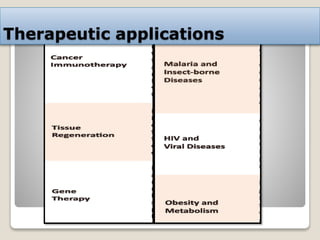
Therapeutic applications
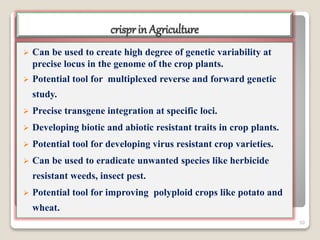
crispr in Agriculture
 Can be used to create high degree of genetic variability at
precise locus in the genome of the crop plants.
 Potential tool for multiplexed reverse and forward genetic
study.
 Precise transgene integration at specific loci.
 Developing biotic and abiotic resistant traits in crop plants.
 Potential tool for developing virus resistant crop varieties.
 Can be used to eradicate unwanted species like herbicide
resistant weeds, insect pest.
 Potential tool for improving polyploid crops like potato and
wheat.
50
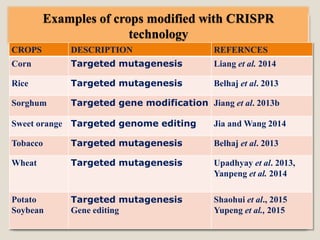
Examples of crops modified with CRISPR
technology
51
CROPS DESCRIPTION REFERNCES
Corn Targeted mutagenesis Liang et al. 2014
Rice Targeted mutagenesis Belhaj et al. 2013
Sorghum Targeted gene modification Jiang et al. 2013b
Sweet orange Targeted genome editing Jia and Wang 2014
Tobacco Targeted mutagenesis Belhaj et al. 2013
Wheat Targeted mutagenesis Upadhyay et al. 2013,
Yanpeng et al. 2014
Potato
Soybean
Targeted mutagenesis
Gene editing
Shaohui et al., 2015
Yupeng et al., 2015
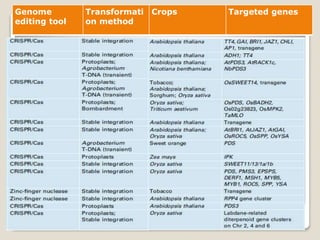
Genome
editing tool
Transformati
on method
Crops Targeted genes
52
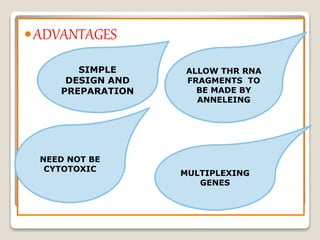
ADVANTAGES
SIMPLE
DESIGN AND
PREPARATION
NEED NOT BE
CYTOTOXIC
ALLOW THR RNA
FRAGMENTS TO
BE MADE BY
ANNELEING
MULTIPLEXING
GENES
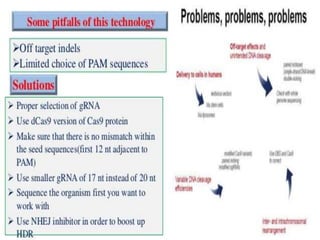
 LIMITATIONS
 ETHICAL ISSUES
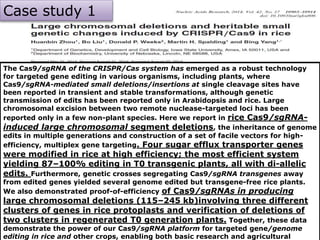
Case study-2
The Cas9/sgRNA of the CRISPR/Cas system has emerged as a robust technology
for targeted gene editing in various organisms, including plants, where
Cas9/sgRNA-mediated small deletions/insertions at single cleavage sites have
been reported in transient and stable transformations, although genetic
transmission of edits has been reported only in Arabidopsis and rice. Large
chromosomal excision between two remote nuclease-targeted loci has been
reported only in a few non-plant species. Here we report in rice Cas9/sgRNA-
induced large chromosomal segment deletions, the inheritance of genome
edits in multiple generations and construction of a set of facile vectors for high-
efficiency, multiplex gene targeting. Four sugar efflux transporter genes
were modified in rice at high efficiency; the most efficient system
yielding 87–100% editing in T0 transgenic plants, all with di-allelic
edits. Furthermore, genetic crosses segregating Cas9/sgRNA transgenes away
from edited genes yielded several genome edited but transgene-free rice plants.

We also demonstrated proof-of-efficiency of Cas9/sgRNAs in producing
large chromosomal deletions (115–245 kb)involving three different
clusters of genes in rice protoplasts and verification of deletions of
two clusters in regenerated T0 generation plants. Together, these data
demonstrate the power of our Cas9/sgRNA platform for targeted gene/genome
editing in rice and other crops, enabling both basic research and agricultural
Case study 1
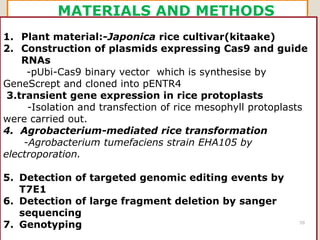
MATERIALS AND METHODS
1. Plant material:-Japonica rice cultivar(kitaake)
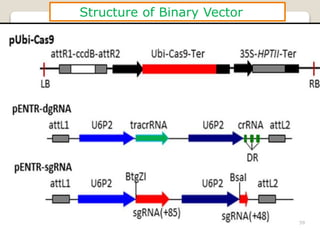
2. Construction of plasmids expressing Cas9 and guide
RNAs
-pUbi-Cas9 binary vector which is synthesise by
GeneScrept and cloned into pENTR4
3.transient gene expression in rice protoplasts
-Isolation and transfection of rice mesophyll protoplasts
were carried out.
4. Agrobacterium-mediated rice transformation
-Agrobacterium tumefaciens strain EHA105 by
electroporation.
5. Detection of targeted genomic editing events by
T7E1
6. Detection of large fragment deletion by sanger
sequencing
7. Genotyping 58
59
Structure of Binary Vector
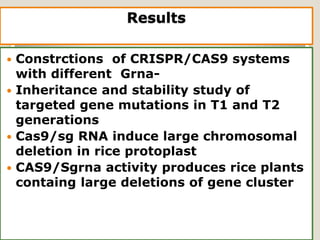
Results
 Constrctions of CRISPR/CAS9 systems
with different Grna-
 Inheritance and stability study of
targeted gene mutations in T1 and T2
generations
 Cas9/sg RNA induce large chromosomal
deletion in rice protoplast
 CAS9/Sgrna activity produces rice plants
containg large deletions of gene cluster
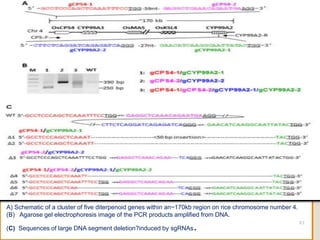
A) Schematic of a cluster of five diterpenoid genes within an~170kb region on rice chromosome number 4.
(B) Agarose gel electrophoresis image of the PCR products amplified from DNA.
(C) Sequences of large DNA segment deletion?induced by sgRNAs. 61
62
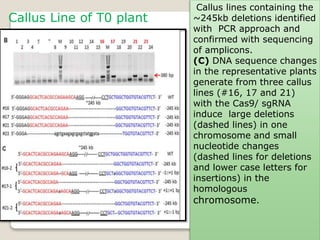
Callus Line of T0 plant
Callus lines containing the
~245kb deletions identified
with PCR approach and
confirmed with sequencing
of amplicons.
(C) DNA sequence changes
in the representative plants
generate from three callus
lines (#16, 17 and 21)
with the Cas9/ sgRNA
induce large deletions
(dashed lines) in one
chromosome and small
nucleotide changes
(dashed lines for deletions
and lower case letters for
insertions) in the
homologous
chromosome.
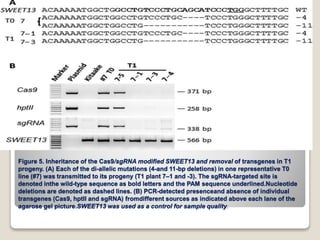
Figure 5. Inheritance of the Cas9/sgRNA modified SWEET13 and removal of transgenes in T1
progeny. (A) Each of the di-allelic mutations (4-and 11-bp deletions) in one representative T0
line (#7) was transmitted to its progeny (T1 plant 7–1 and -3). The sgRNA-targeted site is
denoted inthe wild-type sequence as bold letters and the PAM sequence underlined.Nucleotide
deletions are denoted as dashed lines. (B) PCR-detected presenceand absence of individual
transgenes (Cas9, hptII and sgRNA) fromdifferent sources as indicated above each lane of the
agarose gel picture.SWEET13 was used as a control for sample quality.
Large chromosomal
deletions and heritable
small genetic changes
induced by CRISPR/Cas9 in
rice
Case
study 1
64
Yang et al. (2014)
USA
Case study 2
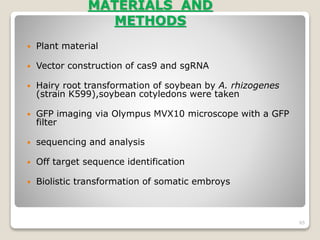
MATERIALS AND
METHODS
 Plant material
 Vector construction of cas9 and sgRNA
 Hairy root transformation of soybean by A. rhizogenes
(strain K599),soybean cotyledons were taken
 GFP imaging via Olympus MVX10 microscope with a GFP
filter
 sequencing and analysis
 Off target sequence identification
 Biolistic transformation of somatic embroys
65
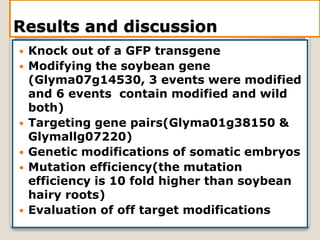
Results and discussion
 Knock out of a GFP transgene
 Modifying the soybean gene
(Glyma07g14530, 3 events were modified
and 6 events contain modified and wild
both)
 Targeting gene pairs(Glyma01g38150 &
Glymallg07220)
 Genetic modifications of somatic embryos
 Mutation efficiency(the mutation
efficiency is 10 fold higher than soybean
hairy roots)
 Evaluation of off target modifications
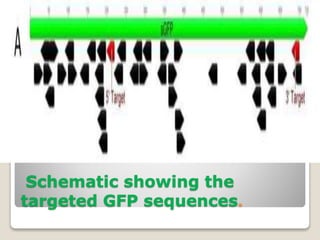
Schematic showing the
targeted GFP sequences.
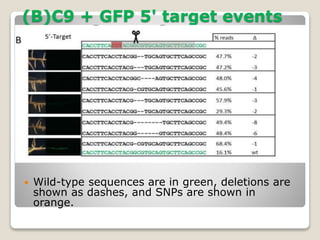
(B)C9 + GFP 5' target events
 Wild-type sequences are in green, deletions are
shown as dashes, and SNPs are shown in
orange.
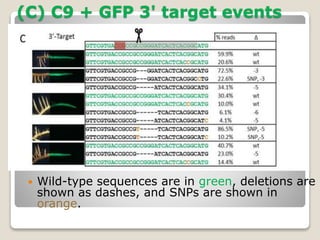
(C) C9 + GFP 3' target events
 Wild-type sequences are in green, deletions are
shown as dashes, and SNPs are shown in
orange.
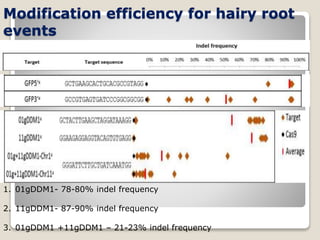
Modification efficiency for hairy root
events
1. 01gDDM1- 78-80% indel frequency
2. 11gDDM1- 87-90% indel frequency
3. 01gDDM1 +11gDDM1 – 21-23% indel frequency
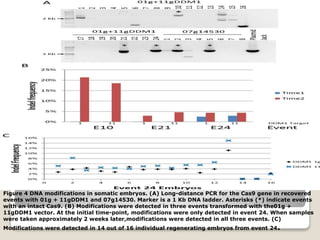
Figure 4 DNA modifications in somatic embryos. (A) Long-distance PCR for the Cas9 gene in recovered
events with 01g + 11gDDM1 and 07g14530. Marker is a 1 Kb DNA ladder. Asterisks (*) indicate events
with an intact Cas9. (B) Modifications were detected in three events transformed with the01g +
11gDDM1 vector. At the initial time-point, modifications were only detected in event 24. When samples
were taken approximately 2 weeks later,modifications were detected in all three events. (C)
Modifications were detected in 14 out of 16 individual regenerating embryos from event 24.
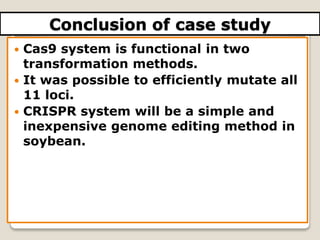
Conclusion of case study
 Cas9 system is functional in two
transformation methods.
 It was possible to efficiently mutate all
11 loci.
 CRISPR system will be a simple and
inexpensive genome editing method in
soybean.
 CONCLUSION
Undoubtedly this process caught most attention
for their potential in medical applications and
numerous other biotechnological applications
like crop editing, gene drives and synthetic
biology
Despite the enormous potential that lies within
the CRISPR-Cas9 technology, further
investigation is required to make the system an
applicable and safe tool for therapeutically
useful approaches
REFERENCES
 RNA-guided genetic silencing systems in bacteria and
archaea. Blake Wiedenheft Samuel H. Sternberg &
Jennifer A. Doudna. Nature 2012
 A Programmable Dual-RNA–Guided DNA Endonuclease
in Adaptive Bacterial Immunity. Jinek et al. Science
2012
 CRISPER handbook
 RNA-guided editing of bacterial genomes using
CRISPR-Cas systems. Jiang et al. Nature Biotech 2013
 CRISPR interference (CRISPRi) for sequence-specific
control of gene expression. Larson et al., Nature
protocols 2013
 Targeted genome modifications in soybean with
crispr/cas9. Jacobs et al. BMC Biotechnology(2015)
 Large chromosomal deletions and heritable small
genetic changes induced by CRISPR/Cas9 in rice, Zhou
et al. Nucleic acid research 2014
75

Crispr cas9

  • 1.
    A art ofgenome editing Presented by SARBANI BANIK 05ABT/15 CREDIT SEMINAR-599 CRISPR-CAS9
  • 2.
    CONTENTS  GENOME EDITING HISTORY OF GENOME EDITING  TYPES OF MOLECULAR SCISCCORS  MECHANISM OF GENOME EDITING  CRISPER TIMELINE  DISCOVERY ISSUES  WHAT IS CRISPR CAS9?  KEY COMPONENTS OF CRISPER  NATURAL CRISPR SYSTEM  CRISPR AS A GENOMIC TOOL  GENERAL PROTOCOL  RECENT ADVANCES  CRISPR IN AGRICUTURE  ADVANTAGES  LIMITATIONS  ETHICAL ISSUES  CASE STUDIES  FUTURE PROSPECTS  CONCLUSION  REFERENCES
  • 3.
    Genome editing, isa type of genetic engineering in which DNA is inserted, deleted or replaced in the genome of a living organism using engineered nucleases, or "molecular scissors.“ Genome editing was selected by Nature Methods as the 2011 Method of the Year GENOME EDITING
  • 4.
     Evolution ofgenome editing techniques
  • 5.
    Molecular scissorsMega nucleases TALEN (Transcription activator likeeffector based nucleases Crispr cas9 Zinc finger nucleases(ZFN)
  • 6.
  • 7.
  • 8.
     Discovery ofcrisper technology
  • 9.
  • 11.
    What is CRISPR-cas9system? Clustered regularly interspaced short palindromic repeats segments of prokaryotic DNA containing,repetitive base sequences. These play a key role in a bacterial defence system,  form the basis of a genome editing technology known as CRISPR-Cas9 that allows permanent modification of genes within organisms. CRISPRs are found in approximately 40% of sequenced bacterial genomes and 90% of sequenced archaea
  • 15.
    . Crispr (cr) RNA+ trans-activating (tra) crRNA combined = single guide (sg) RNA
  • 17.
    Discovery of CRISPRin bacterial immune system  It was first observed in Escherichia coli by Osaka University researcher Yoshizumi Ishino in 1987. ENEMIES FIGHTING FOR EXISTANCE
  • 19.
    Natural defense mechanism High throughputgenome engineering technology
  • 23.
  • 27.
  • 28.
    28  Optimized CRISPRDesign (Feng Zhang's Lab at MIT/BROAD, USA)  sgRNA Scorer (George Church's Lab at Harvard, USA)  sgRNA Designer (BROAD Institute)  ChopChop web tool (George Church's Lab at Harvard, USA)  E-CRISP (Michael Boutros' lab at DKFZ, Germany)  CRISPR Finder (Wellcome Trust Sanger Institute, Hinxton, UK)  RepeatMasker (Institute for Systems Biology) to double check and avoid selecting target sites with repeated sequences sgRNA designing tools
  • 30.
    RECENT ADVANCES Expanding CRISPR-CAS9 recognitionsequence Improving cleavage specificity of the CRISPR-CAS9 system Inducible cas9 expression
  • 31.
     Expanding CRISPR-CAS9recognition sequence Strategy no 1:- Drive grna expression using a different promoter Stratergy no 2:- remove restrictions in the PAM sequences Stratergy no 3:- by editing the cas 9 sequence
  • 32.
    Modification to the cas9 endonuclease Twocatalytic domains RUVc & HNH Mutated this catalytic residues Cause single strand nick in case of DSBS Reduce off target activity Specific knock out targets CAS9n Improving cleavage specificity of the CRISPR-CAS9 system
  • 33.
     Cas9 wild-type:The cut site occurs 3 bp 5’ of the PAM sequence  Cas9n (D10a): the single strand nick occurs on the opposite strand AGCTGGGATCAACTATAGCG CGG TCGACCCTAGTTGATATCGC GCC gRNA target sequence PAM AGCTGGGATCAACTATAGCG CGG TCGACCCTAGTTGATATCGC GCC gRNA target sequence PAM
  • 34.
    Pacas9 dimerises and becomeactive creating dsb when optical stimulas is present Photo activable cas9 (pacas9) by splitting cas9 into two fragments and fused to photo induicible domain In order to make cas9 active in specific time or specific tissues Inducible or conditional Upon blue light irradiation
  • 36.
    Applications…. An effective technique thatwill allow scientists to adequately edit genes to cure diseases. The case is similar for plant species. Where scientists desire to knock‐out a gene that will result in an increase in a particular nutritional content or in increased drought and/or pest resistance.
  • 37.
    Cont…Sickle cell anemia isa great example of a disease in which mutation of a single base mutation (T to A) could be edited by CRISPR and the disease cured  Wang et al. (2014) used both TALEN and CRISPR/Cas9 technologies to target and successfully knock out the genes of the mildew- resistance locus (MLO) in wheat to generate plants resistant to powdery mildew disease. Germline manipulation with CRISPR‐Cas9 system in mice were capable of correcting both the mutant gene and cataract phenotype in offspring initially caused by a one base pair deletion in exon 3 of Crygc (crystallin gamma C) gene.
  • 38.
    Cont…  Inhuman intestinalstem cells collected from patients with cystic fibrosis, the culprit defective gene CFTR (cystic fibrosis transmembrane conductance regulator) was rectified by homologous recombination during CRISPR‐Cas9 genome editing while the pluripotency was retained as demonstrated by formations of organ‐like expansions in cell culture
  • 39.
     . HepG2cells expressing hepatitis B virus (HBV), the introduction of CRISPR‐Cas9 system resulted in both decreased hepatitis B core antigen expression which provides an impetus for further research on the possibility of CRISPR‐Cas9‐mediated hepatitis B prevention
  • 40.
    Cont…   . CRISPR‐Cas9 canmutate long terminal repeat (LTR) sequence of HIV‐1 in vitro, resulting in removal of the integrated pro viral DNA from the part of the host cells and a significant drop in virus expression. Likewise, in an effort to confirm that gene editing was at least possible, cells from rice plants were transformed with vectors carrying CRISPR gateway vector targeting CHLOROPHYLLA OXYGENASE 1 (CAO1) gene (Miao et al., 2013
  • 41.
  • 42.
  • 43.
  • 49.
  • 50.
    crispr in Agriculture Can be used to create high degree of genetic variability at precise locus in the genome of the crop plants.  Potential tool for multiplexed reverse and forward genetic study.  Precise transgene integration at specific loci.  Developing biotic and abiotic resistant traits in crop plants.  Potential tool for developing virus resistant crop varieties.  Can be used to eradicate unwanted species like herbicide resistant weeds, insect pest.  Potential tool for improving polyploid crops like potato and wheat. 50
  • 51.
    Examples of cropsmodified with CRISPR technology 51 CROPS DESCRIPTION REFERNCES Corn Targeted mutagenesis Liang et al. 2014 Rice Targeted mutagenesis Belhaj et al. 2013 Sorghum Targeted gene modification Jiang et al. 2013b Sweet orange Targeted genome editing Jia and Wang 2014 Tobacco Targeted mutagenesis Belhaj et al. 2013 Wheat Targeted mutagenesis Upadhyay et al. 2013, Yanpeng et al. 2014 Potato Soybean Targeted mutagenesis Gene editing Shaohui et al., 2015 Yupeng et al., 2015
  • 52.
  • 53.
    ADVANTAGES SIMPLE DESIGN AND PREPARATION NEED NOTBE CYTOTOXIC ALLOW THR RNA FRAGMENTS TO BE MADE BY ANNELEING MULTIPLEXING GENES
  • 54.
  • 56.
  • 57.
    Case study-2 The Cas9/sgRNAof the CRISPR/Cas system has emerged as a robust technology for targeted gene editing in various organisms, including plants, where Cas9/sgRNA-mediated small deletions/insertions at single cleavage sites have been reported in transient and stable transformations, although genetic transmission of edits has been reported only in Arabidopsis and rice. Large chromosomal excision between two remote nuclease-targeted loci has been reported only in a few non-plant species. Here we report in rice Cas9/sgRNA- induced large chromosomal segment deletions, the inheritance of genome edits in multiple generations and construction of a set of facile vectors for high- efficiency, multiplex gene targeting. Four sugar efflux transporter genes were modified in rice at high efficiency; the most efficient system yielding 87–100% editing in T0 transgenic plants, all with di-allelic edits. Furthermore, genetic crosses segregating Cas9/sgRNA transgenes away from edited genes yielded several genome edited but transgene-free rice plants. We also demonstrated proof-of-efficiency of Cas9/sgRNAs in producing large chromosomal deletions (115–245 kb)involving three different clusters of genes in rice protoplasts and verification of deletions of two clusters in regenerated T0 generation plants. Together, these data demonstrate the power of our Cas9/sgRNA platform for targeted gene/genome editing in rice and other crops, enabling both basic research and agricultural Case study 1
  • 58.
    MATERIALS AND METHODS 1.Plant material:-Japonica rice cultivar(kitaake) 2. Construction of plasmids expressing Cas9 and guide RNAs -pUbi-Cas9 binary vector which is synthesise by GeneScrept and cloned into pENTR4 3.transient gene expression in rice protoplasts -Isolation and transfection of rice mesophyll protoplasts were carried out. 4. Agrobacterium-mediated rice transformation -Agrobacterium tumefaciens strain EHA105 by electroporation. 5. Detection of targeted genomic editing events by T7E1 6. Detection of large fragment deletion by sanger sequencing 7. Genotyping 58
  • 59.
  • 60.
    Results  Constrctions ofCRISPR/CAS9 systems with different Grna-  Inheritance and stability study of targeted gene mutations in T1 and T2 generations  Cas9/sg RNA induce large chromosomal deletion in rice protoplast  CAS9/Sgrna activity produces rice plants containg large deletions of gene cluster
  • 61.
    A) Schematic ofa cluster of five diterpenoid genes within an~170kb region on rice chromosome number 4. (B) Agarose gel electrophoresis image of the PCR products amplified from DNA. (C) Sequences of large DNA segment deletion?induced by sgRNAs. 61
  • 62.
    62 Callus Line ofT0 plant Callus lines containing the ~245kb deletions identified with PCR approach and confirmed with sequencing of amplicons. (C) DNA sequence changes in the representative plants generate from three callus lines (#16, 17 and 21) with the Cas9/ sgRNA induce large deletions (dashed lines) in one chromosome and small nucleotide changes (dashed lines for deletions and lower case letters for insertions) in the homologous chromosome.
  • 63.
    Figure 5. Inheritanceof the Cas9/sgRNA modified SWEET13 and removal of transgenes in T1 progeny. (A) Each of the di-allelic mutations (4-and 11-bp deletions) in one representative T0 line (#7) was transmitted to its progeny (T1 plant 7–1 and -3). The sgRNA-targeted site is denoted inthe wild-type sequence as bold letters and the PAM sequence underlined.Nucleotide deletions are denoted as dashed lines. (B) PCR-detected presenceand absence of individual transgenes (Cas9, hptII and sgRNA) fromdifferent sources as indicated above each lane of the agarose gel picture.SWEET13 was used as a control for sample quality.
  • 64.
    Large chromosomal deletions andheritable small genetic changes induced by CRISPR/Cas9 in rice Case study 1 64 Yang et al. (2014) USA Case study 2
  • 65.
    MATERIALS AND METHODS  Plantmaterial  Vector construction of cas9 and sgRNA  Hairy root transformation of soybean by A. rhizogenes (strain K599),soybean cotyledons were taken  GFP imaging via Olympus MVX10 microscope with a GFP filter  sequencing and analysis  Off target sequence identification  Biolistic transformation of somatic embroys 65
  • 66.
    Results and discussion Knock out of a GFP transgene  Modifying the soybean gene (Glyma07g14530, 3 events were modified and 6 events contain modified and wild both)  Targeting gene pairs(Glyma01g38150 & Glymallg07220)  Genetic modifications of somatic embryos  Mutation efficiency(the mutation efficiency is 10 fold higher than soybean hairy roots)  Evaluation of off target modifications
  • 67.
  • 68.
    (B)C9 + GFP5' target events  Wild-type sequences are in green, deletions are shown as dashes, and SNPs are shown in orange.
  • 69.
    (C) C9 +GFP 3' target events  Wild-type sequences are in green, deletions are shown as dashes, and SNPs are shown in orange.
  • 70.
    Modification efficiency forhairy root events 1. 01gDDM1- 78-80% indel frequency 2. 11gDDM1- 87-90% indel frequency 3. 01gDDM1 +11gDDM1 – 21-23% indel frequency
  • 71.
    Figure 4 DNAmodifications in somatic embryos. (A) Long-distance PCR for the Cas9 gene in recovered events with 01g + 11gDDM1 and 07g14530. Marker is a 1 Kb DNA ladder. Asterisks (*) indicate events with an intact Cas9. (B) Modifications were detected in three events transformed with the01g + 11gDDM1 vector. At the initial time-point, modifications were only detected in event 24. When samples were taken approximately 2 weeks later,modifications were detected in all three events. (C) Modifications were detected in 14 out of 16 individual regenerating embryos from event 24.
  • 72.
    Conclusion of casestudy  Cas9 system is functional in two transformation methods.  It was possible to efficiently mutate all 11 loci.  CRISPR system will be a simple and inexpensive genome editing method in soybean.
  • 73.
     CONCLUSION Undoubtedly thisprocess caught most attention for their potential in medical applications and numerous other biotechnological applications like crop editing, gene drives and synthetic biology Despite the enormous potential that lies within the CRISPR-Cas9 technology, further investigation is required to make the system an applicable and safe tool for therapeutically useful approaches
  • 74.
    REFERENCES  RNA-guided geneticsilencing systems in bacteria and archaea. Blake Wiedenheft Samuel H. Sternberg & Jennifer A. Doudna. Nature 2012  A Programmable Dual-RNA–Guided DNA Endonuclease in Adaptive Bacterial Immunity. Jinek et al. Science 2012  CRISPER handbook  RNA-guided editing of bacterial genomes using CRISPR-Cas systems. Jiang et al. Nature Biotech 2013  CRISPR interference (CRISPRi) for sequence-specific control of gene expression. Larson et al., Nature protocols 2013  Targeted genome modifications in soybean with crispr/cas9. Jacobs et al. BMC Biotechnology(2015)  Large chromosomal deletions and heritable small genetic changes induced by CRISPR/Cas9 in rice, Zhou et al. Nucleic acid research 2014
  • 75.

Editor's Notes

  • #34 So in contrast to the wild type, which will introduce a double strand break 3 bases to the 5 prime of the PAM site, the D10A nickase will cut only the opposite strand at this position. Work is still being done to understand the best strategies for using this system – and a lot of this work is showcased in a recent paper from Keithjoungs lab