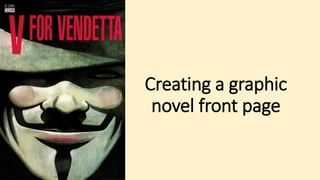
Creating a graphic
novel front page
Learning Aims
• MUST be able to create cover art for your graphic novel
• SHOULD be able to create a cover that reflects your story
• COULD create a professional cover
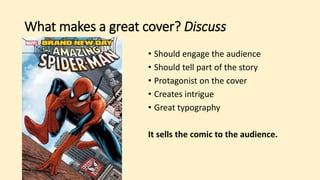
What makes a great cover? Discuss
• Should engage the audience
• Should tell part of the story
• Protagonist on the cover
• Creates intrigue
• Great typography
It sells the comic to the audience.
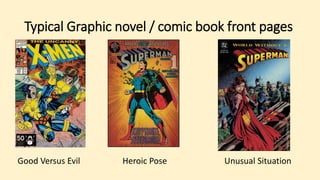
Typical Graphic novel / comic book front pages
Good Versus Evil Heroic Pose Unusual Situation
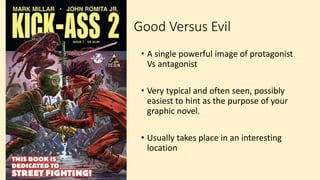
Good Versus Evil
• A single powerful image of protagonist
Vs antagonist
• Very typical and often seen, possibly
easiest to hint as the purpose of your
graphic novel.
• Usually takes place in an interesting
location
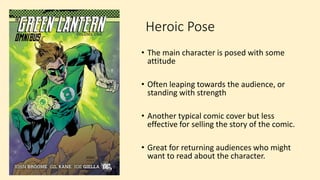
Heroic Pose
• The main character is posed with some
attitude
• Often leaping towards the audience, or
standing with strength
• Another typical comic cover but less
effective for selling the story of the comic.
• Great for returning audiences who might
want to read about the character.
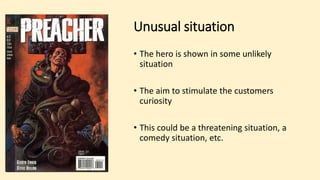
Unusual situation
• The hero is shown in some unlikely
situation
• The aim to stimulate the customers
curiosity
• This could be a threatening situation, a
comedy situation, etc.
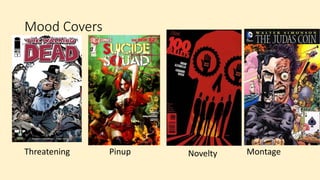
Mood Covers
Threatening Pinup
Nove
lty
MontageNovelty
Criteria for a good cover?
• It has to make the audience want to pick up the graphic novel
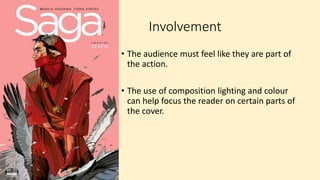
Involvement
• The audience must feel like they are part of
the action.
• The use of composition lighting and colour
can help focus the reader on certain parts of
the cover.
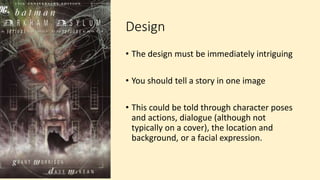
Design
• The design must be immediately intriguing
• You should tell a story in one image
• This could be told through character poses
and actions, dialogue (although not
typically on a cover), the location and
background, or a facial expression.
Curiosity
• The situation should pose a
question in the customers mind
• It should encourage them to read
more and resolve their questions by
reading the graphic novel.
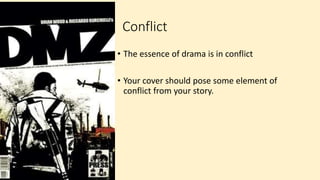
Conflict
• The essence of drama is in conflict
• Your cover should pose some element of
conflict from your story.
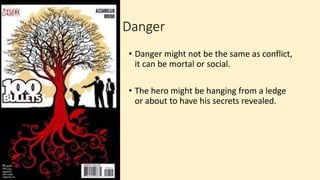
Danger
• Danger might not be the same as conflict,
it can be mortal or social.
• The hero might be hanging from a ledge
or about to have his secrets revealed.
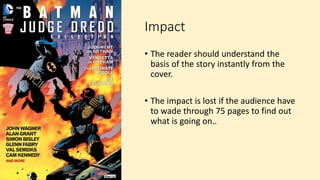
Impact
• The reader should understand the
basis of the story instantly from the
cover.
• The impact is lost if the audience have
to wade through 75 pages to find out
what is going on..
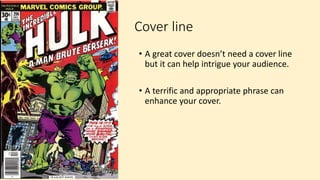
Cover line
• A great cover doesn’t need a cover line
but it can help intrigue your audience.
• A terrific and appropriate phrase can
enhance your cover.

Creating a graphic novel front page

  • 1.
  • 2.
    Learning Aims • MUSTbe able to create cover art for your graphic novel • SHOULD be able to create a cover that reflects your story • COULD create a professional cover
  • 3.
    What makes agreat cover? Discuss • Should engage the audience • Should tell part of the story • Protagonist on the cover • Creates intrigue • Great typography It sells the comic to the audience.
  • 4.
    Typical Graphic novel/ comic book front pages Good Versus Evil Heroic Pose Unusual Situation
  • 5.
    Good Versus Evil •A single powerful image of protagonist Vs antagonist • Very typical and often seen, possibly easiest to hint as the purpose of your graphic novel. • Usually takes place in an interesting location
  • 6.
    Heroic Pose • Themain character is posed with some attitude • Often leaping towards the audience, or standing with strength • Another typical comic cover but less effective for selling the story of the comic. • Great for returning audiences who might want to read about the character.
  • 7.
    Unusual situation • Thehero is shown in some unlikely situation • The aim to stimulate the customers curiosity • This could be a threatening situation, a comedy situation, etc.
  • 8.
  • 9.
    Criteria for agood cover? • It has to make the audience want to pick up the graphic novel
  • 10.
    Involvement • The audiencemust feel like they are part of the action. • The use of composition lighting and colour can help focus the reader on certain parts of the cover.
  • 11.
    Design • The designmust be immediately intriguing • You should tell a story in one image • This could be told through character poses and actions, dialogue (although not typically on a cover), the location and background, or a facial expression.
  • 12.
    Curiosity • The situationshould pose a question in the customers mind • It should encourage them to read more and resolve their questions by reading the graphic novel.
  • 13.
    Conflict • The essenceof drama is in conflict • Your cover should pose some element of conflict from your story.
  • 14.
    Danger • Danger mightnot be the same as conflict, it can be mortal or social. • The hero might be hanging from a ledge or about to have his secrets revealed.
  • 15.
    Impact • The readershould understand the basis of the story instantly from the cover. • The impact is lost if the audience have to wade through 75 pages to find out what is going on..
  • 16.
    Cover line • Agreat cover doesn’t need a cover line but it can help intrigue your audience. • A terrific and appropriate phrase can enhance your cover.