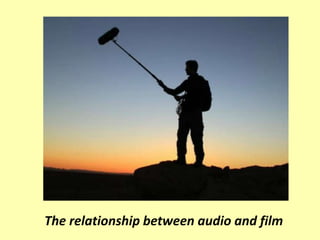
The relationship between audio and film
How can sound be used to affect the audience
experience? What type of sounds are usually in film?
Learning outcomes
describe how audio works for film
using examples
be able to demonstrate ways that
audio techniques could be applied
to your film.
evaluate the impact of audio on
audience and consider this in your
planning.
MUST
SHOULD
COULD
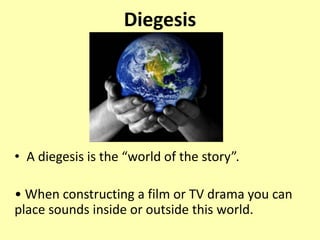
Diegesis
• A diegesis is the “world of the story”.
• When constructing a film or TV drama you can
place sounds inside or outside this world.
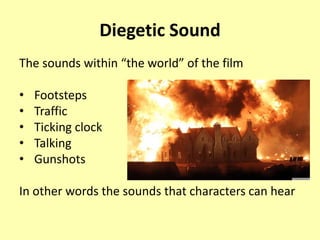
Diegetic Sound
The sounds within “the world” of the film
• Footsteps
• Traffic
• Ticking clock
• Talking
• Gunshots
In other words the sounds that characters can hear
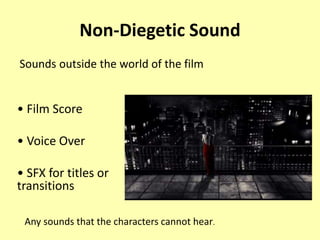
Non-Diegetic Sound
• Film Score
• Voice Over
• SFX for titles or
transitions
Any sounds that the characters cannot hear.
Sounds outside the world of the film
Discuss in Pairs and share
How sound is used in this scene:
• Diegetic sound
• Non-diegetic sound
• https://www.youtube.com/w
atch?v=ZgKukhIw5eY
Diegetic or Non-diegetic?
Use the Moodle lesson to
answer whether the film
clips are diegetic or non-
diegetic.
Once you have completed
this have a look at the
Audio plan under the
lesson resources folder.
Discuss as a team
How you could use audio in your film
• Take meeting notes
during your
discussions.
• Fill out the audio
worksheet
individually for your
scene.
Work on an audio plan for your scene
• Download the worksheet from the
Moodle lesson resources for unit 22.
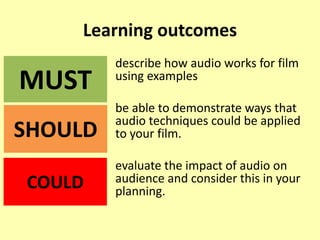
Learning outcomes
describe how audio works for film
using examples
be able to demonstrate ways that
audio techniques could be applied
to your film.
evaluate the impact of audio on
audience and consider this in your
planning.
MUST
SHOULD
COULD

Interactive media lv3 sound

  • 1.
  • 2.
    How can soundbe used to affect the audience experience? What type of sounds are usually in film?
  • 3.
    Learning outcomes describe howaudio works for film using examples be able to demonstrate ways that audio techniques could be applied to your film. evaluate the impact of audio on audience and consider this in your planning. MUST SHOULD COULD
  • 4.
    Diegesis • A diegesisis the “world of the story”. • When constructing a film or TV drama you can place sounds inside or outside this world.
  • 5.
    Diegetic Sound The soundswithin “the world” of the film • Footsteps • Traffic • Ticking clock • Talking • Gunshots In other words the sounds that characters can hear
  • 6.
    Non-Diegetic Sound • FilmScore • Voice Over • SFX for titles or transitions Any sounds that the characters cannot hear. Sounds outside the world of the film
  • 7.
    Discuss in Pairsand share How sound is used in this scene: • Diegetic sound • Non-diegetic sound • https://www.youtube.com/w atch?v=ZgKukhIw5eY
  • 8.
    Diegetic or Non-diegetic? Usethe Moodle lesson to answer whether the film clips are diegetic or non- diegetic. Once you have completed this have a look at the Audio plan under the lesson resources folder.
  • 9.
    Discuss as ateam How you could use audio in your film • Take meeting notes during your discussions. • Fill out the audio worksheet individually for your scene.
  • 10.
    Work on anaudio plan for your scene • Download the worksheet from the Moodle lesson resources for unit 22.
  • 11.
    Learning outcomes describe howaudio works for film using examples be able to demonstrate ways that audio techniques could be applied to your film. evaluate the impact of audio on audience and consider this in your planning. MUST SHOULD COULD