In semiconductor testing, contactor can
also refer to the specialized socket that
connects the device under test.In process
industries a contactor is a vessel where
two streams interact, for example, air and
liquid. See Gas-liquid contactor.
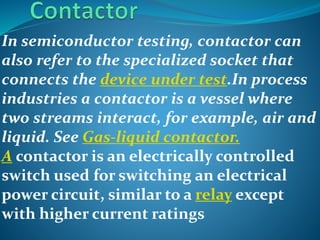
A contactor is an electrically controlled
switch used for switching an electrical
power circuit, similar to a relay except
with higher current ratings
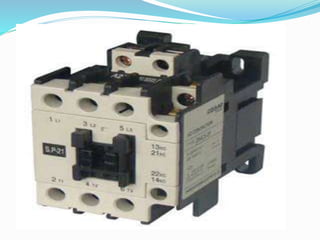
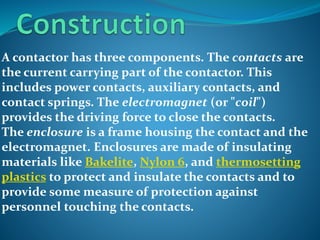
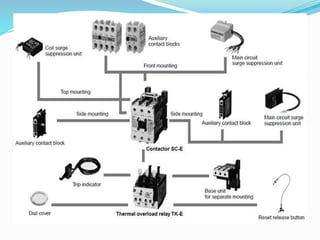
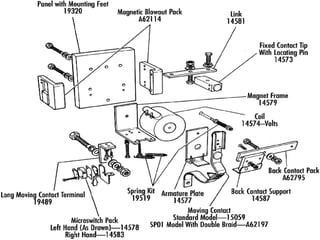
A contactor has three components. The contacts are
the current carrying part of the contactor. This
includes power contacts, auxiliary contacts, and
contact springs. The electromagnet (or "coil")
provides the driving force to close the contacts.
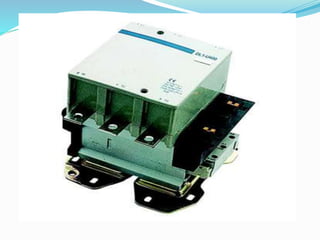
The enclosure is a frame housing the contact and the
electromagnet. Enclosures are made of insulating
materials like Bakelite, Nylon 6, and thermosetting
plastics to protect and insulate the contacts and to
provide some measure of protection against
personnel touching the contacts.
Unlike general-purpose relays, contactors are
designed to be directly connected to high-
current load devices. Relays tend to be of lower
capacity and are usually designed for
both normally closed and normally
open applications. Devices switching more
than 15 amperes or in circuits rated more than a
few kilowatts are usually called contactors.
Apart from optional auxiliary low current
contacts, contactors are almost exclusively
fitted with normally open ("form A") contacts.
Without adequate contact protection, the
occurrence of electric current arcing causes
significant degradation of the contacts, which
suffer significant damage. An electrical arc
occurs between the two contact points
(electrodes) when they transition from a
closed to an open (break arc) or from an open
to a closed (make arc). The break arc is
typically more energetic and thus more
destructive.
Most motor control contactors at low
voltages (600 volts and less) are air break
contactors; air at atmospheric pressure
surrounds the contacts and extinguishes
the arc when interrupting the circuit.
Modern medium-voltage AC motor
controllers use vacuum contactors. High
voltage AC contactors (greater than 1000
volts) may use vacuum or an inert gas
around the contacts.
Contactors are rated by designed load
current per contact (pole), maximum
fault withstand current, duty cycle,
design life expectancy, voltage, and coil
voltage. A general purpose motor
control contactor may be suitable for
heavy starting duty on large motors; so-
called "definite purpose" contactors are
carefully adapted to such applications
as air-conditioning compressor motor
starting.
NEMA contactors for low-voltage
motors (less than 1000 volts) are
rated according to NEMA size,
which gives a maximum continuous
current rating and a rating by
horsepower for attached induction
motors. NEMA standard contactor
sizes are designated
00,0,1,2,3,4,5,6,7,8,9
Vacuum contactors utilize vacuum bottle
encapsulated contacts to suppress the arc.
This arc suppression allows the contacts
to be much smaller and use less space
than air break contacts at higher currents.
As the contacts are encapsulated, vacuum
contactors are used fairly extensively in
dirty applications, such as mining.
A mercury-wetted relay is a
form of relay, usually a reed
relay, in which the contacts are
wetted with mercury. These are
not considered contactors
because they are not intended
for currents above 15 amps.

Contactor

  • 1.
    In semiconductor testing,contactor can also refer to the specialized socket that connects the device under test.In process industries a contactor is a vessel where two streams interact, for example, air and liquid. See Gas-liquid contactor. A contactor is an electrically controlled switch used for switching an electrical power circuit, similar to a relay except with higher current ratings
  • 3.
    A contactor hasthree components. The contacts are the current carrying part of the contactor. This includes power contacts, auxiliary contacts, and contact springs. The electromagnet (or "coil") provides the driving force to close the contacts. The enclosure is a frame housing the contact and the electromagnet. Enclosures are made of insulating materials like Bakelite, Nylon 6, and thermosetting plastics to protect and insulate the contacts and to provide some measure of protection against personnel touching the contacts.
  • 6.
    Unlike general-purpose relays,contactors are designed to be directly connected to high- current load devices. Relays tend to be of lower capacity and are usually designed for both normally closed and normally open applications. Devices switching more than 15 amperes or in circuits rated more than a few kilowatts are usually called contactors. Apart from optional auxiliary low current contacts, contactors are almost exclusively fitted with normally open ("form A") contacts.
  • 11.
    Without adequate contactprotection, the occurrence of electric current arcing causes significant degradation of the contacts, which suffer significant damage. An electrical arc occurs between the two contact points (electrodes) when they transition from a closed to an open (break arc) or from an open to a closed (make arc). The break arc is typically more energetic and thus more destructive.
  • 12.
    Most motor controlcontactors at low voltages (600 volts and less) are air break contactors; air at atmospheric pressure surrounds the contacts and extinguishes the arc when interrupting the circuit. Modern medium-voltage AC motor controllers use vacuum contactors. High voltage AC contactors (greater than 1000 volts) may use vacuum or an inert gas around the contacts.
  • 13.
    Contactors are ratedby designed load current per contact (pole), maximum fault withstand current, duty cycle, design life expectancy, voltage, and coil voltage. A general purpose motor control contactor may be suitable for heavy starting duty on large motors; so- called "definite purpose" contactors are carefully adapted to such applications as air-conditioning compressor motor starting.
  • 14.
    NEMA contactors forlow-voltage motors (less than 1000 volts) are rated according to NEMA size, which gives a maximum continuous current rating and a rating by horsepower for attached induction motors. NEMA standard contactor sizes are designated 00,0,1,2,3,4,5,6,7,8,9
  • 20.
    Vacuum contactors utilizevacuum bottle encapsulated contacts to suppress the arc. This arc suppression allows the contacts to be much smaller and use less space than air break contacts at higher currents. As the contacts are encapsulated, vacuum contactors are used fairly extensively in dirty applications, such as mining.
  • 21.
    A mercury-wetted relayis a form of relay, usually a reed relay, in which the contacts are wetted with mercury. These are not considered contactors because they are not intended for currents above 15 amps.