Electrical basics
ContentsFuse
A circuit breaker
A relay
A contactor
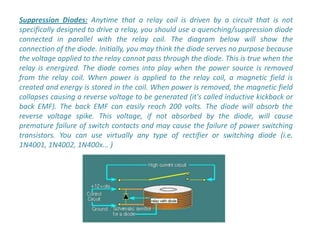
Suppression Diodes:
Wiring
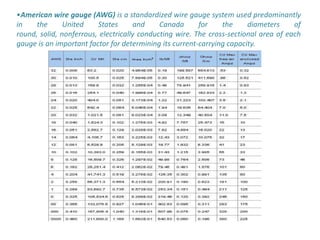
American wire gauge (AWG)
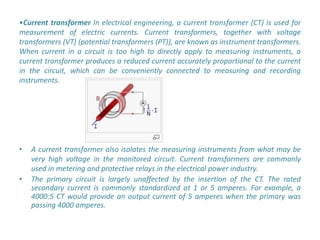
Current transformer
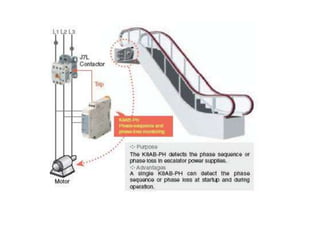
Phase monitoring relay
Ground fault interrupter (GFI)
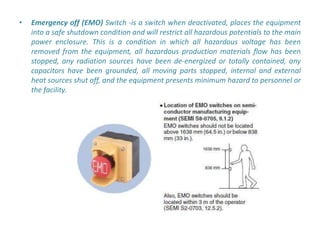
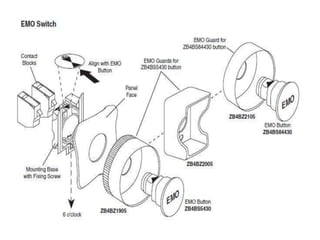
Emergency off (EMO) Switch
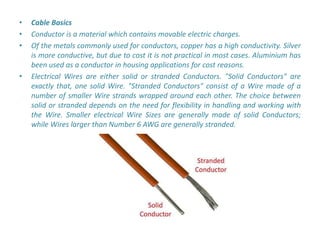
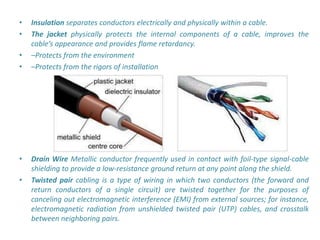
Cable Basics
Heat Shrink tubing
Busbar
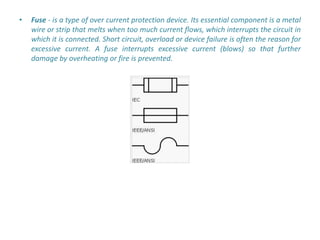
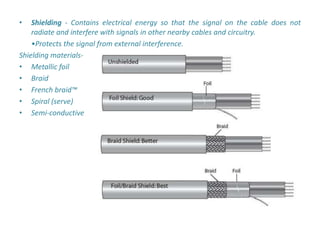
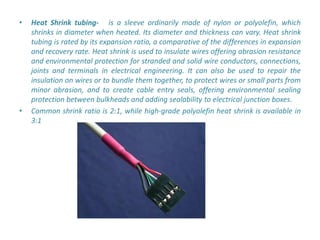
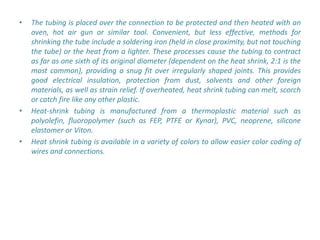
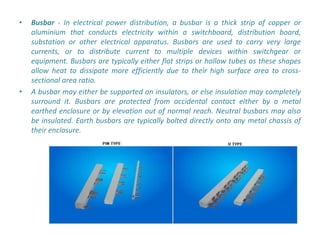
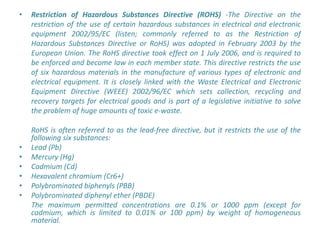
Restriction of Hazardous Substances Directive (ROHS)Fuse - is a type of over current protection device. Its essential component is a metal wire or strip that melts when too much current flows, which interrupts the circuit in which it is connected. Short circuit, overload or device failure is often the reason for excessive current. A fuse interrupts excessive current (blows) so that further damage by overheating or fire is prevented.A circuit breaker is an automatically operated electrical switch designed to protect an electrical circuit from damage caused by overload or short circuit. Its basic function is to detect a fault condition and, by interrupting continuity, to immediately discontinue electrical flow. Unlike a fuse, which operates once and then has to be replaced, a circuit breaker can be reset (either manually or automatically) to resume normal operation.
In - rated current of a circuit breaker for low voltage distribution applications as the current that the breaker is designed to carry continuously (at an ambient air temperature of 30 °C).
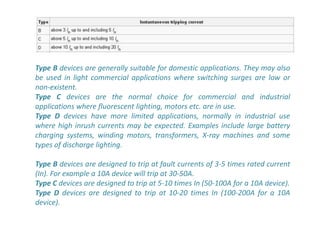
Instantaneous tripping current, that is the minimum value of current that causes the circuit-breaker to trip without intentional time delay (i.e., in less than 100 ms), expressed in terms of InType B devices are generally suitable for domestic applications. They may also be used in light commercial applications where switching surges are low or non-existent. Type C devices are the normal choice for commercial and industrial applications where fluorescent lighting, motors etc. are in use. Type D devices have more limited applications, normally in industrial use where high inrush currents may be expected. Examples include large battery charging systems, winding motors, transformers, X-ray machines and some types of discharge lighting. Type B devices are designed to trip at fault currents of 3-5 times rated current (In). For example a 10A device will trip at 30-50A. Type C devices are designed to trip at 5-10 times In (50-100A for a 10A device). Type D devices are designed to trip at 10-20 times In (100-200A for a 10A device).
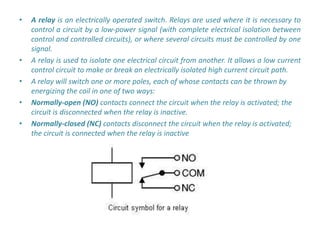
A relay is an electrically operated switch. Relays are used where it is necessary to control a circuit by a low-power signal (with complete electrical isolation between control and controlled circuits), or where several circuits must be controlled by one signal.
A relay is used to isolate one electrical circuit from another. It allows a low current control circuit to make or break an electrically isolated high current circuit path.
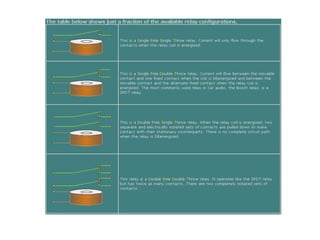
A relay will switch one or more poles, each of whose contacts can be thrown by energizing the coil in one of two ways:
Normally-open (NO) contacts connect the circuit when the relay is activated; the circuit is disconnected when the relay is inactive.
Normally-closed (NC) contacts disconnect the circuit when the relay is activated; the circuit is connected when the relay is inactive
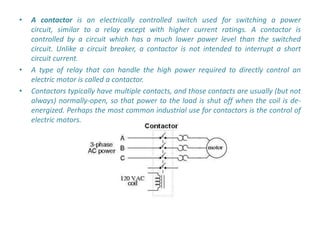
A contactor is an electrically controlled switch used for switching a power circuit, similar to a relay except with higher current ratings. A contactor is controlled by a circuit which has a much lower power level than the switched circuit. Unlike a circuit breaker, a contactor is not intended to interrupt a short circuit current.
A type of relay that can handle the high power required to directly control an electric motor is called a contactor.

Electrical basics

  • 1.
  • 2.
  • 3.
  • 4.
  • 5.
  • 6.
  • 7.
  • 8.
  • 9.
  • 10.
  • 11.
  • 12.
  • 13.
  • 14.
  • 15.
  • 16.
    Restriction of HazardousSubstances Directive (ROHS)Fuse - is a type of over current protection device. Its essential component is a metal wire or strip that melts when too much current flows, which interrupts the circuit in which it is connected. Short circuit, overload or device failure is often the reason for excessive current. A fuse interrupts excessive current (blows) so that further damage by overheating or fire is prevented.A circuit breaker is an automatically operated electrical switch designed to protect an electrical circuit from damage caused by overload or short circuit. Its basic function is to detect a fault condition and, by interrupting continuity, to immediately discontinue electrical flow. Unlike a fuse, which operates once and then has to be replaced, a circuit breaker can be reset (either manually or automatically) to resume normal operation.
  • 17.
    In - ratedcurrent of a circuit breaker for low voltage distribution applications as the current that the breaker is designed to carry continuously (at an ambient air temperature of 30 °C).
  • 18.
    Instantaneous tripping current,that is the minimum value of current that causes the circuit-breaker to trip without intentional time delay (i.e., in less than 100 ms), expressed in terms of InType B devices are generally suitable for domestic applications. They may also be used in light commercial applications where switching surges are low or non-existent. Type C devices are the normal choice for commercial and industrial applications where fluorescent lighting, motors etc. are in use. Type D devices have more limited applications, normally in industrial use where high inrush currents may be expected. Examples include large battery charging systems, winding motors, transformers, X-ray machines and some types of discharge lighting. Type B devices are designed to trip at fault currents of 3-5 times rated current (In). For example a 10A device will trip at 30-50A. Type C devices are designed to trip at 5-10 times In (50-100A for a 10A device). Type D devices are designed to trip at 10-20 times In (100-200A for a 10A device).
  • 19.
    A relay isan electrically operated switch. Relays are used where it is necessary to control a circuit by a low-power signal (with complete electrical isolation between control and controlled circuits), or where several circuits must be controlled by one signal.
  • 20.
    A relay isused to isolate one electrical circuit from another. It allows a low current control circuit to make or break an electrically isolated high current circuit path.
  • 21.
    A relay willswitch one or more poles, each of whose contacts can be thrown by energizing the coil in one of two ways:
  • 22.
    Normally-open (NO) contactsconnect the circuit when the relay is activated; the circuit is disconnected when the relay is inactive.
  • 23.
    Normally-closed (NC) contactsdisconnect the circuit when the relay is activated; the circuit is connected when the relay is inactive
  • 24.
    A contactor isan electrically controlled switch used for switching a power circuit, similar to a relay except with higher current ratings. A contactor is controlled by a circuit which has a much lower power level than the switched circuit. Unlike a circuit breaker, a contactor is not intended to interrupt a short circuit current.
  • 25.
    A type ofrelay that can handle the high power required to directly control an electric motor is called a contactor.