What Is A Contact Lens ?
 Artificial device whose front surface
substitutes the anterior surface of cornea.
 Used for correction of:
1. Refractive errors
2. Irregularities on anterior surface of
cornea
Contact Lens Specifications
 Diameter
1. Overall diameter [OD] - x mm
2. Optical zone diameter (OZ)
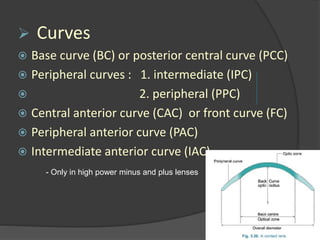
 Curves
 Base curve (BC) or posterior central curve (PCC)
 Peripheral curves : 1. intermediate (IPC)
 2. peripheral (PPC)
 Central anterior curve (CAC) or front curve (FC)
 Peripheral anterior curve (PAC)
 Intermediate anterior curve (IAC)
- Only in high power minus and plus lenses
Edge
 Polished and blended union of the Peripheral
posterior curve & Peripheral Anterior curve of the
lens
Power
 Central anterior curve curvature determines the
power of the lens
 Measured in terms of posterior vertex power.
 Unit: Diopters [D]
Thickness
 Measured in the centre of the lens
 Varies depending upon the posterior vertex
power of the lens
Tint
 Color of the lens
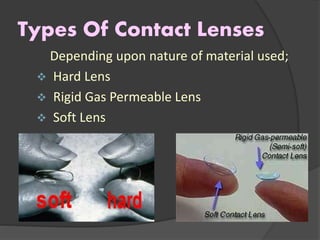
Types Of Contact Lenses
Depending upon nature of material used;
 Hard Lens
 Rigid Gas Permeable Lens
 Soft Lens
Hard Lens
 From PMMA (polymethylmethacrylate)
 High optical quality, stability, light weight,
nontoxic, durable & cheap
 Diameter of 8.5-10 mm
 Disadvantages: 1. Restricts the tolerance -
O2 impermeable
2. Corneal Abrasions
3. Stable tear film
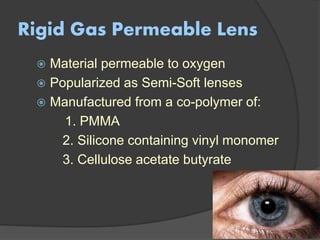
Rigid Gas Permeable Lens
 Material permeable to oxygen
 Popularized as Semi-Soft lenses
 Manufactured from a co-polymer of:
1. PMMA
2. Silicone containing vinyl monomer
3. Cellulose acetate butyrate
Soft Lens
 Material: HEMA
(hydroxymethymethacrylate)
 About 1-2 mm larger than
corneal diameter
 Advantages: 1. Comfortable
2. Well-tolerated
Soft Lens
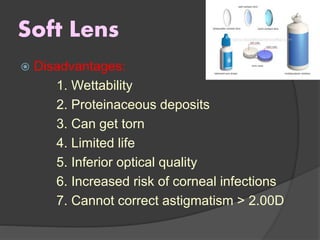
 Disadvantages:
1. Wettability
2. Proteinaceous deposits
3. Can get torn
4. Limited life
5. Inferior optical quality
6. Increased risk of corneal infections
7. Cannot correct astigmatism > 2.00D
Soft Lens
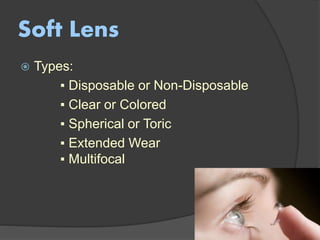
 Types:
▪ Disposable or Non-Disposable
▪ Clear or Colored
▪ Spherical or Toric
▪ Extended Wear
▪ Multifocal
Spherical Soft Lens
 A spherical contact lens is one in which
both the inner and outer optical surfaces
are portions of a sphere
 Corrects both short- and long-
sightedness
 Cheapest & most comfortable
 Easy to get in a disposable form
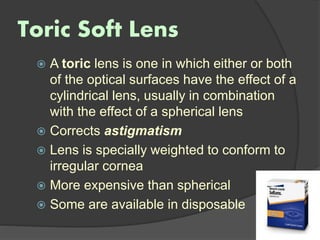
Toric Soft Lens
 A toric lens is one in which either or both
of the optical surfaces have the effect of a
cylindrical lens, usually in combination
with the effect of a spherical lens
 Corrects astigmatism
 Lens is specially weighted to conform to
irregular cornea
 More expensive than spherical
 Some are available in disposable
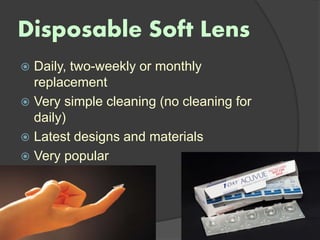
Disposable Soft Lens
 Daily, two-weekly or monthly
replacement
 Very simple cleaning (no cleaning for
daily)
 Latest designs and materials
 Very popular
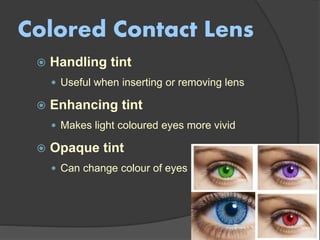
Colored Contact Lens
 Handling tint
 Useful when inserting or removing lens
 Enhancing tint
 Makes light coloured eyes more vivid
 Opaque tint
 Can change colour of eyes
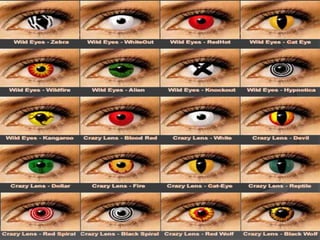
Colored Contact Lens
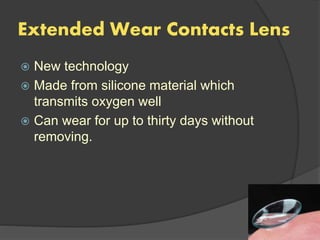
Extended Wear Contacts Lens
 New technology
 Made from silicone material which
transmits oxygen well
 Can wear for up to thirty days without
removing.
MultiFocal Contacts Lenses
 Can have dual focus lenses
 New technology → More expensive
 Available as disposable lenses
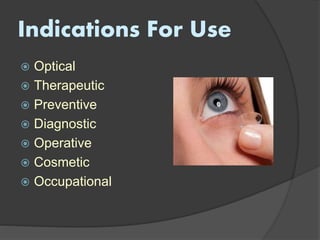
Indications For Use
 Optical
 Therapeutic
 Preventive
 Diagnostic
 Operative
 Cosmetic
 Occupational
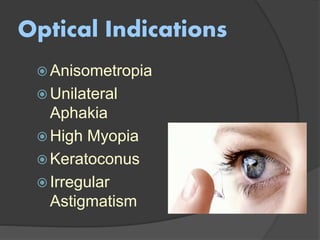
Optical Indications
 Anisometropia
 Unilateral
Aphakia
 High Myopia
 Keratoconus
 Irregular
Astigmatism
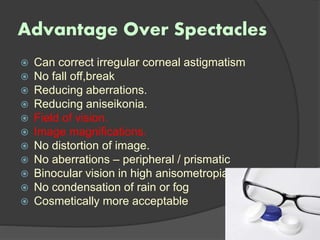
Advantage Over Spectacles
 Can correct irregular corneal astigmatism
 No fall off,break
 Reducing aberrations.
 Reducing aniseikonia.
 Field of vision.
 Image magnifications.
 No distortion of image.
 No aberrations – peripheral / prismatic
 Binocular vision in high anisometropia
 No condensation of rain or fog
 Cosmetically more acceptable
Disadvantages
 When the pupil is dilated rigid contact
lens may produce a halo.
 Eye strain in presbyopic myopes.
Therapeutic Indications
 Diseases of Cornea – Non-healing corneal
ulcers, filamentary keratitis and recurrent
corneal erosion syndrome.
 Diseases of Iris – Aniridia, coloboma and
albinism (avoid glare)
 Glaucoma (vehicle for drug delivery)
 Amblyopia (Opaque lens - Occlusion)
 Bandage Soft Contact Lenses –
Post-keratoplasty and microcorneal
perforation
Preventive Indications
 Prevention of symblepharon and
restoration of fornices in chemical burns
 Exposure keratitis
 Trichiasis
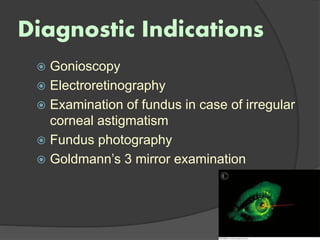
Diagnostic Indications
 Gonioscopy
 Electroretinography
 Examination of fundus in case of irregular
corneal astigmatism
 Fundus photography
 Goldmann’s 3 mirror examination
Operative Indications
 Goniotomy operation for congenital
glaucoma
 Vitrectomy
 Endocular photocoagulation
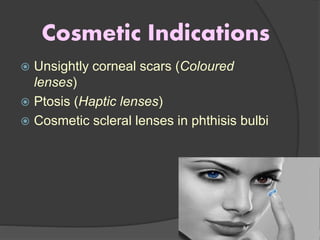
Cosmetic Indications
 Unsightly corneal scars (Coloured
lenses)
 Ptosis (Haptic lenses)
 Cosmetic scleral lenses in phthisis bulbi
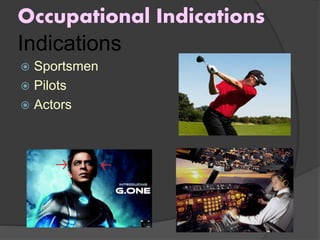
Occupational Indications
Indications
 Sportsmen
 Pilots
 Actors
Complications
Eyelid
Ptosis
Conjunctiva
Giant papillary conjunctivitis
Superior limbic keratoconjunctivitis
Cornea
Epithelium
Corneal abrasion
Corneal erosion
Contact lens acute red eye (CLARE)
Keratitis
Corneal ulcer
Corneal stroma
Corneal neovascularisation
Corneal oedema
Corneal infiltrates
Corneal endothelium
Endothelial polymegathism
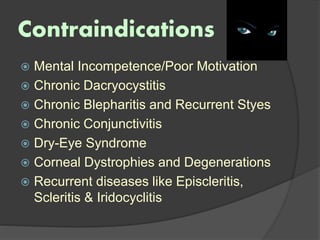
Contraindications
 Mental Incompetence/Poor Motivation
 Chronic Dacryocystitis
 Chronic Blepharitis and Recurrent Styes
 Chronic Conjunctivitis
 Dry-Eye Syndrome
 Corneal Dystrophies and Degenerations
 Recurrent diseases like Episcleritis,
Scleritis & Iridocyclitis
THANK YOU!

Contact lens -Dr Ferdous

  • 2.
    What Is AContact Lens ?  Artificial device whose front surface substitutes the anterior surface of cornea.  Used for correction of: 1. Refractive errors 2. Irregularities on anterior surface of cornea
  • 3.
    Contact Lens Specifications Diameter 1. Overall diameter [OD] - x mm 2. Optical zone diameter (OZ)
  • 4.
     Curves  Basecurve (BC) or posterior central curve (PCC)  Peripheral curves : 1. intermediate (IPC)  2. peripheral (PPC)  Central anterior curve (CAC) or front curve (FC)  Peripheral anterior curve (PAC)  Intermediate anterior curve (IAC) - Only in high power minus and plus lenses
  • 5.
    Edge  Polished andblended union of the Peripheral posterior curve & Peripheral Anterior curve of the lens Power  Central anterior curve curvature determines the power of the lens  Measured in terms of posterior vertex power.  Unit: Diopters [D]
  • 6.
    Thickness  Measured inthe centre of the lens  Varies depending upon the posterior vertex power of the lens Tint  Color of the lens
  • 7.
    Types Of ContactLenses Depending upon nature of material used;  Hard Lens  Rigid Gas Permeable Lens  Soft Lens
  • 8.
    Hard Lens  FromPMMA (polymethylmethacrylate)  High optical quality, stability, light weight, nontoxic, durable & cheap  Diameter of 8.5-10 mm  Disadvantages: 1. Restricts the tolerance - O2 impermeable 2. Corneal Abrasions 3. Stable tear film
  • 9.
    Rigid Gas PermeableLens  Material permeable to oxygen  Popularized as Semi-Soft lenses  Manufactured from a co-polymer of: 1. PMMA 2. Silicone containing vinyl monomer 3. Cellulose acetate butyrate
  • 10.
    Soft Lens  Material:HEMA (hydroxymethymethacrylate)  About 1-2 mm larger than corneal diameter  Advantages: 1. Comfortable 2. Well-tolerated
  • 11.
    Soft Lens  Disadvantages: 1.Wettability 2. Proteinaceous deposits 3. Can get torn 4. Limited life 5. Inferior optical quality 6. Increased risk of corneal infections 7. Cannot correct astigmatism > 2.00D
  • 12.
    Soft Lens  Types: ▪Disposable or Non-Disposable ▪ Clear or Colored ▪ Spherical or Toric ▪ Extended Wear ▪ Multifocal
  • 13.
    Spherical Soft Lens A spherical contact lens is one in which both the inner and outer optical surfaces are portions of a sphere  Corrects both short- and long- sightedness  Cheapest & most comfortable  Easy to get in a disposable form
  • 14.
    Toric Soft Lens A toric lens is one in which either or both of the optical surfaces have the effect of a cylindrical lens, usually in combination with the effect of a spherical lens  Corrects astigmatism  Lens is specially weighted to conform to irregular cornea  More expensive than spherical  Some are available in disposable
  • 15.
    Disposable Soft Lens Daily, two-weekly or monthly replacement  Very simple cleaning (no cleaning for daily)  Latest designs and materials  Very popular
  • 16.
    Colored Contact Lens Handling tint  Useful when inserting or removing lens  Enhancing tint  Makes light coloured eyes more vivid  Opaque tint  Can change colour of eyes
  • 17.
  • 18.
    Extended Wear ContactsLens  New technology  Made from silicone material which transmits oxygen well  Can wear for up to thirty days without removing.
  • 19.
    MultiFocal Contacts Lenses Can have dual focus lenses  New technology → More expensive  Available as disposable lenses
  • 20.
    Indications For Use Optical  Therapeutic  Preventive  Diagnostic  Operative  Cosmetic  Occupational
  • 21.
    Optical Indications  Anisometropia Unilateral Aphakia  High Myopia  Keratoconus  Irregular Astigmatism
  • 22.
    Advantage Over Spectacles Can correct irregular corneal astigmatism  No fall off,break  Reducing aberrations.  Reducing aniseikonia.  Field of vision.  Image magnifications.  No distortion of image.  No aberrations – peripheral / prismatic  Binocular vision in high anisometropia  No condensation of rain or fog  Cosmetically more acceptable
  • 23.
    Disadvantages  When thepupil is dilated rigid contact lens may produce a halo.  Eye strain in presbyopic myopes.
  • 24.
    Therapeutic Indications  Diseasesof Cornea – Non-healing corneal ulcers, filamentary keratitis and recurrent corneal erosion syndrome.  Diseases of Iris – Aniridia, coloboma and albinism (avoid glare)  Glaucoma (vehicle for drug delivery)  Amblyopia (Opaque lens - Occlusion)  Bandage Soft Contact Lenses – Post-keratoplasty and microcorneal perforation
  • 25.
    Preventive Indications  Preventionof symblepharon and restoration of fornices in chemical burns  Exposure keratitis  Trichiasis
  • 26.
    Diagnostic Indications  Gonioscopy Electroretinography  Examination of fundus in case of irregular corneal astigmatism  Fundus photography  Goldmann’s 3 mirror examination
  • 27.
    Operative Indications  Goniotomyoperation for congenital glaucoma  Vitrectomy  Endocular photocoagulation
  • 28.
    Cosmetic Indications  Unsightlycorneal scars (Coloured lenses)  Ptosis (Haptic lenses)  Cosmetic scleral lenses in phthisis bulbi
  • 29.
  • 30.
    Complications Eyelid Ptosis Conjunctiva Giant papillary conjunctivitis Superiorlimbic keratoconjunctivitis Cornea Epithelium Corneal abrasion Corneal erosion Contact lens acute red eye (CLARE) Keratitis Corneal ulcer Corneal stroma Corneal neovascularisation Corneal oedema Corneal infiltrates Corneal endothelium Endothelial polymegathism
  • 31.
    Contraindications  Mental Incompetence/PoorMotivation  Chronic Dacryocystitis  Chronic Blepharitis and Recurrent Styes  Chronic Conjunctivitis  Dry-Eye Syndrome  Corneal Dystrophies and Degenerations  Recurrent diseases like Episcleritis, Scleritis & Iridocyclitis
  • 32.