CONTACT LENS
BY DHAISY OPTOMETRIST
WHAT IS CONTACT LENS
 Artificial device whose front surface substitutes the
anterior surface of the cornea
 Used for correction of:
 Refractive error
 Irregularities on front surface of cornea
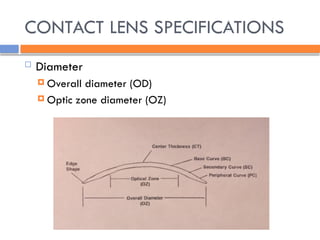
CONTACT LENS SPECIFICATIONS
 Diameter
 Overall diameter (OD)
 Optic zone diameter (OZ)
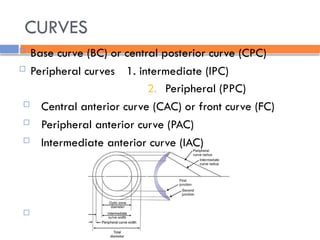
CURVES
 Base curve (BC) or central posterior curve (CPC)
 Peripheral curves 1. intermediate (IPC)
2. Peripheral (PPC)
 Central anterior curve (CAC) or front curve (FC)
 Peripheral anterior curve (PAC)
 Intermediate anterior curve (IAC)

 Edge
 Union of the peripheral posterior curve and peripheral
anterior curve
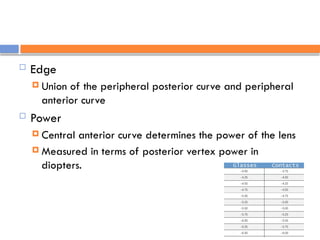
 Power
 Central anterior curve determines the power of the lens
 Measured in terms of posterior vertex power in
diopters.
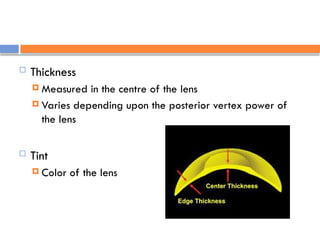
 Thickness
 Measured in the centre of the lens
 Varies depending upon the posterior vertex power of
the lens
 Tint
 Color of the lens
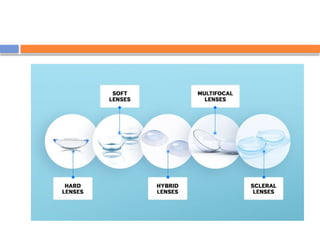
TYPES OF CONTACT LENS
 Hard Lens
 Rigid Gas Permeable Lens
 Soft Lens
 Hybrid lens (Central RGP with peripheral soft lens)
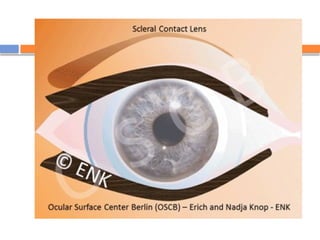
 Scleral lens
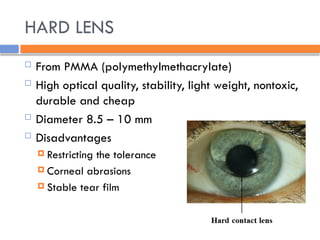
HARD LENS
 From PMMA (polymethylmethacrylate)
 High optical quality, stability, light weight, nontoxic,
durable and cheap
 Diameter 8.5 – 10 mm
 Disadvantages
 Restricting the tolerance
 Corneal abrasions
 Stable tear film
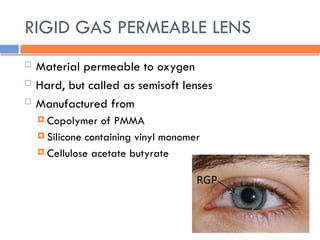
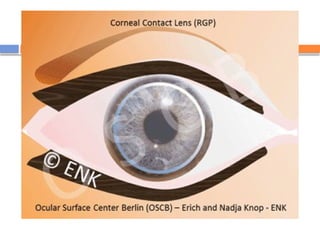
RIGID GAS PERMEABLE LENS
 Material permeable to oxygen
 Hard, but called as semisoft lenses
 Manufactured from
 Copolymer of PMMA
 Silicone containing vinyl monomer
 Cellulose acetate butyrate
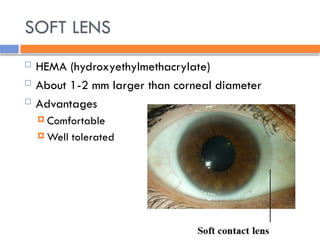
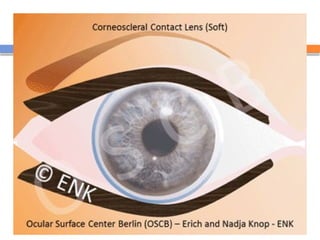
SOFT LENS
 HEMA (hydroxyethylmethacrylate)
 About 1-2 mm larger than corneal diameter
 Advantages
 Comfortable
 Well tolerated
SOFT LENS
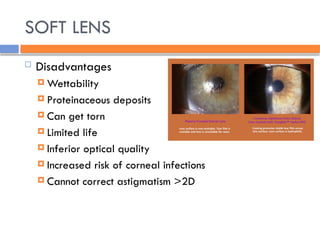
 Disadvantages
 Wettability
 Proteinaceous deposits
 Can get torn
 Limited life
 Inferior optical quality
 Increased risk of corneal infections
 Cannot correct astigmatism >2D
SOFT LENS
 Types
 Disposable or non-disposable
 Clear or colored
 Spherical or toric
 Extended wear
 Multifocal
SPHERICAL SOFT LENS
 A spherical contact lens is one in which both the
inner and outer optical surfaces are portions of a
sphere
 Corrects both short- and long –sightedness
 Cheapest & most comfortable
 Easy to get in a disposable form
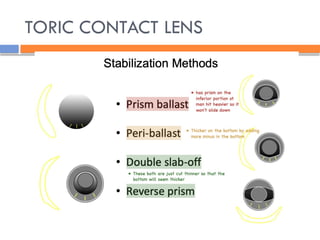
TORIC SOFT LENS
 A toric lens is one in which either or both of the
optical surfaces have the effect of a cylindrical lens
usually in combination with the effects of a spherical
lens.
 Corrects astigmatism
 Lens is specially weighted to conform to irregular
cornea
 More expensive than spherical
 Some are available in disposable
TORIC CONTACT LENS
DISPOSABLE SOFT LENS
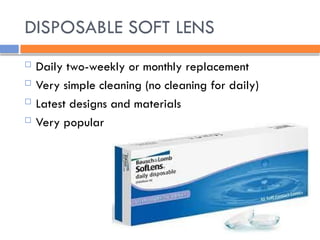
 Daily two-weekly or monthly replacement
 Very simple cleaning (no cleaning for daily)
 Latest designs and materials
 Very popular
COLORED CONTACT LENS
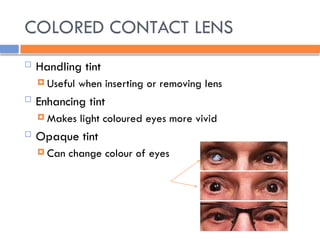
 Handling tint
 Useful when inserting or removing lens
 Enhancing tint
 Makes light coloured eyes more vivid
 Opaque tint
 Can change colour of eyes
EXTENDED WEAR CONTACT LENS
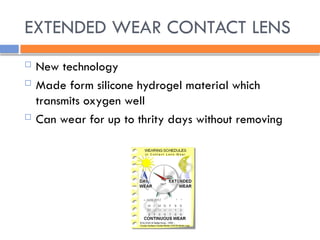
 New technology
 Made form silicone hydrogel material which
transmits oxygen well
 Can wear for up to thrity days without removing
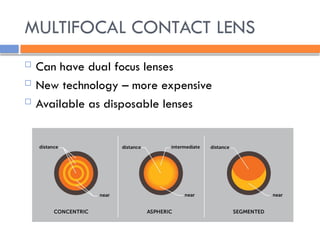
MULTIFOCAL CONTACT LENS
 Can have dual focus lenses
 New technology – more expensive
 Available as disposable lenses
INDICATIONS
 Optical
 Therapeutic
 Preventive
 Diagnostic
 Operative
 Cometic
 occupational
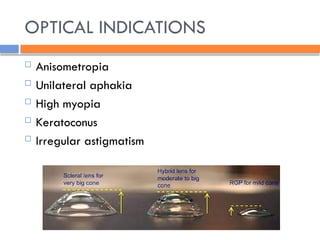
OPTICAL INDICATIONS
 Anisometropia
 Unilateral aphakia
 High myopia
 Keratoconus
 Irregular astigmatism
ADVANTAGES OVER SPECTACLE
 Can correct irregular astigmatism
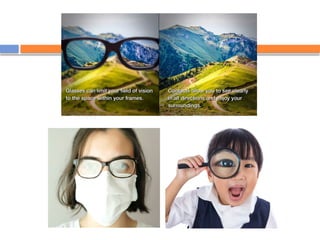
 Normal field of vision
 No aberrations binocular vision in high
anisometropia
 No condensation of rain or fog
 Cosmetically more acceptable
THERAPEUTIC INDICATIONS
 Diseases of Cornea (thinning and perforation)
 Diseases of Iris (aniridia)
 Glaucoma – drug delivery
 Amblyopia
 Bandage soft contact lenses
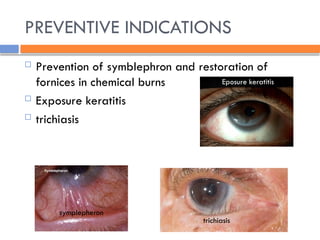
PREVENTIVE INDICATIONS
 Prevention of symblephron and restoration of
fornices in chemical burns
 Exposure keratitis
 trichiasis
Eposure keratitis
symplepheron
trichiasis
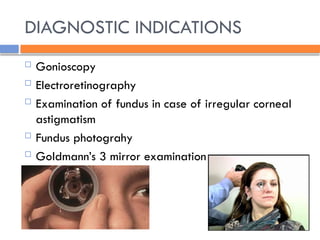
DIAGNOSTIC INDICATIONS
 Gonioscopy
 Electroretinography
 Examination of fundus in case of irregular corneal
astigmatism
 Fundus photograhy
 Goldmann’s 3 mirror examination
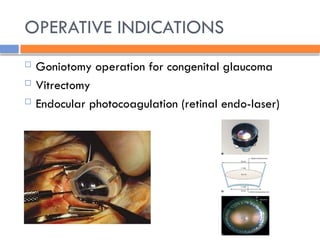
OPERATIVE INDICATIONS
 Goniotomy operation for congenital glaucoma
 Vitrectomy
 Endocular photocoagulation (retinal endo-laser)
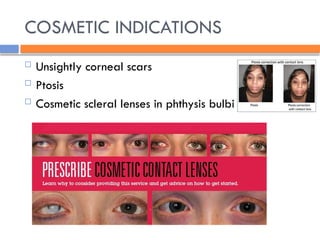
COSMETIC INDICATIONS
 Unsightly corneal scars
 Ptosis
 Cosmetic scleral lenses in phthysis bulbi
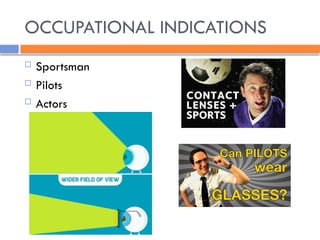
OCCUPATIONAL INDICATIONS
 Sportsman
 Pilots
 Actors
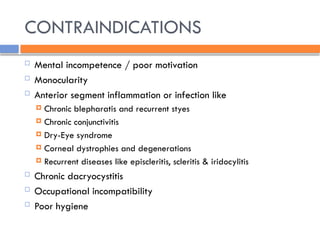
CONTRAINDICATIONS
 Mental incompetence / poor motivation
 Monocularity
 Anterior segment inflammation or infection like
 Chronic blepharatis and recurrent styes
 Chronic conjunctivitis
 Dry-Eye syndrome
 Corneal dystrophies and degenerations
 Recurrent diseases like episcleritis, scleritis & iridocylitis
 Chronic dacryocystitis
 Occupational incompatibility
 Poor hygiene
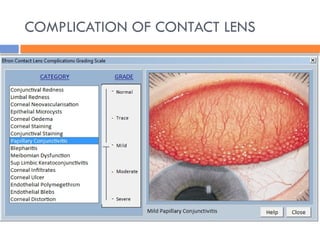
COMPLICATION OF CONTACT LENS
contact lens types, indication and complication .pptx

contact lens types, indication and complication .pptx

  • 1.
  • 2.
    WHAT IS CONTACTLENS  Artificial device whose front surface substitutes the anterior surface of the cornea  Used for correction of:  Refractive error  Irregularities on front surface of cornea
  • 3.
    CONTACT LENS SPECIFICATIONS Diameter  Overall diameter (OD)  Optic zone diameter (OZ)
  • 4.
    CURVES  Base curve(BC) or central posterior curve (CPC)  Peripheral curves 1. intermediate (IPC) 2. Peripheral (PPC)  Central anterior curve (CAC) or front curve (FC)  Peripheral anterior curve (PAC)  Intermediate anterior curve (IAC) 
  • 5.
     Edge  Unionof the peripheral posterior curve and peripheral anterior curve  Power  Central anterior curve determines the power of the lens  Measured in terms of posterior vertex power in diopters.
  • 6.
     Thickness  Measuredin the centre of the lens  Varies depending upon the posterior vertex power of the lens  Tint  Color of the lens
  • 7.
    TYPES OF CONTACTLENS  Hard Lens  Rigid Gas Permeable Lens  Soft Lens  Hybrid lens (Central RGP with peripheral soft lens)  Scleral lens
  • 10.
    HARD LENS  FromPMMA (polymethylmethacrylate)  High optical quality, stability, light weight, nontoxic, durable and cheap  Diameter 8.5 – 10 mm  Disadvantages  Restricting the tolerance  Corneal abrasions  Stable tear film
  • 11.
    RIGID GAS PERMEABLELENS  Material permeable to oxygen  Hard, but called as semisoft lenses  Manufactured from  Copolymer of PMMA  Silicone containing vinyl monomer  Cellulose acetate butyrate
  • 13.
    SOFT LENS  HEMA(hydroxyethylmethacrylate)  About 1-2 mm larger than corneal diameter  Advantages  Comfortable  Well tolerated
  • 15.
    SOFT LENS  Disadvantages Wettability  Proteinaceous deposits  Can get torn  Limited life  Inferior optical quality  Increased risk of corneal infections  Cannot correct astigmatism >2D
  • 16.
    SOFT LENS  Types Disposable or non-disposable  Clear or colored  Spherical or toric  Extended wear  Multifocal
  • 17.
    SPHERICAL SOFT LENS A spherical contact lens is one in which both the inner and outer optical surfaces are portions of a sphere  Corrects both short- and long –sightedness  Cheapest & most comfortable  Easy to get in a disposable form
  • 18.
    TORIC SOFT LENS A toric lens is one in which either or both of the optical surfaces have the effect of a cylindrical lens usually in combination with the effects of a spherical lens.  Corrects astigmatism  Lens is specially weighted to conform to irregular cornea  More expensive than spherical  Some are available in disposable
  • 19.
  • 20.
    DISPOSABLE SOFT LENS Daily two-weekly or monthly replacement  Very simple cleaning (no cleaning for daily)  Latest designs and materials  Very popular
  • 21.
    COLORED CONTACT LENS Handling tint  Useful when inserting or removing lens  Enhancing tint  Makes light coloured eyes more vivid  Opaque tint  Can change colour of eyes
  • 22.
    EXTENDED WEAR CONTACTLENS  New technology  Made form silicone hydrogel material which transmits oxygen well  Can wear for up to thrity days without removing
  • 23.
    MULTIFOCAL CONTACT LENS Can have dual focus lenses  New technology – more expensive  Available as disposable lenses
  • 24.
    INDICATIONS  Optical  Therapeutic Preventive  Diagnostic  Operative  Cometic  occupational
  • 25.
    OPTICAL INDICATIONS  Anisometropia Unilateral aphakia  High myopia  Keratoconus  Irregular astigmatism
  • 26.
    ADVANTAGES OVER SPECTACLE Can correct irregular astigmatism  Normal field of vision  No aberrations binocular vision in high anisometropia  No condensation of rain or fog  Cosmetically more acceptable
  • 28.
    THERAPEUTIC INDICATIONS  Diseasesof Cornea (thinning and perforation)  Diseases of Iris (aniridia)  Glaucoma – drug delivery  Amblyopia  Bandage soft contact lenses
  • 29.
    PREVENTIVE INDICATIONS  Preventionof symblephron and restoration of fornices in chemical burns  Exposure keratitis  trichiasis Eposure keratitis symplepheron trichiasis
  • 30.
    DIAGNOSTIC INDICATIONS  Gonioscopy Electroretinography  Examination of fundus in case of irregular corneal astigmatism  Fundus photograhy  Goldmann’s 3 mirror examination
  • 31.
    OPERATIVE INDICATIONS  Goniotomyoperation for congenital glaucoma  Vitrectomy  Endocular photocoagulation (retinal endo-laser)
  • 32.
    COSMETIC INDICATIONS  Unsightlycorneal scars  Ptosis  Cosmetic scleral lenses in phthysis bulbi
  • 33.
  • 34.
    CONTRAINDICATIONS  Mental incompetence/ poor motivation  Monocularity  Anterior segment inflammation or infection like  Chronic blepharatis and recurrent styes  Chronic conjunctivitis  Dry-Eye syndrome  Corneal dystrophies and degenerations  Recurrent diseases like episcleritis, scleritis & iridocylitis  Chronic dacryocystitis  Occupational incompatibility  Poor hygiene

  • 35.