Download as PDF, PPTX

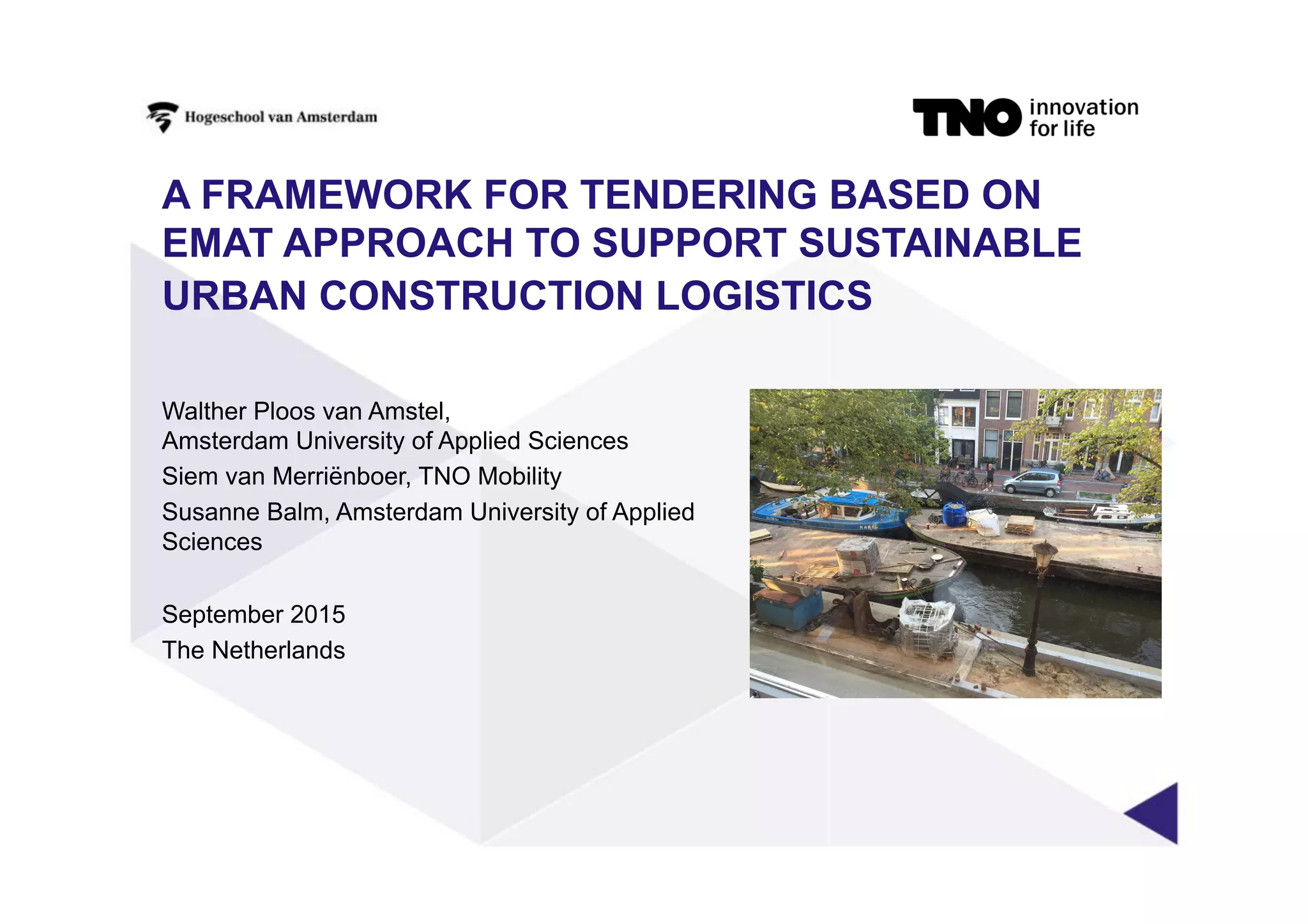
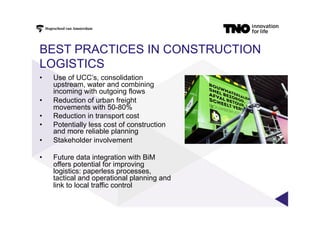
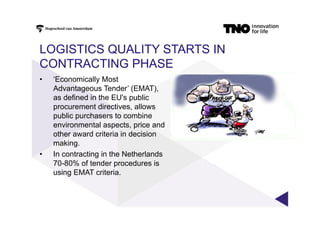
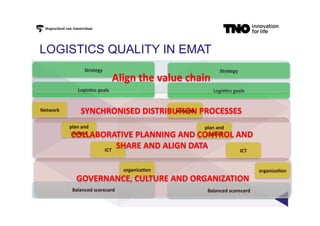
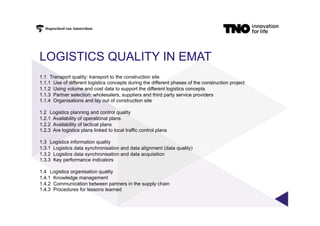
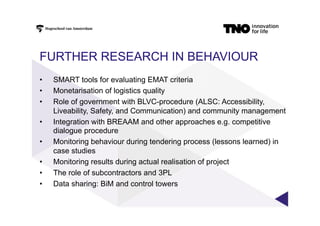

The document discusses a framework for enhancing sustainable urban construction logistics through the 'economically most advantageous tender' (emat) approach, highlighting the need for efficient and environmentally responsible procurement in construction projects. It emphasizes stakeholder involvement, data integration, and best practices to minimize urban freight movements and reduce costs associated with construction logistics. The authors suggest further research into the behavioral aspects of tendering processes and the role of various logistics and planning strategies in improving overall construction logistics quality.


