SUPPLY CHAIN
INFRASTRUCTURE –PROSPECTS
    AND CHALLENGES IN
 RECESSION HIT ECONOMY


                 Presented by:-
                 Rajeev Kumar
      Research Scholar, MBA ( FMS BHU)
                   JRF-UGC
Introduction


                Recession & it’s Impact


          Role of Supply Chain Infrastructure


  Components of Supply Chain Infrastructure System


Prospects and Challenges of Supply Chain Infrastructure


         Future Prospects & Challenges ahead


    Supply Chain Network Infrastructure Planning


                         2
Introduction

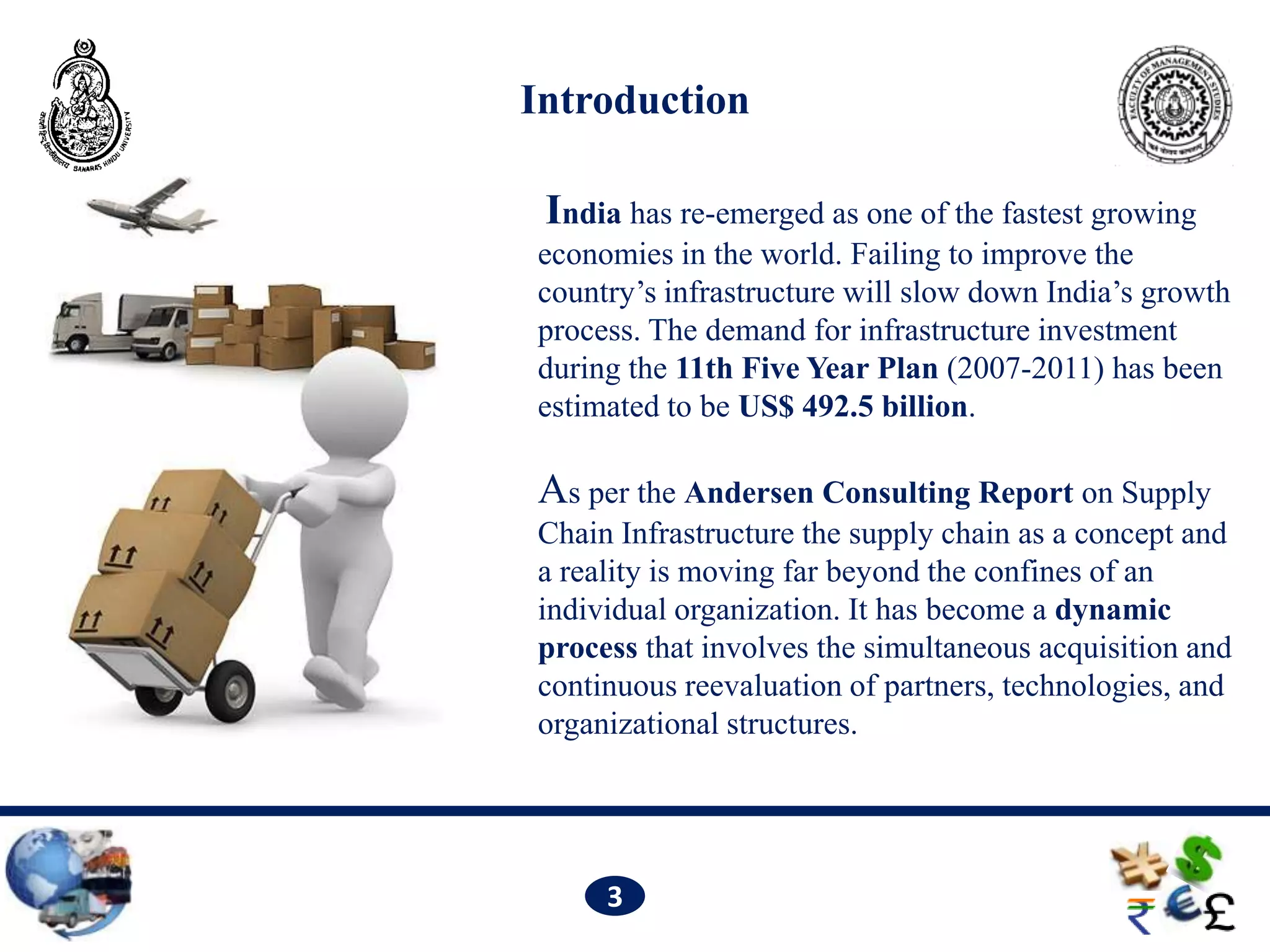
 India has re-emerged as one of the fastest growing
economies in the world. Failing to improve the
country’s infrastructure will slow down India’s growth
process. The demand for infrastructure investment
during the 11th Five Year Plan (2007-2011) has been
estimated to be US$ 492.5 billion.

As per the Andersen Consulting Report on Supply
Chain Infrastructure the supply chain as a concept and
a reality is moving far beyond the confines of an
individual organization. It has become a dynamic
process that involves the simultaneous acquisition and
continuous reevaluation of partners, technologies, and
organizational structures.


     3
What is recession ?

In the United States, the Business Cycle Dating Committee of the National
Bureau of Economic Research (NBER) is generally seen as the authority for
dating US recessions. The NBER defines an economic recession as: "a
significant decline in economic activity spread across the economy, lasting
more than a few months, normally visible in real GDP, real income,
employment, industrial production and wholesale-retail sales."
A recession has many attributes that can occur simultaneously and
includes declines in component measures of economic activity (GDP) such
as consumption, investment, governments’ spending and net export
activity.
Economist Richard C. Koo (2009) wrote that under ideal conditions, a
country's economy should have the household sector as net savers & the
corporate sector as net borrowers, with the government budget nearly
balanced & net exports near zero.


                                           4
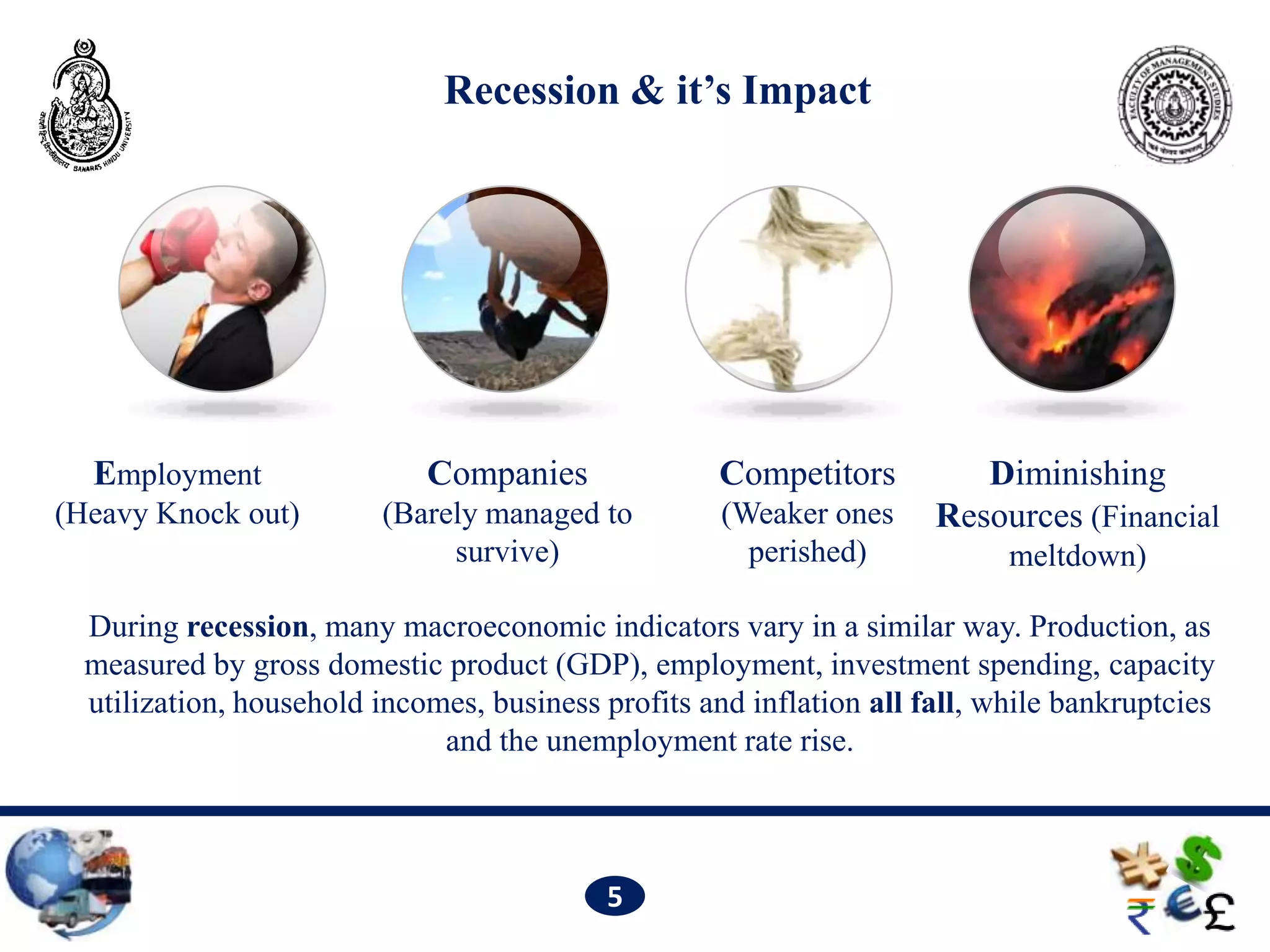
Recession & it’s Impact


  Employment                 Companies               Competitors         Diminishing
(Heavy Knock out)        (Barely managed to          (Weaker ones     Resources (Financial
                              survive)                 perished)            meltdown)

  During recession, many macroeconomic indicators vary in a similar way. Production, as
  measured by gross domestic product (GDP), employment, investment spending, capacity
  utilization, household incomes, business profits and inflation all fall, while bankruptcies
                              and the unemployment rate rise.


                                            5
Infrastructure Development in India

        Indian government’s first priority is rising to the challenge of maintaining and
        managing high growth through investment in infrastructure sector.

        Physical infrastructure covering transportation, power and communication
        through its backward and forward linkages facilitates growth; social
        infrastructure including water supply, sanitation, sewage disposal, education
        and health, which are in the nature of primary services, has a direct impact on
        the quality of life.
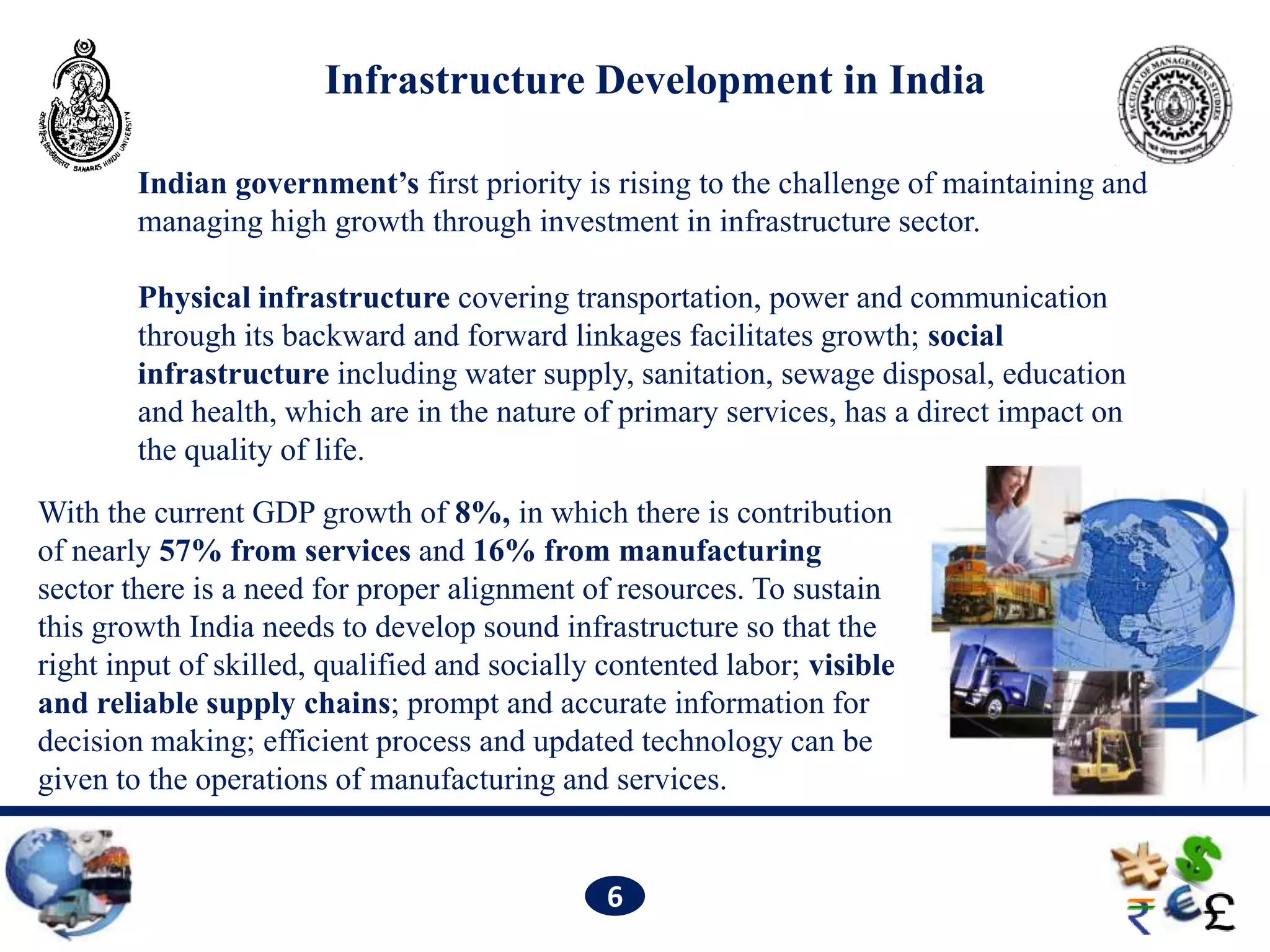
With the current GDP growth of 8%, in which there is contribution
of nearly 57% from services and 16% from manufacturing
sector there is a need for proper alignment of resources. To sustain
this growth India needs to develop sound infrastructure so that the
right input of skilled, qualified and socially contented labor; visible
and reliable supply chains; prompt and accurate information for
decision making; efficient process and updated technology can be
given to the operations of manufacturing and services.


                                               6
Role of Supply Chain Infrastructure

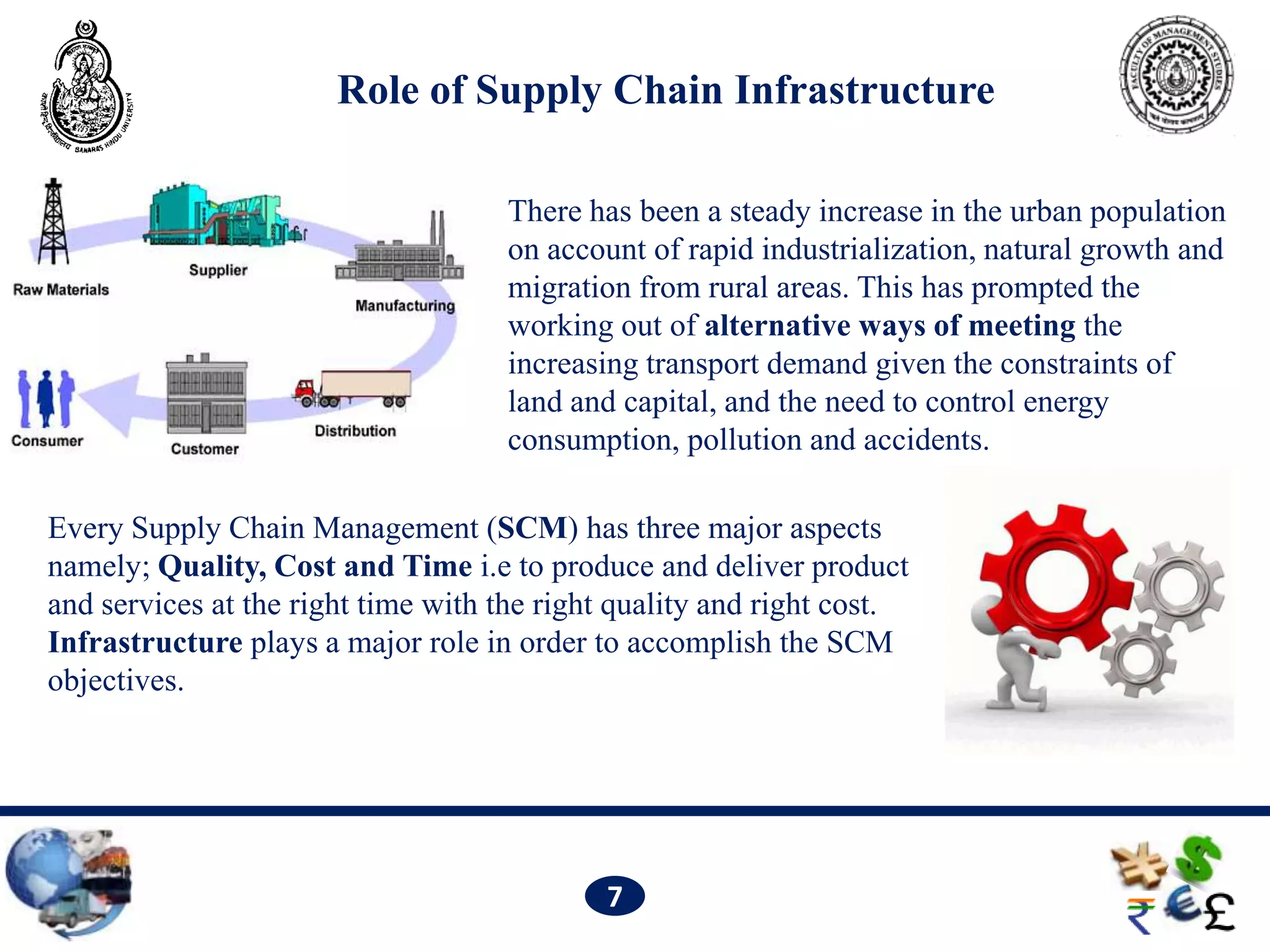
                                    There has been a steady increase in the urban population
                                    on account of rapid industrialization, natural growth and
                                    migration from rural areas. This has prompted the
                                    working out of alternative ways of meeting the
                                    increasing transport demand given the constraints of
                                    land and capital, and the need to control energy
                                    consumption, pollution and accidents.

Every Supply Chain Management (SCM) has three major aspects
namely; Quality, Cost and Time i.e to produce and deliver product
and services at the right time with the right quality and right cost.
Infrastructure plays a major role in order to accomplish the SCM
objectives.


                                            7
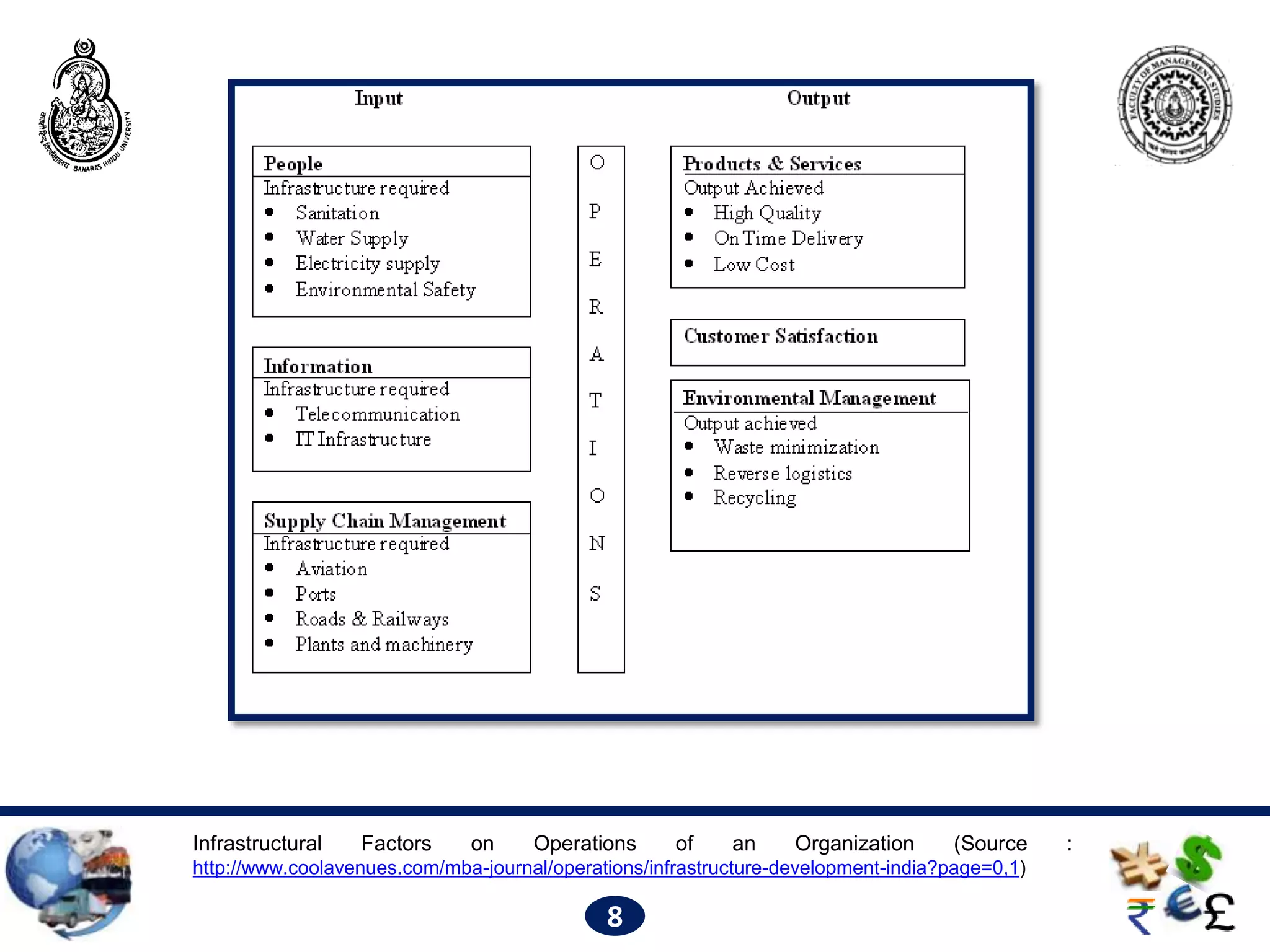
Infrastructural   Factors     on     Operations      of    an     Organization      (Source    :
http://www.coolavenues.com/mba-journal/operations/infrastructure-development-india?page=0,1)

                                             8
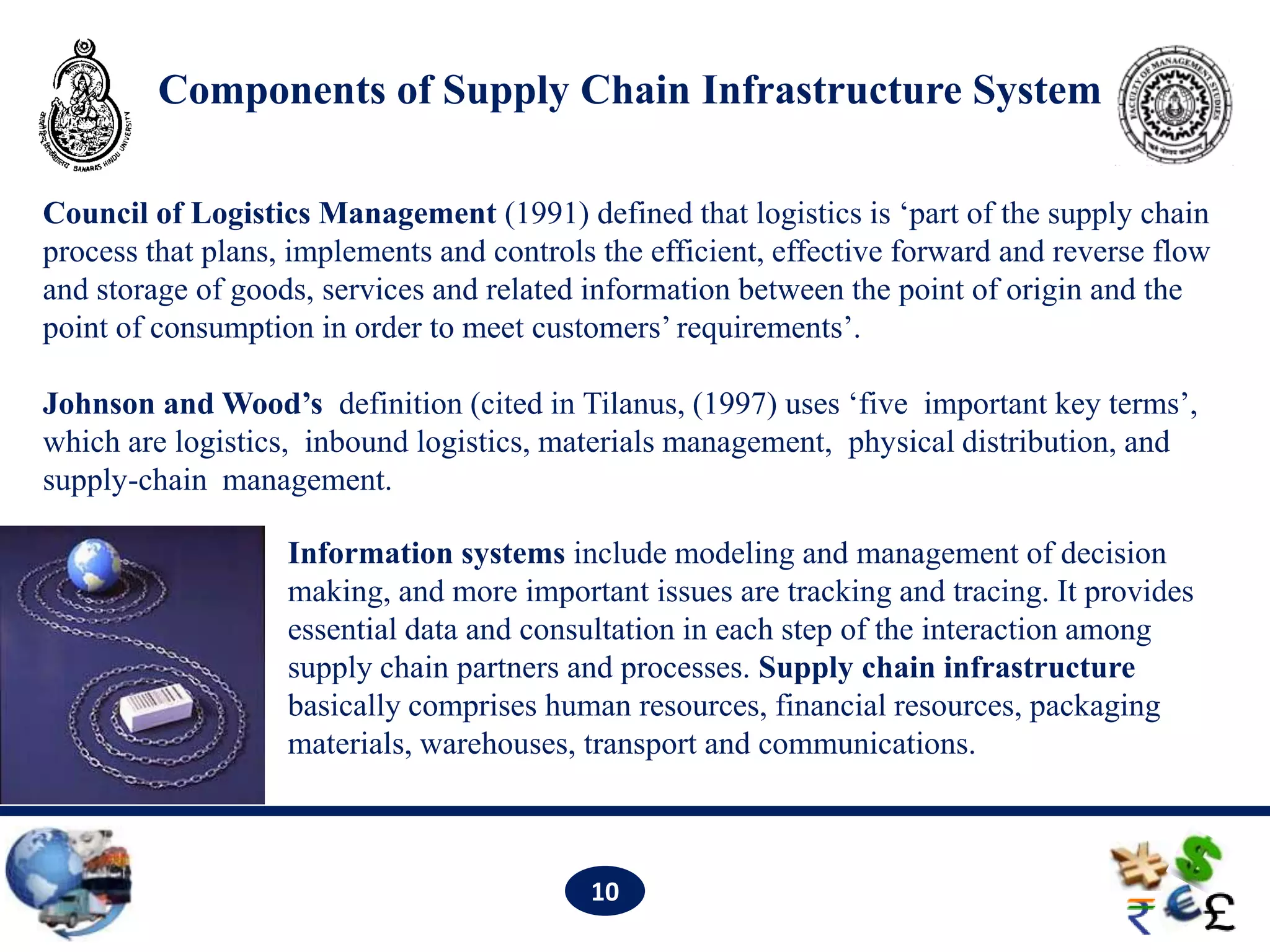
The figure shown depicts the influence of various infrastructural
factors on operations of an organization or a project. The output of
the well managed operations creates better services and products
which are the assets of any country.
Infrastructural development in a country helps to run the
operations of any company efficiently and effectively. Since cost is
a reality and price is a possibility and due to high competition
price is decided by the market forces, the controlling of cost is
very imperative and is within the scope of a organizations’ SCM
practices.
                   Customer demands for better services, growing dominance of
                   technology, the view of the individual enterprise as just one component of
                   the total value system, the increase in interconnectedness and globalization
                   of business and economics and the widening range of stakeholders to be
                   satisfied are all factors contributing to the substantial supply chain
                   challenges.


                                            9
Components of Supply Chain Infrastructure System

Council of Logistics Management (1991) defined that logistics is ‘part of the supply chain
process that plans, implements and controls the efficient, effective forward and reverse flow
and storage of goods, services and related information between the point of origin and the
point of consumption in order to meet customers’ requirements’.

Johnson and Wood’s definition (cited in Tilanus, (1997) uses ‘five important key terms’,
which are logistics, inbound logistics, materials management, physical distribution, and
supply-chain management.

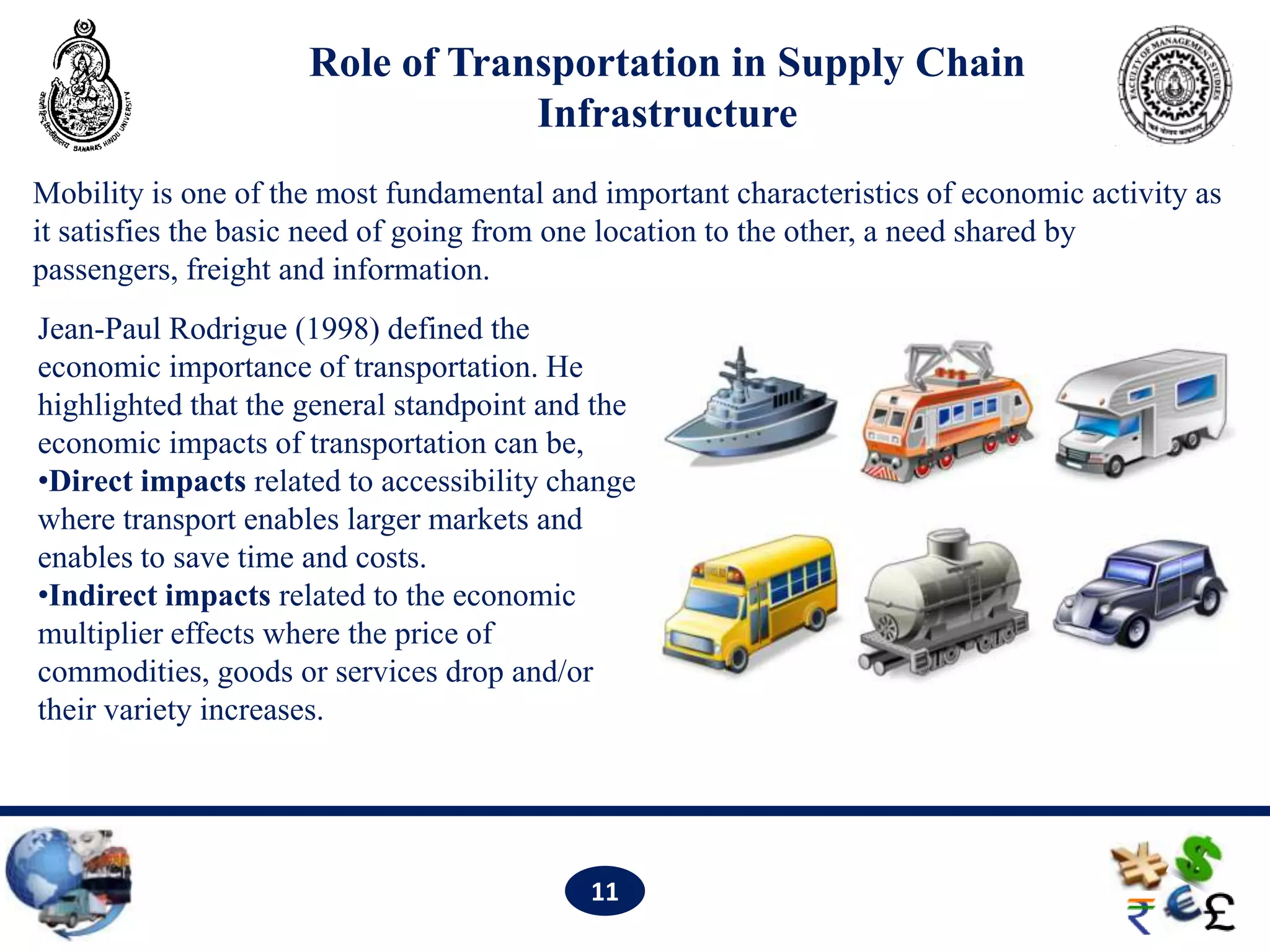
                   Information systems include modeling and management of decision
                   making, and more important issues are tracking and tracing. It provides
                   essential data and consultation in each step of the interaction among
                   supply chain partners and processes. Supply chain infrastructure
                   basically comprises human resources, financial resources, packaging
                   materials, warehouses, transport and communications.


                                           10
Role of Transportation in Supply Chain
                                 Infrastructure
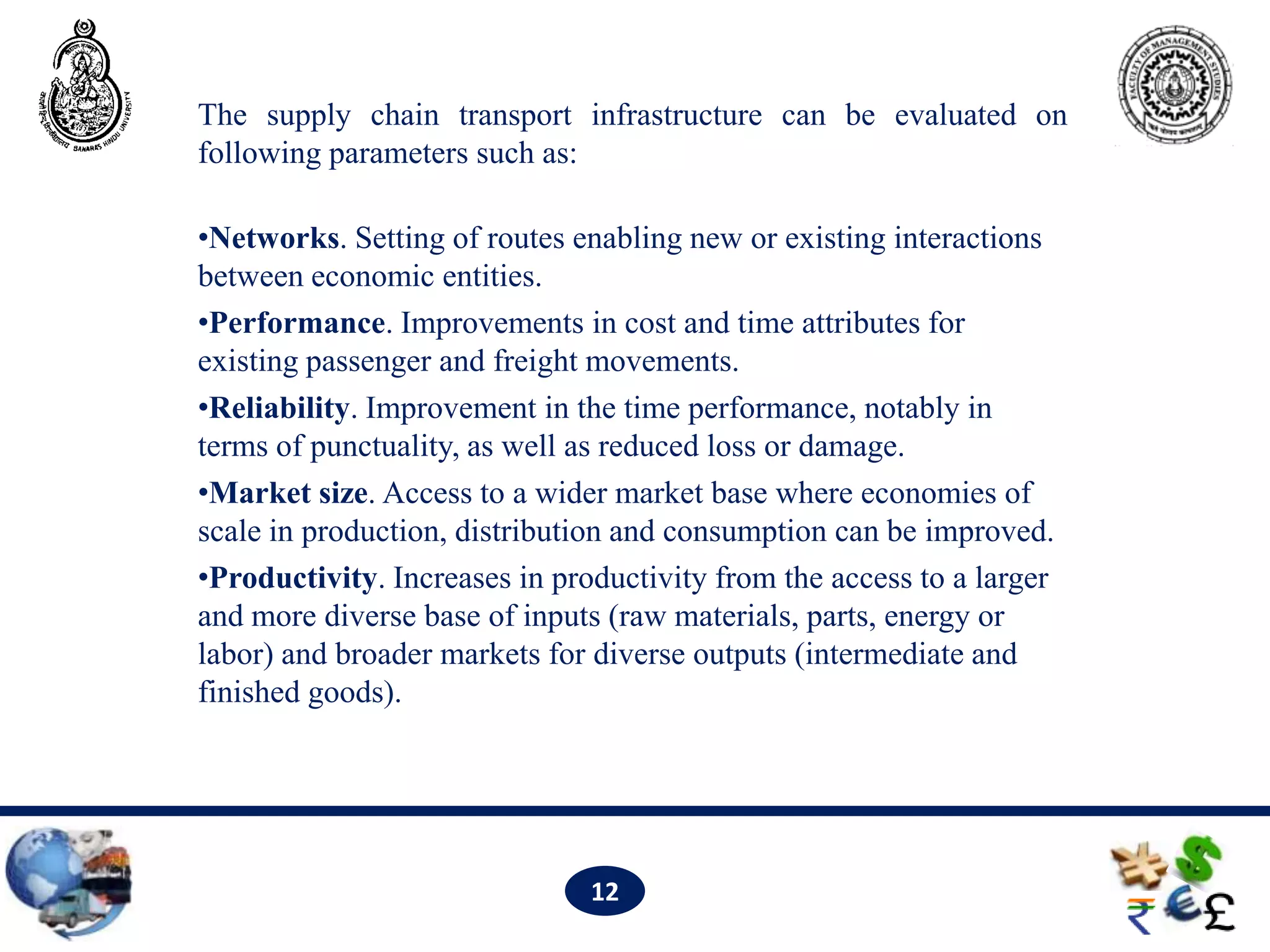
Mobility is one of the most fundamental and important characteristics of economic activity as
it satisfies the basic need of going from one location to the other, a need shared by
passengers, freight and information.
Jean-Paul Rodrigue (1998) defined the
economic importance of transportation. He
highlighted that the general standpoint and the
economic impacts of transportation can be,
•Direct impacts related to accessibility change
where transport enables larger markets and
enables to save time and costs.
•Indirect impacts related to the economic
multiplier effects where the price of
commodities, goods or services drop and/or
their variety increases.


                                           11
The supply chain transport infrastructure can be evaluated on
following parameters such as:

•Networks. Setting of routes enabling new or existing interactions
between economic entities.
•Performance. Improvements in cost and time attributes for
existing passenger and freight movements.
•Reliability. Improvement in the time performance, notably in
terms of punctuality, as well as reduced loss or damage.
•Market size. Access to a wider market base where economies of
scale in production, distribution and consumption can be improved.
•Productivity. Increases in productivity from the access to a larger
and more diverse base of inputs (raw materials, parts, energy or
labor) and broader markets for diverse outputs (intermediate and
finished goods).


                               12
The major impacts of transport on economic processes can be categorized as
follows:
Geographic specialization: Improvements in transportation and
communication favor a process of geographical specialization that increases
productivity and spatial interactions.
Large scale production: An efficient transport system offering cost, time and
reliability advantages permits goods to be transported over longer distances.
This facilitates mass production through economies of scale because larger
markets can be accessed.
Increased competition: When transport is efficient, the potential market for a
given product (or service) increases and so does competition. A wider array of
goods and services becomes available to consumers through competition
which tends to reduce costs and promote quality and innovation.
Increased land value: Land which is adjacent or serviced by good transport
services generally has greater value due to the utility it confers to many
activities. In some cases, the opposite can be true if related to residential
activities.


                                   13
Role of Warehousing in Supply Chain
                                Infrastructure
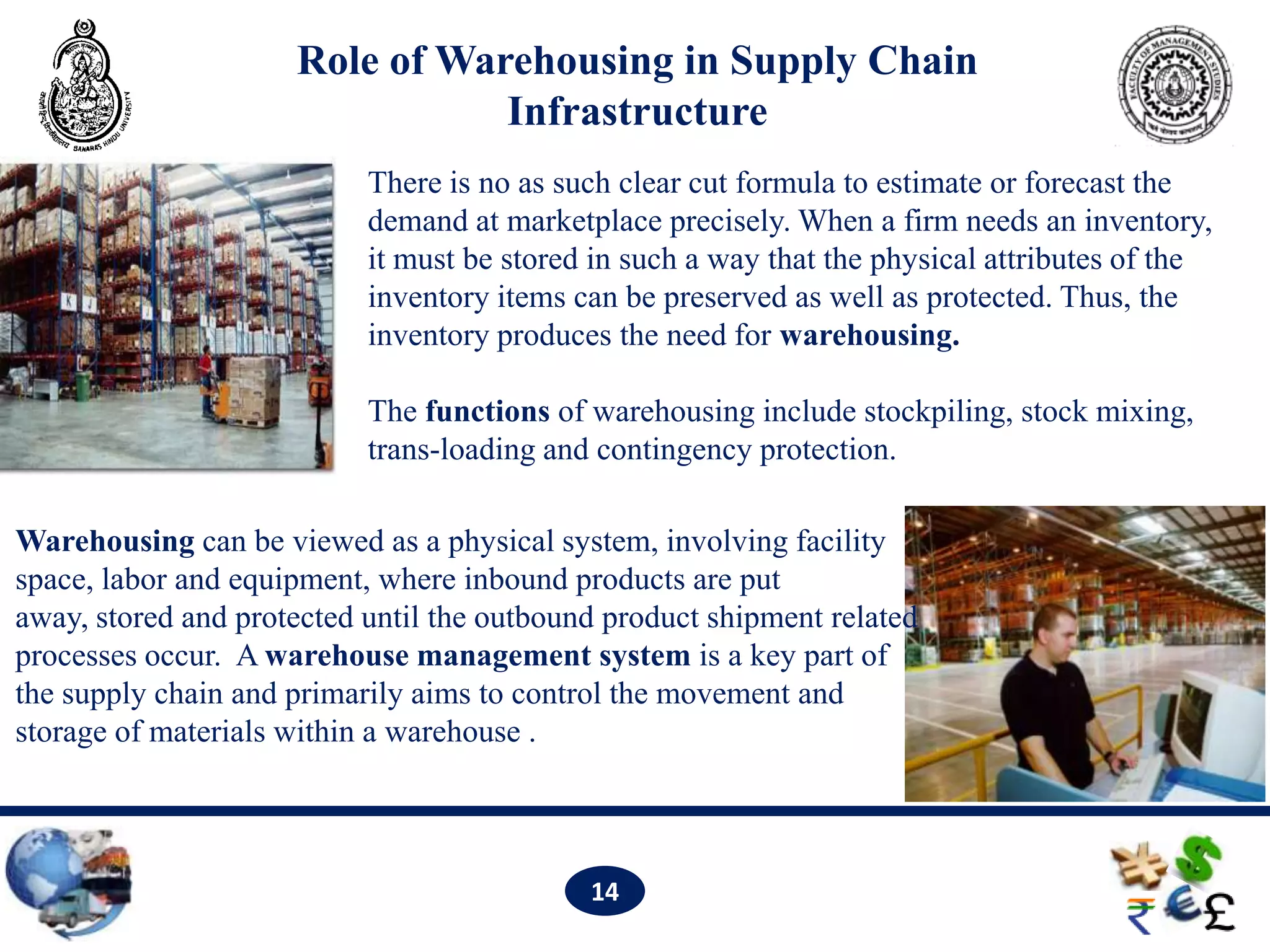
                           There is no as such clear cut formula to estimate or forecast the
                           demand at marketplace precisely. When a firm needs an inventory,
                           it must be stored in such a way that the physical attributes of the
                           inventory items can be preserved as well as protected. Thus, the
                           inventory produces the need for warehousing.

                           The functions of warehousing include stockpiling, stock mixing,
                           trans-loading and contingency protection.

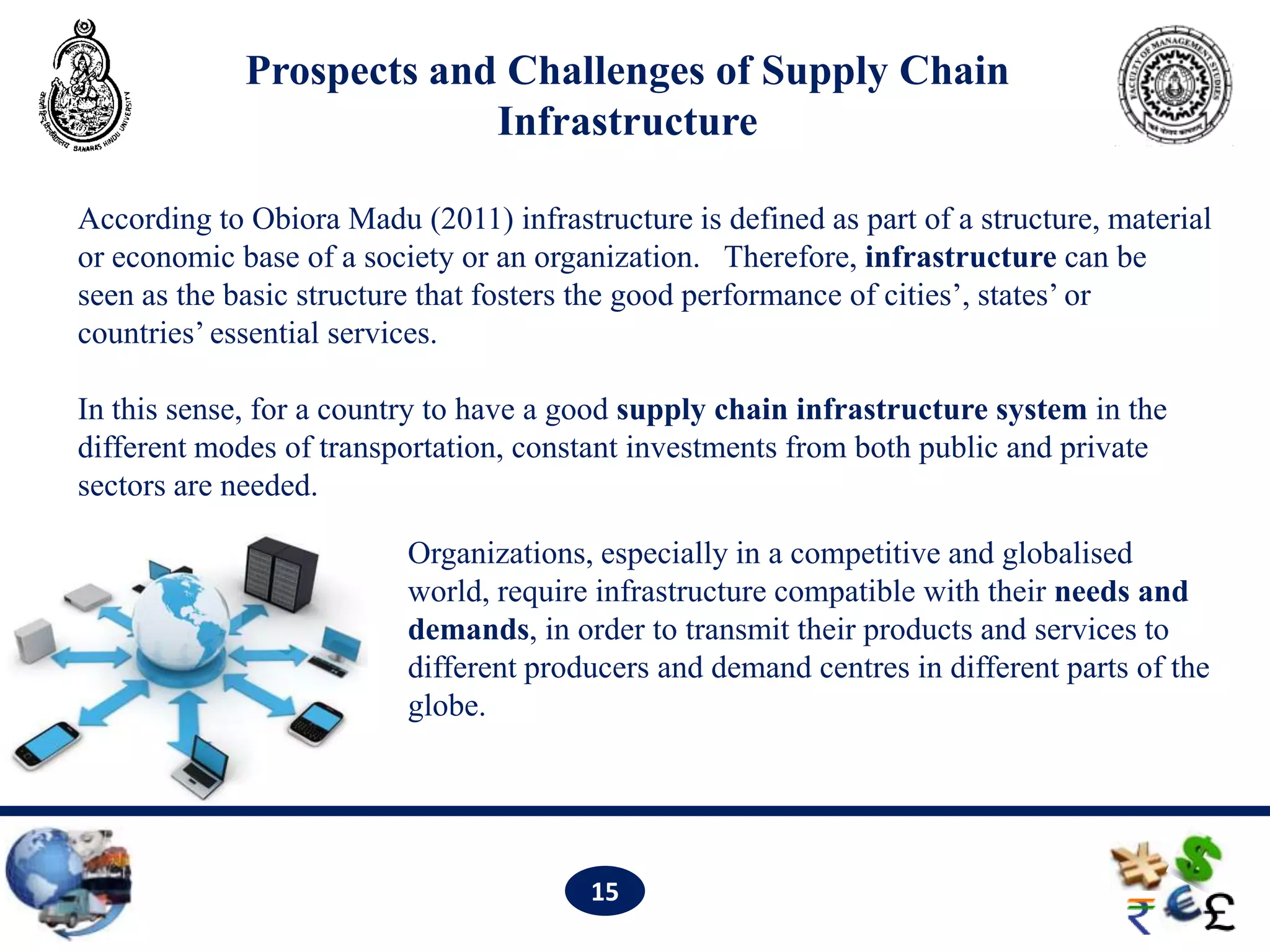
Warehousing can be viewed as a physical system, involving facility
space, labor and equipment, where inbound products are put
away, stored and protected until the outbound product shipment related
processes occur. A warehouse management system is a key part of
the supply chain and primarily aims to control the movement and
storage of materials within a warehouse .


                                            14
Prospects and Challenges of Supply Chain
                          Infrastructure

According to Obiora Madu (2011) infrastructure is defined as part of a structure, material
or economic base of a society or an organization. Therefore, infrastructure can be
seen as the basic structure that fosters the good performance of cities’, states’ or
countries’ essential services.

In this sense, for a country to have a good supply chain infrastructure system in the
different modes of transportation, constant investments from both public and private
sectors are needed.

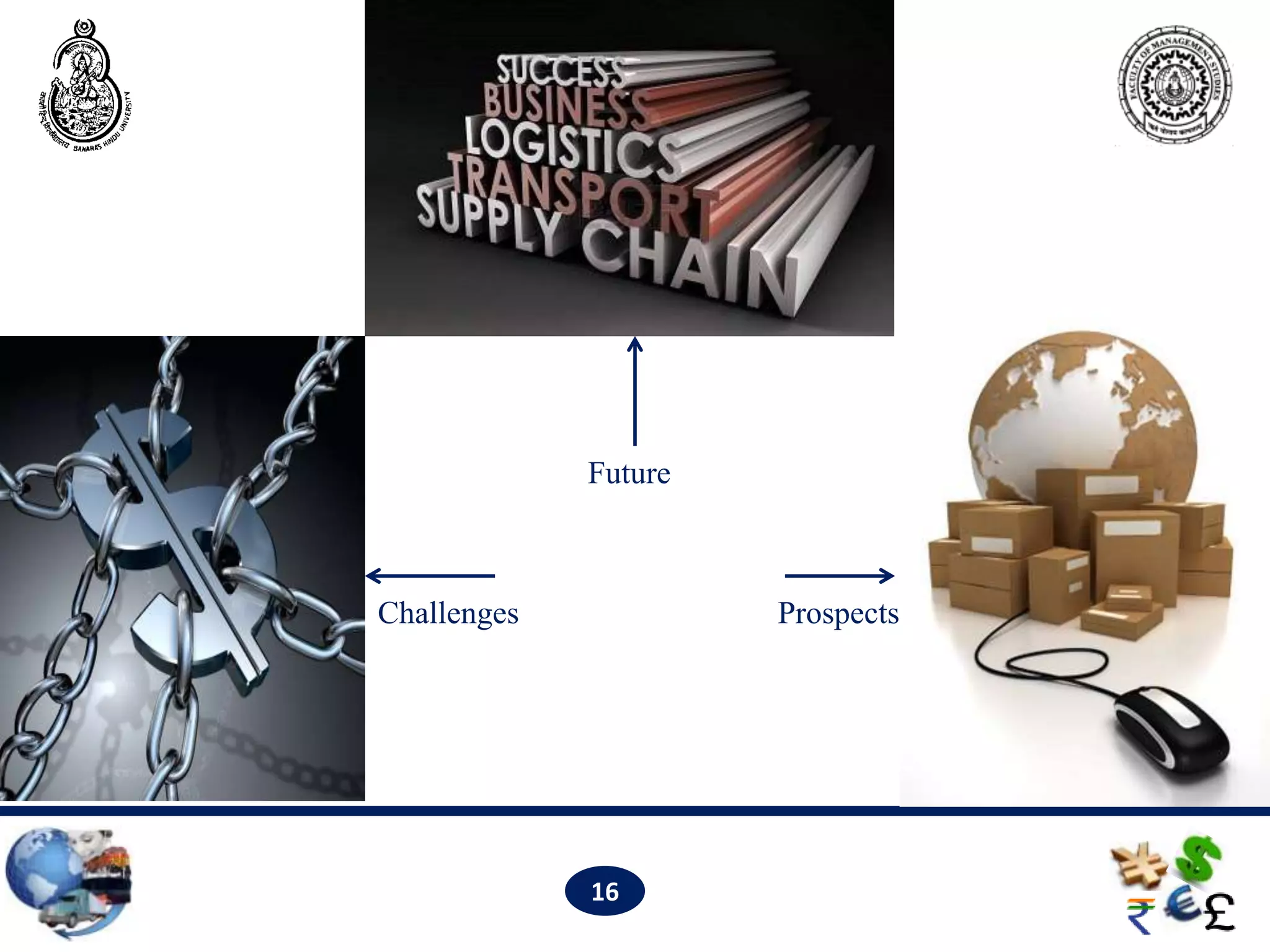
                          Organizations, especially in a competitive and globalised
                          world, require infrastructure compatible with their needs and
                          demands, in order to transmit their products and services to
                          different producers and demand centres in different parts of the
                          globe.


                                        15
Future


Challenges            Prospects


             16
The major opportunities are highlighted below by Obiora Madu (2011).

•Many big Indian corporate such as Tata and Reliance Industries have been attracted
by the potential of this sector and have established logistics divisions. They started
providing in-house logistics services, and soon sensing the growth of the market, have
started providing services to other corporate as well.
•Large express cargo and courier companies such as Transport Corporation of India
(TCI) and Blue Dart have also started logistics operations. These companies enjoy the
advantage of already having a large asset base and an all-India distribution network.
•Indian shippers are gradually becoming more aware of the benefits of logistics
outsourcing. They are now realizing that customer service and delivery performance are
equally important as cost to remain competitive in this global economy.
•The Indian economy is growing at over 9% for the last couple of years (compared to
the world GDP growth rate of 3%), which implies more outputs and more demand for
specialized logistics services.


                                       17
Supply Chain Network Infrastructure Planning


Alan Kosansky and Ted Schaefer(2011) suggested 10 Guidelines for Supply Chain Network
Infrastructure Planning.
     •Network structure, which determines 75%- 80% of total supply chain costs, offers the
     biggest opportunity to reduce those expenditures.
     •Optimize supply chain infrastructure to realize maximal cost savings.
     •Understand the changes that can be impacted.
     •Consider technological analysis to make the supply chain decisions.
     •Modern infrastructure planning requires a collaborative effort.
     •The planning process needs to include many different scenarios to ensure a robust
     solution.
     •Consider hybrid solutions to ensure low-cost, high level customer service.
     •Models and analysis mean nothing without implementation.
     •Optimized supply chains minimize inefficiencies.
     •The answer is in the data.


                                          18
19
References
•Argyres, N.S. (1999). The Impact of Information Technology on Coordination: Evidence from the B-2
“Stealth” Bomber, Organization Science, 10(2), 162-180.
•De, P. (2004). Transport Cooperation in BIMST-EC: Issues and Way Forward, Research and Information
System for Developing Countries (RIS), New Delhi.
•Gallaher Michael P., and Alan C. O’Connor (2002). Economic Impact Assessment of the International
Standard for the Exchange of Product Model Data (STEP) in Transportation Equipment Industries. NIST
Planning Report 02-5. Gaithersburg, MD:NIST.
•Koo, Richard (2009). The Holy Grail of Macroeconomics-Lessons from Japan's Great Recession, John
Wiley & Sons (Asia) Pte. Ltd.
•Kosansky, A. and Schaefer, T. (2011). Guidelines for Supply Chain Network Infrastructure Planning.
USA, Industrial week.
•Lee, H. I. and S. Whang (2000). Information Sharing in a Supply Chain. International Journal of
Technology Management , 373-387.
•Planning Commission, (2007). Projections of Investment in Infrastructure during the Eleventh
Plan, Government of India, New Delhi. 16.


                                             20
21

Supply Chain Infrastructure

  • 1.
    SUPPLY CHAIN INFRASTRUCTURE –PROSPECTS AND CHALLENGES IN RECESSION HIT ECONOMY Presented by:- Rajeev Kumar Research Scholar, MBA ( FMS BHU) JRF-UGC
  • 2.
    Introduction Recession & it’s Impact Role of Supply Chain Infrastructure Components of Supply Chain Infrastructure System Prospects and Challenges of Supply Chain Infrastructure Future Prospects & Challenges ahead Supply Chain Network Infrastructure Planning 2
  • 3.
    Introduction India hasre-emerged as one of the fastest growing economies in the world. Failing to improve the country’s infrastructure will slow down India’s growth process. The demand for infrastructure investment during the 11th Five Year Plan (2007-2011) has been estimated to be US$ 492.5 billion. As per the Andersen Consulting Report on Supply Chain Infrastructure the supply chain as a concept and a reality is moving far beyond the confines of an individual organization. It has become a dynamic process that involves the simultaneous acquisition and continuous reevaluation of partners, technologies, and organizational structures. 3
  • 4.
    What is recession? In the United States, the Business Cycle Dating Committee of the National Bureau of Economic Research (NBER) is generally seen as the authority for dating US recessions. The NBER defines an economic recession as: "a significant decline in economic activity spread across the economy, lasting more than a few months, normally visible in real GDP, real income, employment, industrial production and wholesale-retail sales." A recession has many attributes that can occur simultaneously and includes declines in component measures of economic activity (GDP) such as consumption, investment, governments’ spending and net export activity. Economist Richard C. Koo (2009) wrote that under ideal conditions, a country's economy should have the household sector as net savers & the corporate sector as net borrowers, with the government budget nearly balanced & net exports near zero. 4
  • 5.
    Recession & it’sImpact Employment Companies Competitors Diminishing (Heavy Knock out) (Barely managed to (Weaker ones Resources (Financial survive) perished) meltdown) During recession, many macroeconomic indicators vary in a similar way. Production, as measured by gross domestic product (GDP), employment, investment spending, capacity utilization, household incomes, business profits and inflation all fall, while bankruptcies and the unemployment rate rise. 5
  • 6.
    Infrastructure Development inIndia Indian government’s first priority is rising to the challenge of maintaining and managing high growth through investment in infrastructure sector. Physical infrastructure covering transportation, power and communication through its backward and forward linkages facilitates growth; social infrastructure including water supply, sanitation, sewage disposal, education and health, which are in the nature of primary services, has a direct impact on the quality of life. With the current GDP growth of 8%, in which there is contribution of nearly 57% from services and 16% from manufacturing sector there is a need for proper alignment of resources. To sustain this growth India needs to develop sound infrastructure so that the right input of skilled, qualified and socially contented labor; visible and reliable supply chains; prompt and accurate information for decision making; efficient process and updated technology can be given to the operations of manufacturing and services. 6
  • 7.
    Role of SupplyChain Infrastructure There has been a steady increase in the urban population on account of rapid industrialization, natural growth and migration from rural areas. This has prompted the working out of alternative ways of meeting the increasing transport demand given the constraints of land and capital, and the need to control energy consumption, pollution and accidents. Every Supply Chain Management (SCM) has three major aspects namely; Quality, Cost and Time i.e to produce and deliver product and services at the right time with the right quality and right cost. Infrastructure plays a major role in order to accomplish the SCM objectives. 7
  • 8.
    Infrastructural Factors on Operations of an Organization (Source : http://www.coolavenues.com/mba-journal/operations/infrastructure-development-india?page=0,1) 8
  • 9.
    The figure showndepicts the influence of various infrastructural factors on operations of an organization or a project. The output of the well managed operations creates better services and products which are the assets of any country. Infrastructural development in a country helps to run the operations of any company efficiently and effectively. Since cost is a reality and price is a possibility and due to high competition price is decided by the market forces, the controlling of cost is very imperative and is within the scope of a organizations’ SCM practices. Customer demands for better services, growing dominance of technology, the view of the individual enterprise as just one component of the total value system, the increase in interconnectedness and globalization of business and economics and the widening range of stakeholders to be satisfied are all factors contributing to the substantial supply chain challenges. 9
  • 10.
    Components of SupplyChain Infrastructure System Council of Logistics Management (1991) defined that logistics is ‘part of the supply chain process that plans, implements and controls the efficient, effective forward and reverse flow and storage of goods, services and related information between the point of origin and the point of consumption in order to meet customers’ requirements’. Johnson and Wood’s definition (cited in Tilanus, (1997) uses ‘five important key terms’, which are logistics, inbound logistics, materials management, physical distribution, and supply-chain management. Information systems include modeling and management of decision making, and more important issues are tracking and tracing. It provides essential data and consultation in each step of the interaction among supply chain partners and processes. Supply chain infrastructure basically comprises human resources, financial resources, packaging materials, warehouses, transport and communications. 10
  • 11.
    Role of Transportationin Supply Chain Infrastructure Mobility is one of the most fundamental and important characteristics of economic activity as it satisfies the basic need of going from one location to the other, a need shared by passengers, freight and information. Jean-Paul Rodrigue (1998) defined the economic importance of transportation. He highlighted that the general standpoint and the economic impacts of transportation can be, •Direct impacts related to accessibility change where transport enables larger markets and enables to save time and costs. •Indirect impacts related to the economic multiplier effects where the price of commodities, goods or services drop and/or their variety increases. 11
  • 12.
    The supply chaintransport infrastructure can be evaluated on following parameters such as: •Networks. Setting of routes enabling new or existing interactions between economic entities. •Performance. Improvements in cost and time attributes for existing passenger and freight movements. •Reliability. Improvement in the time performance, notably in terms of punctuality, as well as reduced loss or damage. •Market size. Access to a wider market base where economies of scale in production, distribution and consumption can be improved. •Productivity. Increases in productivity from the access to a larger and more diverse base of inputs (raw materials, parts, energy or labor) and broader markets for diverse outputs (intermediate and finished goods). 12
  • 13.
    The major impactsof transport on economic processes can be categorized as follows: Geographic specialization: Improvements in transportation and communication favor a process of geographical specialization that increases productivity and spatial interactions. Large scale production: An efficient transport system offering cost, time and reliability advantages permits goods to be transported over longer distances. This facilitates mass production through economies of scale because larger markets can be accessed. Increased competition: When transport is efficient, the potential market for a given product (or service) increases and so does competition. A wider array of goods and services becomes available to consumers through competition which tends to reduce costs and promote quality and innovation. Increased land value: Land which is adjacent or serviced by good transport services generally has greater value due to the utility it confers to many activities. In some cases, the opposite can be true if related to residential activities. 13
  • 14.
    Role of Warehousingin Supply Chain Infrastructure There is no as such clear cut formula to estimate or forecast the demand at marketplace precisely. When a firm needs an inventory, it must be stored in such a way that the physical attributes of the inventory items can be preserved as well as protected. Thus, the inventory produces the need for warehousing. The functions of warehousing include stockpiling, stock mixing, trans-loading and contingency protection. Warehousing can be viewed as a physical system, involving facility space, labor and equipment, where inbound products are put away, stored and protected until the outbound product shipment related processes occur. A warehouse management system is a key part of the supply chain and primarily aims to control the movement and storage of materials within a warehouse . 14
  • 15.
    Prospects and Challengesof Supply Chain Infrastructure According to Obiora Madu (2011) infrastructure is defined as part of a structure, material or economic base of a society or an organization. Therefore, infrastructure can be seen as the basic structure that fosters the good performance of cities’, states’ or countries’ essential services. In this sense, for a country to have a good supply chain infrastructure system in the different modes of transportation, constant investments from both public and private sectors are needed. Organizations, especially in a competitive and globalised world, require infrastructure compatible with their needs and demands, in order to transmit their products and services to different producers and demand centres in different parts of the globe. 15
  • 16.
    Future Challenges Prospects 16
  • 17.
    The major opportunitiesare highlighted below by Obiora Madu (2011). •Many big Indian corporate such as Tata and Reliance Industries have been attracted by the potential of this sector and have established logistics divisions. They started providing in-house logistics services, and soon sensing the growth of the market, have started providing services to other corporate as well. •Large express cargo and courier companies such as Transport Corporation of India (TCI) and Blue Dart have also started logistics operations. These companies enjoy the advantage of already having a large asset base and an all-India distribution network. •Indian shippers are gradually becoming more aware of the benefits of logistics outsourcing. They are now realizing that customer service and delivery performance are equally important as cost to remain competitive in this global economy. •The Indian economy is growing at over 9% for the last couple of years (compared to the world GDP growth rate of 3%), which implies more outputs and more demand for specialized logistics services. 17
  • 18.
    Supply Chain NetworkInfrastructure Planning Alan Kosansky and Ted Schaefer(2011) suggested 10 Guidelines for Supply Chain Network Infrastructure Planning. •Network structure, which determines 75%- 80% of total supply chain costs, offers the biggest opportunity to reduce those expenditures. •Optimize supply chain infrastructure to realize maximal cost savings. •Understand the changes that can be impacted. •Consider technological analysis to make the supply chain decisions. •Modern infrastructure planning requires a collaborative effort. •The planning process needs to include many different scenarios to ensure a robust solution. •Consider hybrid solutions to ensure low-cost, high level customer service. •Models and analysis mean nothing without implementation. •Optimized supply chains minimize inefficiencies. •The answer is in the data. 18
  • 19.
  • 20.
    References •Argyres, N.S. (1999).The Impact of Information Technology on Coordination: Evidence from the B-2 “Stealth” Bomber, Organization Science, 10(2), 162-180. •De, P. (2004). Transport Cooperation in BIMST-EC: Issues and Way Forward, Research and Information System for Developing Countries (RIS), New Delhi. •Gallaher Michael P., and Alan C. O’Connor (2002). Economic Impact Assessment of the International Standard for the Exchange of Product Model Data (STEP) in Transportation Equipment Industries. NIST Planning Report 02-5. Gaithersburg, MD:NIST. •Koo, Richard (2009). The Holy Grail of Macroeconomics-Lessons from Japan's Great Recession, John Wiley & Sons (Asia) Pte. Ltd. •Kosansky, A. and Schaefer, T. (2011). Guidelines for Supply Chain Network Infrastructure Planning. USA, Industrial week. •Lee, H. I. and S. Whang (2000). Information Sharing in a Supply Chain. International Journal of Technology Management , 373-387. •Planning Commission, (2007). Projections of Investment in Infrastructure during the Eleventh Plan, Government of India, New Delhi. 16. 20
  • 21.