Connective tissue diseases
Autoimmune diseases
Systemic lupus erythematosus
 A multisystem disease
 Incurable, but treatable
 Common in post-pubertal young females
 Remitting-relapsing course
 Pathogenesis-
 Small genetic predisposition- F/H +ve in 10%
 Environmental triggers- UV light, EBV infection, HRT
 Drugs- procainamide, hydralazine, quinidine, phenytoin
 Increased apoptosis with deficient phagocytic activity,
exposes nuclear fragments as potential autoAg
Symptoms & signs
 Fever, malaise, arthralgia/arthritis, myalgia
 Skin- malar rash, alopecia, oral ulcers
 Blood- anemia/pancytopenia, APLS
 Heart- pericarditis, endocarditis-MV/TV,
accelerated atherosclerosis
 Lung- pleuritis ± effusion, pneumonitis, ILD
 Kidney- hematuria, proteinuria, ARI/CRI
 Neuropsychiatric- cognitive dysfunction,
seizures, psychosis, headache
Diagnosis
 Multiple clinical symptoms/signs
 + anti-nuclear Ab- sensitive
specially anti-Smith & anti-dsDNA- specific
 ± SS-A/B- confer risk of cardiac conduction
block in neonates
 ± APL Ab- risk of thrombosis/pregnancy loss
 Anti-histone Ab +ve in drug-induced lupus
 Low complement levels
 CBC, RFT, urinanalysis
 Kidney biopsy- for lupus nephritis
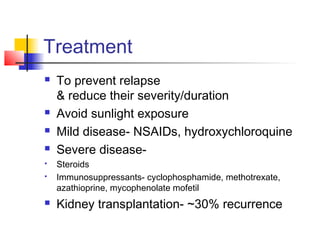
Treatment
 To prevent relapse
& reduce their severity/duration
 Avoid sunlight exposure
 Mild disease- NSAIDs, hydroxychloroquine
 Severe disease-
 Steroids
 Immunosuppressants- cyclophosphamide, methotrexate,
azathioprine, mycophenolate mofetil
 Kidney transplantation- ~30% recurrence
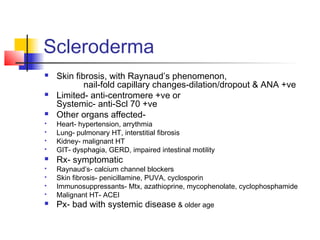
Scleroderma
 Skin fibrosis, with Raynaud’s phenomenon,
nail-fold capillary changes-dilation/dropout & ANA +ve
 Limited- anti-centromere +ve or
Systemic- anti-Scl 70 +ve
 Other organs affected-
 Heart- hypertension, arrythmia
 Lung- pulmonary HT, interstitial fibrosis
 Kidney- malignant HT
 GIT- dysphagia, GERD, impaired intestinal motility
 Rx- symptomatic
 Raynaud’s- calcium channel blockers
 Skin fibrosis- penicillamine, PUVA, cyclosporin
 Immunosuppressants- Mtx, azathioprine, mycophenolate, cyclophosphamide
 Malignant HT- ACEI
 Px- bad with systemic disease & older age
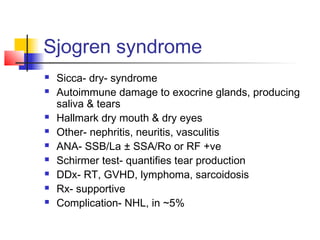
Sjogren syndrome
 Sicca- dry- syndrome
 Autoimmune damage to exocrine glands, producing
saliva & tears
 Hallmark dry mouth & dry eyes
 Other- nephritis, neuritis, vasculitis
 ANA- SSB/La ± SSA/Ro or RF +ve
 Schirmer test- quantifies tear production
 DDx- RT, GVHD, lymphoma, sarcoidosis
 Rx- supportive
 Complication- NHL, in ~5%
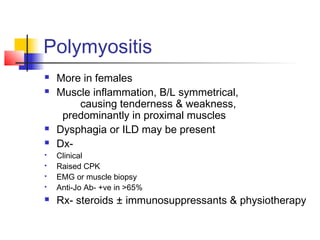
Polymyositis
 More in females
 Muscle inflammation, B/L symmetrical,
causing tenderness & weakness,
predominantly in proximal muscles
 Dysphagia or ILD may be present
 Dx-
 Clinical
 Raised CPK
 EMG or muscle biopsy
 Anti-Jo Ab- +ve in >65%
 Rx- steroids ± immunosuppressants & physiotherapy
Sharp syndrome
 Mixed connective tissue disease
 An overlap syndrome, combining features of
SLE, RA, SS, scleroderma & polymyositis
 Commonly causes-
 Joint pain & swelling
 Raynaud phenomenon
 Sclerodactyly
 Dry mouth/eyes, etc.
 Dx- clinical ± anti U1-RNP Ab
Sharp syndrome
 Mixed connective tissue disease
 An overlap syndrome, combining features of
SLE, RA, SS, scleroderma & polymyositis
 Commonly causes-
 Joint pain & swelling
 Raynaud phenomenon
 Sclerodactyly
 Dry mouth/eyes, etc.
 Dx- clinical ± anti U1-RNP Ab

Connective tissue diseases

  • 1.
  • 2.
    Systemic lupus erythematosus A multisystem disease  Incurable, but treatable  Common in post-pubertal young females  Remitting-relapsing course  Pathogenesis-  Small genetic predisposition- F/H +ve in 10%  Environmental triggers- UV light, EBV infection, HRT  Drugs- procainamide, hydralazine, quinidine, phenytoin  Increased apoptosis with deficient phagocytic activity, exposes nuclear fragments as potential autoAg
  • 3.
    Symptoms & signs Fever, malaise, arthralgia/arthritis, myalgia  Skin- malar rash, alopecia, oral ulcers  Blood- anemia/pancytopenia, APLS  Heart- pericarditis, endocarditis-MV/TV, accelerated atherosclerosis  Lung- pleuritis ± effusion, pneumonitis, ILD  Kidney- hematuria, proteinuria, ARI/CRI  Neuropsychiatric- cognitive dysfunction, seizures, psychosis, headache
  • 4.
    Diagnosis  Multiple clinicalsymptoms/signs  + anti-nuclear Ab- sensitive specially anti-Smith & anti-dsDNA- specific  ± SS-A/B- confer risk of cardiac conduction block in neonates  ± APL Ab- risk of thrombosis/pregnancy loss  Anti-histone Ab +ve in drug-induced lupus  Low complement levels  CBC, RFT, urinanalysis  Kidney biopsy- for lupus nephritis
  • 5.
    Treatment  To preventrelapse & reduce their severity/duration  Avoid sunlight exposure  Mild disease- NSAIDs, hydroxychloroquine  Severe disease-  Steroids  Immunosuppressants- cyclophosphamide, methotrexate, azathioprine, mycophenolate mofetil  Kidney transplantation- ~30% recurrence
  • 6.
    Scleroderma  Skin fibrosis,with Raynaud’s phenomenon, nail-fold capillary changes-dilation/dropout & ANA +ve  Limited- anti-centromere +ve or Systemic- anti-Scl 70 +ve  Other organs affected-  Heart- hypertension, arrythmia  Lung- pulmonary HT, interstitial fibrosis  Kidney- malignant HT  GIT- dysphagia, GERD, impaired intestinal motility  Rx- symptomatic  Raynaud’s- calcium channel blockers  Skin fibrosis- penicillamine, PUVA, cyclosporin  Immunosuppressants- Mtx, azathioprine, mycophenolate, cyclophosphamide  Malignant HT- ACEI  Px- bad with systemic disease & older age
  • 7.
    Sjogren syndrome  Sicca-dry- syndrome  Autoimmune damage to exocrine glands, producing saliva & tears  Hallmark dry mouth & dry eyes  Other- nephritis, neuritis, vasculitis  ANA- SSB/La ± SSA/Ro or RF +ve  Schirmer test- quantifies tear production  DDx- RT, GVHD, lymphoma, sarcoidosis  Rx- supportive  Complication- NHL, in ~5%
  • 8.
    Polymyositis  More infemales  Muscle inflammation, B/L symmetrical, causing tenderness & weakness, predominantly in proximal muscles  Dysphagia or ILD may be present  Dx-  Clinical  Raised CPK  EMG or muscle biopsy  Anti-Jo Ab- +ve in >65%  Rx- steroids ± immunosuppressants & physiotherapy
  • 9.
    Sharp syndrome  Mixedconnective tissue disease  An overlap syndrome, combining features of SLE, RA, SS, scleroderma & polymyositis  Commonly causes-  Joint pain & swelling  Raynaud phenomenon  Sclerodactyly  Dry mouth/eyes, etc.  Dx- clinical ± anti U1-RNP Ab
  • 10.
    Sharp syndrome  Mixedconnective tissue disease  An overlap syndrome, combining features of SLE, RA, SS, scleroderma & polymyositis  Commonly causes-  Joint pain & swelling  Raynaud phenomenon  Sclerodactyly  Dry mouth/eyes, etc.  Dx- clinical ± anti U1-RNP Ab