Mr.Veerabhadra B B
Congestive Heart Failure (CHF)
Congestive Heart Failure (CHF), is the
inability of the heart to pump sufficient blood to
meet the needs of the tissues for oxygen and
nutrients.
Classification
1.Left sided v/s right sided heart failure
2. Forward v/s backward failure
3. High output v/s low output failure
4. Acute v/s chronic failure
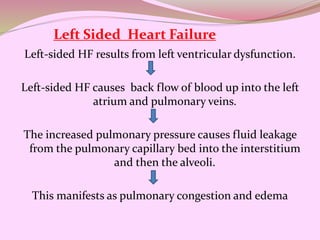
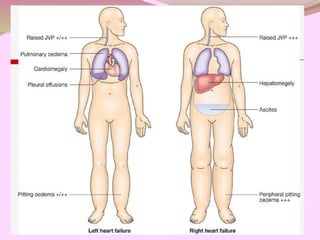
Left-sided HF results from left ventricular dysfunction.
Left-sided HF causes back flow of blood up into the left
atrium and pulmonary veins.
The increased pulmonary pressure causes fluid leakage
from the pulmonary capillary bed into the interstitium
and then the alveoli.
This manifests as pulmonary congestion and edema
Left Sided Heart Failure
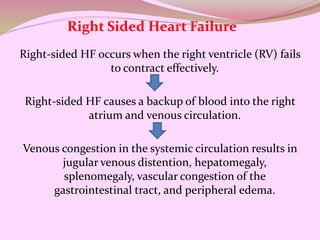
Right-sided HF occurs when the right ventricle (RV) fails
to contract effectively.
Right-sided HF causes a backup of blood into the right
atrium and venous circulation.
Venous congestion in the systemic circulation results in
jugular venous distention, hepatomegaly,
splenomegaly, vascular congestion of the
gastrointestinal tract, and peripheral edema.
Right Sided Heart Failure
SYSTOLIC heart failure.
The left ventricle can’t pump enough blood out to
the systemic circulation during systole, and the
ejection fraction fails.
Consequently, blood backs up into the pulmonary
circulation
pressure rises in the pulmonary venous system, and
cardiac output fails.
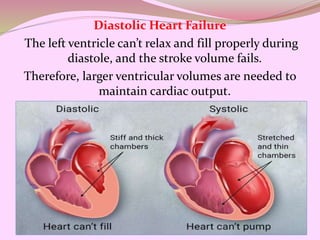
Diastolic Heart Failure
The left ventricle can’t relax and fill properly during
diastole, and the stroke volume fails.
Therefore, larger ventricular volumes are needed to
maintain cardiac output.
Risk factors
 Advancing age
 Coronary artery disease
 Diabetes
 Cigarette smoking
 Obesity
 Elevated total cholesterol
 Abnormally high or low hematocrit level
 Sleep apnoea.
 Medications : NSAIDs , certain anesthesia
medications, some anti-arrhythmic medications.
ETIOLOGY
 Anaemia
 Systemic Infection
 Thyrotoxicosis
 Hypothyroidisms
 Arrhythmias
 Bacterial
Endocarditis
•Valvular Dysfunction
•Pulmonary Embolism
•Pulmonary Disease
•Pagats Disease
•Nutritional Deficiencies
•Hypovolemia
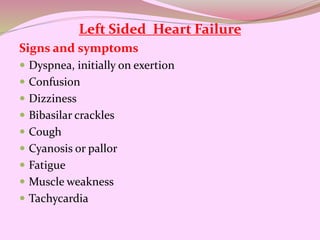
Left Sided Heart Failure
Signs and symptoms
 Dyspnea, initially on exertion
 Confusion
 Dizziness
 Bibasilar crackles
 Cough
 Cyanosis or pallor
 Fatigue
 Muscle weakness
 Tachycardia
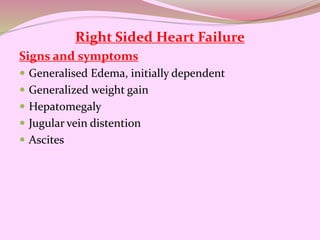
Right Sided Heart Failure
Signs and symptoms
 Generalised Edema, initially dependent
 Generalized weight gain
 Hepatomegaly
 Jugular vein distention
 Ascites
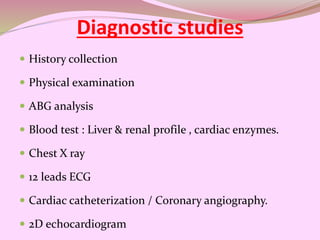
Diagnostic studies
 History collection
 Physical examination
 ABG analysis
 Blood test : Liver & renal profile , cardiac enzymes.
 Chest X ray
 12 leads ECG
 Cardiac catheterization / Coronary angiography.
 2D echocardiogram
Complications
Kidney damage or failure. .
Heart valve problems.
Heart rhythm problems.
Liver damage.
Prevention
 Control or eliminate the risk factors of heart disease — by
making lifestyle changes along with the medications.
Lifestyle changes Help prevent heart failure include:
 Not smoking
 Controlling certain conditions, such as high blood
pressure and diabetes
 Staying physically active
 Eating healthy foods
 Maintaining a healthy weight
 Reducing and managing stress
Management
Angiotensin-converting enzyme inhibitors
(ACE inhibitors): Improves blood flow by causing
Vasodilation. benazepril , captopril ,enalapril
Beta-Blockers
 Beta-blockers can reduce blood pressure and slow a
rapid heart rhythm. Acebutolol .
Atenolol ,Bisoprolol
Loop diuretics. kidneys to excrete more urine. This
helps remove excess fluid from your body. Examples
include furosemide
 Digoxin Improved cardiac output enhances kidney
perfusion, which may create a mild dieresis of sodium
and water
 DOSE: 0.125-0.25 mg PO/IV qDay; higher doses
including 0.375-0.5 mg/day rarely needed
Continued….
 End.

Congestive cardiac failure

  • 1.
  • 2.
    Congestive Heart Failure(CHF) Congestive Heart Failure (CHF), is the inability of the heart to pump sufficient blood to meet the needs of the tissues for oxygen and nutrients.
  • 3.
    Classification 1.Left sided v/sright sided heart failure 2. Forward v/s backward failure 3. High output v/s low output failure 4. Acute v/s chronic failure
  • 4.
    Left-sided HF resultsfrom left ventricular dysfunction. Left-sided HF causes back flow of blood up into the left atrium and pulmonary veins. The increased pulmonary pressure causes fluid leakage from the pulmonary capillary bed into the interstitium and then the alveoli. This manifests as pulmonary congestion and edema Left Sided Heart Failure
  • 5.
    Right-sided HF occurswhen the right ventricle (RV) fails to contract effectively. Right-sided HF causes a backup of blood into the right atrium and venous circulation. Venous congestion in the systemic circulation results in jugular venous distention, hepatomegaly, splenomegaly, vascular congestion of the gastrointestinal tract, and peripheral edema. Right Sided Heart Failure
  • 6.
    SYSTOLIC heart failure. Theleft ventricle can’t pump enough blood out to the systemic circulation during systole, and the ejection fraction fails. Consequently, blood backs up into the pulmonary circulation pressure rises in the pulmonary venous system, and cardiac output fails.
  • 7.
    Diastolic Heart Failure Theleft ventricle can’t relax and fill properly during diastole, and the stroke volume fails. Therefore, larger ventricular volumes are needed to maintain cardiac output.
  • 8.
    Risk factors  Advancingage  Coronary artery disease  Diabetes  Cigarette smoking  Obesity  Elevated total cholesterol  Abnormally high or low hematocrit level  Sleep apnoea.  Medications : NSAIDs , certain anesthesia medications, some anti-arrhythmic medications.
  • 9.
    ETIOLOGY  Anaemia  SystemicInfection  Thyrotoxicosis  Hypothyroidisms  Arrhythmias  Bacterial Endocarditis •Valvular Dysfunction •Pulmonary Embolism •Pulmonary Disease •Pagats Disease •Nutritional Deficiencies •Hypovolemia
  • 10.
    Left Sided HeartFailure Signs and symptoms  Dyspnea, initially on exertion  Confusion  Dizziness  Bibasilar crackles  Cough  Cyanosis or pallor  Fatigue  Muscle weakness  Tachycardia
  • 11.
    Right Sided HeartFailure Signs and symptoms  Generalised Edema, initially dependent  Generalized weight gain  Hepatomegaly  Jugular vein distention  Ascites
  • 13.
    Diagnostic studies  Historycollection  Physical examination  ABG analysis  Blood test : Liver & renal profile , cardiac enzymes.  Chest X ray  12 leads ECG  Cardiac catheterization / Coronary angiography.  2D echocardiogram
  • 14.
    Complications Kidney damage orfailure. . Heart valve problems. Heart rhythm problems. Liver damage.
  • 15.
    Prevention  Control oreliminate the risk factors of heart disease — by making lifestyle changes along with the medications. Lifestyle changes Help prevent heart failure include:  Not smoking  Controlling certain conditions, such as high blood pressure and diabetes  Staying physically active  Eating healthy foods  Maintaining a healthy weight  Reducing and managing stress
  • 16.
    Management Angiotensin-converting enzyme inhibitors (ACEinhibitors): Improves blood flow by causing Vasodilation. benazepril , captopril ,enalapril Beta-Blockers  Beta-blockers can reduce blood pressure and slow a rapid heart rhythm. Acebutolol . Atenolol ,Bisoprolol Loop diuretics. kidneys to excrete more urine. This helps remove excess fluid from your body. Examples include furosemide
  • 17.
     Digoxin Improvedcardiac output enhances kidney perfusion, which may create a mild dieresis of sodium and water  DOSE: 0.125-0.25 mg PO/IV qDay; higher doses including 0.375-0.5 mg/day rarely needed Continued….
  • 18.