CONGESTION ISSUES AND
ITS RELATED
MANAGEMENT
PRESENTED BY-
ALPNA SRIVASTAVA
M.TECH(POWER SYSTEM)
ENROLL.NO.-A2327212008
CONTENTS:
 INTRODUCTION
 NETWORK CONGESTION
 OBJECTIVE OF CONGESTION
MANAGEMENT
 ISSUES WITH CONGESTION
 CASE STUDY
 CONCLUSION
 REFERENCES
Introduction
 Congestion is the overloading in transmission lines. It could
be caused by
 unexpected outages of generation
 sudden increase of load
 tripping of transmission lines
 failure of other equipment
• Conversion of Vertically integrated utilities to Open Access
market system [ May 2003,Indian Electricity Act]
• Because of Open Access, Congestion is prime problem for
power system.
• Congestion can be managed by Facts devices.
• So we develop a set of congestion distribution factors in
terms of real as well as reactive power.
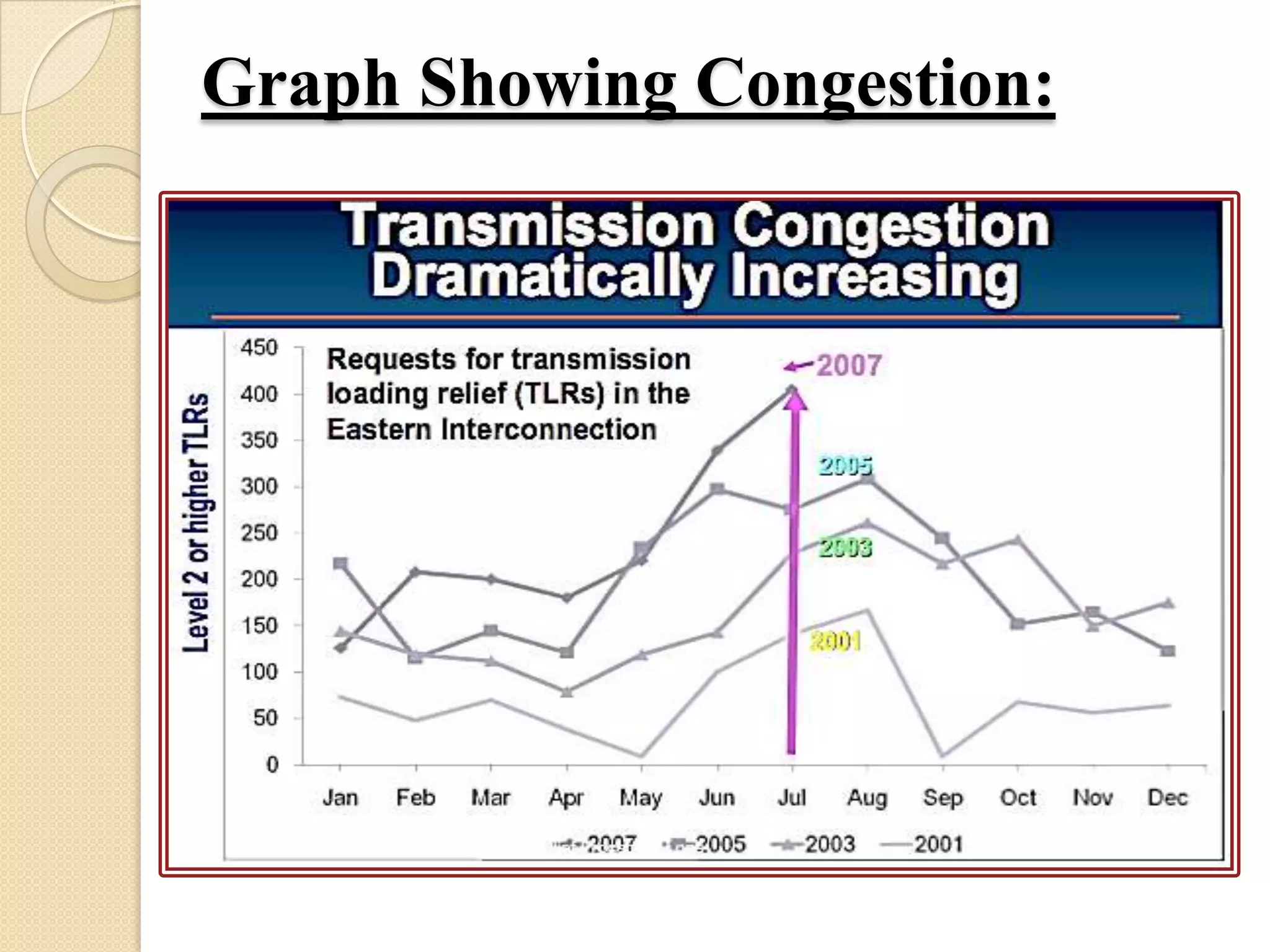
• Transmission congestion can cause additional outages,
increase the electricity prices in some regions and can
threaten system security and reliability.
Network Congestion:
• When the producers and consumers of the electric
energy desire to produce and consume in total that
would cause the transmission system to operate at or
beyond one or more transfer limit, the system is said to
be congested.
OR
• Congestion is a consequence of network constraints
characterizing a finite network capacity that prevent the
simultaneous delivery of power from an associated set
of power transactions.
Graph Showing Congestion:
Objective of Congestion
Management
• Minimized interference of the transmission network in the
market for electric energy
• Secure operation of the power system
• Improvement of market efficiency
• Manage power flow with existing Transmission line
• Last but not the least, congestion can be managed by using
FACTS Devices in the system.
• Since, effective FACTS based power flow control can be
applied to relieve transmission congestion & Improve the
transfer capability of the network with high penetration of
power. While voltage security & voltage stability constraint
are satisfied & transmission net work can be effectively
utilized.
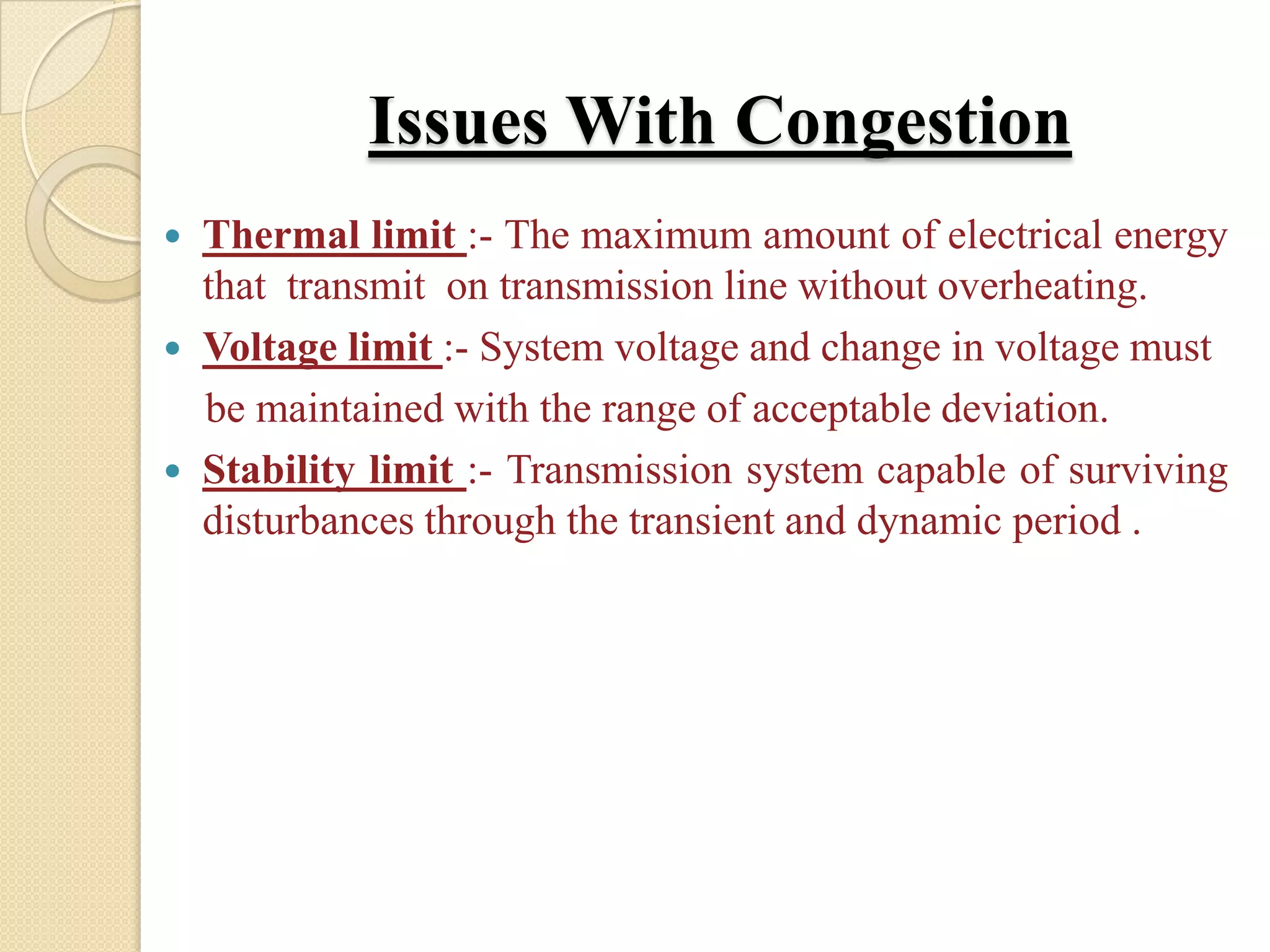
Issues With Congestion
 Thermal limit :- The maximum amount of electrical energy
that transmit on transmission line without overheating.
 Voltage limit :- System voltage and change in voltage must
be maintained with the range of acceptable deviation.
 Stability limit :- Transmission system capable of surviving
disturbances through the transient and dynamic period .
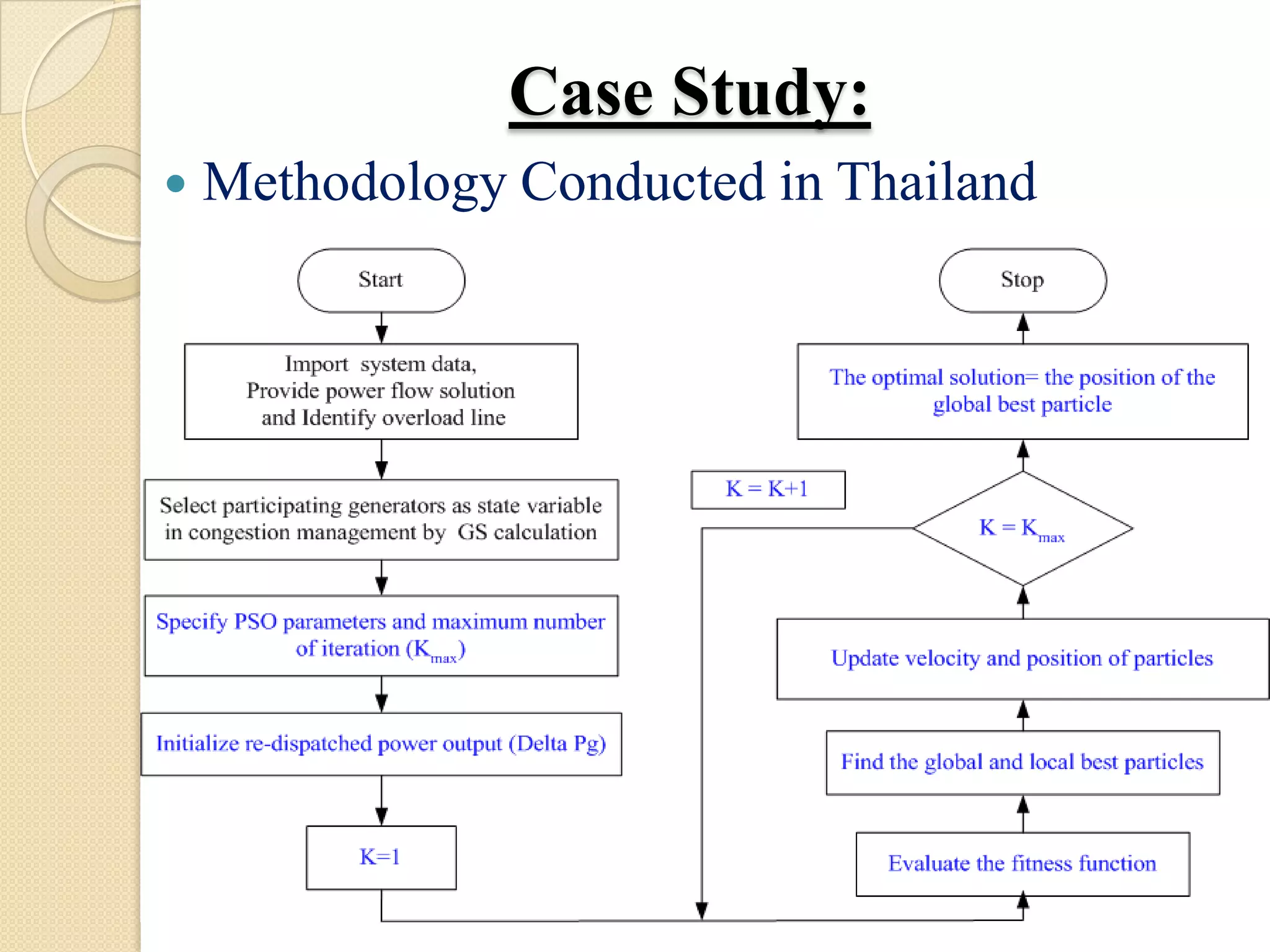
Case Study:
 Methodology Conducted in Thailand
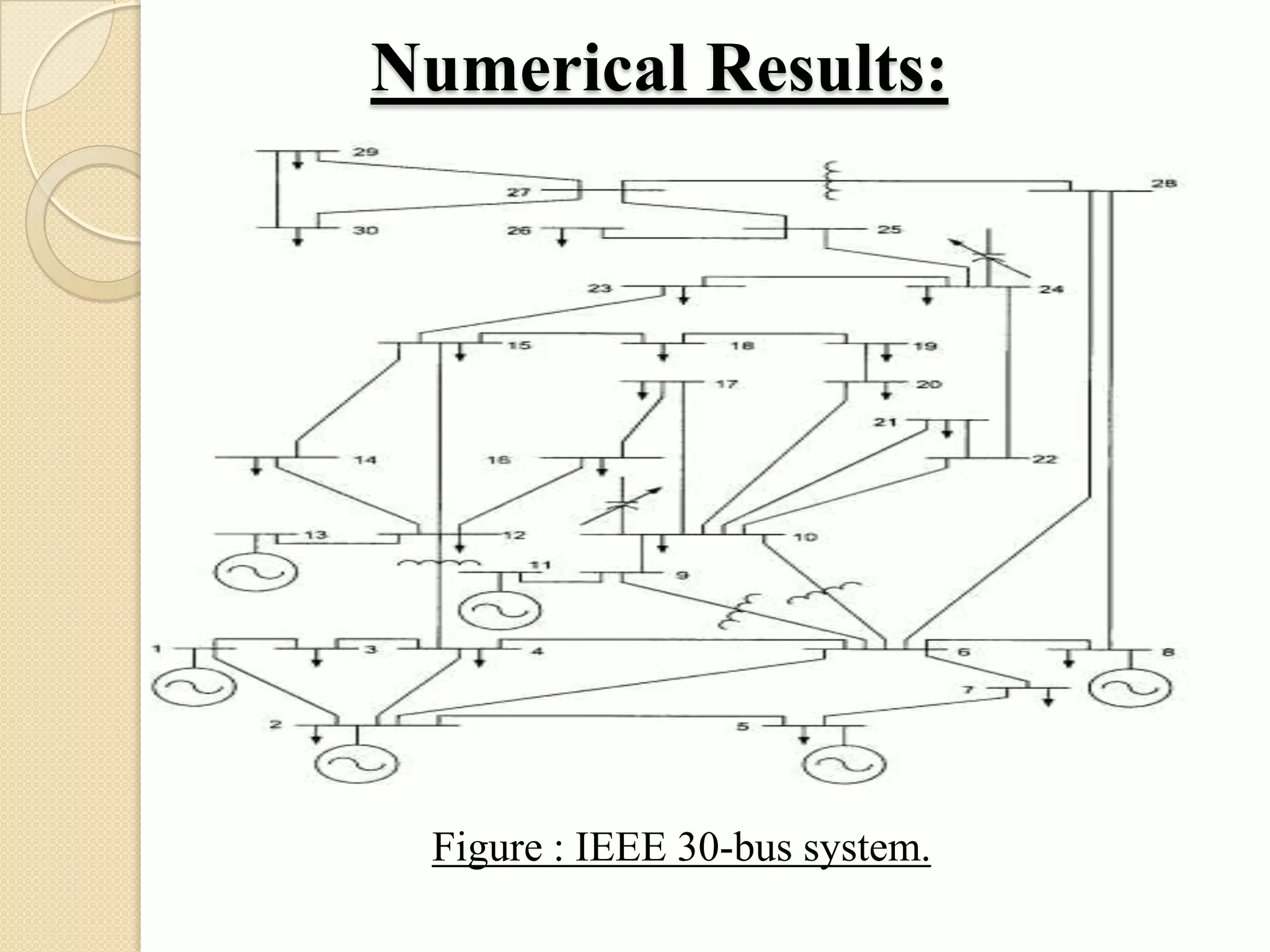
Numerical Results:
Figure : IEEE 30-bus system.
Contd..
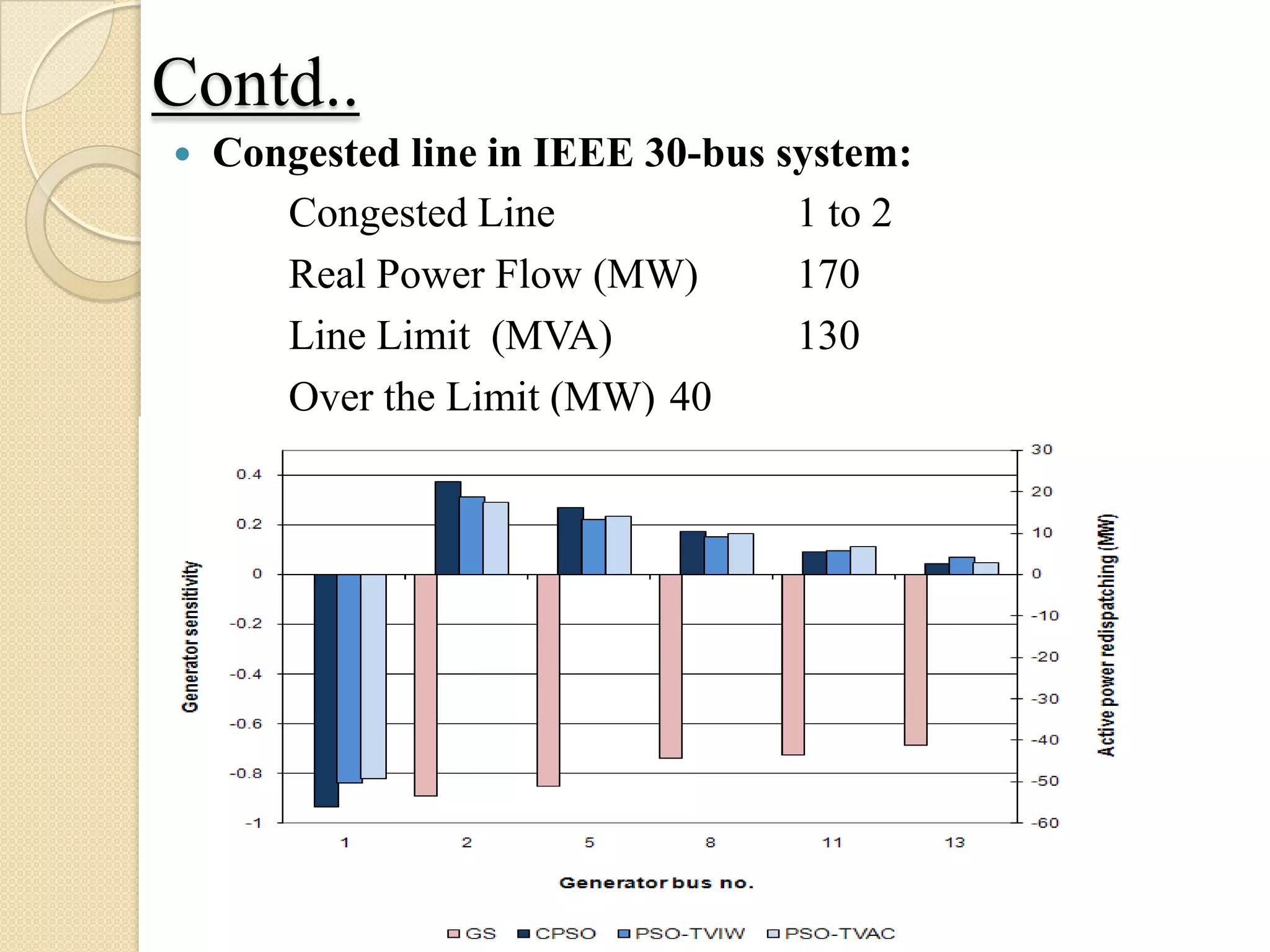
 Congested line in IEEE 30-bus system:
Congested Line 1 to 2
Real Power Flow (MW) 170
Line Limit (MVA) 130
Over the Limit (MW) 40
Conclusion
 In the end by the help of following methods which can be
followed in India congestion problem can be managed:
 Transmission Line Loading Relief (TLR)
◦ Identify flow gates (frequently constrained segments of
the transmission system)
◦ Determine generation impact on flow gates
◦ Monitor flow gates and generate alarms for overload
conditions (manually)priority of transmission service.
• Curtail regional transactions impacting loading on
flow gates based upon priority of transmission
service.
YOU
THANK

Congestion issues and its related management

  • 1.
    CONGESTION ISSUES AND ITSRELATED MANAGEMENT PRESENTED BY- ALPNA SRIVASTAVA M.TECH(POWER SYSTEM) ENROLL.NO.-A2327212008
  • 2.
    CONTENTS:  INTRODUCTION  NETWORKCONGESTION  OBJECTIVE OF CONGESTION MANAGEMENT  ISSUES WITH CONGESTION  CASE STUDY  CONCLUSION  REFERENCES
  • 3.
    Introduction  Congestion isthe overloading in transmission lines. It could be caused by  unexpected outages of generation  sudden increase of load  tripping of transmission lines  failure of other equipment • Conversion of Vertically integrated utilities to Open Access market system [ May 2003,Indian Electricity Act] • Because of Open Access, Congestion is prime problem for power system. • Congestion can be managed by Facts devices. • So we develop a set of congestion distribution factors in terms of real as well as reactive power. • Transmission congestion can cause additional outages, increase the electricity prices in some regions and can threaten system security and reliability.
  • 4.
    Network Congestion: • Whenthe producers and consumers of the electric energy desire to produce and consume in total that would cause the transmission system to operate at or beyond one or more transfer limit, the system is said to be congested. OR • Congestion is a consequence of network constraints characterizing a finite network capacity that prevent the simultaneous delivery of power from an associated set of power transactions.
  • 5.
  • 6.
    Objective of Congestion Management •Minimized interference of the transmission network in the market for electric energy • Secure operation of the power system • Improvement of market efficiency • Manage power flow with existing Transmission line • Last but not the least, congestion can be managed by using FACTS Devices in the system. • Since, effective FACTS based power flow control can be applied to relieve transmission congestion & Improve the transfer capability of the network with high penetration of power. While voltage security & voltage stability constraint are satisfied & transmission net work can be effectively utilized.
  • 7.
    Issues With Congestion Thermal limit :- The maximum amount of electrical energy that transmit on transmission line without overheating.  Voltage limit :- System voltage and change in voltage must be maintained with the range of acceptable deviation.  Stability limit :- Transmission system capable of surviving disturbances through the transient and dynamic period .
  • 8.
    Case Study:  MethodologyConducted in Thailand
  • 9.
    Numerical Results: Figure :IEEE 30-bus system.
  • 10.
    Contd..  Congested linein IEEE 30-bus system: Congested Line 1 to 2 Real Power Flow (MW) 170 Line Limit (MVA) 130 Over the Limit (MW) 40
  • 11.
    Conclusion  In theend by the help of following methods which can be followed in India congestion problem can be managed:  Transmission Line Loading Relief (TLR) ◦ Identify flow gates (frequently constrained segments of the transmission system) ◦ Determine generation impact on flow gates ◦ Monitor flow gates and generate alarms for overload conditions (manually)priority of transmission service. • Curtail regional transactions impacting loading on flow gates based upon priority of transmission service.
  • 12.