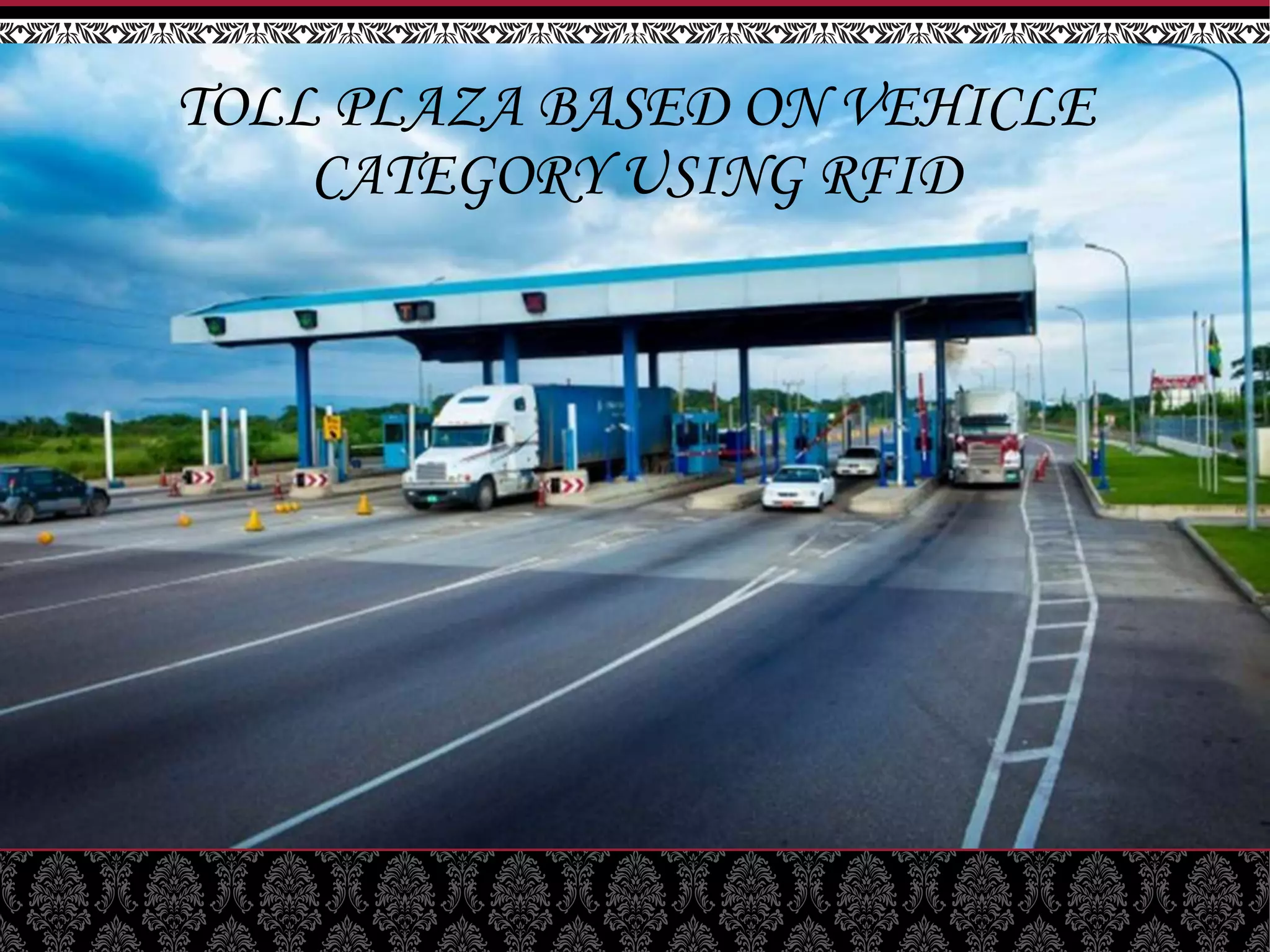
TOLL PLAZA BASED ON VEHICLE
CATEGORY USING RFID
CONTENTS
• INTRODUCTION
• BLOCK DIAGRAM
• BASIC DESIGN OF TOLL PLAZA
• 8051 MICROCONTROLLER
• RFID
• WORKING OF RFID
• COMPARISON WITH OTHER MECHANISMS
• ADVANTAGES AND DISADVANTAGES
• CONCLUSION
INTRODUCTION
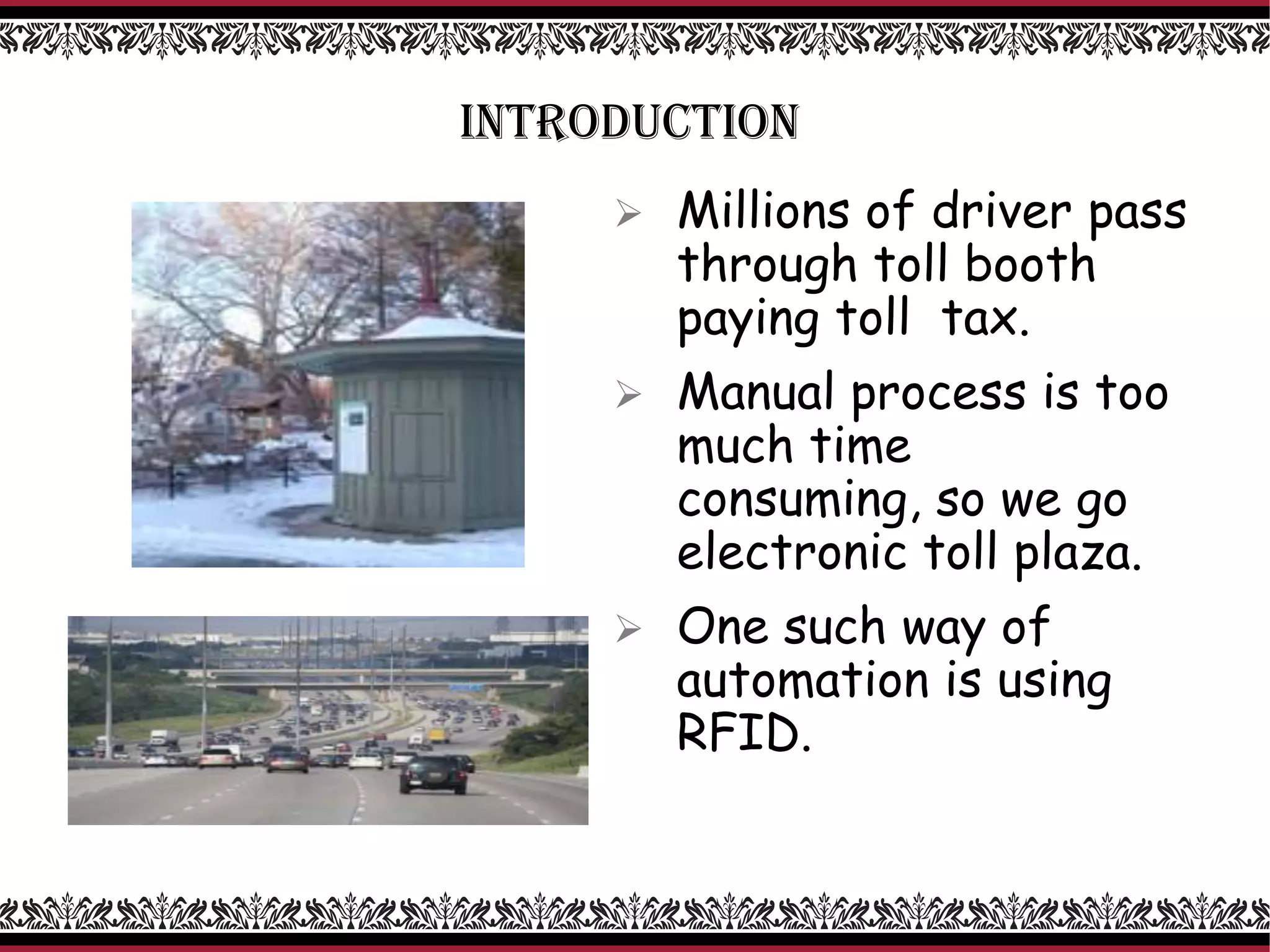
 Millions of driver pass
through toll booth
paying toll tax.
 Manual process is too
much time
consuming, so we go
electronic toll plaza.
 One such way of
automation is using
RFID.
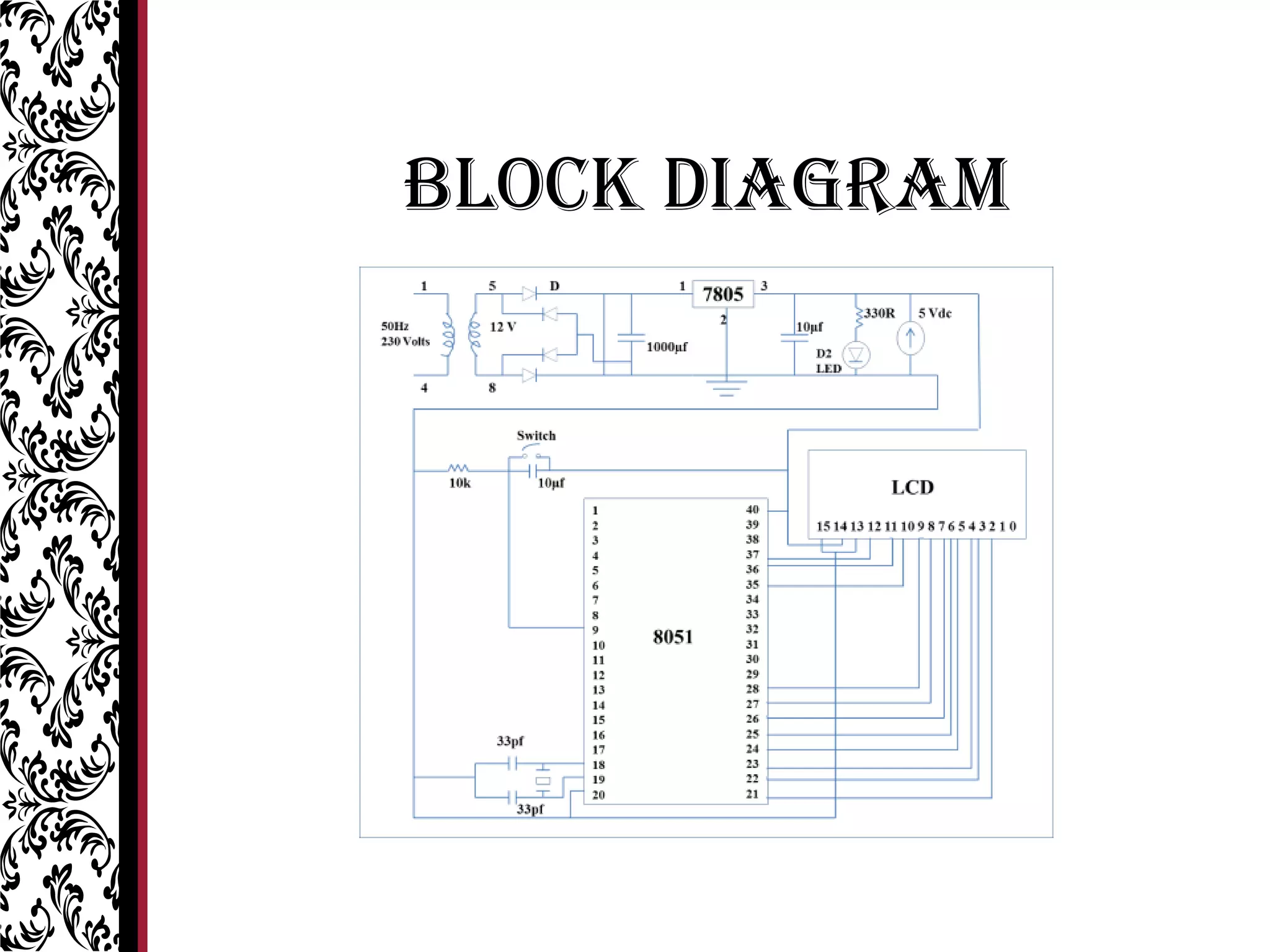
BLOCK DIAGRAM
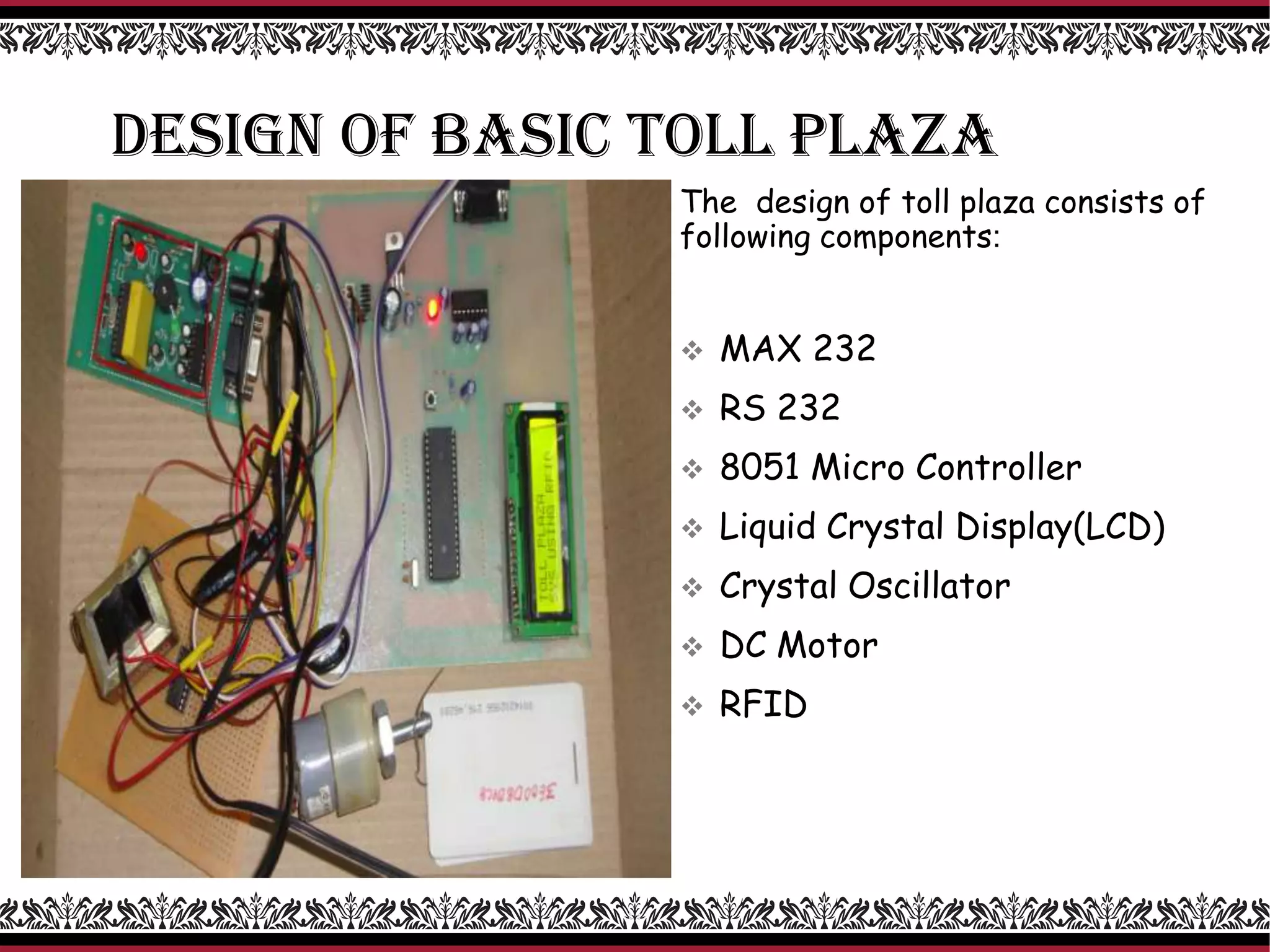
DESIGN OF BASIC TOLL PLAZA
The design of toll plaza consists of
following components:
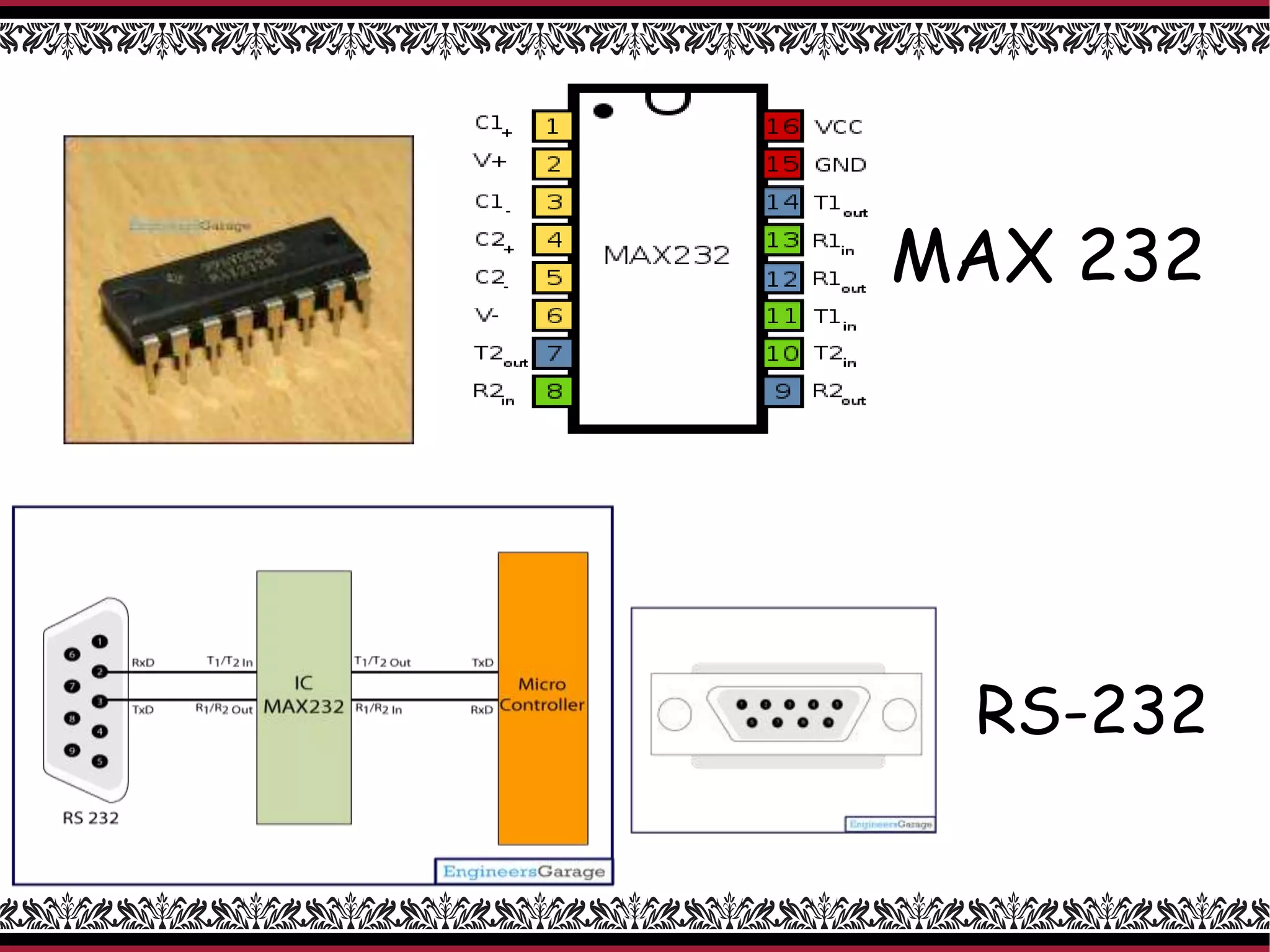
 MAX 232
 RS 232
 8051 Micro Controller
 Liquid Crystal Display(LCD)
 Crystal Oscillator
 DC Motor
 RFID
MAX 232
RS-232
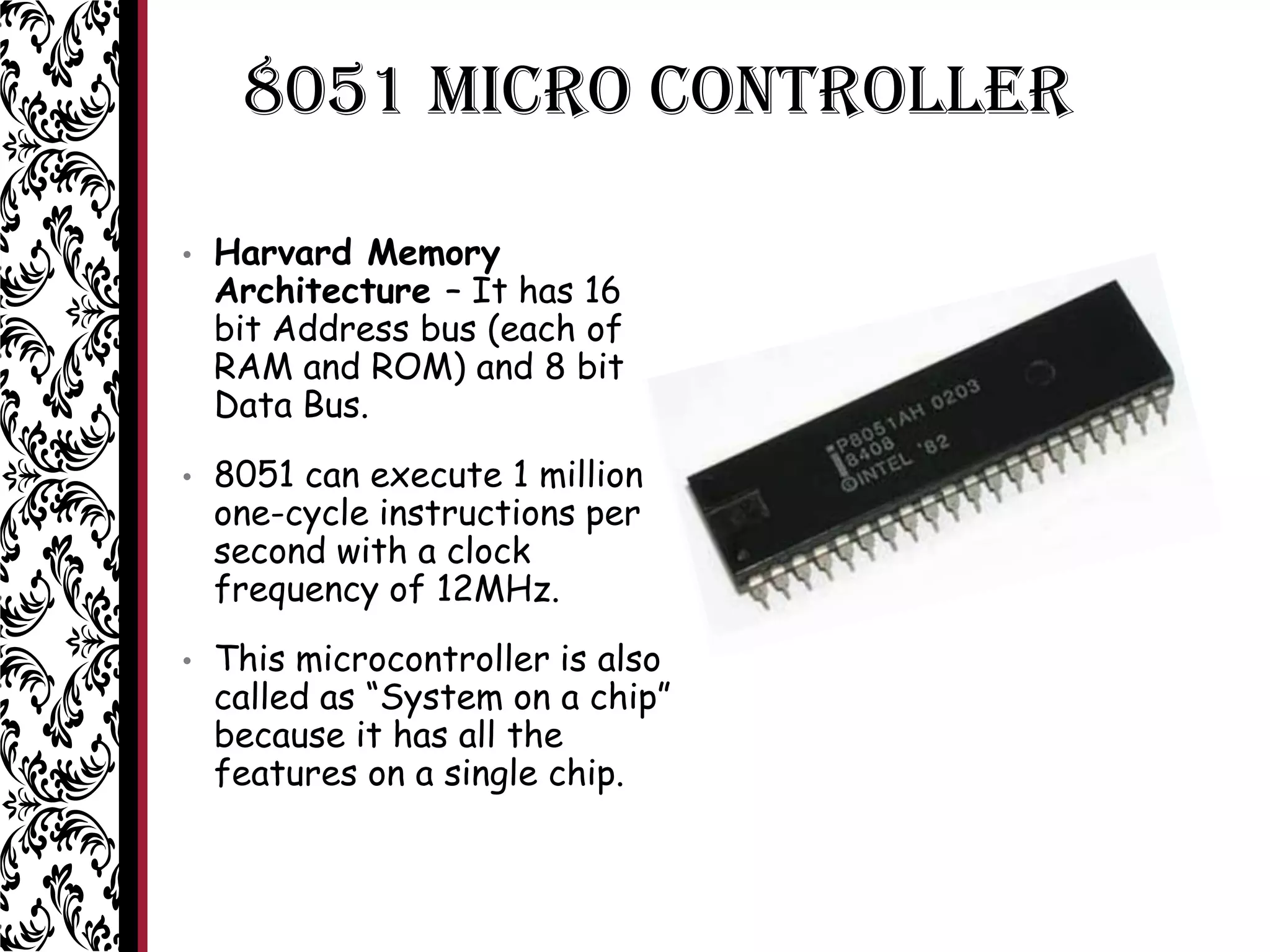
8051 MICRO CONTROLLER
• Harvard Memory
Architecture – It has 16
bit Address bus (each of
RAM and ROM) and 8 bit
Data Bus.
• 8051 can execute 1 million
one-cycle instructions per
second with a clock
frequency of 12MHz.
• This microcontroller is also
called as “System on a chip”
because it has all the
features on a single chip.
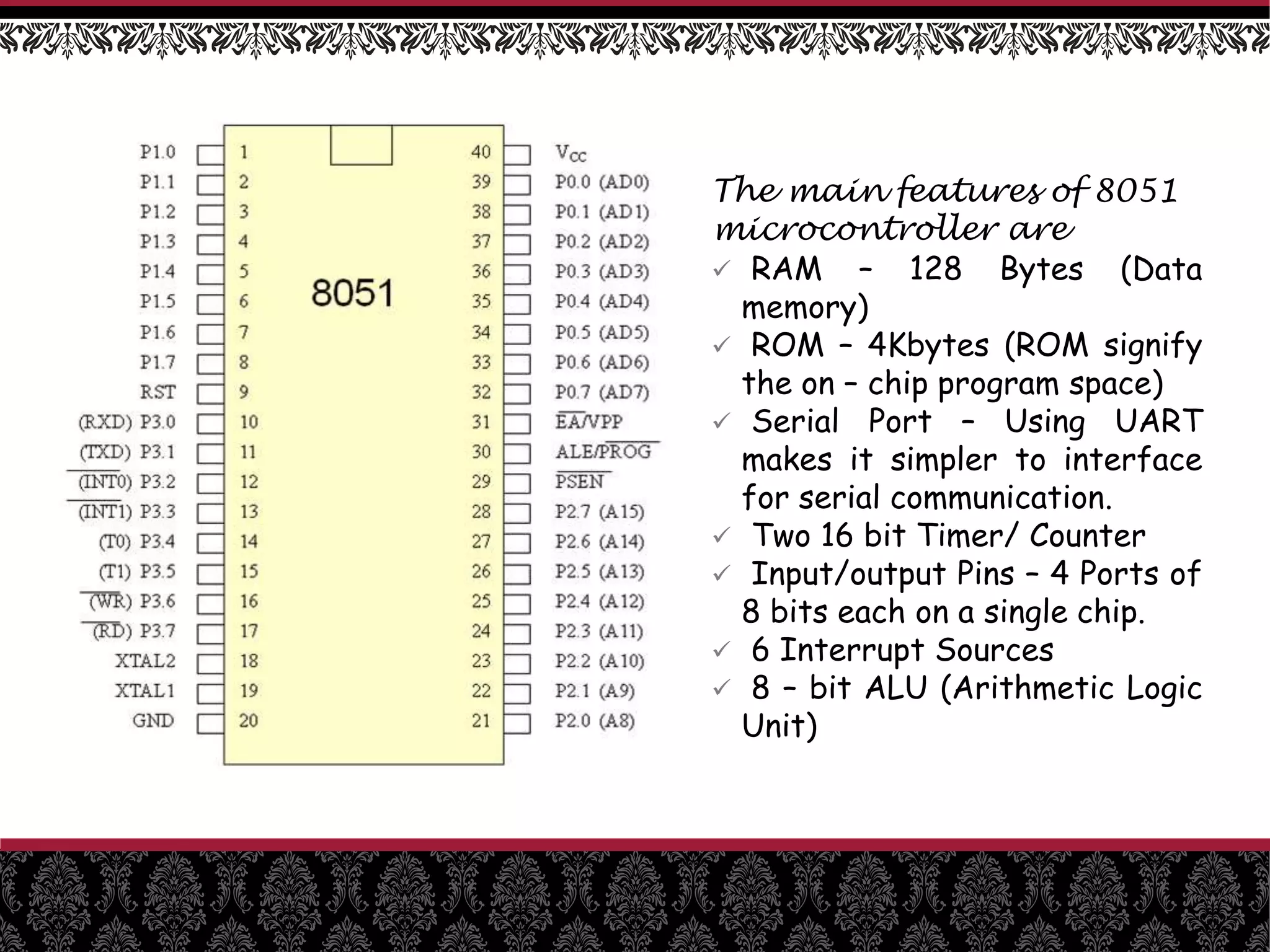
The main features of 8051
microcontroller are
 RAM – 128 Bytes (Data
memory)
 ROM – 4Kbytes (ROM signify
the on – chip program space)
 Serial Port – Using UART
makes it simpler to interface
for serial communication.
 Two 16 bit Timer/ Counter
 Input/output Pins – 4 Ports of
8 bits each on a single chip.
 6 Interrupt Sources
 8 – bit ALU (Arithmetic Logic
Unit)
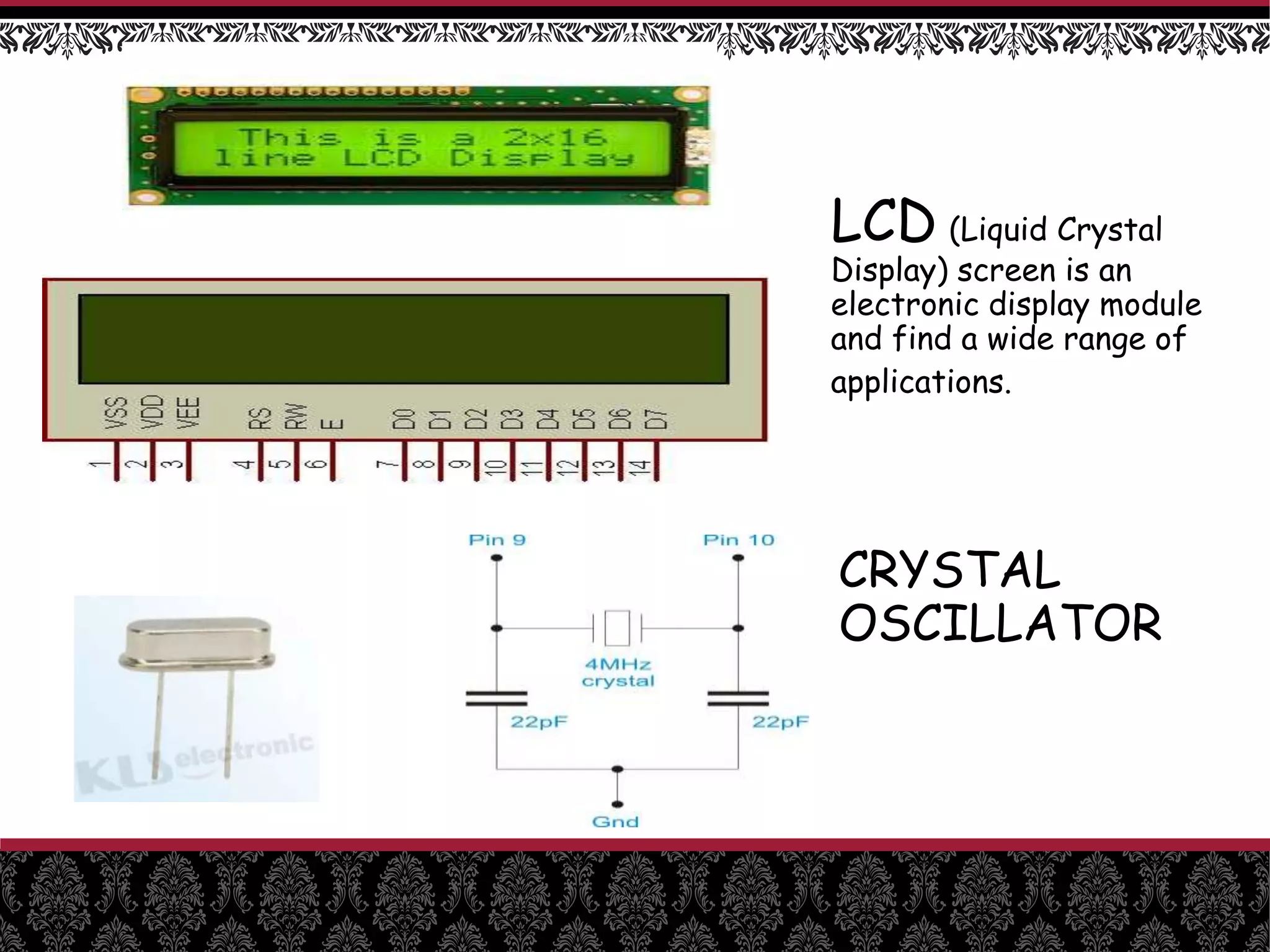
LCD (Liquid Crystal
Display) screen is an
electronic display module
and find a wide range of
applications.
CRYSTAL
OSCILLATOR
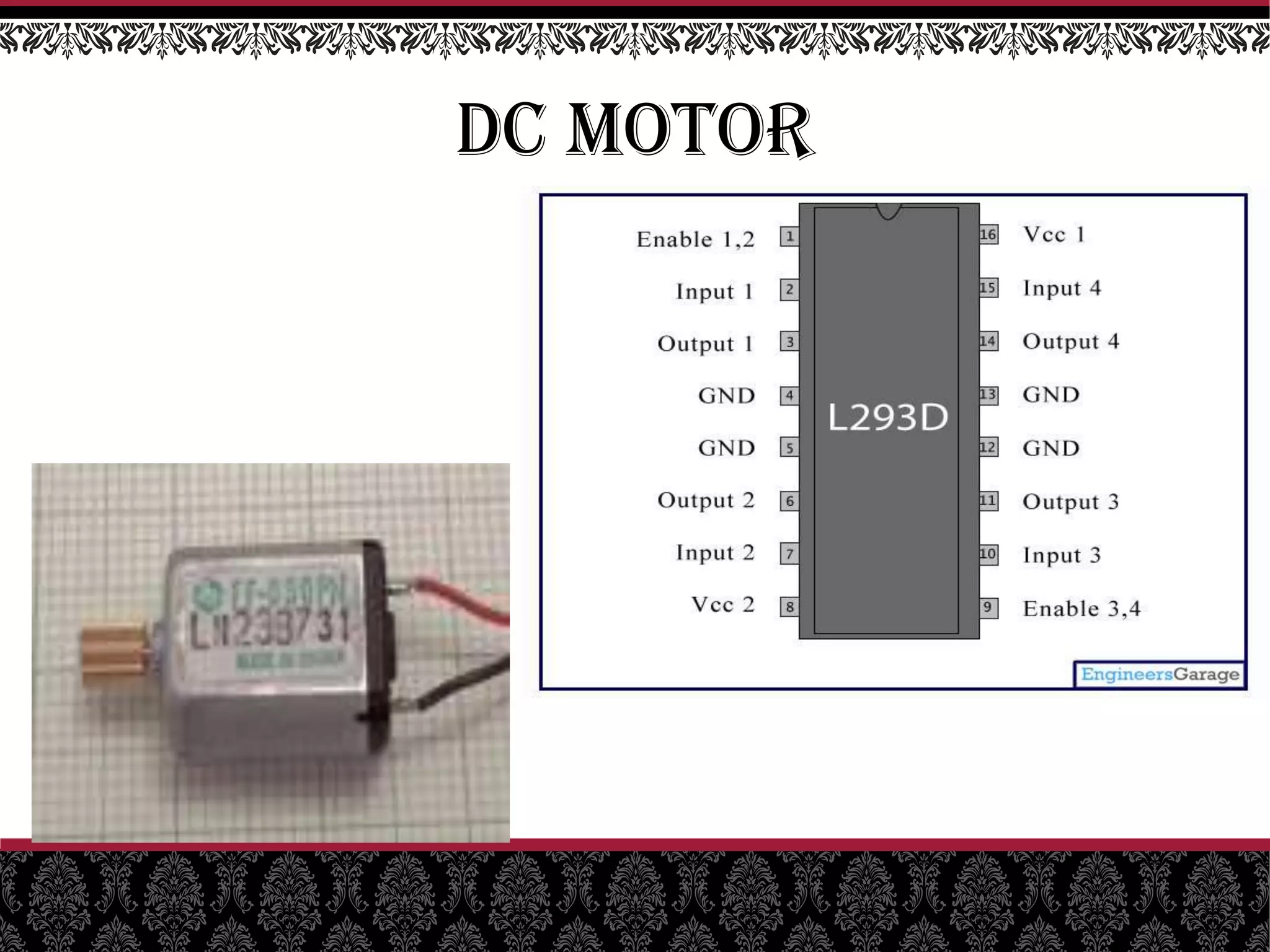
DC MOTOR
RFID
Radio Frequency Identification
and Detection
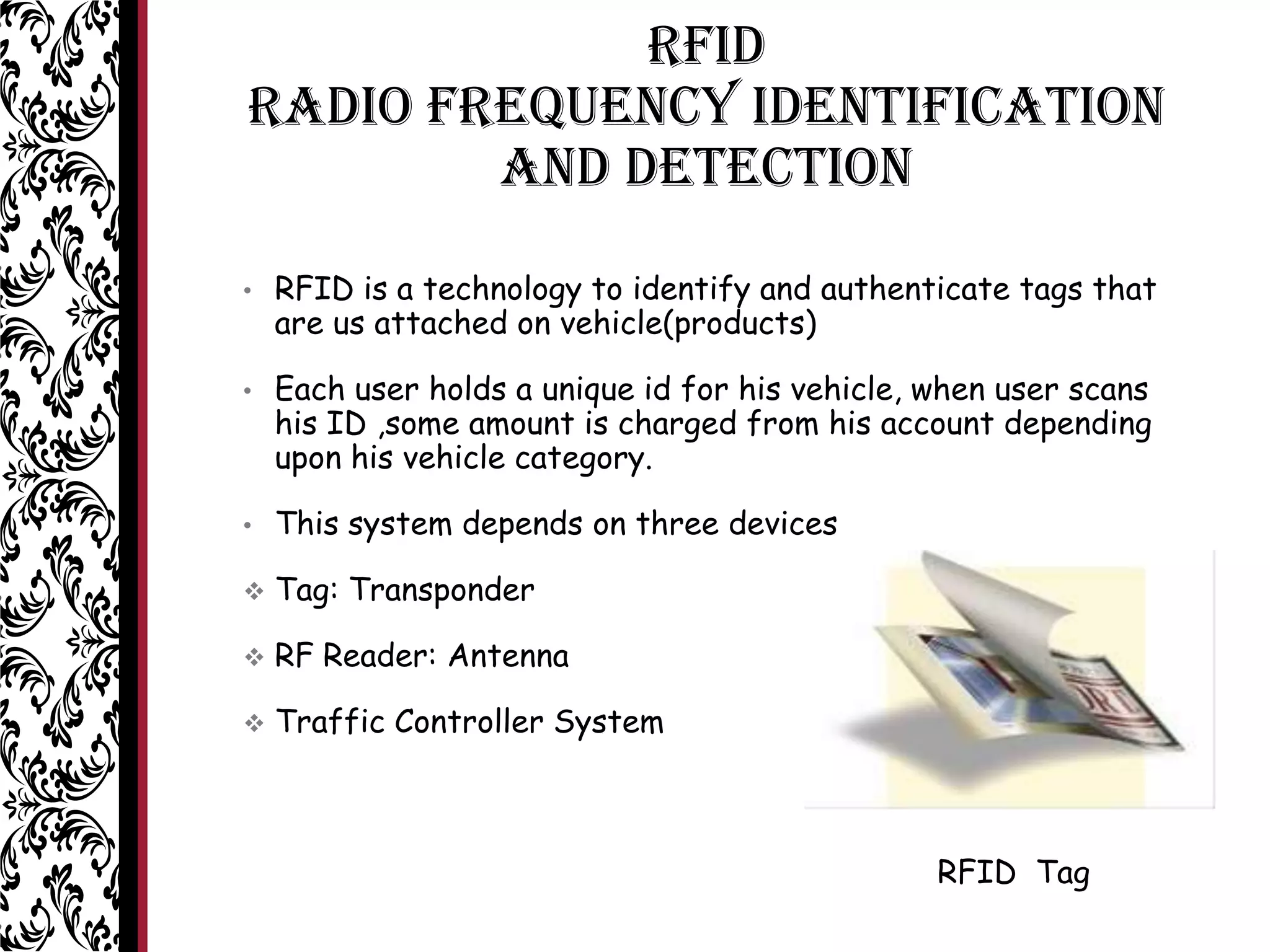
• RFID is a technology to identify and authenticate tags that
are us attached on vehicle(products)
• Each user holds a unique id for his vehicle, when user scans
his ID ,some amount is charged from his account depending
upon his vehicle category.
• This system depends on three devices
 Tag: Transponder
 RF Reader: Antenna
 Traffic Controller System
RFID Tag
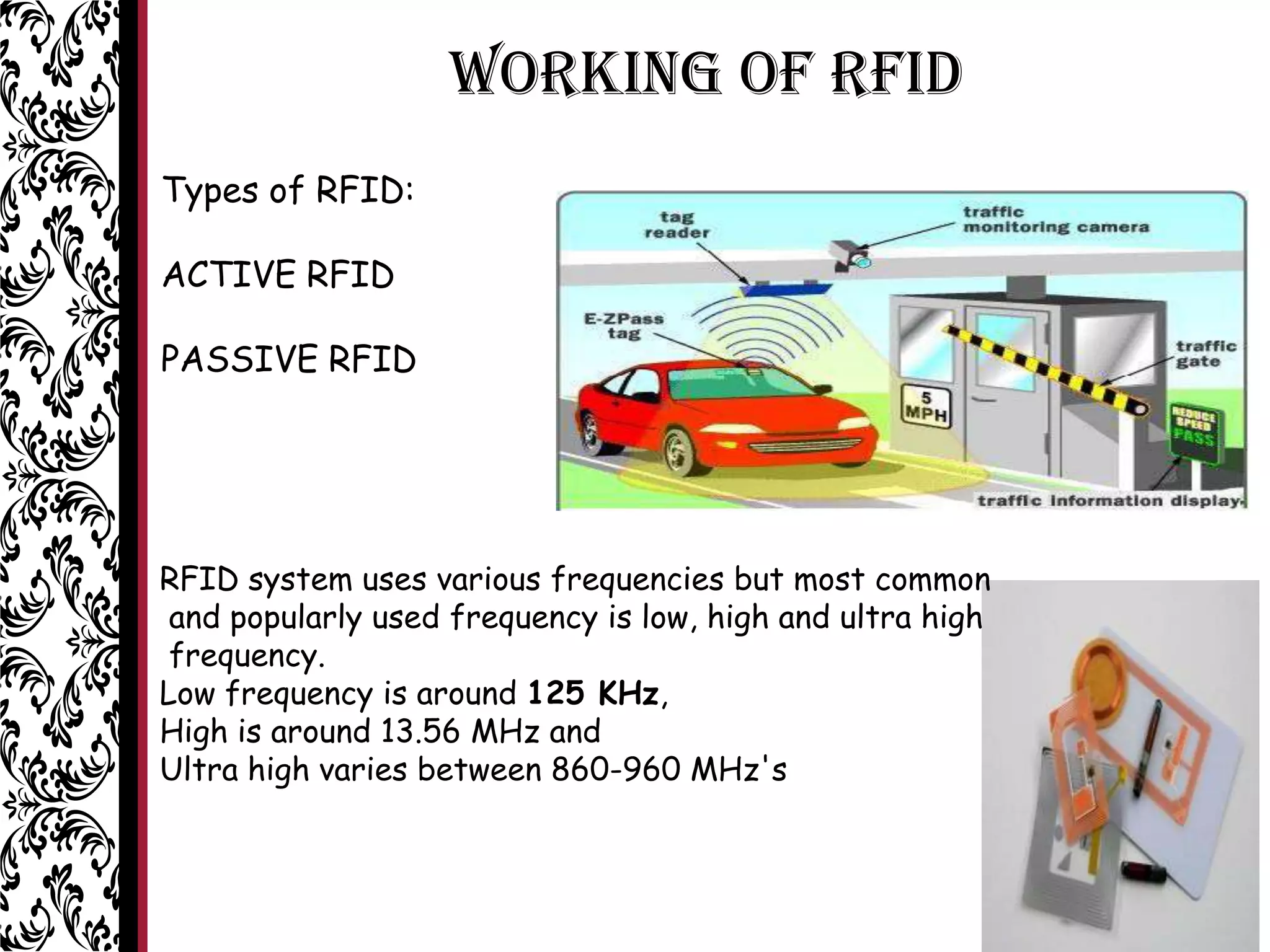
WORKING OF RFID
RFID system uses various frequencies but most common
and popularly used frequency is low, high and ultra high
frequency.
Low frequency is around 125 KHz,
High is around 13.56 MHz and
Ultra high varies between 860-960 MHz's
Types of RFID:
ACTIVE RFID
PASSIVE RFID
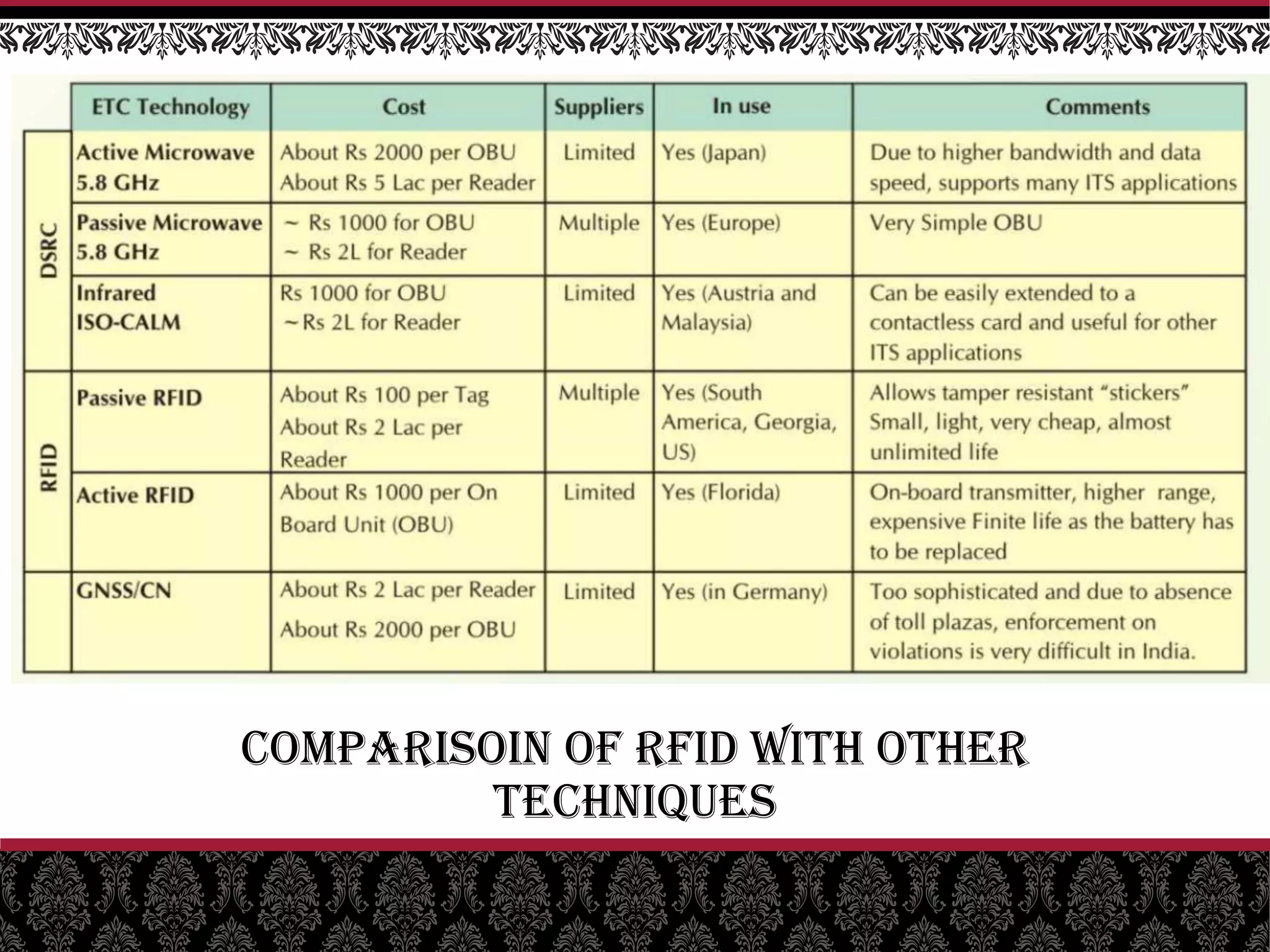
COMPARISOIN of RFID WITH OTHER
TECHNIQUES
ADVANTAGES & DISADVANTAGES
 ROAD USERS
 Increases user convenience from payment without
stops.
 Less Traffic Congestion.
 TOLL OPERATORS
 Less operating cost.
 Better audit control.
 GOVERNMENT/SOCIETY
• Transparency of Toll Transactions.
• Reduces Revenue Leakages.
RFID tags are inexpensive technology, and can
minimize cost to customer.
CONCLUSION
 RFID Technology is the best technology among all
automated technology
 Implementation of this technology will dramatically
decrease the traffic at Toll juncture.
 RFID has low cost, and high durability makes it suitable in
INDIA
Toll plaza ppt

Toll plaza ppt

  • 1.
    TOLL PLAZA BASEDON VEHICLE CATEGORY USING RFID
  • 2.
    CONTENTS • INTRODUCTION • BLOCKDIAGRAM • BASIC DESIGN OF TOLL PLAZA • 8051 MICROCONTROLLER • RFID • WORKING OF RFID • COMPARISON WITH OTHER MECHANISMS • ADVANTAGES AND DISADVANTAGES • CONCLUSION
  • 3.
    INTRODUCTION  Millions ofdriver pass through toll booth paying toll tax.  Manual process is too much time consuming, so we go electronic toll plaza.  One such way of automation is using RFID.
  • 4.
  • 5.
    DESIGN OF BASICTOLL PLAZA The design of toll plaza consists of following components:  MAX 232  RS 232  8051 Micro Controller  Liquid Crystal Display(LCD)  Crystal Oscillator  DC Motor  RFID
  • 6.
  • 7.
    8051 MICRO CONTROLLER •Harvard Memory Architecture – It has 16 bit Address bus (each of RAM and ROM) and 8 bit Data Bus. • 8051 can execute 1 million one-cycle instructions per second with a clock frequency of 12MHz. • This microcontroller is also called as “System on a chip” because it has all the features on a single chip.
  • 8.
    The main featuresof 8051 microcontroller are  RAM – 128 Bytes (Data memory)  ROM – 4Kbytes (ROM signify the on – chip program space)  Serial Port – Using UART makes it simpler to interface for serial communication.  Two 16 bit Timer/ Counter  Input/output Pins – 4 Ports of 8 bits each on a single chip.  6 Interrupt Sources  8 – bit ALU (Arithmetic Logic Unit)
  • 9.
    LCD (Liquid Crystal Display)screen is an electronic display module and find a wide range of applications. CRYSTAL OSCILLATOR
  • 10.
  • 11.
    RFID Radio Frequency Identification andDetection • RFID is a technology to identify and authenticate tags that are us attached on vehicle(products) • Each user holds a unique id for his vehicle, when user scans his ID ,some amount is charged from his account depending upon his vehicle category. • This system depends on three devices  Tag: Transponder  RF Reader: Antenna  Traffic Controller System RFID Tag
  • 12.
    WORKING OF RFID RFIDsystem uses various frequencies but most common and popularly used frequency is low, high and ultra high frequency. Low frequency is around 125 KHz, High is around 13.56 MHz and Ultra high varies between 860-960 MHz's Types of RFID: ACTIVE RFID PASSIVE RFID
  • 13.
    COMPARISOIN of RFIDWITH OTHER TECHNIQUES
  • 14.
    ADVANTAGES & DISADVANTAGES ROAD USERS  Increases user convenience from payment without stops.  Less Traffic Congestion.  TOLL OPERATORS  Less operating cost.  Better audit control.  GOVERNMENT/SOCIETY • Transparency of Toll Transactions. • Reduces Revenue Leakages. RFID tags are inexpensive technology, and can minimize cost to customer.
  • 15.
    CONCLUSION  RFID Technologyis the best technology among all automated technology  Implementation of this technology will dramatically decrease the traffic at Toll juncture.  RFID has low cost, and high durability makes it suitable in INDIA