EVERYTHING ABOUT
CONFLICT
By: Sheri, Devang, & Antonella
What is conflicts?
                      If you don’t learn how to deal with
Conflicts is any       conflicts, you will face a lot of serious
clash/problems         problems in the future.
of different
ideas and             Conflicts can be found and made for
interest               anything. Example:
                       fighting over if you made a valid try
                       in touch.
                       Arguing how gets to visit grandpa
                       first
                       Having a disagreement over who
Major Sources of Conflicts
   Resources: Many conflicts happen when two or
    more people want the same thing but only one
   can have it. Expectations: Many conflicts happen
    Values and
    because of different ideas about what is important or how
    things should be done.
   Emotions: Many conflicts happen because of hurt feelings
    or anger. These feeling are usually a reaction to rudeness
    or insensitivity.
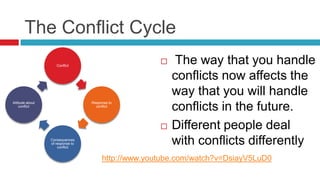
The Conflict Cycle
                    Conflict
                                                         The way that you handle
                                                         conflicts now affects the
                                                         way that you will handle
                                                         conflicts in the future.
Attitude about                    Response to
    conflict                        conflict


                                                        Different people deal
                 Consequences
                 of response to
                     conflict
                                                         with conflicts differently
                                       http://www.youtube.com/watch?v=DsiayV5LuD0
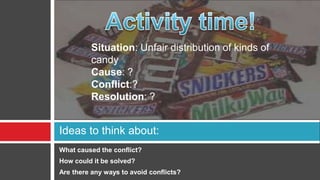
Situation: Unfair distribution of kinds of
          candy
          Cause: ?
          Conflict:?
          Resolution: ?


Ideas to think about:
What caused the conflict?
How could it be solved?
Are there any ways to avoid conflicts?
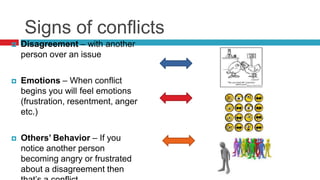
Signs of conflicts
   Disagreement – with another
    person over an issue


   Emotions – When conflict
    begins you will feel emotions
    (frustration, resentment, anger
    etc.)


   Others’ Behavior – If you
    notice another person
    becoming angry or frustrated
    about a disagreement then
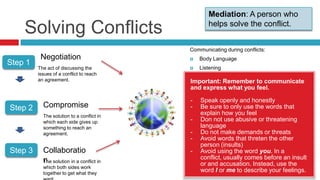
Mediation: A person who

    Solving Conflicts                             helps solve the conflict.


                                           Communicating during conflicts:
          Negotiation                         Body Language
Step 1
         The act of discussing the            Listening
         issues of a conflict to reach
         an agreement.                     Important: Remember to communicate
                                           and express what you feel.

                                           -   Speak openly and honestly
Step 2     Compromise                      -   Be sure to only use the words that
           The solution to a conflict in
                                               explain how you feel
           which each side gives up        -   Don not use abusive or threatening
           something to reach an               language
           agreement.                      -   Do not make demands or threats
                                           -   Avoid words that threten the other
                                               person (insults)
Step 3     Collaboratio                    -   Avoid using the word you. In a
           n                                   conflict, usually comes before an insult
           The solution in a conflict in
                                               or and accusation. Instead, use the
           which both sides work
           together to get what they
                                               word I or me to describe your feelings.
The end.
Remember to
watch out for
conflicts they
  could be
 anywhere!

Conflict presentation

  • 1.
  • 2.
    What is conflicts?  If you don’t learn how to deal with Conflicts is any conflicts, you will face a lot of serious clash/problems problems in the future. of different ideas and  Conflicts can be found and made for interest anything. Example:   fighting over if you made a valid try in touch.   Arguing how gets to visit grandpa first   Having a disagreement over who
  • 3.
    Major Sources ofConflicts  Resources: Many conflicts happen when two or more people want the same thing but only one  can have it. Expectations: Many conflicts happen Values and because of different ideas about what is important or how things should be done.  Emotions: Many conflicts happen because of hurt feelings or anger. These feeling are usually a reaction to rudeness or insensitivity.
  • 4.
    The Conflict Cycle Conflict  The way that you handle conflicts now affects the way that you will handle conflicts in the future. Attitude about Response to conflict conflict  Different people deal Consequences of response to conflict with conflicts differently http://www.youtube.com/watch?v=DsiayV5LuD0
  • 5.
    Situation: Unfair distributionof kinds of candy Cause: ? Conflict:? Resolution: ? Ideas to think about: What caused the conflict? How could it be solved? Are there any ways to avoid conflicts?
  • 6.
    Signs of conflicts  Disagreement – with another person over an issue  Emotions – When conflict begins you will feel emotions (frustration, resentment, anger etc.)  Others’ Behavior – If you notice another person becoming angry or frustrated about a disagreement then
  • 7.
    Mediation: A personwho Solving Conflicts helps solve the conflict. Communicating during conflicts: Negotiation  Body Language Step 1 The act of discussing the  Listening issues of a conflict to reach an agreement. Important: Remember to communicate and express what you feel. - Speak openly and honestly Step 2 Compromise - Be sure to only use the words that The solution to a conflict in explain how you feel which each side gives up - Don not use abusive or threatening something to reach an language agreement. - Do not make demands or threats - Avoid words that threten the other person (insults) Step 3 Collaboratio - Avoid using the word you. In a n conflict, usually comes before an insult The solution in a conflict in or and accusation. Instead, use the which both sides work together to get what they word I or me to describe your feelings.
  • 8.
    The end. Remember to watchout for conflicts they could be anywhere!