MENTAL ILLNESS 
Mental Illness 
FACT: One out of every six 
people has a mental illness.
Understanding Mental Illness 
The brain controls thoughts, feelings, memories 
and actions. Mental A mental illness is a disorder that 
affects them. 
Illness 
When the brain is working properly, it responds to 
life events with normal emotions. 
But the brain’s responses can be changed 
by illnesses that affect the balance of 
chemicals in the brain.
Mental Illness
Causes of Mental Illness 
It is not completely understood. Many illnesses 
are more common in some families than others. 
Mental Illness 
Inherited traits may influence mental illness. 
Sometimes stressful events can trigger a mental 
illness, so the environment may also influence 
mental illness.
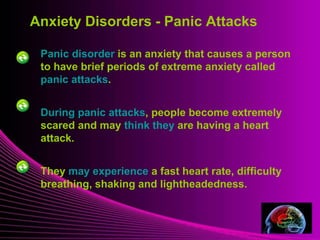
Anxiety Disorders - Panic Attacks 
Panic disorder is an anxiety that causes a person 
to have brief periods of extreme anxiety called 
panic attacks. 
Mental Illness 
During panic attacks, people become extremely 
scared and may think they are having a heart 
attack. 
They may experience a fast heart rate, difficulty 
breathing, shaking and lightheadedness.
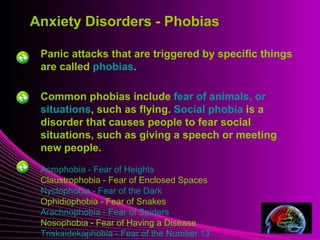
Anxiety Disorders - Phobias 
Panic attacks that are triggered by specific things 
are called phobias. 
Mental Illness 
Common phobias include fear of animals, or 
situations, such as flying. Social phobia is a 
disorder that causes people to fear social 
situations, such as giving a speech or meeting 
new people. 
Acrophobia - Fear of Heights 
Claustrophobia - Fear of Enclosed Spaces 
Nyctophobia - Fear of the Dark 
Ophidiophobia - Fear of Snakes 
Arachnophobia - Fear of Spiders 
Nosophobia - Fear of Having a Disease 
Triskaidekaphobia - Fear of the Number 13
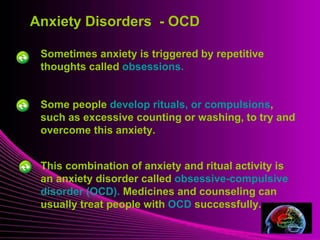
Anxiety Disorders - OCD 
Sometimes anxiety is triggered by repetitive 
thoughts called obsessions. 
Mental Illness 
Some people develop rituals, or compulsions, 
such as excessive counting or washing, to try and 
overcome this anxiety. 
This combination of anxiety and ritual activity is 
an anxiety disorder called obsessive-compulsive 
disorder (OCD). Medicines and counseling can 
usually treat people with OCD successfully.
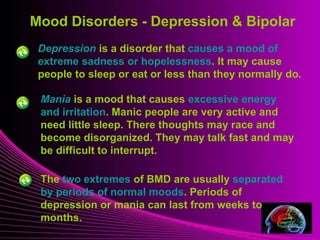
Mood Disorders - Depression & Bipolar 
Depression is a disorder that causes a mood of 
extreme sadness or hopelessness. It may cause 
people to sleep or eat or less than they normally do. 
Mental Illness 
Mania is a mood that causes excessive energy 
and irritation. Manic people are very active and 
need little sleep. There thoughts may race and 
become disorganized. They may talk fast and may 
be difficult to interrupt. 
The two extremes of BMD are usually separated 
by periods of normal moods. Periods of 
depression or mania can last from weeks to 
months.
Schizophrenia skit-se-free-nee-uh 
Is a disorder in which a person breaks from reality in 
several ways. People with the disorder do not always 
have the same symptoms. 
Mental Illness 
Most people who have this disorder express little 
emotion. They usually have hallucinations and 
delusions, and often they feel paranoia. 
Paranoia is the belief that other people want to 
harm someone. Many people who have the disorder 
suffer from disorganized thinking, which can lead 
to nonsense speech.
Main learning points …... 
Give examples/ descriptions of anxiety disorders, 
mood disorders, and schizophrenia. 
Mental Illness 
List two factors that can lead to mental illness.

Mental illness

  • 1.
    MENTAL ILLNESS MentalIllness FACT: One out of every six people has a mental illness.
  • 2.
    Understanding Mental Illness The brain controls thoughts, feelings, memories and actions. Mental A mental illness is a disorder that affects them. Illness When the brain is working properly, it responds to life events with normal emotions. But the brain’s responses can be changed by illnesses that affect the balance of chemicals in the brain.
  • 3.
  • 4.
    Causes of MentalIllness It is not completely understood. Many illnesses are more common in some families than others. Mental Illness Inherited traits may influence mental illness. Sometimes stressful events can trigger a mental illness, so the environment may also influence mental illness.
  • 5.
    Anxiety Disorders -Panic Attacks Panic disorder is an anxiety that causes a person to have brief periods of extreme anxiety called panic attacks. Mental Illness During panic attacks, people become extremely scared and may think they are having a heart attack. They may experience a fast heart rate, difficulty breathing, shaking and lightheadedness.
  • 6.
    Anxiety Disorders -Phobias Panic attacks that are triggered by specific things are called phobias. Mental Illness Common phobias include fear of animals, or situations, such as flying. Social phobia is a disorder that causes people to fear social situations, such as giving a speech or meeting new people. Acrophobia - Fear of Heights Claustrophobia - Fear of Enclosed Spaces Nyctophobia - Fear of the Dark Ophidiophobia - Fear of Snakes Arachnophobia - Fear of Spiders Nosophobia - Fear of Having a Disease Triskaidekaphobia - Fear of the Number 13
  • 7.
    Anxiety Disorders -OCD Sometimes anxiety is triggered by repetitive thoughts called obsessions. Mental Illness Some people develop rituals, or compulsions, such as excessive counting or washing, to try and overcome this anxiety. This combination of anxiety and ritual activity is an anxiety disorder called obsessive-compulsive disorder (OCD). Medicines and counseling can usually treat people with OCD successfully.
  • 8.
    Mood Disorders -Depression & Bipolar Depression is a disorder that causes a mood of extreme sadness or hopelessness. It may cause people to sleep or eat or less than they normally do. Mental Illness Mania is a mood that causes excessive energy and irritation. Manic people are very active and need little sleep. There thoughts may race and become disorganized. They may talk fast and may be difficult to interrupt. The two extremes of BMD are usually separated by periods of normal moods. Periods of depression or mania can last from weeks to months.
  • 9.
    Schizophrenia skit-se-free-nee-uh Isa disorder in which a person breaks from reality in several ways. People with the disorder do not always have the same symptoms. Mental Illness Most people who have this disorder express little emotion. They usually have hallucinations and delusions, and often they feel paranoia. Paranoia is the belief that other people want to harm someone. Many people who have the disorder suffer from disorganized thinking, which can lead to nonsense speech.
  • 10.
    Main learning points…... Give examples/ descriptions of anxiety disorders, mood disorders, and schizophrenia. Mental Illness List two factors that can lead to mental illness.