ESTIMATION AND SPECIFICATION
MATERIAL OF WORK
CONCRETE AND CONCRETE BLOCKS
ITEM OF WORK
RETAINING WALLS
CONCRETE
& CONCRETE BLOCKS
 Concrete is a composite material composed of coarse aggregate bonded
together with a fluid cement which hardens over time.
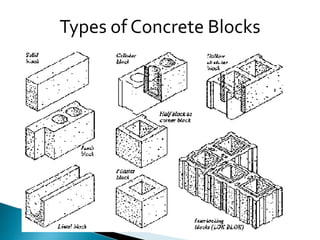
 Concrete blocks are made in three different types, which includes solid, hollow
and interlocking. Solid concrete blocks are 55 percent solid and hollow blocks are
25 per cent solid. Concrete blocks are typically classified into a category by their
density or unit weight. Density is determined by the amount and type of
aggregates added the concrete mixture to produce lightweight, medium and
normal weight concrete blocks. Concrete blocks are available in decorative and
load bearing types.
Types of Concrete Blocks
 Concrete blocks are versatile; they can be used for many
different types of applications whether the application is
load bearing, structural or decorative. Load bearing
applications of concrete blocks can either be veneer which
is supporting a roof or a retaining wall which is supporting
a large amount of soil.This type of application may require
reinforcement of the concrete blocks to ensure the
material is further protected and able to withstand the
weight that is required.The typical shape of a concrete
block is rectangular or square.Their size in thickness
ranges from 40mm to 100mm. They can also be
customized to suit the design requirements of the project.
 RetainingWalls
 Siding
 Veneer
 Homes
 Commercial Properties
 Paving Applications
 Steps
 Landscaping Garden Beds
 Curbing and Edging
 Concrete Block Home
 Concrete blocks are used the same way as baked bricks are use.
 These are placed one over the other sandwiched between layers of
mortar.
 These are not load bearing members and can only retain weight till a
limit.
Cost
• AAC (Autoclave Aerated Concrete) blocks: 1 Cubic meter of AAC
blocks cost approximately Rs 3200/- to Rs 3500/- in Indian Cities.
(Per block cost is approximately Rs. 80/-)
RETAINING WALLS
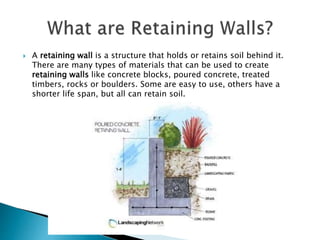
 A retaining wall is a structure that holds or retains soil behind it.
There are many types of materials that can be used to create
retaining walls like concrete blocks, poured concrete, treated
timbers, rocks or boulders. Some are easy to use, others have a
shorter life span, but all can retain soil.
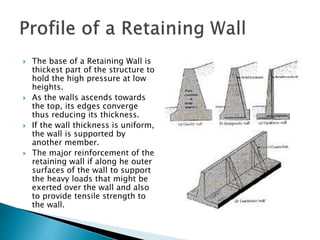
 The base of a Retaining Wall is
thickest part of the structure to
hold the high pressure at low
heights.
 As the walls ascends towards
the top, its edges converge
thus reducing its thickness.
 If the wall thickness is uniform,
the wall is supported by
another member.
 The major reinforcement of the
retaining wall if along he outer
surfaces of the wall to support
the heavy loads that might be
exerted over the wall and also
to provide tensile strength to
the wall.
 The scale at which the retaining walls are constructed might vary
over a huge range.
 From the walls of a landfilled garden to the the walls of World’s
Largest Dams, all are Retaining Walls.

Concrete blocks, retaining walls

  • 1.
    ESTIMATION AND SPECIFICATION MATERIALOF WORK CONCRETE AND CONCRETE BLOCKS ITEM OF WORK RETAINING WALLS
  • 2.
  • 3.
     Concrete isa composite material composed of coarse aggregate bonded together with a fluid cement which hardens over time.  Concrete blocks are made in three different types, which includes solid, hollow and interlocking. Solid concrete blocks are 55 percent solid and hollow blocks are 25 per cent solid. Concrete blocks are typically classified into a category by their density or unit weight. Density is determined by the amount and type of aggregates added the concrete mixture to produce lightweight, medium and normal weight concrete blocks. Concrete blocks are available in decorative and load bearing types.
  • 4.
  • 5.
     Concrete blocksare versatile; they can be used for many different types of applications whether the application is load bearing, structural or decorative. Load bearing applications of concrete blocks can either be veneer which is supporting a roof or a retaining wall which is supporting a large amount of soil.This type of application may require reinforcement of the concrete blocks to ensure the material is further protected and able to withstand the weight that is required.The typical shape of a concrete block is rectangular or square.Their size in thickness ranges from 40mm to 100mm. They can also be customized to suit the design requirements of the project.
  • 6.
     RetainingWalls  Siding Veneer  Homes  Commercial Properties  Paving Applications  Steps  Landscaping Garden Beds  Curbing and Edging  Concrete Block Home
  • 7.
     Concrete blocksare used the same way as baked bricks are use.  These are placed one over the other sandwiched between layers of mortar.  These are not load bearing members and can only retain weight till a limit. Cost • AAC (Autoclave Aerated Concrete) blocks: 1 Cubic meter of AAC blocks cost approximately Rs 3200/- to Rs 3500/- in Indian Cities. (Per block cost is approximately Rs. 80/-)
  • 8.
  • 9.
     A retainingwall is a structure that holds or retains soil behind it. There are many types of materials that can be used to create retaining walls like concrete blocks, poured concrete, treated timbers, rocks or boulders. Some are easy to use, others have a shorter life span, but all can retain soil.
  • 10.
     The baseof a Retaining Wall is thickest part of the structure to hold the high pressure at low heights.  As the walls ascends towards the top, its edges converge thus reducing its thickness.  If the wall thickness is uniform, the wall is supported by another member.  The major reinforcement of the retaining wall if along he outer surfaces of the wall to support the heavy loads that might be exerted over the wall and also to provide tensile strength to the wall.
  • 11.
     The scaleat which the retaining walls are constructed might vary over a huge range.  From the walls of a landfilled garden to the the walls of World’s Largest Dams, all are Retaining Walls.