Downloaded 708 times


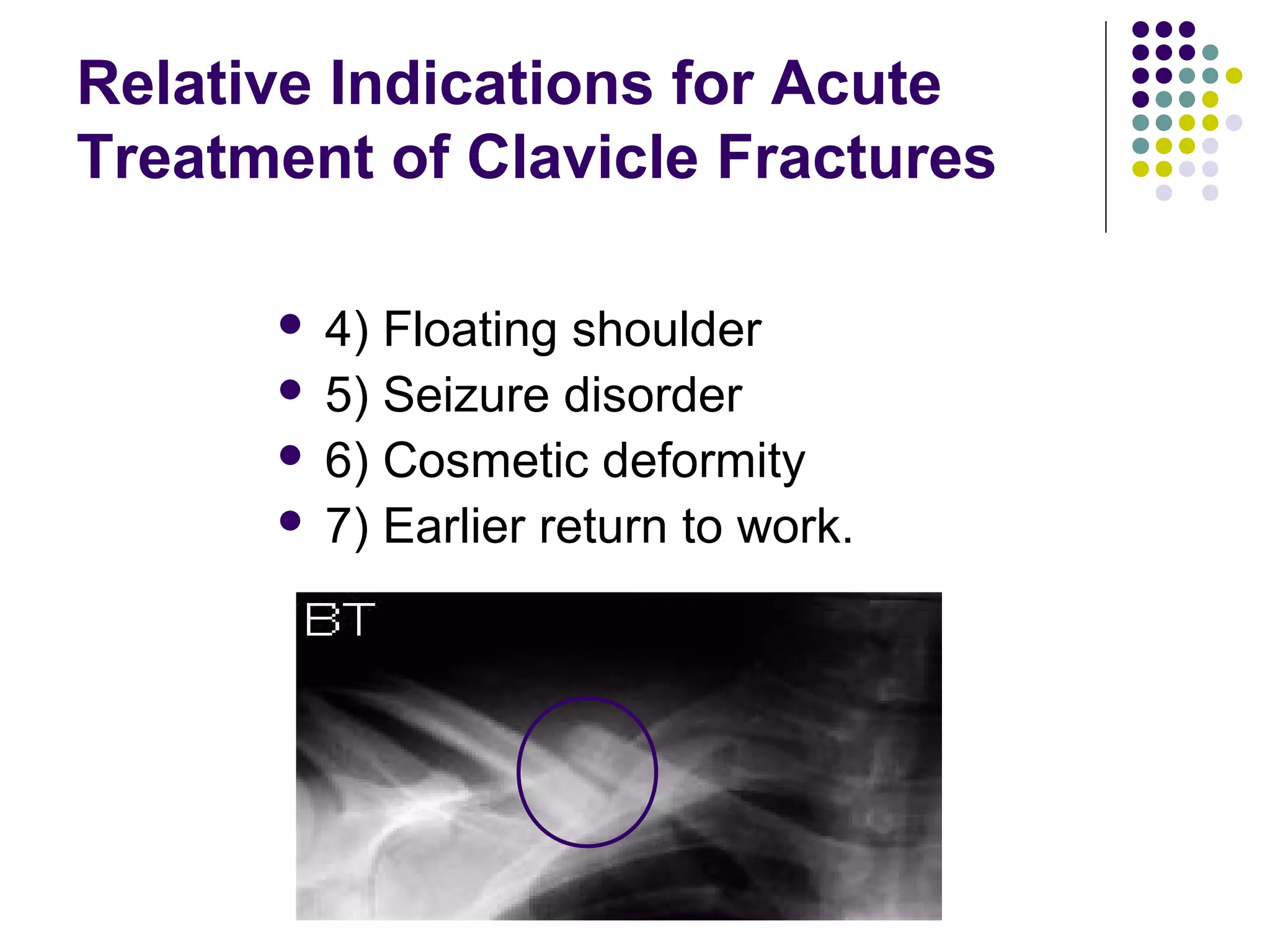


The document summarizes information about clavicle fractures, including their epidemiology, anatomy, mechanisms of injury, classification systems, treatment options, and evidence for management approaches. Specifically, it finds that: 1) Clavicle fractures are among the most common fractures and midshaft fractures account for 69-80% of cases. 2) They are often caused by a direct blow to the shoulder and result in characteristic deformities from surrounding muscle and ligament forces. 3) Nonoperative treatment is usually indicated for nondisplaced fractures but recent evidence shows displaced or shortened fractures have higher risks of poor outcomes like pain, weakness and nonunion.


