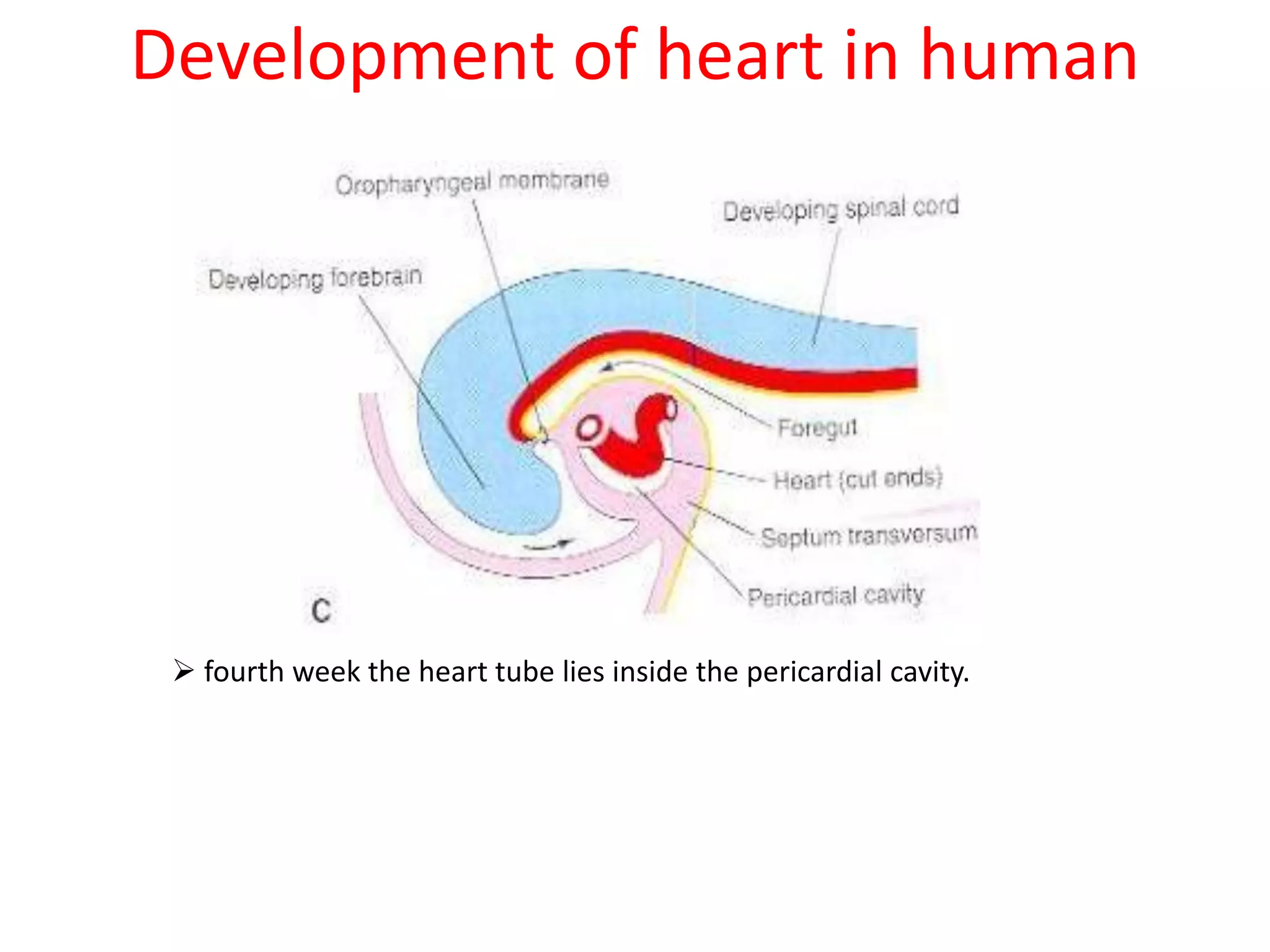
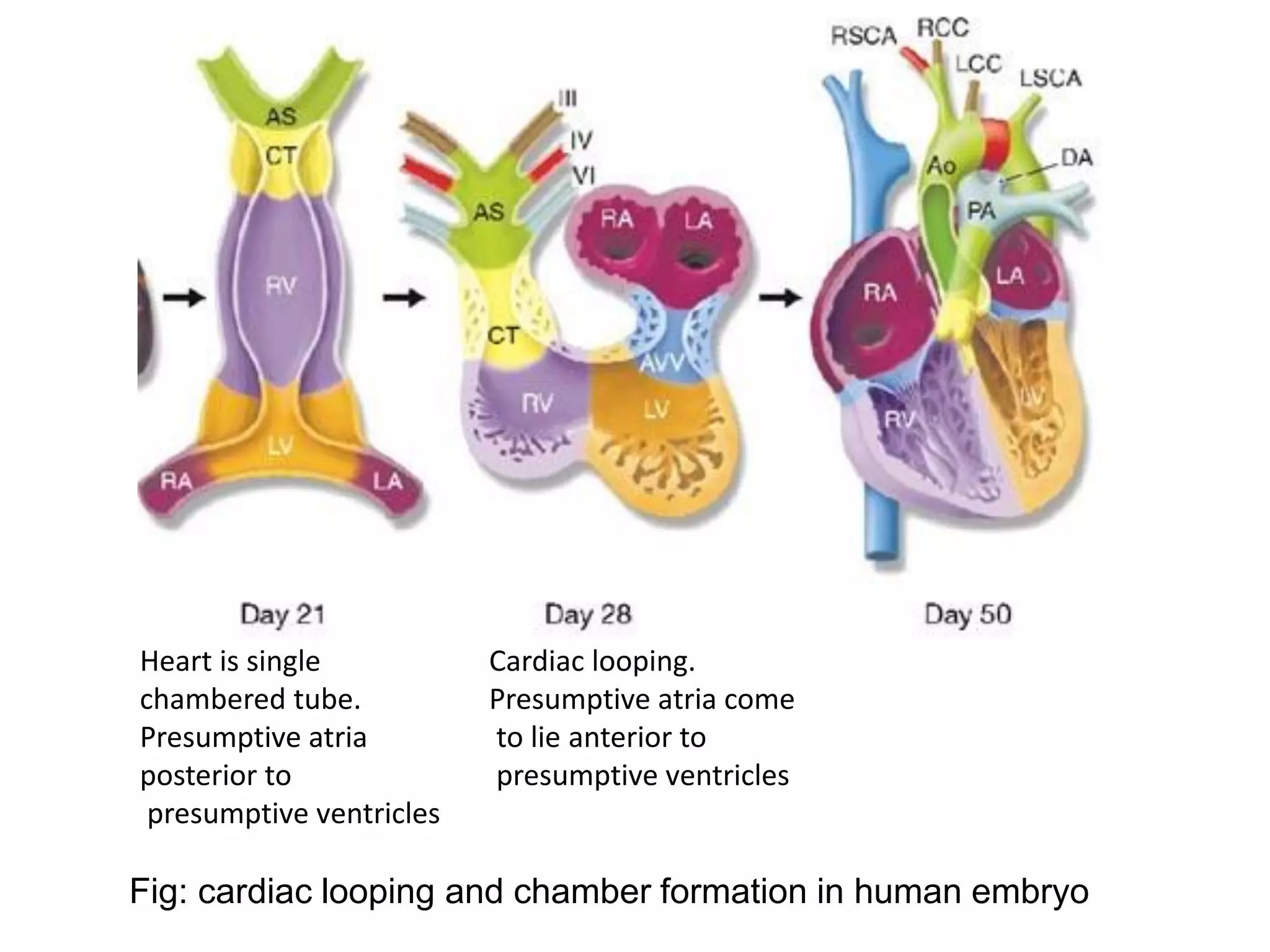
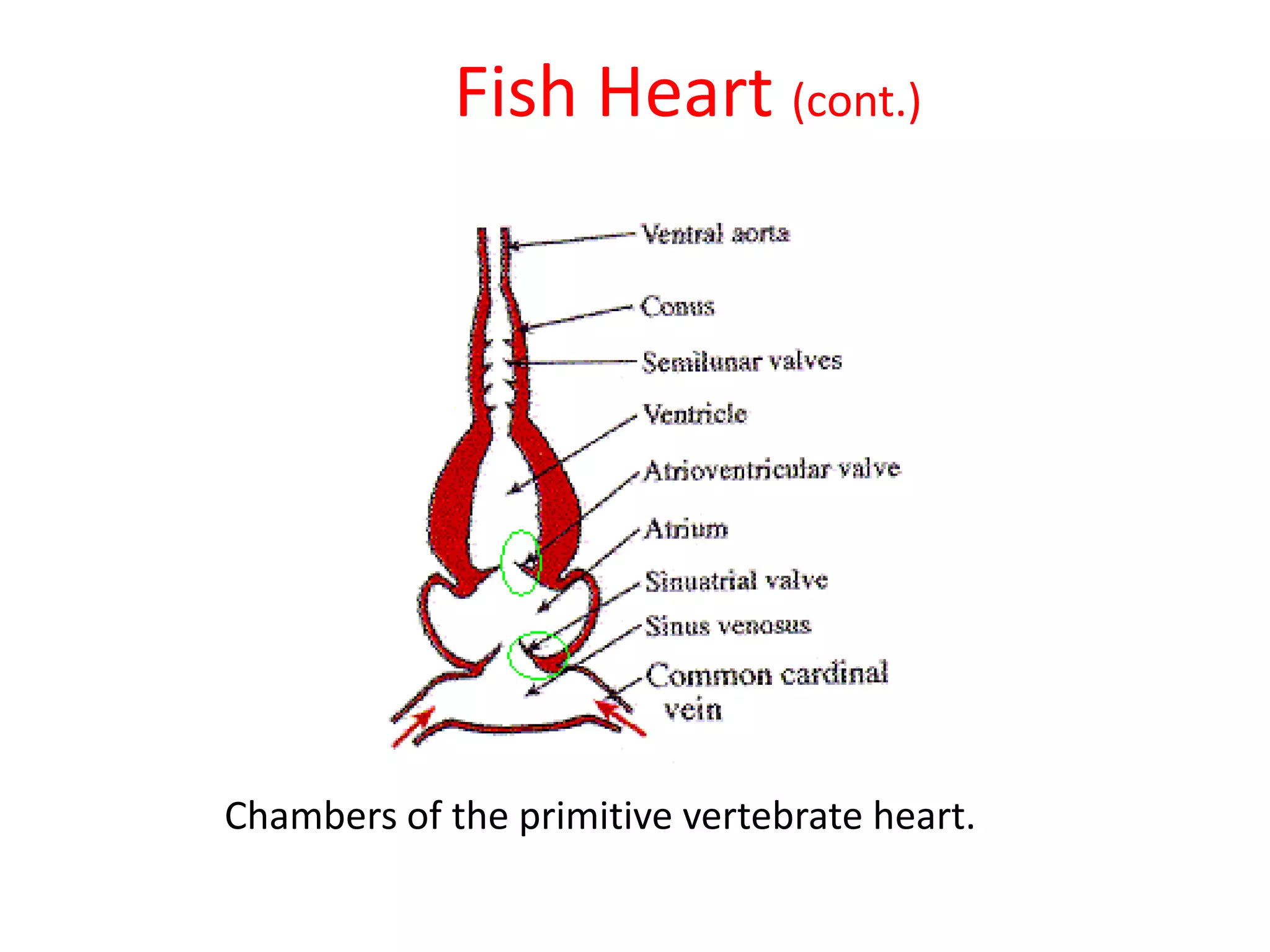
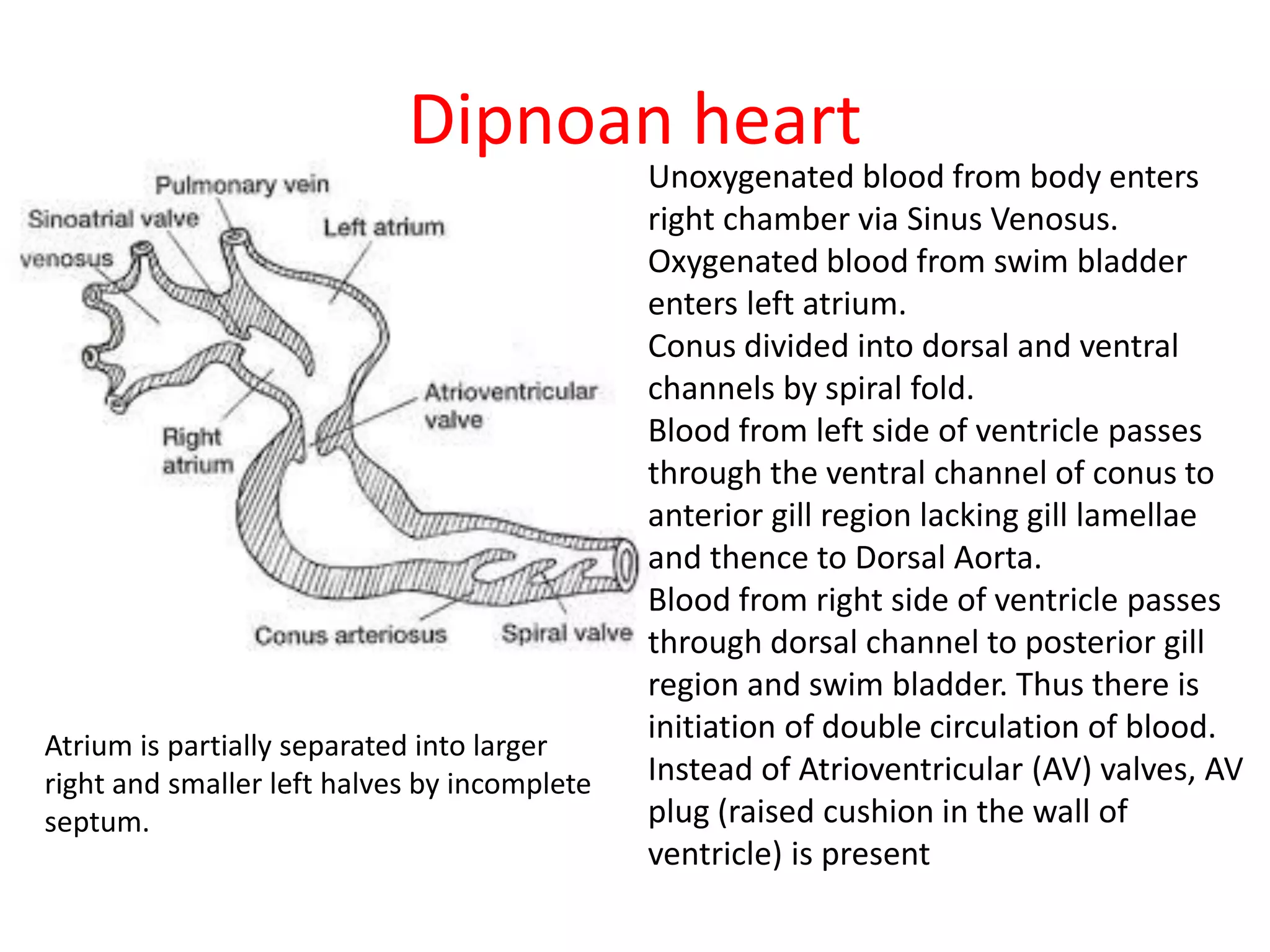
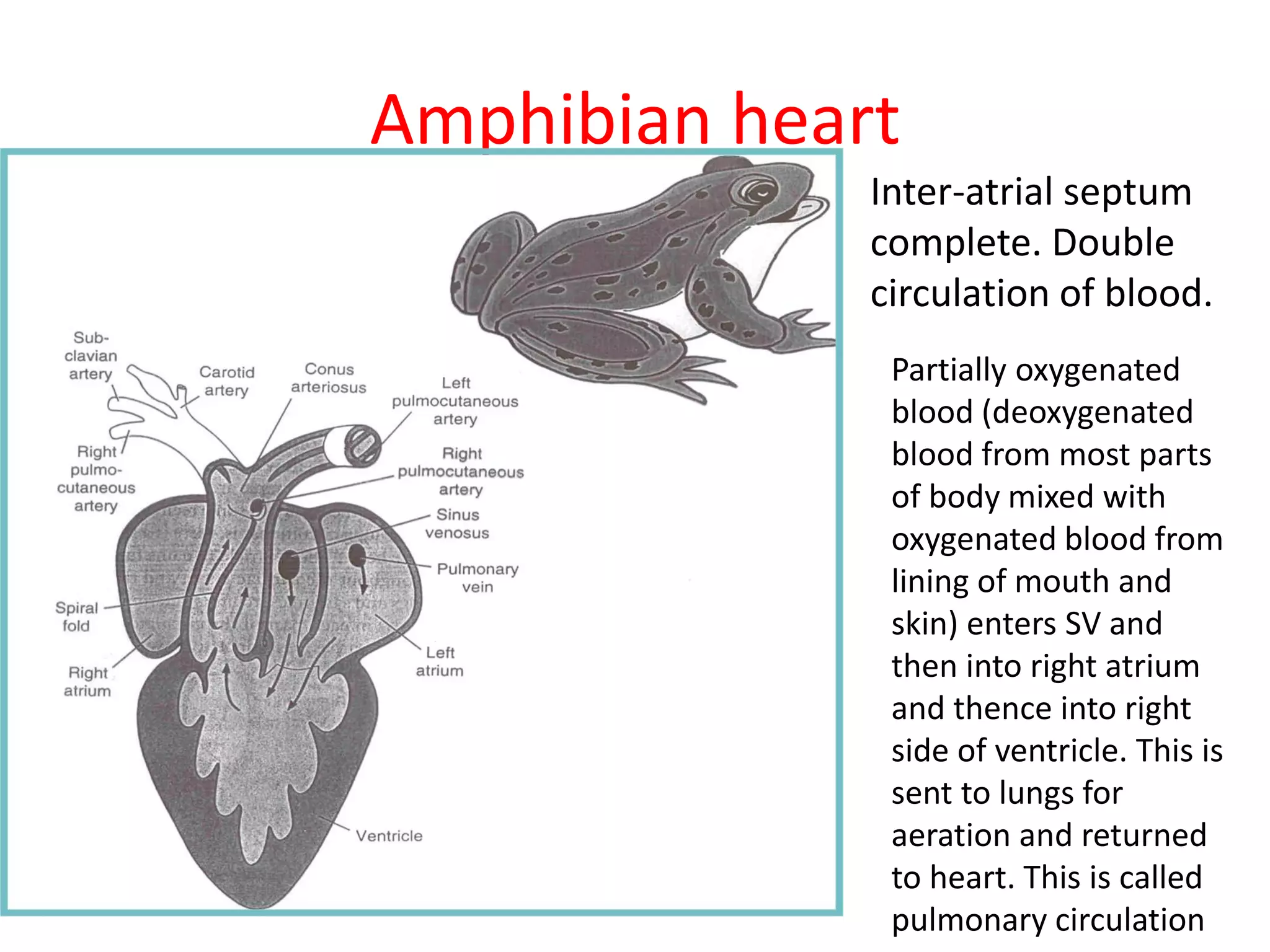
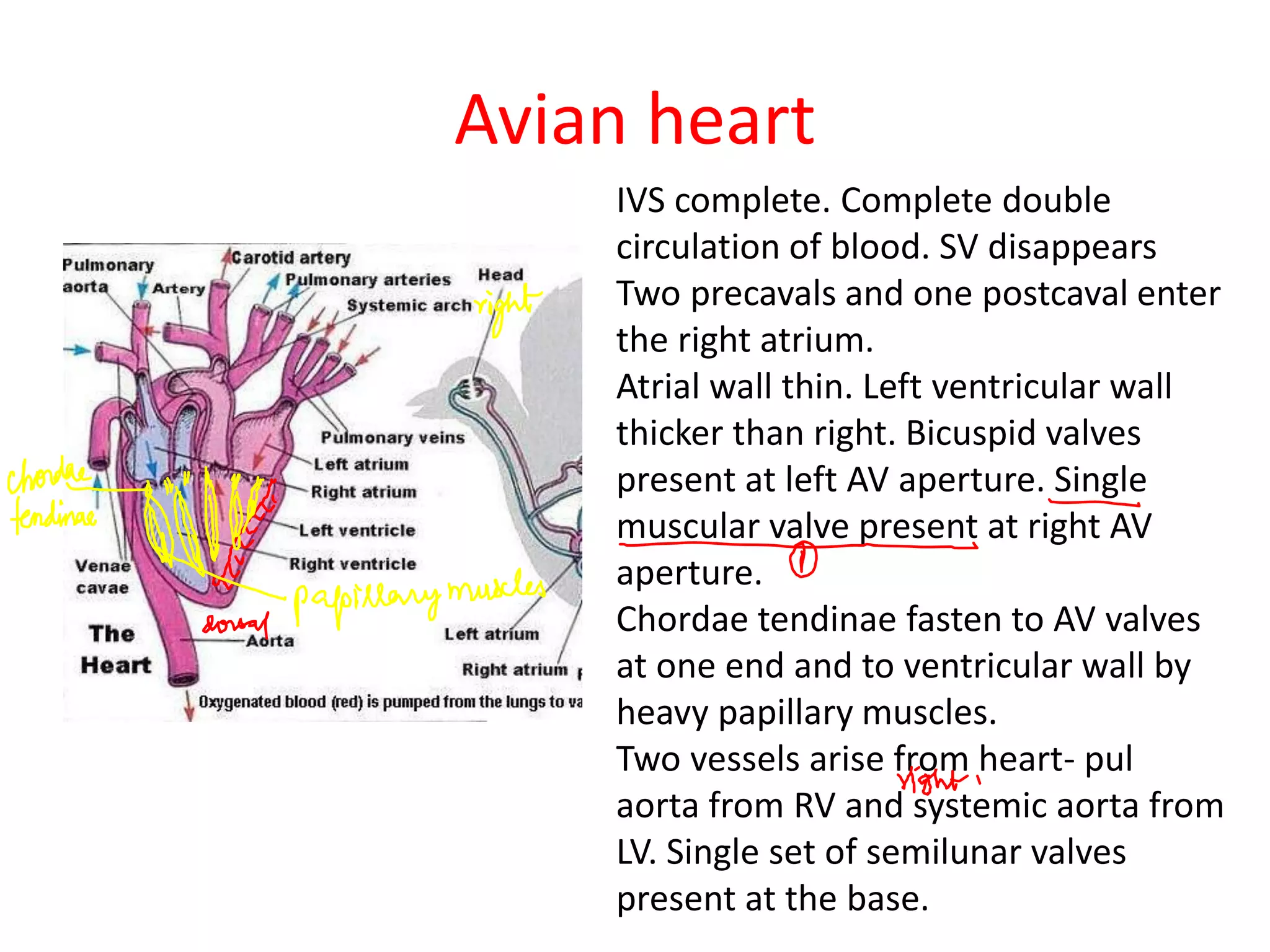
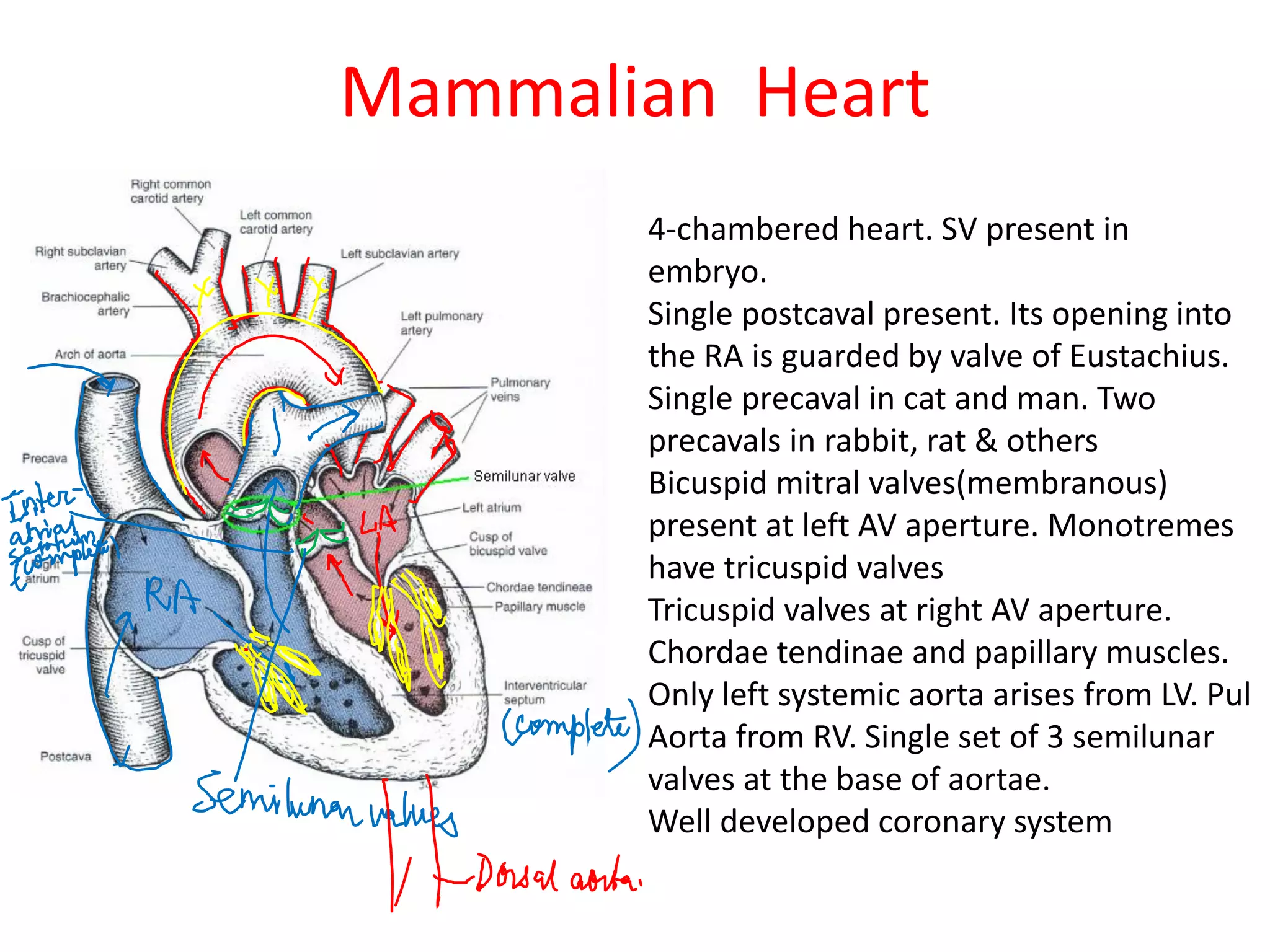
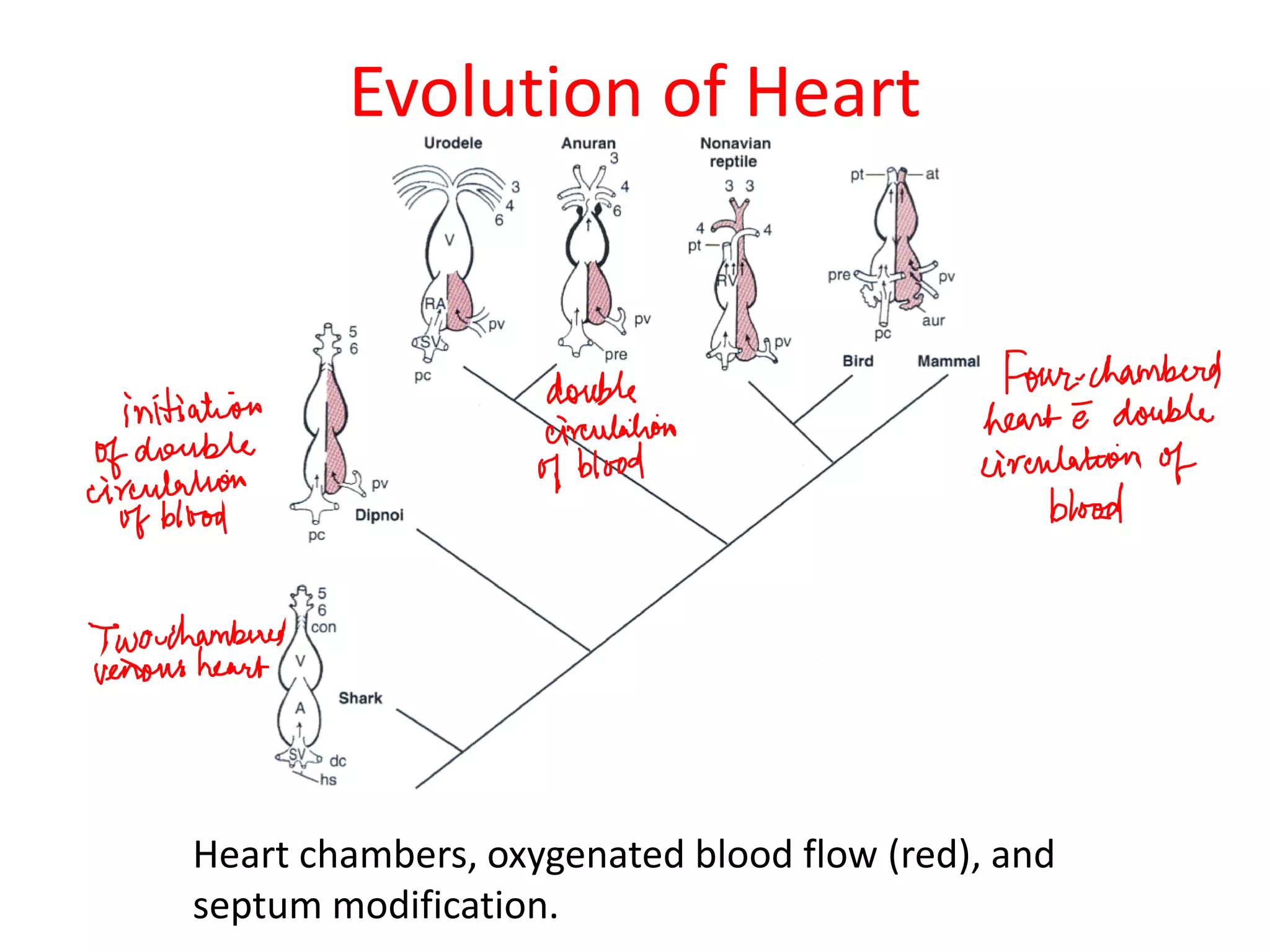
This document provides an overview of heart development and comparative anatomy across vertebrates. It describes how the heart originates from mesodermal tissue and develops into a tubular structure. Across species, the heart evolves from a two-chambered structure in fish to a four-chambered heart with complete separation of oxygenated and deoxygenated blood in mammals. Key developments include the formation of four chambers, completion of the interatrial and interventricular septa, and separation of pulmonary and systemic circulation. Differences in heart structure across fish, amphibians, reptiles, birds, and mammals are also summarized.
















![Cardio vascular_ system-1[1].pdf](https://cdn.slidesharecdn.com/ss_thumbnails/cardiovascularsystem-11-251126110900-78e18dd1-thumbnail.jpg?width=640&height=640&fit=bounds)


