COMMUNITY
LANGUAGE
LEARNING (CLL)
 BACKGROUND
 developed by Charles Curran in the 1970s
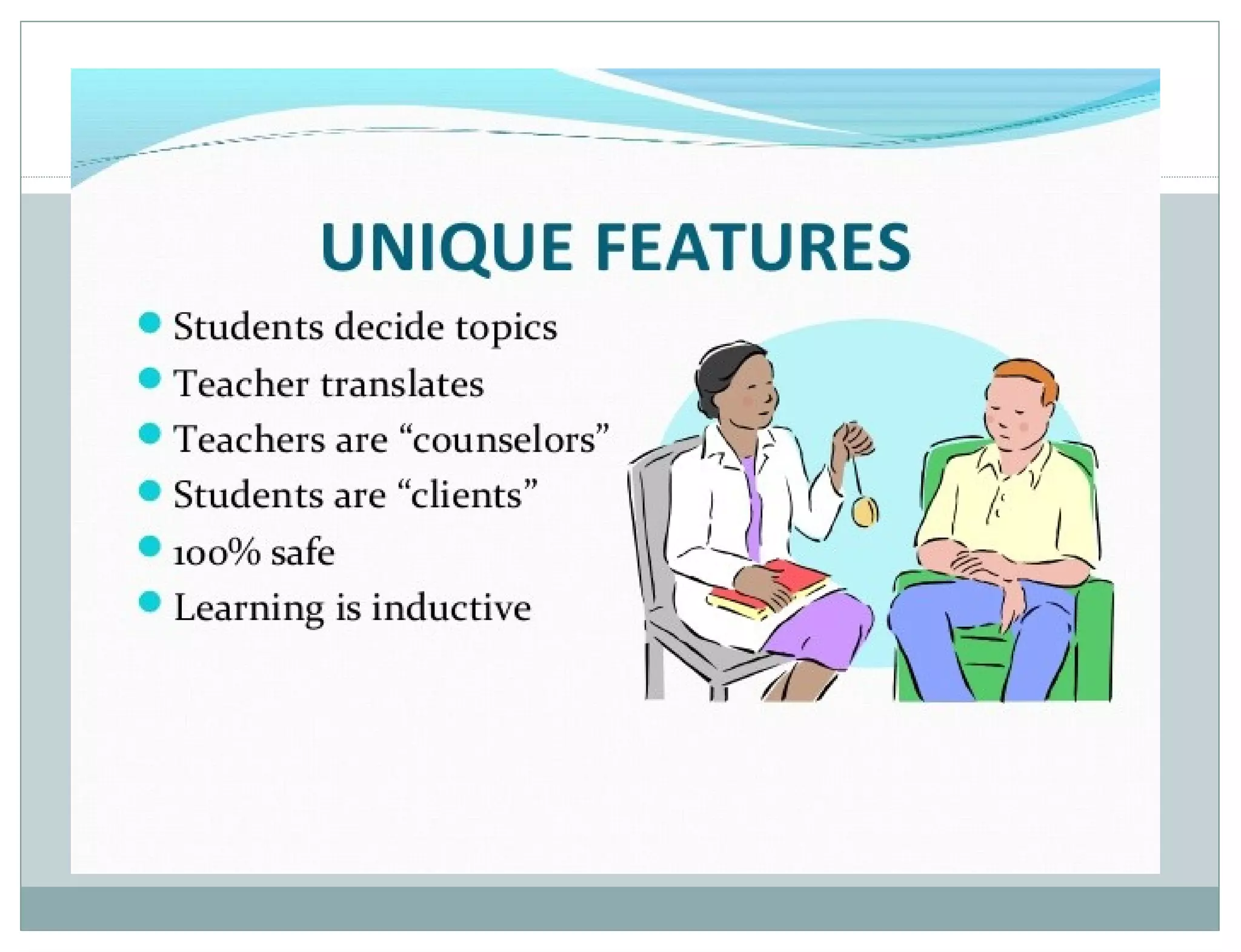
 primary insights from Rogerian counseling theory
counselor client
(knower) teacher (learner) student
Maskowitz’s Humanistic Techniques
which engages the whole person:
• blend what students feel, think, and know
with what they are learning in target
language
• self actualization and self-esteem
• help to foster a caring climate
• emotions and feelings as well as linguistic
knowledge and behavioral skills
Language Alternation;
(another language teaching tradition which
CLL is linked )
- Mackey: A message, lesson or class is
presented first in the native language and
then, in the target language before overhears.
 Approach;
 Theory of Language;
the social-process view of language
+
the Interactional view of language
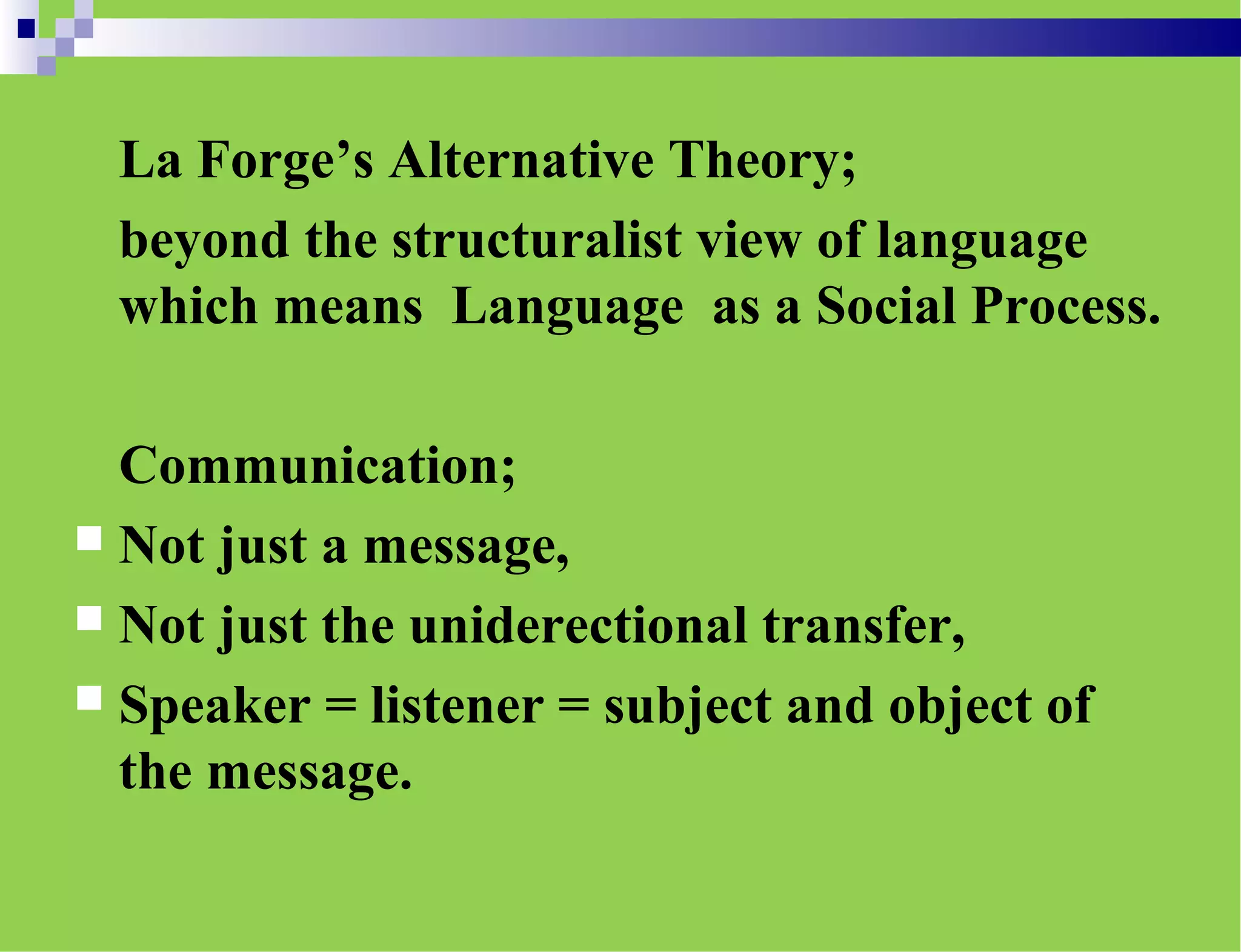
La Forge’s Alternative Theory;
beyond the structuralist view of language
which means Language as a Social Process.
Communication;
 Not just a message,
 Not just the uniderectional transfer,
 Speaker = listener = subject and object of
the message.
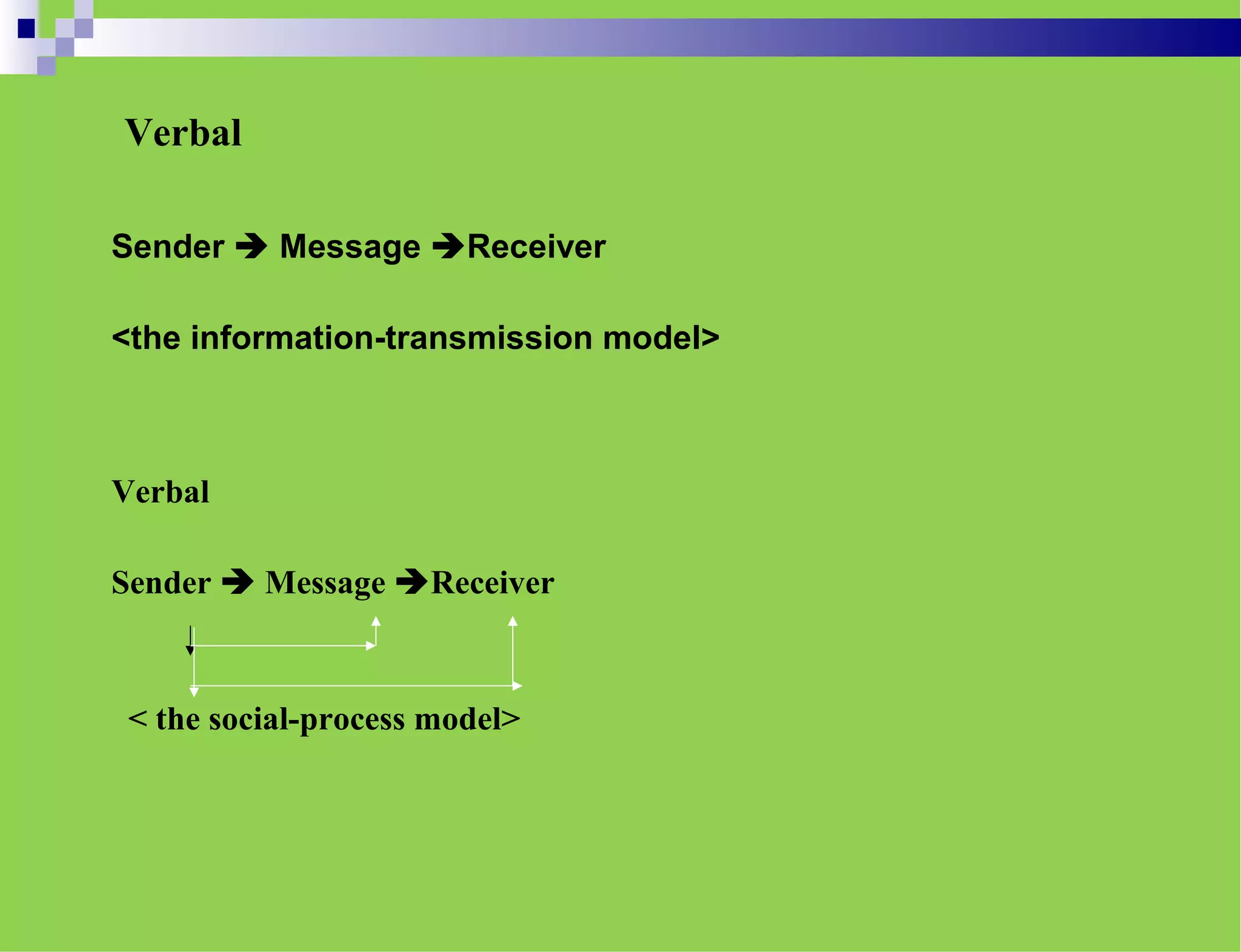
Verbal
Sender  Message Receiver
<the information-transmission model>
Verbal
Sender  Message Receiver
< the social-process model>
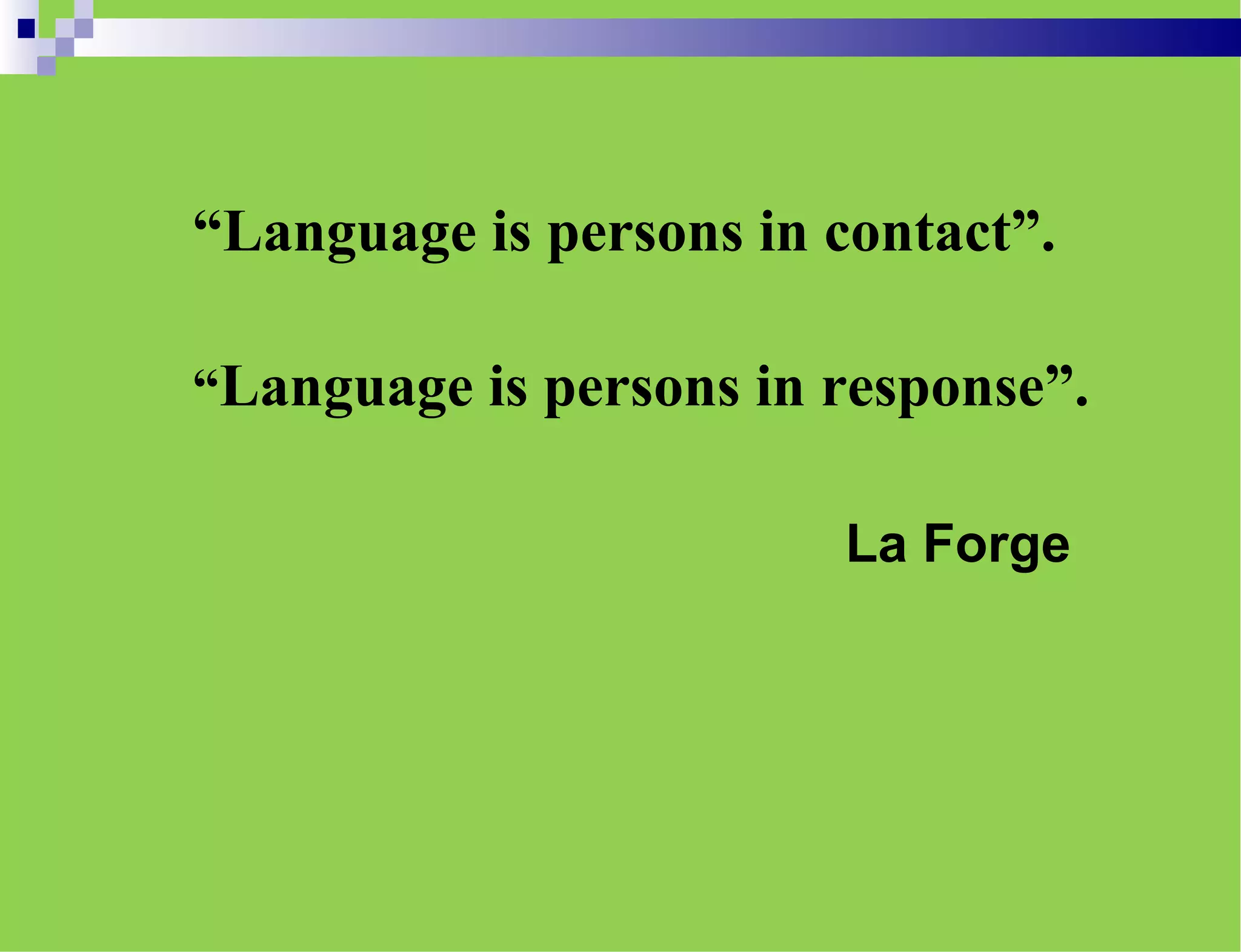
“Language is persons in contact”.
“Language is persons in response”.
La Forge
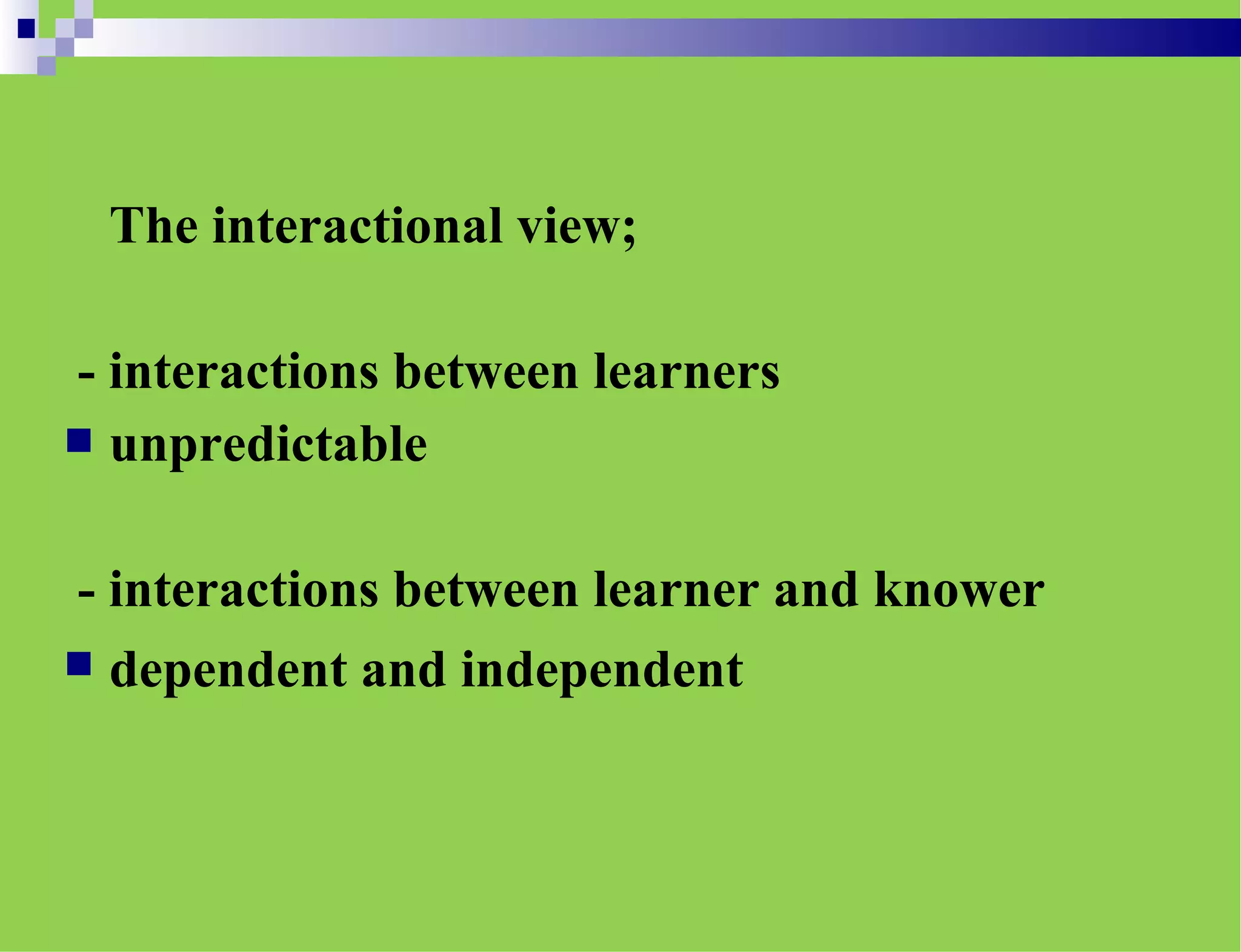
The interactional view;
- interactions between learners
 unpredictable
- interactions between learner and knower
 dependent and independent
Stages;
 in stage 1; dependent
 in stage 2; self-assertive
 in stage 3; resentful & indignant
 in stage 4; tolerant
 in stage 5; independent
Theory of Language Learning
 Whole-person Learning ( cognitive and affective )
-a holistic one
-analyzed into five stages
Whole person learning stages;
1- feelings of security and belonging
2- independence
3- speaking independently
4- mature enough to take criticism
5- improving the knowledge of linguistics
Convalidation or Consensual Validation
S stands for security
A stands for attention and aggression
R stands for retention and reflection
D stands for discrimination
“SARD” By Curran
 Design
- Objectives
 encouraging the students to take more
responsibility
 learning how to learn from one another
 using the target language communicatively
The Syllabus
 the teaching of oral proficiency
 a topic based course progression
 emerging from the interaction between learners and
teachers
 detailed and specific grammar and lexical points
isolated by the teacher
Learning Activities
 Translation
 Group work
 Tape-recording
 Transcription
Analysis
Reflection and
observation
Listening
Free conversation
Roles of Learners
 Being a member of the community,
 Listening carefully
 Telling messages independently
 Repeating messages without any hesitation
 Expreesing feelings, frustration
 Being counselor of other learners
 Learners become members of a community and learn through
interacting with the community.
 Learning is viewed as something that is achieved
collaboratively not as an individual accomplishment
 Learners are expected to listen carefully to the knower
 CLL learners are typically grouped in a circle of six to twelve
learners.
Roles of Teachers
 Encourager
 Supporter
 Monitoring relationship
 Politely criticiser
 advicer
 Is to respond calmly and nonjudgmentally, in a supportive manner, and help
the client try to understand his/her problems
 Keyed to the 5 development stages:
 In early stages of learning the teacher operates in supportive role, providing
target language translations and a model for imitation on request of the clients.
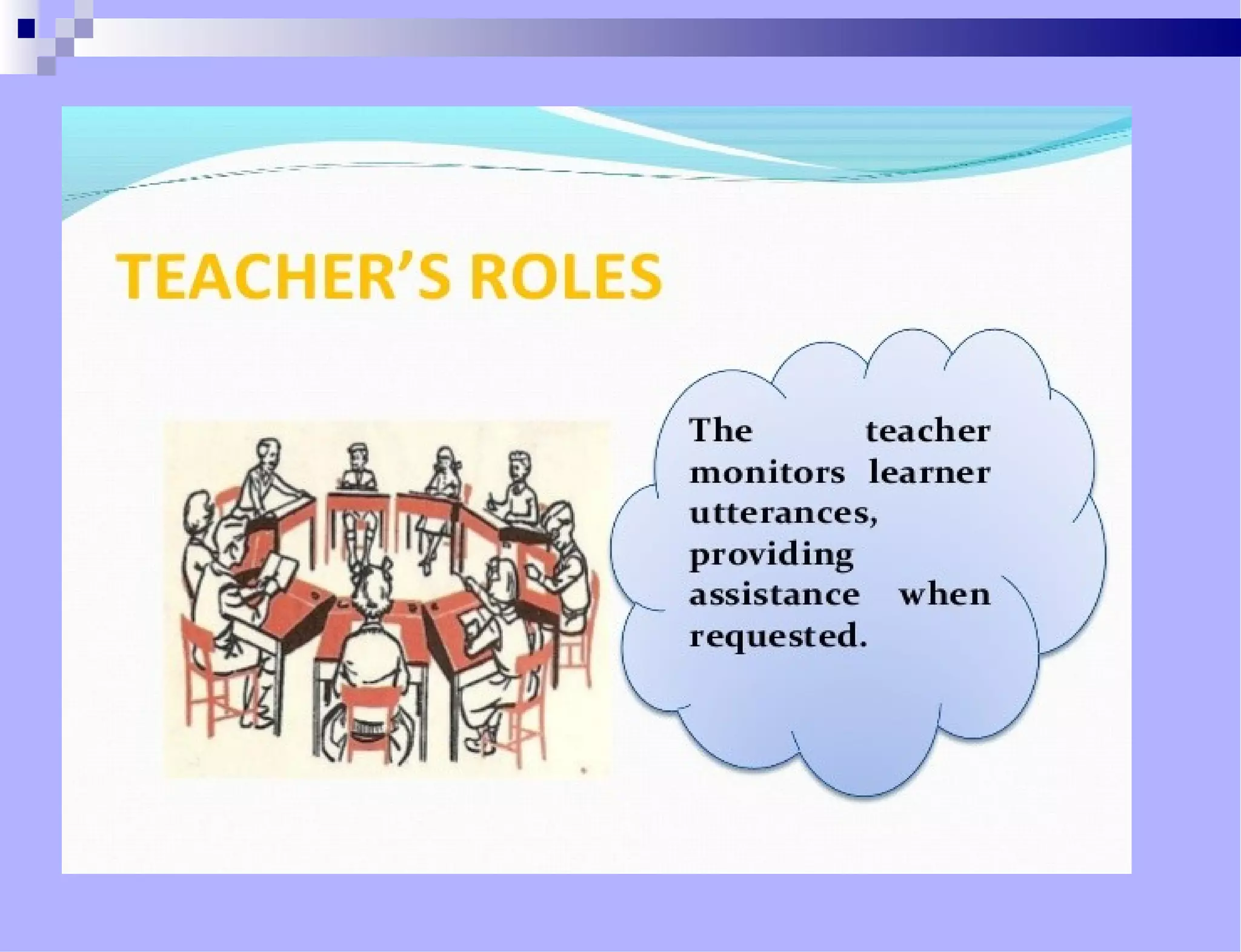
 Later, the teacher monitors learner utterances, providing assistance
when requested.
 As learning processes, students become increasingly capable of accepting
criticism and the teacher may intervene directly to correct deviant
utterances, supply idioms and advise on usage and fine points of
grammar.
Instructional Materials
 a textbook isn’t necessary
 developed by the teachers as the course develops
 projector, tape recorder
 scripts for conversations developed by the students.
Procedure
 informal greeting
 statement of the goals and guidelines
 sitting in a circle
 conversations and messages given by the
student in the L1
 Translation of it into the target language by
the teacher
 repetition for the tape recorder
 Replaying the tape recorder for refreshing
what have learned by repeating
 Reflection
 Elements of Spelling, Grammar,
Capitalization
 Asking questions about the lesson
 Copying sentences from the board with notes
on meaning/usage.
What is the role of the native language in
CLL?
 Enhancing the security
 Providing a bridge from the familiar to the
unfamiliar
 Making the meaning clear
 Weaknesses
 a lack of grammatical syllabus
 unclear objectives
 focus on fluency rather than accuracy
 difficulty in evaluation
What areas of language skills are
emphasized?
- Culture is the integral part of language learning,
and language is for creative and critical thinking.
- The most important skills are understanding and
speaking the language and then, reading and
writing with reinforcement.
Cons
 In the beginning some learners find it difficult to speak on tape
while others might find that the conversation lacks spontaneity.
 We as teachers can find it strange to give our students so much
freedom and tend to intervene too much.
 In your efforts to let your students become independent learners
you can neglect their need for guidance.
Pros
 Learners appreciate the autonomy CLL offers them and thrive on
analyzing their own conversations.
 CLL works especially well with lower levels who are struggling to
produce spoken English.
 The class often becomes a real community, not just when using
CLL but all of the time. Students become much more aware of
their peers, their strengths and weaknesses and want to work as
a team.
Community language learning_cll1_son

Community language learning_cll1_son

  • 1.
  • 5.
     BACKGROUND  developedby Charles Curran in the 1970s  primary insights from Rogerian counseling theory counselor client (knower) teacher (learner) student
  • 6.
    Maskowitz’s Humanistic Techniques whichengages the whole person: • blend what students feel, think, and know with what they are learning in target language • self actualization and self-esteem • help to foster a caring climate • emotions and feelings as well as linguistic knowledge and behavioral skills
  • 7.
    Language Alternation; (another languageteaching tradition which CLL is linked ) - Mackey: A message, lesson or class is presented first in the native language and then, in the target language before overhears.
  • 8.
     Approach;  Theoryof Language; the social-process view of language + the Interactional view of language
  • 9.
    La Forge’s AlternativeTheory; beyond the structuralist view of language which means Language as a Social Process. Communication;  Not just a message,  Not just the uniderectional transfer,  Speaker = listener = subject and object of the message.
  • 10.
    Verbal Sender  MessageReceiver <the information-transmission model> Verbal Sender  Message Receiver < the social-process model>
  • 11.
    “Language is personsin contact”. “Language is persons in response”. La Forge
  • 12.
    The interactional view; -interactions between learners  unpredictable - interactions between learner and knower  dependent and independent
  • 13.
    Stages;  in stage1; dependent  in stage 2; self-assertive  in stage 3; resentful & indignant  in stage 4; tolerant  in stage 5; independent
  • 14.
    Theory of LanguageLearning  Whole-person Learning ( cognitive and affective ) -a holistic one -analyzed into five stages
  • 15.
    Whole person learningstages; 1- feelings of security and belonging 2- independence 3- speaking independently 4- mature enough to take criticism 5- improving the knowledge of linguistics
  • 16.
    Convalidation or ConsensualValidation S stands for security A stands for attention and aggression R stands for retention and reflection D stands for discrimination “SARD” By Curran
  • 17.
     Design - Objectives encouraging the students to take more responsibility  learning how to learn from one another  using the target language communicatively
  • 18.
    The Syllabus  theteaching of oral proficiency  a topic based course progression  emerging from the interaction between learners and teachers  detailed and specific grammar and lexical points isolated by the teacher
  • 19.
    Learning Activities  Translation Group work  Tape-recording  Transcription Analysis Reflection and observation Listening Free conversation
  • 20.
    Roles of Learners Being a member of the community,  Listening carefully  Telling messages independently  Repeating messages without any hesitation  Expreesing feelings, frustration  Being counselor of other learners
  • 21.
     Learners becomemembers of a community and learn through interacting with the community.  Learning is viewed as something that is achieved collaboratively not as an individual accomplishment  Learners are expected to listen carefully to the knower  CLL learners are typically grouped in a circle of six to twelve learners.
  • 23.
    Roles of Teachers Encourager  Supporter  Monitoring relationship  Politely criticiser  advicer
  • 24.
     Is torespond calmly and nonjudgmentally, in a supportive manner, and help the client try to understand his/her problems  Keyed to the 5 development stages:  In early stages of learning the teacher operates in supportive role, providing target language translations and a model for imitation on request of the clients.  Later, the teacher monitors learner utterances, providing assistance when requested.  As learning processes, students become increasingly capable of accepting criticism and the teacher may intervene directly to correct deviant utterances, supply idioms and advise on usage and fine points of grammar.
  • 25.
    Instructional Materials  atextbook isn’t necessary  developed by the teachers as the course develops  projector, tape recorder  scripts for conversations developed by the students.
  • 26.
    Procedure  informal greeting statement of the goals and guidelines  sitting in a circle  conversations and messages given by the student in the L1  Translation of it into the target language by the teacher  repetition for the tape recorder
  • 27.
     Replaying thetape recorder for refreshing what have learned by repeating  Reflection  Elements of Spelling, Grammar, Capitalization  Asking questions about the lesson  Copying sentences from the board with notes on meaning/usage.
  • 28.
    What is therole of the native language in CLL?  Enhancing the security  Providing a bridge from the familiar to the unfamiliar  Making the meaning clear
  • 29.
     Weaknesses  alack of grammatical syllabus  unclear objectives  focus on fluency rather than accuracy  difficulty in evaluation
  • 30.
    What areas oflanguage skills are emphasized? - Culture is the integral part of language learning, and language is for creative and critical thinking. - The most important skills are understanding and speaking the language and then, reading and writing with reinforcement.
  • 31.
    Cons  In thebeginning some learners find it difficult to speak on tape while others might find that the conversation lacks spontaneity.  We as teachers can find it strange to give our students so much freedom and tend to intervene too much.  In your efforts to let your students become independent learners you can neglect their need for guidance.
  • 32.
    Pros  Learners appreciatethe autonomy CLL offers them and thrive on analyzing their own conversations.  CLL works especially well with lower levels who are struggling to produce spoken English.  The class often becomes a real community, not just when using CLL but all of the time. Students become much more aware of their peers, their strengths and weaknesses and want to work as a team.