INTRODUCTION TO
           APPLIED LINGUISTICS
              Video Lesson 1
 Linguistics vs Applied Linguistics

Mgs. Nina Nesterenko
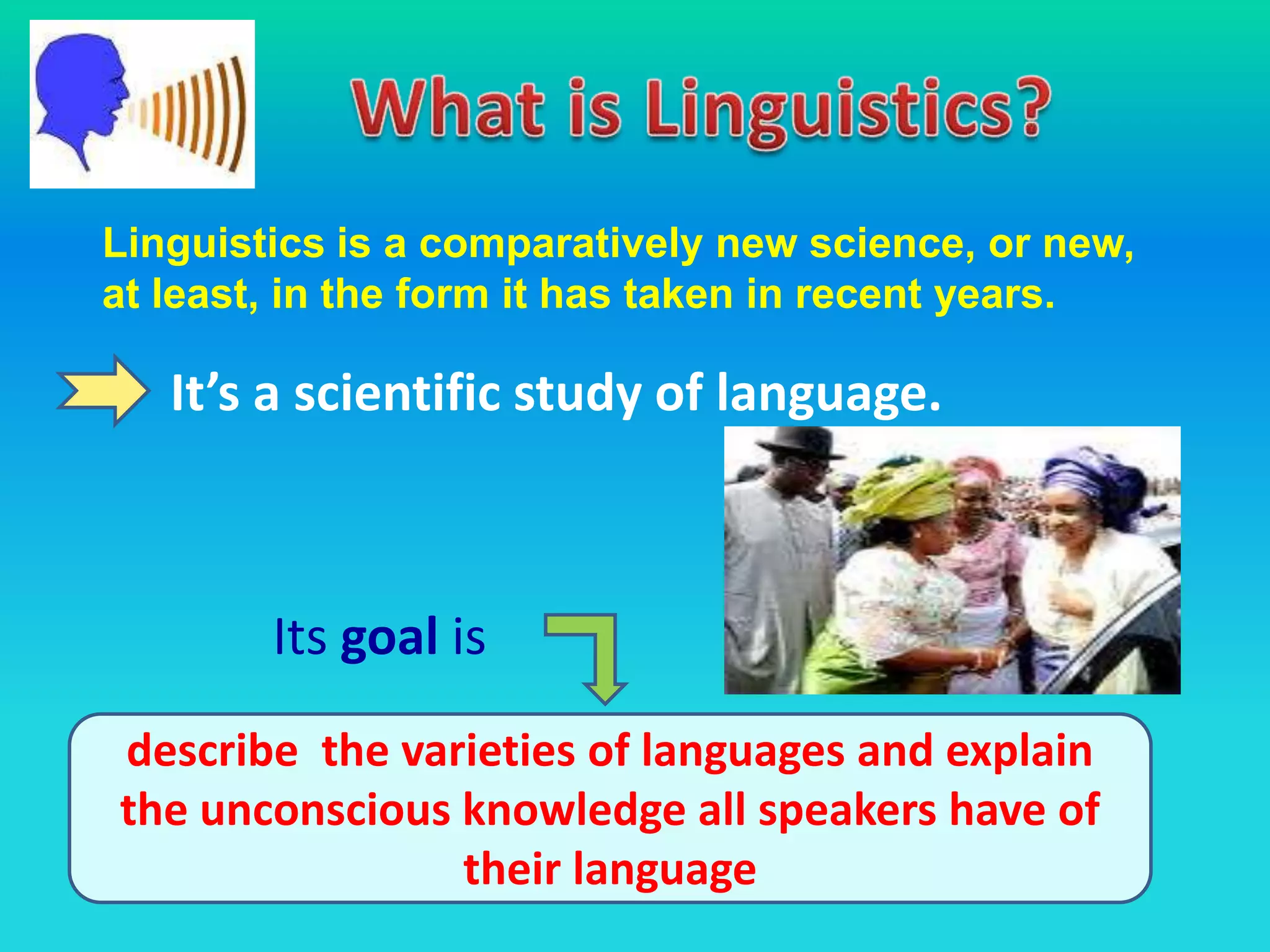
Linguistics is a comparatively new science, or new,
at least, in the form it has taken in recent years.

   It’s a scientific study of language.


        Its goal is
describe the varieties of languages and explain
the unconscious knowledge all speakers have of
                their language
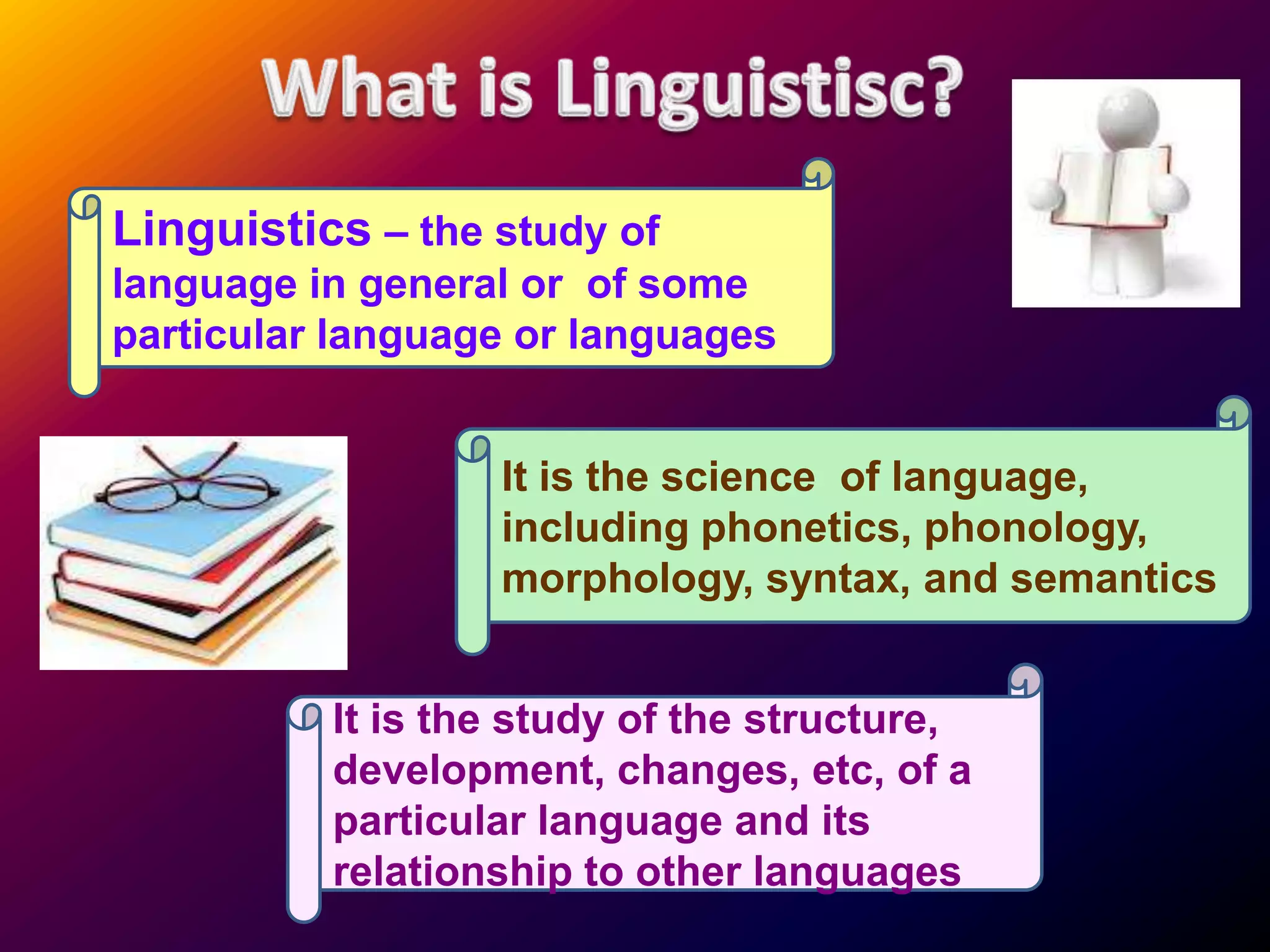
Linguistics – the study of
language in general or of some
particular language or languages


                  It is the science of language,
                  including phonetics, phonology,
                  morphology, syntax, and semantics


          It is the study of the structure,
          development, changes, etc, of a
          particular language and its
          relationship to other languages
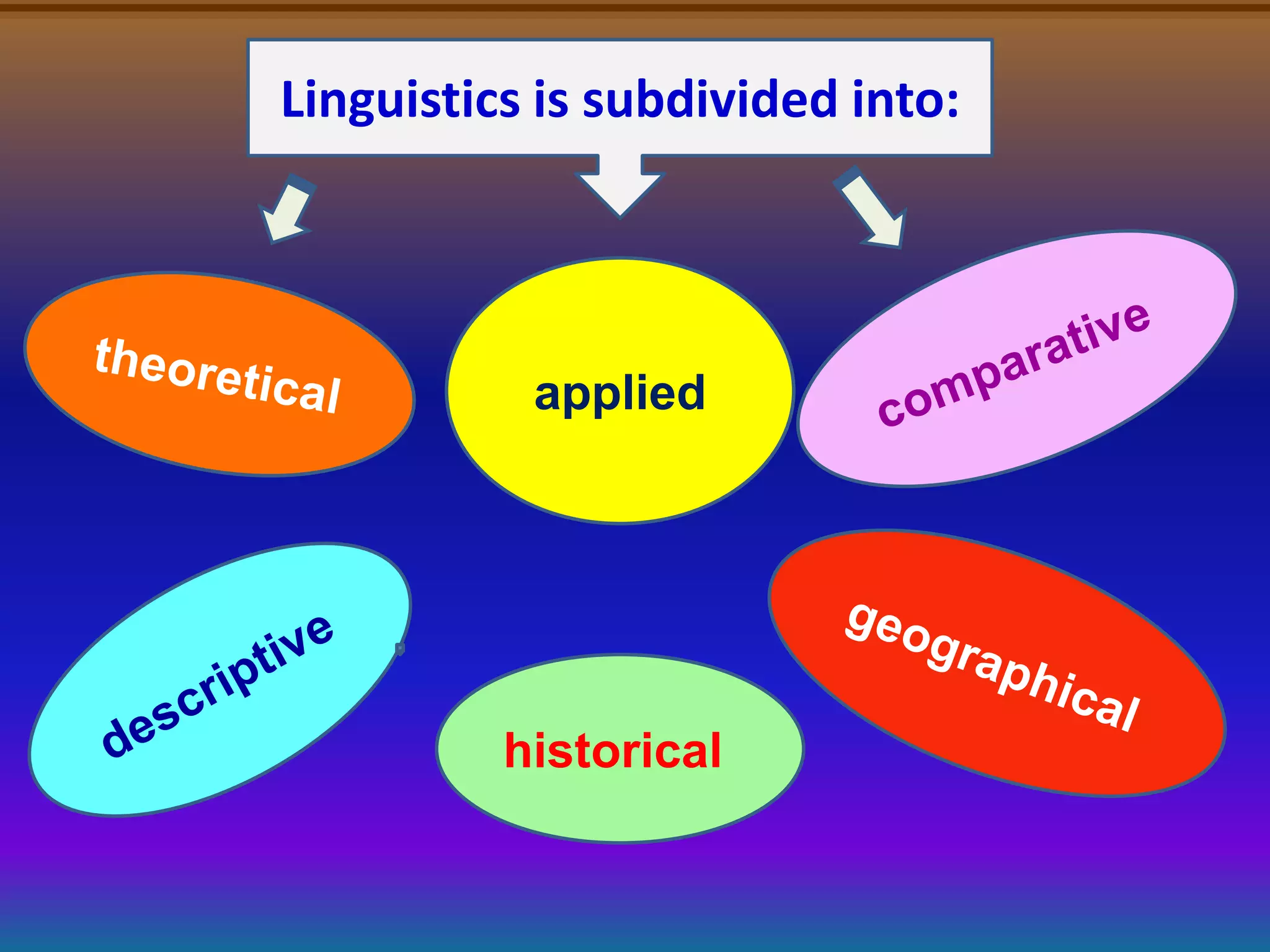
Linguistics is subdivided into:


           applied


          historical
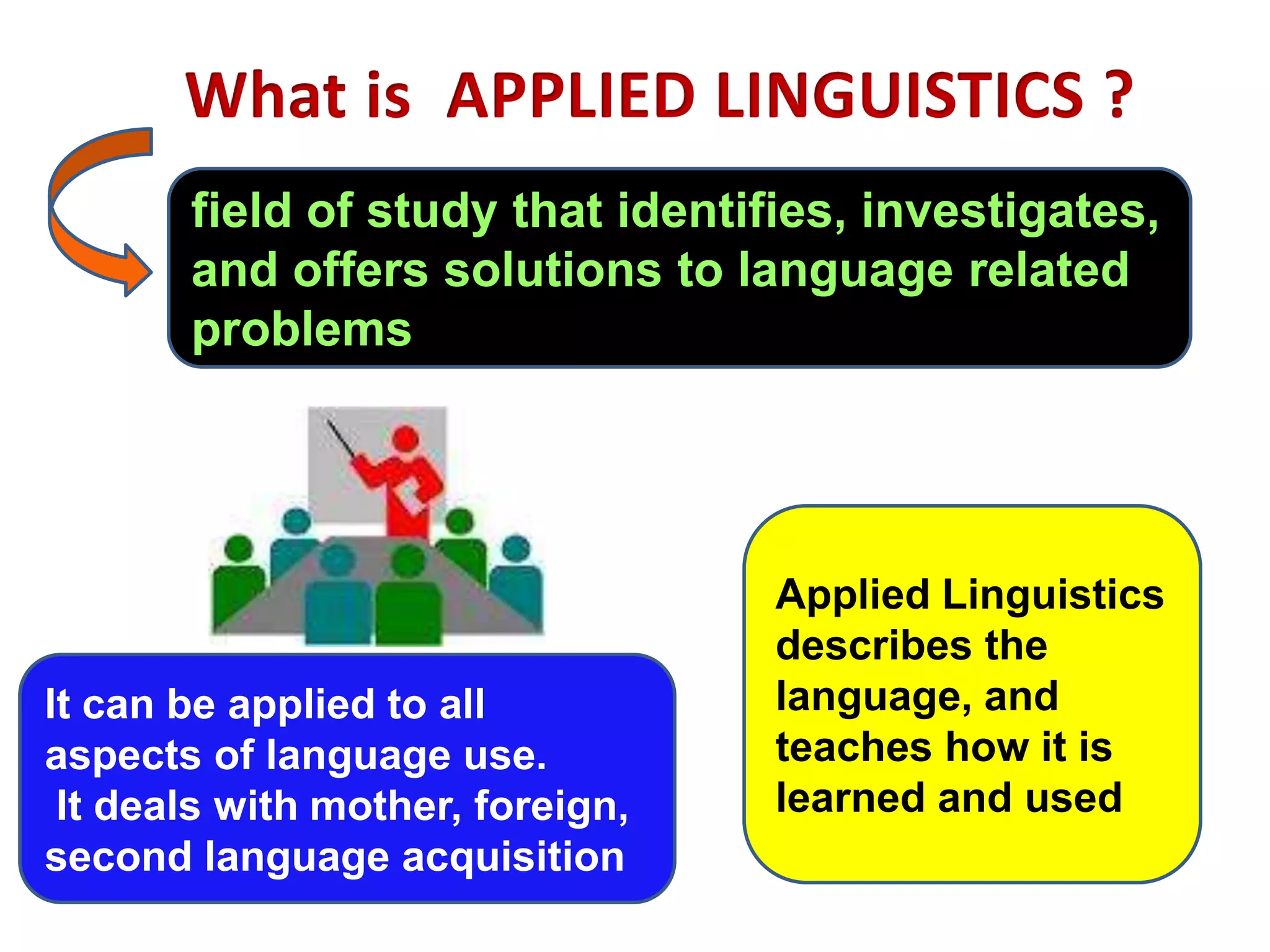
field of study that identifies, investigates,
       and offers solutions to language related
       problems


                                  Applied Linguistics
                                  describes the
It can be applied to all          language, and
aspects of language use.          teaches how it is
 It deals with mother, foreign,   learned and used
second language acquisition
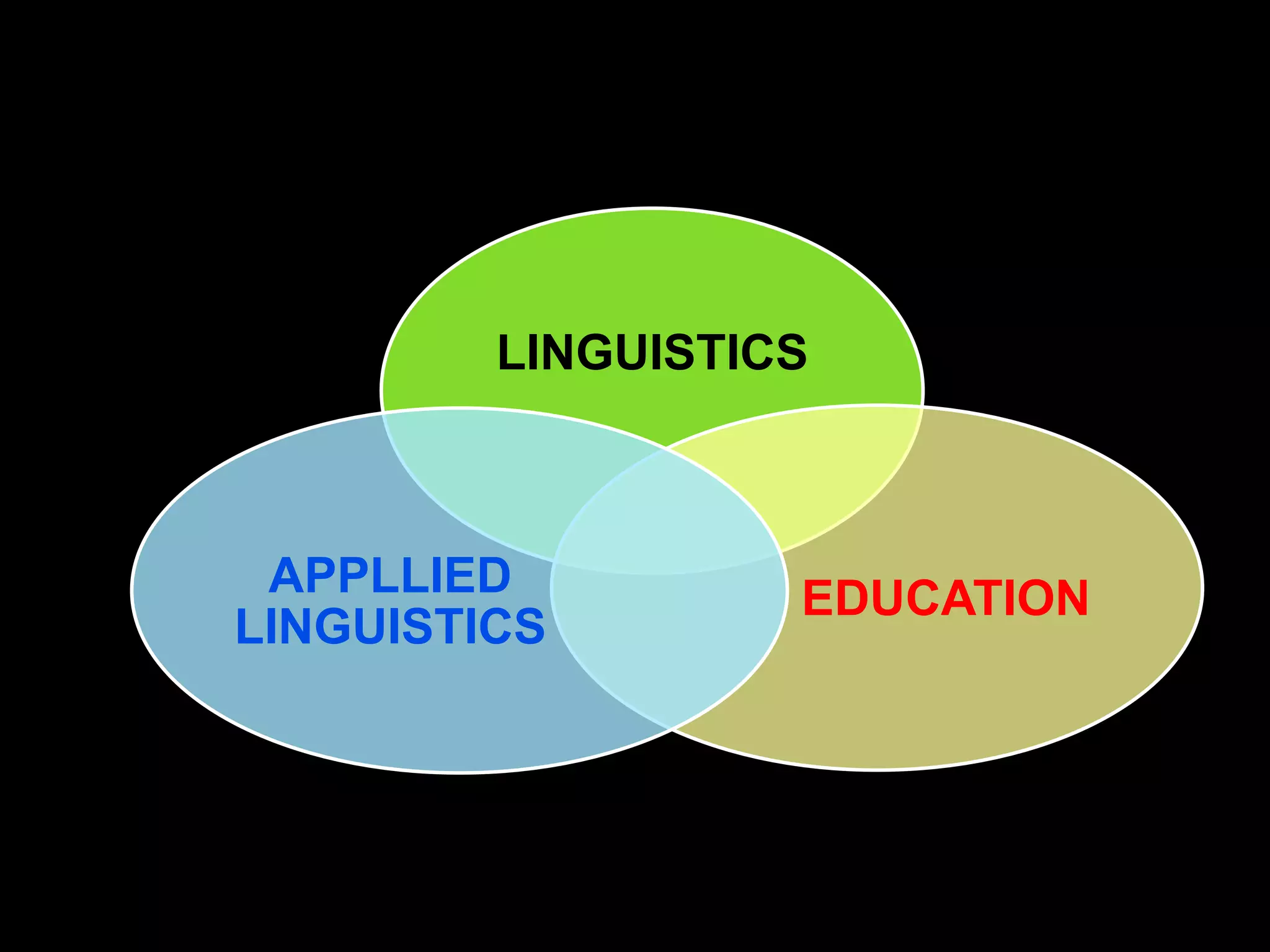
LINGUISTICS


 APPLLIED          EDUCATION
LINGUISTICS
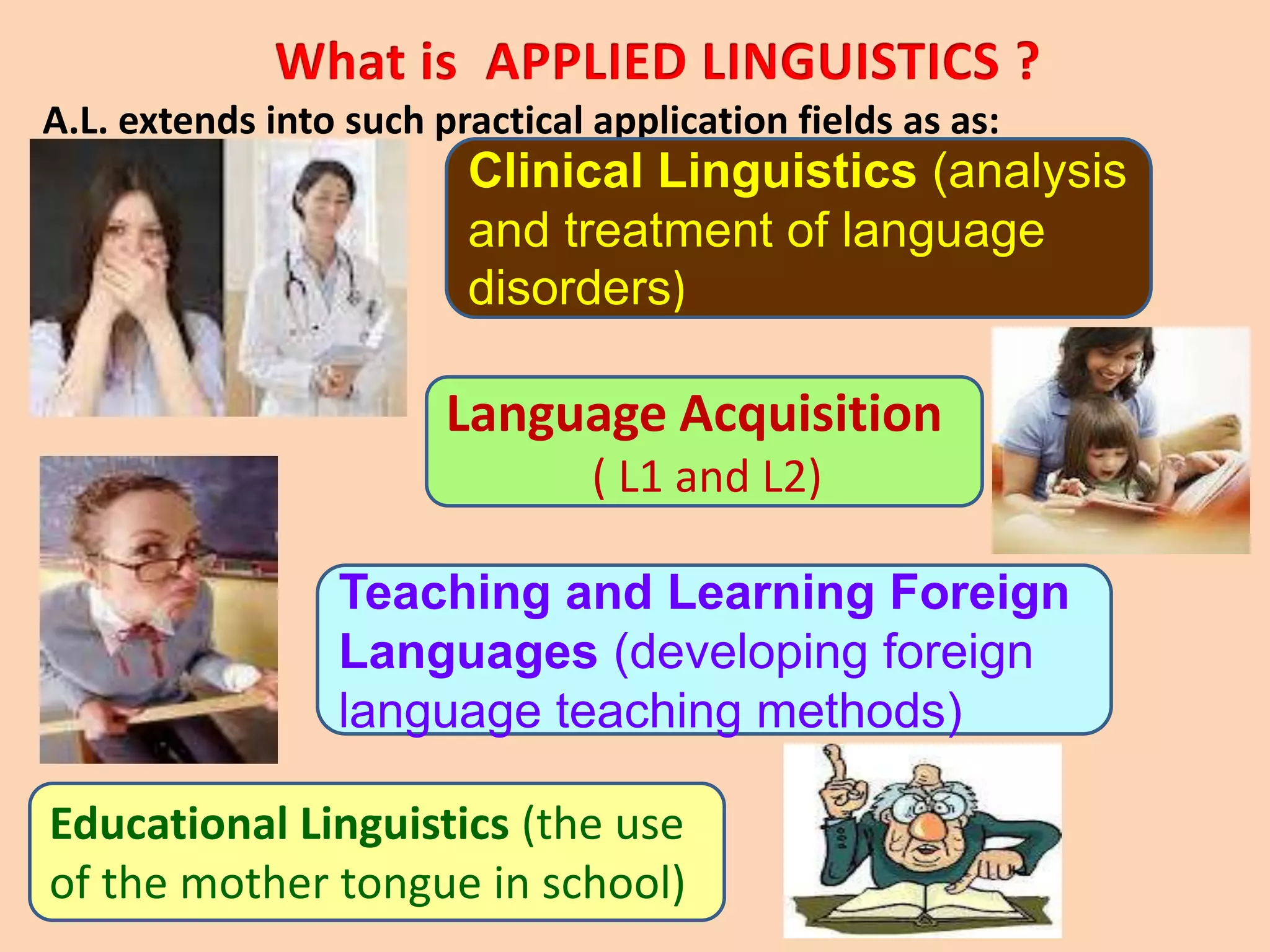
A.L. extends into such practical application fields as as:
                         Clinical Linguistics (analysis
                         and treatment of language
                         disorders)

                        Language Acquisition
                                 ( L1 and L2)

                 Teaching and Learning Foreign
                 Languages (developing foreign
                 language teaching methods)

Educational Linguistics (the use
of the mother tongue in school)
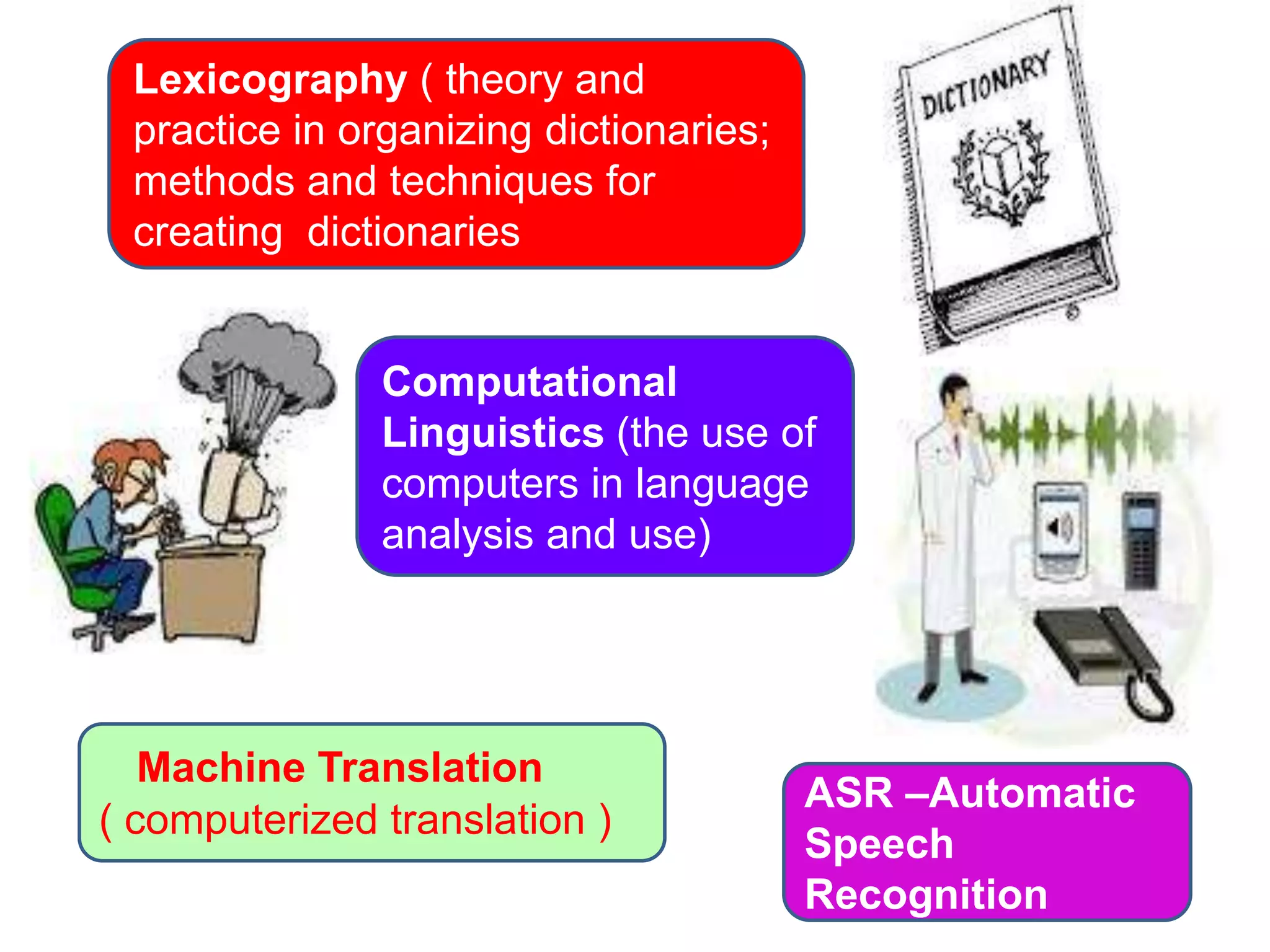
Lexicography ( theory and
 practice in organizing dictionaries;
 methods and techniques for
 creating dictionaries


               Computational
               Linguistics (the use of
               computers in language
               analysis and use)


   Machine Translation
                                        ASR –Automatic
( computerized translation )
                                        Speech
                                        Recognition
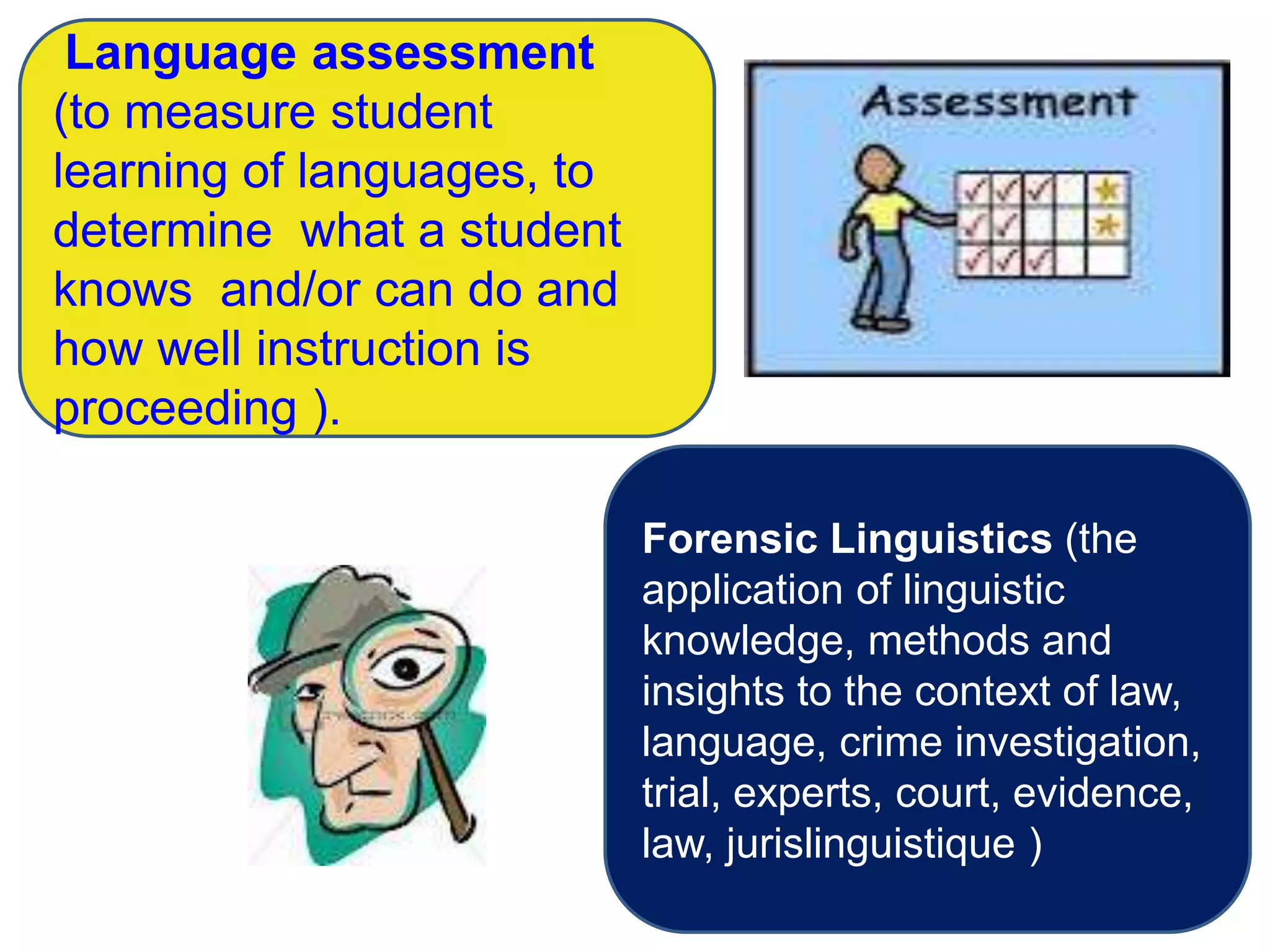
Language assessment
(to measure student
learning of languages, to
determine what a student
knows and/or can do and
how well instruction is
proceeding ).

                            Forensic Linguistics (the
                            application of linguistic
                            knowledge, methods and
                            insights to the context of law,
                            language, crime investigation,
                            trial, experts, court, evidence,
                            law, jurislinguistique )
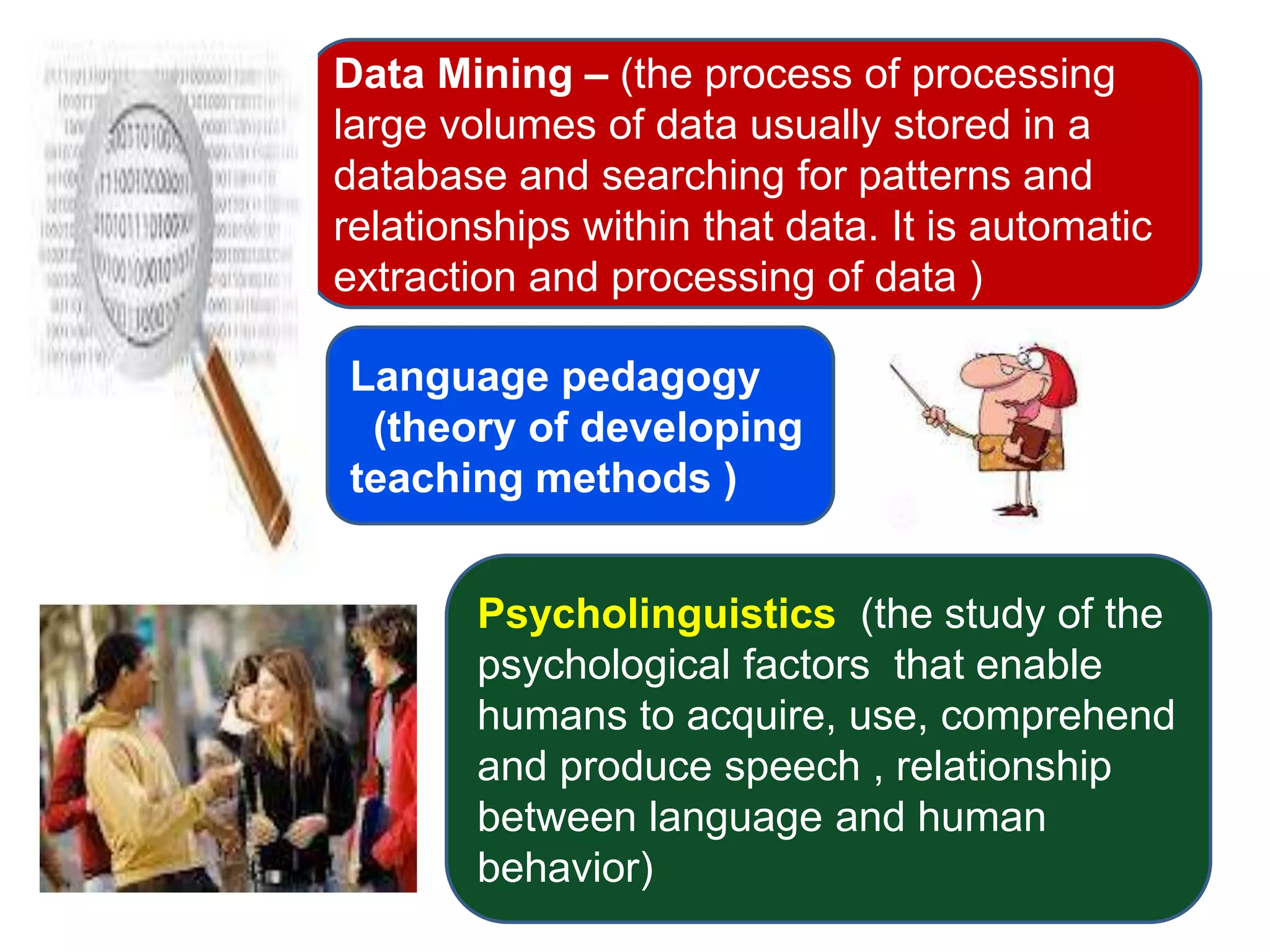
Data Mining – (the process of processing
large volumes of data usually stored in a
database and searching for patterns and
relationships within that data. It is automatic
extraction and processing of data )

Language pedagogy
 (theory of developing
teaching methods )


        Psycholinguistics (the study of the
        psychological factors that enable
        humans to acquire, use, comprehend
        and produce speech , relationship
        between language and human
        behavior)
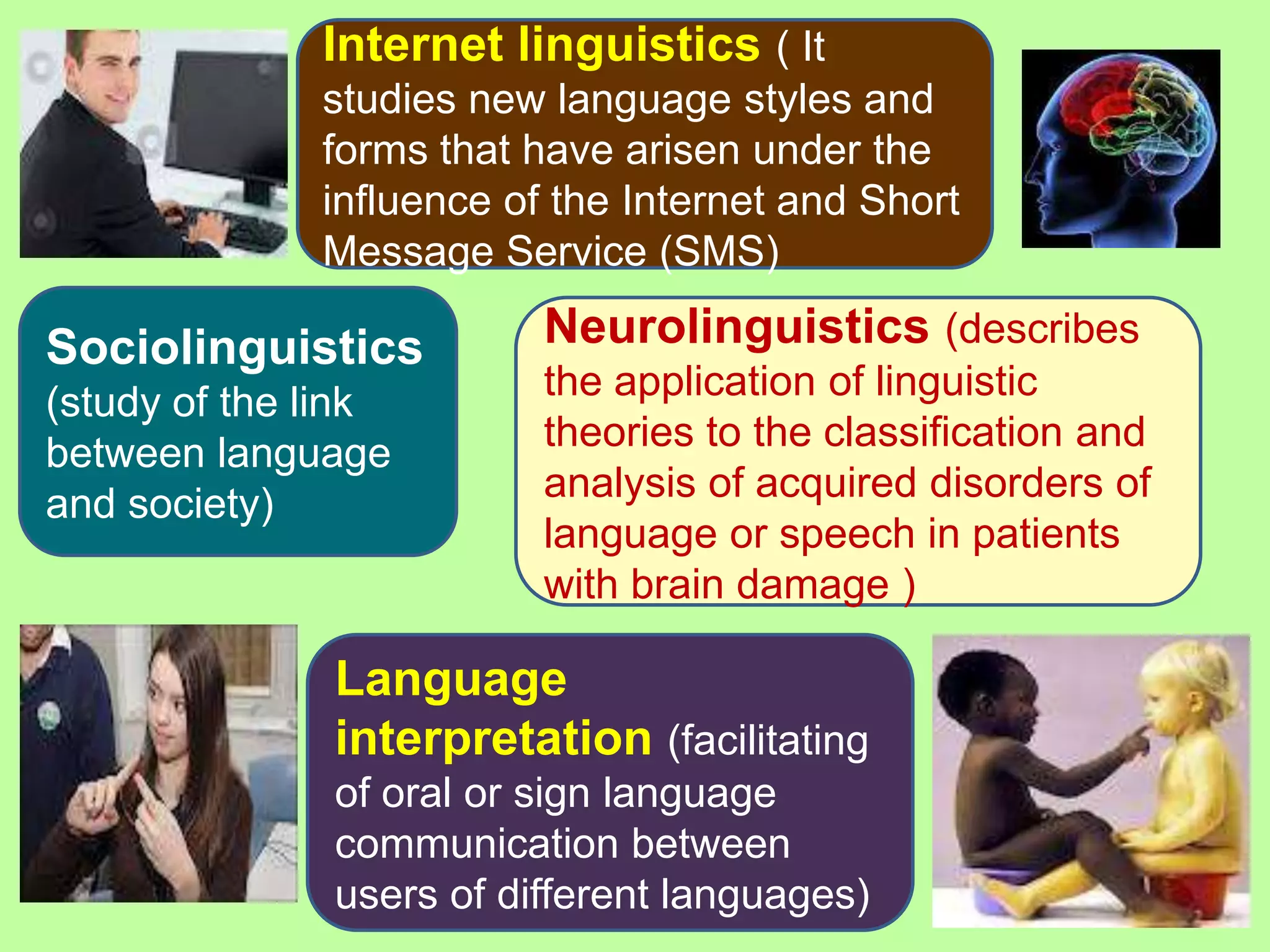
Internet linguistics ( It
              studies new language styles and
              forms that have arisen under the
              influence of the Internet and Short
              Message Service (SMS)

Sociolinguistics          Neurolinguistics (describes
(study of the link        the application of linguistic
between language          theories to the classification and
and society)              analysis of acquired disorders of
                          language or speech in patients
                          with brain damage )

               Language
               interpretation (facilitating
               of oral or sign language
               communication between
               users of different languages)
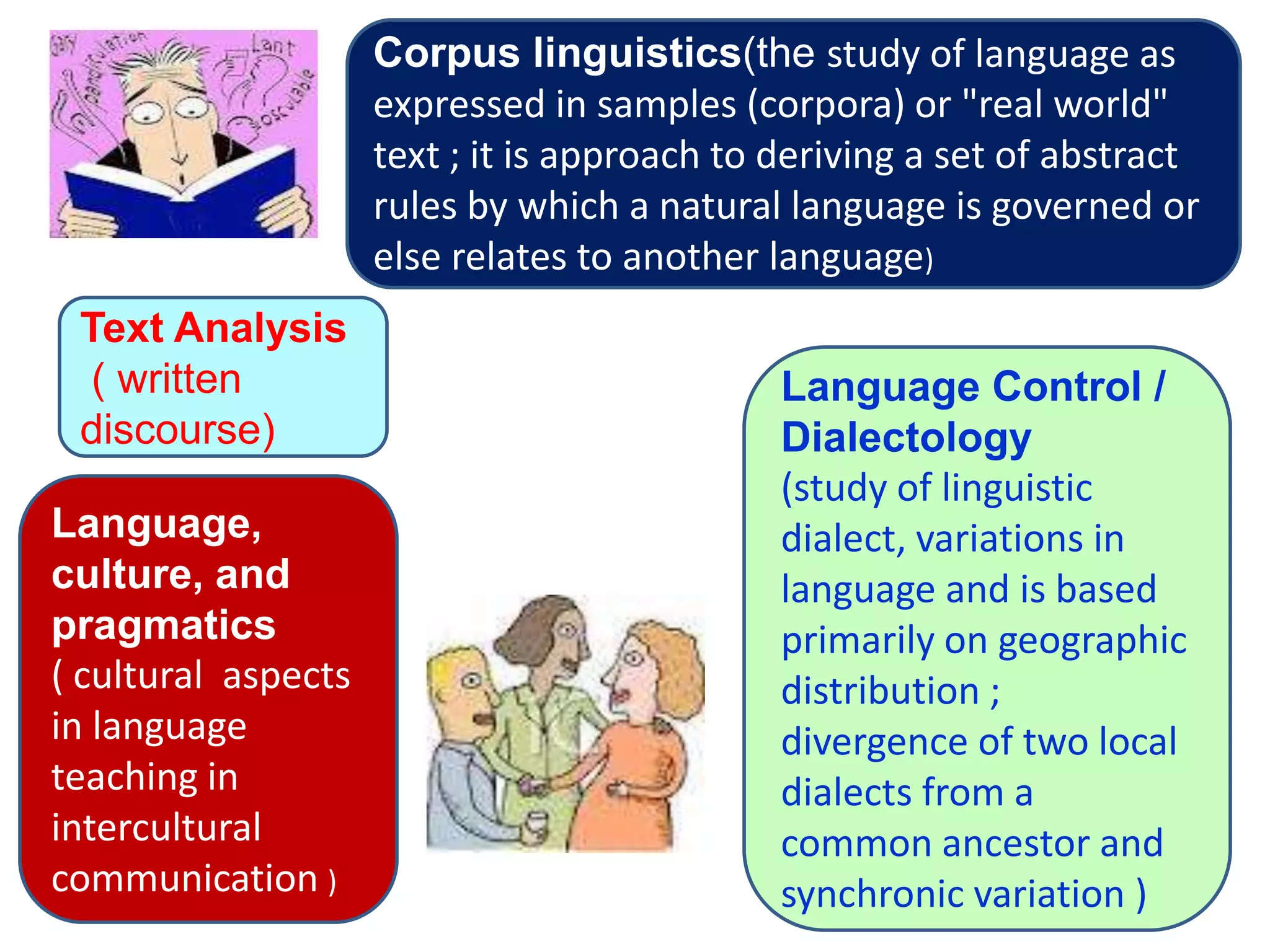
Corpus linguistics(the study of language as
                     expressed in samples (corpora) or "real world"
                     text ; it is approach to deriving a set of abstract
                     rules by which a natural language is governed or
                     else relates to another language)
 Text Analysis
  ( written                                   Language Control /
 discourse)                                   Dialectology
                                              (study of linguistic
Language,                                     dialect, variations in
culture, and                                  language and is based
pragmatics                                    primarily on geographic
( cultural aspects                            distribution ;
in language                                   divergence of two local
teaching in                                   dialects from a
intercultural                                 common ancestor and
communication )                               synchronic variation )
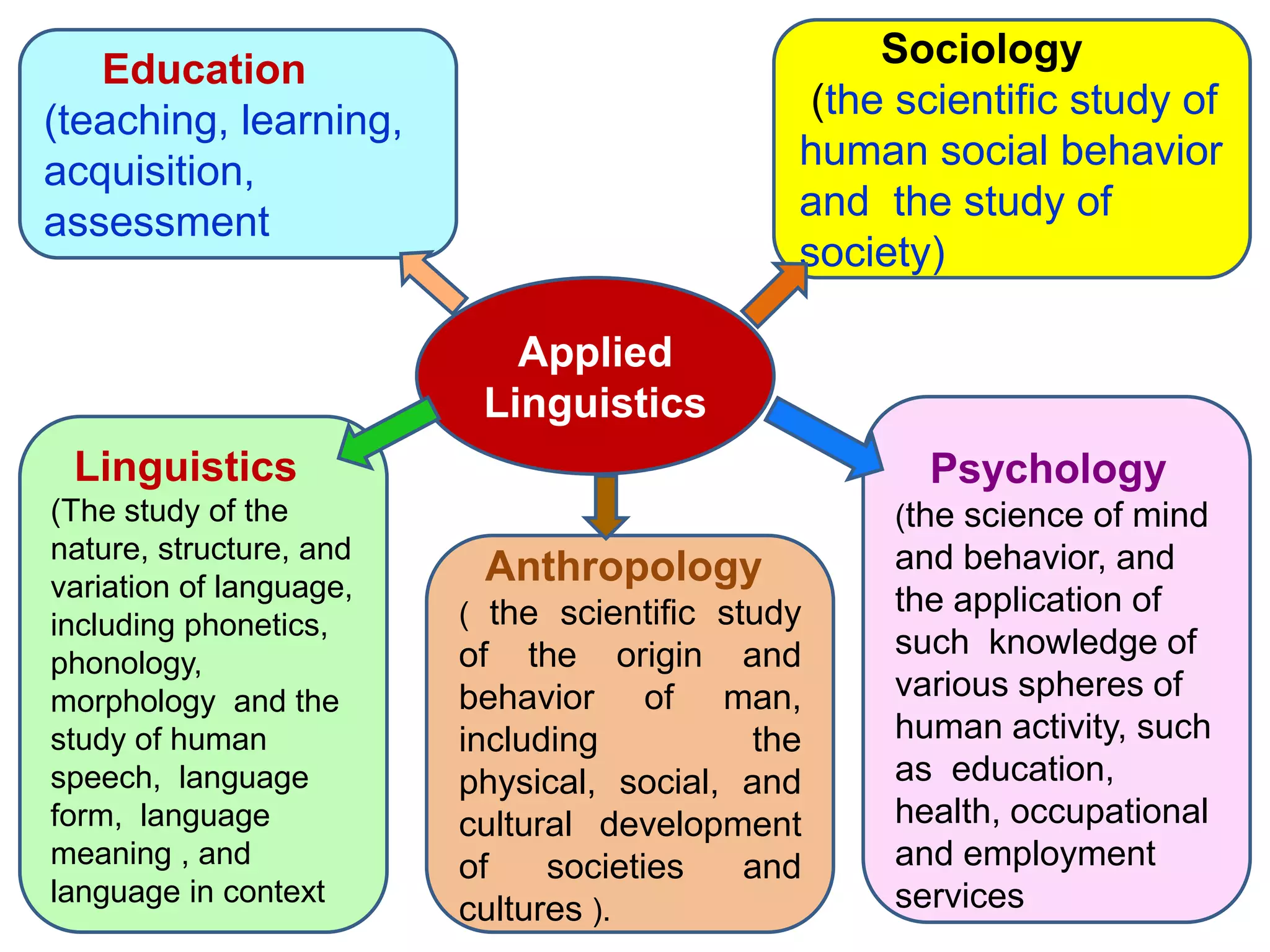
Education                                       Sociology
(teaching, learning,                           (the scientific study of
acquisition,                                  human social behavior
assessment                                    and the study of
                                              society)

                            Applied
                          Linguistics
 Linguistics                                         Psychology
(The study of the                                  (the science of mind
nature, structure, and                             and behavior, and
variation of language,
                          Anthropology
                         ( the scientific study    the application of
including phonetics,
                         of the origin and         such knowledge of
phonology,
morphology and the       behavior of man,          various spheres of
study of human           including         the     human activity, such
speech, language         physical, social, and     as education,
form, language           cultural development      health, occupational
meaning , and            of    societies   and     and employment
language in context                                services
                         cultures ).
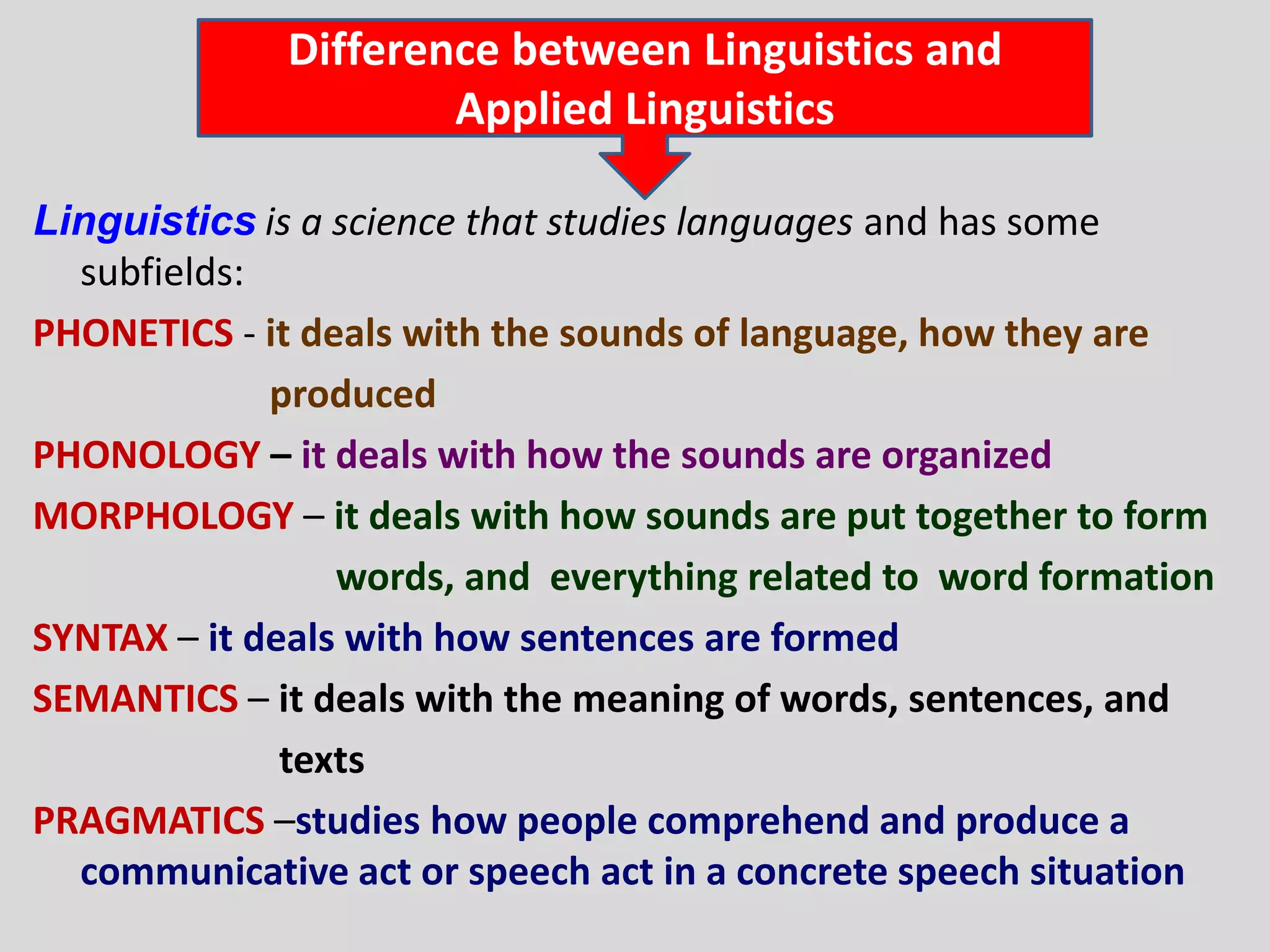
Difference between Linguistics and
                     Applied Linguistics

Linguistics is a science that studies languages and has some
  subfields:
PHONETICS - it deals with the sounds of language, how they are
             produced
PHONOLOGY – it deals with how the sounds are organized
MORPHOLOGY – it deals with how sounds are put together to form
                 words, and everything related to word formation
SYNTAX – it deals with how sentences are formed
SEMANTICS – it deals with the meaning of words, sentences, and
              texts
PRAGMATICS –studies how people comprehend and produce a
  communicative act or speech act in a concrete speech situation
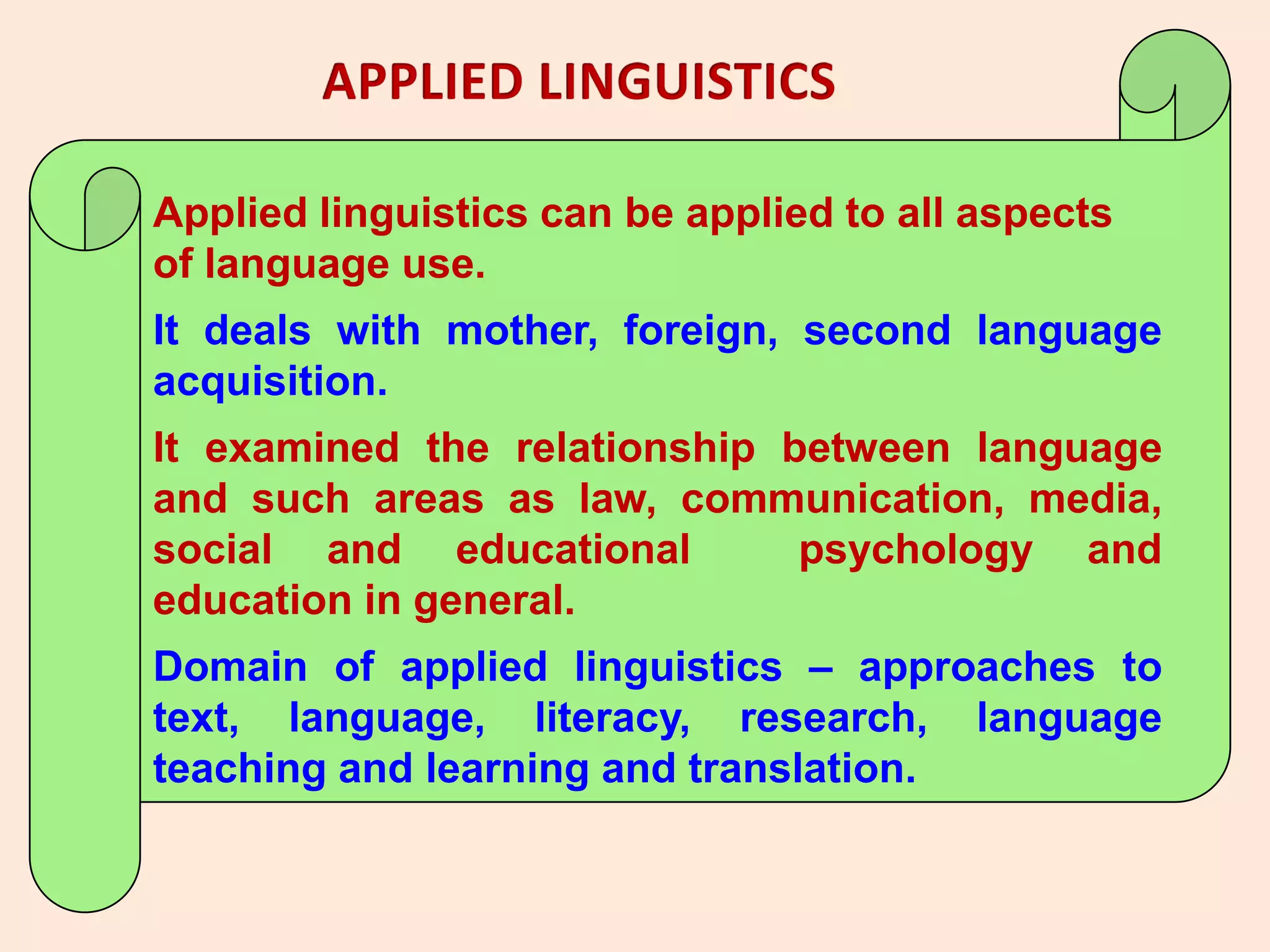
Applied linguistics can be applied to all aspects
of language use.
It deals with mother, foreign, second language
acquisition.
It examined the relationship between language
and such areas as law, communication, media,
social and educational        psychology and
education in general.
Domain of applied linguistics – approaches to
text, language, literacy, research, language
teaching and learning and translation.
To be continued!....

  Thank you!

Linguistics vs applied linguistics

  • 1.
    INTRODUCTION TO APPLIED LINGUISTICS Video Lesson 1 Linguistics vs Applied Linguistics Mgs. Nina Nesterenko
  • 2.
    Linguistics is acomparatively new science, or new, at least, in the form it has taken in recent years. It’s a scientific study of language. Its goal is describe the varieties of languages and explain the unconscious knowledge all speakers have of their language
  • 3.
    Linguistics – thestudy of language in general or of some particular language or languages It is the science of language, including phonetics, phonology, morphology, syntax, and semantics It is the study of the structure, development, changes, etc, of a particular language and its relationship to other languages
  • 4.
    Linguistics is subdividedinto: applied historical
  • 5.
    field of studythat identifies, investigates, and offers solutions to language related problems Applied Linguistics describes the It can be applied to all language, and aspects of language use. teaches how it is It deals with mother, foreign, learned and used second language acquisition
  • 6.
    LINGUISTICS APPLLIED EDUCATION LINGUISTICS
  • 7.
    A.L. extends intosuch practical application fields as as: Clinical Linguistics (analysis and treatment of language disorders) Language Acquisition ( L1 and L2) Teaching and Learning Foreign Languages (developing foreign language teaching methods) Educational Linguistics (the use of the mother tongue in school)
  • 8.
    Lexicography ( theoryand practice in organizing dictionaries; methods and techniques for creating dictionaries Computational Linguistics (the use of computers in language analysis and use) Machine Translation ASR –Automatic ( computerized translation ) Speech Recognition
  • 9.
    Language assessment (to measurestudent learning of languages, to determine what a student knows and/or can do and how well instruction is proceeding ). Forensic Linguistics (the application of linguistic knowledge, methods and insights to the context of law, language, crime investigation, trial, experts, court, evidence, law, jurislinguistique )
  • 10.
    Data Mining –(the process of processing large volumes of data usually stored in a database and searching for patterns and relationships within that data. It is automatic extraction and processing of data ) Language pedagogy (theory of developing teaching methods ) Psycholinguistics (the study of the psychological factors that enable humans to acquire, use, comprehend and produce speech , relationship between language and human behavior)
  • 11.
    Internet linguistics (It studies new language styles and forms that have arisen under the influence of the Internet and Short Message Service (SMS) Sociolinguistics Neurolinguistics (describes (study of the link the application of linguistic between language theories to the classification and and society) analysis of acquired disorders of language or speech in patients with brain damage ) Language interpretation (facilitating of oral or sign language communication between users of different languages)
  • 12.
    Corpus linguistics(the studyof language as expressed in samples (corpora) or "real world" text ; it is approach to deriving a set of abstract rules by which a natural language is governed or else relates to another language) Text Analysis ( written Language Control / discourse) Dialectology (study of linguistic Language, dialect, variations in culture, and language and is based pragmatics primarily on geographic ( cultural aspects distribution ; in language divergence of two local teaching in dialects from a intercultural common ancestor and communication ) synchronic variation )
  • 13.
    Education Sociology (teaching, learning, (the scientific study of acquisition, human social behavior assessment and the study of society) Applied Linguistics Linguistics Psychology (The study of the (the science of mind nature, structure, and and behavior, and variation of language, Anthropology ( the scientific study the application of including phonetics, of the origin and such knowledge of phonology, morphology and the behavior of man, various spheres of study of human including the human activity, such speech, language physical, social, and as education, form, language cultural development health, occupational meaning , and of societies and and employment language in context services cultures ).
  • 14.
    Difference between Linguisticsand Applied Linguistics Linguistics is a science that studies languages and has some subfields: PHONETICS - it deals with the sounds of language, how they are produced PHONOLOGY – it deals with how the sounds are organized MORPHOLOGY – it deals with how sounds are put together to form words, and everything related to word formation SYNTAX – it deals with how sentences are formed SEMANTICS – it deals with the meaning of words, sentences, and texts PRAGMATICS –studies how people comprehend and produce a communicative act or speech act in a concrete speech situation
  • 15.
    Applied linguistics canbe applied to all aspects of language use. It deals with mother, foreign, second language acquisition. It examined the relationship between language and such areas as law, communication, media, social and educational psychology and education in general. Domain of applied linguistics – approaches to text, language, literacy, research, language teaching and learning and translation.
  • 16.