Developing Effective Communication Skills Developing Effective Communication Skills
We communicate to…… Get information Motivate Cheat Praise Make arrangements Give advice Sell Greet Abuse Etc
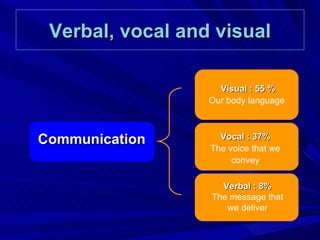
Verbal, vocal and visual Vocal : 37% The voice that we convey Visual : 55 % Our body language  Communication Verbal : 8% The message that we deliver
Causes of Communication Difficulties: Not explaining priorities or goals properly Not listening Not understanding fully and fail to ask questions Mind made up, preconceived ideas Lack of information and knowledge
Causes of Communication Difficulties: Not understanding others’ needs Not thinking clearly, jumping to conclusions Bad mood Failure to explore alternatives
Communication failures can cause….. Loss of business Mistakes, inefficiencies Lowered productivity Poor coordination and cooperation Damaged personal or company image Frustration, hostility
Communication failures can cause….. Dissatisfaction with others Lowered morale Loss of team spirit High employee turnover Conflict and arguments Drop in self esteem and confidence Loss of friendship
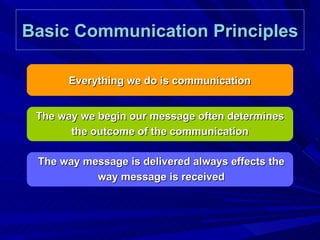
Basic Communication Principles Everything we do is communication  The way we begin our message often determines the outcome of the communication The way message is delivered always effects the way message is received
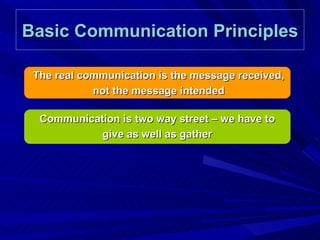
Basic Communication Principles The real communication is the message received, not the message intended Communication is two way street – we have to give as well as gather
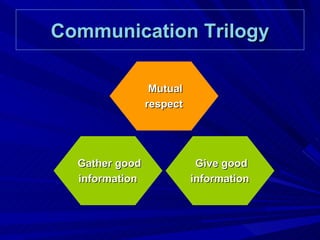
Communication Trilogy Give good information  Gather good information  Mutual respect
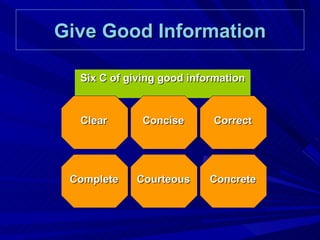
Give Good Information Six C of giving good information Clear Concise Courteous Complete Correct Concrete
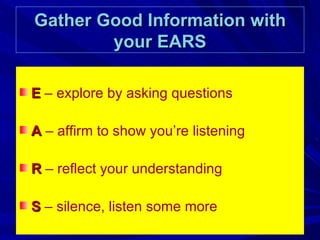
Gather Good Information with your EARS E  – explore by asking questions A  – affirm to show you’re listening R   – reflect your understanding S   – silence, listen some more
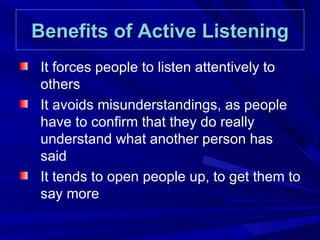
Benefits of Active Listening It forces people to listen attentively to others It avoids misunderstandings, as people have to confirm that they do really understand what another person has said It tends to open people up, to get them to say more
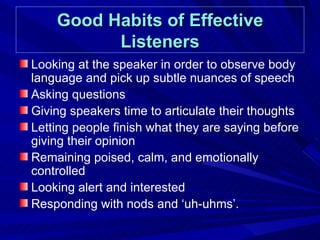
Good Habits of Effective Listeners Looking at the speaker in order to observe body language and pick up subtle nuances of speech Asking questions Giving speakers time to articulate their thoughts Letting people finish what they are saying before giving their opinion Remaining poised, calm, and emotionally controlled Looking alert and interested Responding with nods and ‘uh-uhms’.
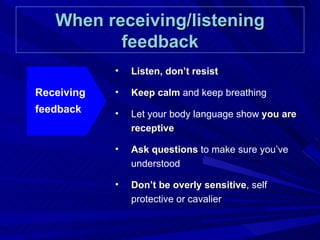
When receiving/listening feedback Listen, don’t resist Keep calm  and keep breathing Let your body language show  you are receptive Ask questions  to make sure you’ve understood Don’t be overly   sensitive , self protective or cavalier Receiving feedback
Thank you Thank you

Effective communication skills

  • 1.
    Developing Effective CommunicationSkills Developing Effective Communication Skills
  • 2.
    We communicate to……Get information Motivate Cheat Praise Make arrangements Give advice Sell Greet Abuse Etc
  • 3.
    Verbal, vocal andvisual Vocal : 37% The voice that we convey Visual : 55 % Our body language Communication Verbal : 8% The message that we deliver
  • 4.
    Causes of CommunicationDifficulties: Not explaining priorities or goals properly Not listening Not understanding fully and fail to ask questions Mind made up, preconceived ideas Lack of information and knowledge
  • 5.
    Causes of CommunicationDifficulties: Not understanding others’ needs Not thinking clearly, jumping to conclusions Bad mood Failure to explore alternatives
  • 6.
    Communication failures cancause….. Loss of business Mistakes, inefficiencies Lowered productivity Poor coordination and cooperation Damaged personal or company image Frustration, hostility
  • 7.
    Communication failures cancause….. Dissatisfaction with others Lowered morale Loss of team spirit High employee turnover Conflict and arguments Drop in self esteem and confidence Loss of friendship
  • 8.
    Basic Communication PrinciplesEverything we do is communication The way we begin our message often determines the outcome of the communication The way message is delivered always effects the way message is received
  • 9.
    Basic Communication PrinciplesThe real communication is the message received, not the message intended Communication is two way street – we have to give as well as gather
  • 10.
    Communication Trilogy Givegood information Gather good information Mutual respect
  • 11.
    Give Good InformationSix C of giving good information Clear Concise Courteous Complete Correct Concrete
  • 12.
    Gather Good Informationwith your EARS E – explore by asking questions A – affirm to show you’re listening R – reflect your understanding S – silence, listen some more
  • 13.
    Benefits of ActiveListening It forces people to listen attentively to others It avoids misunderstandings, as people have to confirm that they do really understand what another person has said It tends to open people up, to get them to say more
  • 14.
    Good Habits ofEffective Listeners Looking at the speaker in order to observe body language and pick up subtle nuances of speech Asking questions Giving speakers time to articulate their thoughts Letting people finish what they are saying before giving their opinion Remaining poised, calm, and emotionally controlled Looking alert and interested Responding with nods and ‘uh-uhms’.
  • 15.
    When receiving/listening feedbackListen, don’t resist Keep calm and keep breathing Let your body language show you are receptive Ask questions to make sure you’ve understood Don’t be overly sensitive , self protective or cavalier Receiving feedback
  • 16.