Common Digestive Problems
Ryann Ting
Camille Chong
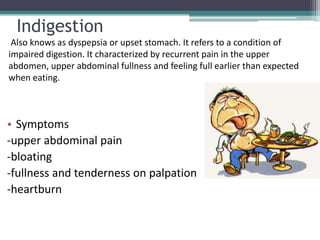
Indigestion
 Also knows as dyspepsia or upset stomach. It refers to a condition of
impaired digestion. It characterized by recurrent pain in the upper
abdomen, upper abdominal fullness and feeling full earlier than expected
when eating.


• Symptoms
-upper abdominal pain
-bloating
-fullness and tenderness on palpation
-heartburn
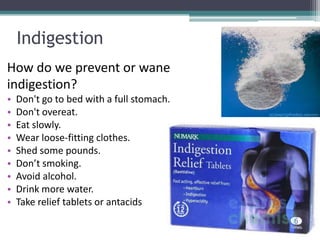
Indigestion
How do we prevent or wane
indigestion?
•   Don't go to bed with a full stomach.
•   Don't overeat.
•   Eat slowly.
•   Wear loose-fitting clothes.
•   Shed some pounds.
•   Don’t smoking.
•   Avoid alcohol.
•   Drink more water.
•   Take relief tablets or antacids
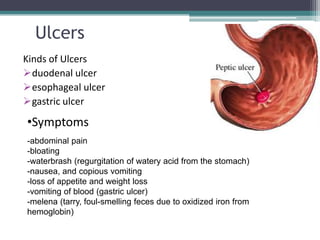
Ulcers
Kinds of Ulcers
duodenal ulcer
esophageal ulcer
gastric ulcer

•Symptoms
-abdominal pain
-bloating
-waterbrash (regurgitation of watery acid from the stomach)
-nausea, and copious vomiting
-loss of appetite and weight loss
-vomiting of blood (gastric ulcer)
-melena (tarry, foul-smelling feces due to oxidized iron from
hemoglobin)
Ulcers
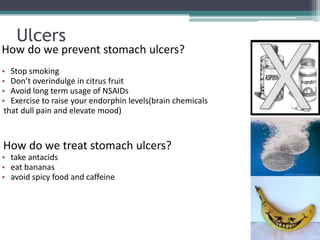
How do we prevent stomach ulcers?
• Stop smoking
• Don’t overindulge in citrus fruit
• Avoid long term usage of NSAIDs
• Exercise to raise your endorphin levels(brain chemicals
 that dull pain and elevate mood)


How do we treat stomach ulcers?
• take antacids
• eat bananas
• avoid spicy food and caffeine
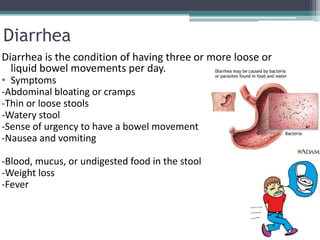
Diarrhea
Diarrhea is the condition of having three or more loose or
  liquid bowel movements per day.
• Symptoms
-Abdominal bloating or cramps
-Thin or loose stools
-Watery stool
-Sense of urgency to have a bowel movement
-Nausea and vomiting

-Blood, mucus, or undigested food in the stool
-Weight loss
-Fever
Diarrhea
• How can diarrhea be treated?
  If you have a mild case of diarrhea, you can just let it
  run its course, or you can treat it with an over-the-
  counter medicine.
  Drink plenty of fluids. Instead of drinking liquids with
  your meals, drink liquids between meals. Drink small
  amounts of fluids frequently.
Cholera
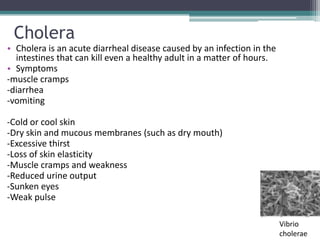
• Cholera is an acute diarrheal disease caused by an infection in the
  intestines that can kill even a healthy adult in a matter of hours.
• Symptoms
-muscle cramps
-diarrhea
-vomiting

-Cold or cool skin
-Dry skin and mucous membranes (such as dry mouth)
-Excessive thirst
-Loss of skin elasticity
-Muscle cramps and weakness
-Reduced urine output
-Sunken eyes
-Weak pulse

                                                                        Vibrio
                                                                        cholerae
Cholera
• How do we prevent cholera?
  Water purification-All water used for drinking,
  washing, or cooking should be sterilized.
• How is cholera treated?
  Most cases can be treated through oral rehydration
  salts, which help reverse dehydration and restore
  potassium levels following the onset of acute
  diarrhea.
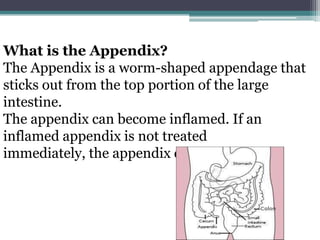
What is the Appendix?
The Appendix is a worm-shaped appendage that
sticks out from the top portion of the large
intestine.
The appendix can become inflamed. If an
inflamed appendix is not treated
immediately, the appendix can burst.
Appendicitis is a condition in which the
appendix, a small inconsequential
appendage to the colon, becomes inflamed
and swollen and many cases require removal
of the inflamed appendix, either by
laparotomy or laparoscopy.
What are the symptoms of appendicitis?
Progressively worsening pain
-Coughing or sneezing is painful
-Nausea
-Vomiting
-Diarrhea
-Inability to pass gas (break wind, fart)
-Fever
-Constipation
-Loss of appetite
Not everyone with appendicitis will have all of the
symptoms, especially children, pregnant women, and the
elderly.
What Causes Appendicitis?
Appendicitis occurs when the appendix
becomes blocked, often by stool, a foreign
body, or cancer. Blockage may also occur
from infection, since the appendix swells in
response to any infection in the body
What is the treatment for appendicitis?
The surgery that corrects appendicitis called an appendectomy, is a
procedure with relatively little risk.Many surgeons are performing
laparoscopic appendectomy in which the appendix is removed. Once the
useless appendix is removed, there is no danger of appendicitis
recurring.
Appendicitis can occur in persons of any age, but it is most prevalent in
young adults. It tends to occur on its own with no particular cause.
What is typhoid fever?
Typhoid fever, also called enteric fever, is a
contagious, potentially life-threatening
bacterial infection. Typhoid fever is caused
by the bacterium Salmonella enteric
serotype Typhi (also known as Salmonella
Typhi), which is carried by infected humans
in the blood and digestive tract and spreads
to others through food and drinking water
contaminated with infected feces.
What are the symptoms of typhoid fever?
Symptoms of typhoid fever usually develop five to 21 days
following ingestion of food or water contaminated with
Salmonella Typhi bacteria and can last up to a month or longer.
Typical symptoms of typhoid fever include:
-Abdominal pain and tenderness
-Diarrhea or constipation
-Difficulty concentrating
-Fever and chills. A sustained fever of 104 degrees Fahrenheit is
not uncommon with typhoid fever.
-Headache
-Malaise (general ill feeling)
-Mood changes
-Nosebleeds
-Poor appetite
-Rash (small, flat, red rashes on the belly and chest that are also
known as rose spots)
-Weakness and fatigue
How is typhoid fever treated?
Typhoid fever is a treatable disease and can often be cured
with a full course of antibiotics, such as ampicillin,
trimethoprim-sulfamethoxazole, or ciprofloxacin. In some
severe cases, treatment may require rehydration with
intravenous fluids and electrolyte replacement therapy. With
treatment, symptoms typically improve within two to four
weeks. Symptoms may return if you have not been completely
treated.
What is bangungot?
Bangungot,also known as,sudden
unexpected death syndrome, or Sudden
unexpected nocturnal death syndrome
(SUNDS), is sudden unexpected death of
adolescents and adults during sleep.
SUDS has been cloaked in superstition. In Thailand it is
particularly believed to be linked to eating rice cakes.Filipinos
believe ingesting high levels of carbohydrates just before
sleeping causes bangungot.
CAUSES
It has only been recently that the scientific world has begun to
understand this syndrome. Victims of bangungot have not been
found to have any organic heart diseases or structural heart
problems. However, cardiac activity during SUDS episodes
indicates irregular heart rhythms and ventricular fibrillation.
The victim survives this episode if the heart's rhythm goes back
to normal.
Ongoing genetic studies by Spanish electrophysiologist Dr.
Josep Brugada Terradellas show that SUDS results from
mutations in the cardiac sodium channel gene. This means that
it is a chromosomal problem, which is why it runs in families.
Thus, doctors say that families who have kin that have suffered
from or died of SUDS must see a heart specialist.
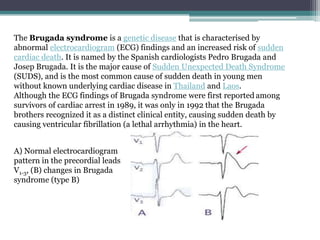
The Brugada syndrome is a genetic disease that is characterised by
abnormal electrocardiogram (ECG) findings and an increased risk of sudden
cardiac death. It is named by the Spanish cardiologists Pedro Brugada and
Josep Brugada. It is the major cause of Sudden Unexpected Death Syndrome
(SUDS), and is the most common cause of sudden death in young men
without known underlying cardiac disease in Thailand and Laos.
Although the ECG findings of Brugada syndrome were first reported among
survivors of cardiac arrest in 1989, it was only in 1992 that the Brugada
brothers recognized it as a distinct clinical entity, causing sudden death by
causing ventricular fibrillation (a lethal arrhythmia) in the heart.


A) Normal electrocardiogram
pattern in the precordial leads
V1-3, (B) changes in Brugada
syndrome (type B)
Common digestive problems

Common digestive problems

  • 1.
  • 2.
    Indigestion Also knowsas dyspepsia or upset stomach. It refers to a condition of impaired digestion. It characterized by recurrent pain in the upper abdomen, upper abdominal fullness and feeling full earlier than expected when eating. • Symptoms -upper abdominal pain -bloating -fullness and tenderness on palpation -heartburn
  • 3.
    Indigestion How do weprevent or wane indigestion? • Don't go to bed with a full stomach. • Don't overeat. • Eat slowly. • Wear loose-fitting clothes. • Shed some pounds. • Don’t smoking. • Avoid alcohol. • Drink more water. • Take relief tablets or antacids
  • 4.
    Ulcers Kinds of Ulcers duodenalulcer esophageal ulcer gastric ulcer •Symptoms -abdominal pain -bloating -waterbrash (regurgitation of watery acid from the stomach) -nausea, and copious vomiting -loss of appetite and weight loss -vomiting of blood (gastric ulcer) -melena (tarry, foul-smelling feces due to oxidized iron from hemoglobin)
  • 5.
    Ulcers How do weprevent stomach ulcers? • Stop smoking • Don’t overindulge in citrus fruit • Avoid long term usage of NSAIDs • Exercise to raise your endorphin levels(brain chemicals that dull pain and elevate mood) How do we treat stomach ulcers? • take antacids • eat bananas • avoid spicy food and caffeine
  • 6.
    Diarrhea Diarrhea is thecondition of having three or more loose or liquid bowel movements per day. • Symptoms -Abdominal bloating or cramps -Thin or loose stools -Watery stool -Sense of urgency to have a bowel movement -Nausea and vomiting -Blood, mucus, or undigested food in the stool -Weight loss -Fever
  • 7.
    Diarrhea • How candiarrhea be treated? If you have a mild case of diarrhea, you can just let it run its course, or you can treat it with an over-the- counter medicine. Drink plenty of fluids. Instead of drinking liquids with your meals, drink liquids between meals. Drink small amounts of fluids frequently.
  • 8.
    Cholera • Cholera isan acute diarrheal disease caused by an infection in the intestines that can kill even a healthy adult in a matter of hours. • Symptoms -muscle cramps -diarrhea -vomiting -Cold or cool skin -Dry skin and mucous membranes (such as dry mouth) -Excessive thirst -Loss of skin elasticity -Muscle cramps and weakness -Reduced urine output -Sunken eyes -Weak pulse Vibrio cholerae
  • 9.
    Cholera • How dowe prevent cholera? Water purification-All water used for drinking, washing, or cooking should be sterilized. • How is cholera treated? Most cases can be treated through oral rehydration salts, which help reverse dehydration and restore potassium levels following the onset of acute diarrhea.
  • 10.
    What is theAppendix? The Appendix is a worm-shaped appendage that sticks out from the top portion of the large intestine. The appendix can become inflamed. If an inflamed appendix is not treated immediately, the appendix can burst.
  • 11.
    Appendicitis is acondition in which the appendix, a small inconsequential appendage to the colon, becomes inflamed and swollen and many cases require removal of the inflamed appendix, either by laparotomy or laparoscopy.
  • 12.
    What are thesymptoms of appendicitis? Progressively worsening pain -Coughing or sneezing is painful -Nausea -Vomiting -Diarrhea -Inability to pass gas (break wind, fart) -Fever -Constipation -Loss of appetite Not everyone with appendicitis will have all of the symptoms, especially children, pregnant women, and the elderly.
  • 13.
    What Causes Appendicitis? Appendicitisoccurs when the appendix becomes blocked, often by stool, a foreign body, or cancer. Blockage may also occur from infection, since the appendix swells in response to any infection in the body
  • 14.
    What is thetreatment for appendicitis? The surgery that corrects appendicitis called an appendectomy, is a procedure with relatively little risk.Many surgeons are performing laparoscopic appendectomy in which the appendix is removed. Once the useless appendix is removed, there is no danger of appendicitis recurring. Appendicitis can occur in persons of any age, but it is most prevalent in young adults. It tends to occur on its own with no particular cause.
  • 15.
    What is typhoidfever? Typhoid fever, also called enteric fever, is a contagious, potentially life-threatening bacterial infection. Typhoid fever is caused by the bacterium Salmonella enteric serotype Typhi (also known as Salmonella Typhi), which is carried by infected humans in the blood and digestive tract and spreads to others through food and drinking water contaminated with infected feces.
  • 16.
    What are thesymptoms of typhoid fever? Symptoms of typhoid fever usually develop five to 21 days following ingestion of food or water contaminated with Salmonella Typhi bacteria and can last up to a month or longer. Typical symptoms of typhoid fever include: -Abdominal pain and tenderness -Diarrhea or constipation -Difficulty concentrating -Fever and chills. A sustained fever of 104 degrees Fahrenheit is not uncommon with typhoid fever. -Headache -Malaise (general ill feeling) -Mood changes -Nosebleeds -Poor appetite -Rash (small, flat, red rashes on the belly and chest that are also known as rose spots) -Weakness and fatigue
  • 17.
    How is typhoidfever treated? Typhoid fever is a treatable disease and can often be cured with a full course of antibiotics, such as ampicillin, trimethoprim-sulfamethoxazole, or ciprofloxacin. In some severe cases, treatment may require rehydration with intravenous fluids and electrolyte replacement therapy. With treatment, symptoms typically improve within two to four weeks. Symptoms may return if you have not been completely treated.
  • 18.
    What is bangungot? Bangungot,alsoknown as,sudden unexpected death syndrome, or Sudden unexpected nocturnal death syndrome (SUNDS), is sudden unexpected death of adolescents and adults during sleep.
  • 19.
    SUDS has beencloaked in superstition. In Thailand it is particularly believed to be linked to eating rice cakes.Filipinos believe ingesting high levels of carbohydrates just before sleeping causes bangungot. CAUSES It has only been recently that the scientific world has begun to understand this syndrome. Victims of bangungot have not been found to have any organic heart diseases or structural heart problems. However, cardiac activity during SUDS episodes indicates irregular heart rhythms and ventricular fibrillation. The victim survives this episode if the heart's rhythm goes back to normal. Ongoing genetic studies by Spanish electrophysiologist Dr. Josep Brugada Terradellas show that SUDS results from mutations in the cardiac sodium channel gene. This means that it is a chromosomal problem, which is why it runs in families. Thus, doctors say that families who have kin that have suffered from or died of SUDS must see a heart specialist.
  • 20.
    The Brugada syndromeis a genetic disease that is characterised by abnormal electrocardiogram (ECG) findings and an increased risk of sudden cardiac death. It is named by the Spanish cardiologists Pedro Brugada and Josep Brugada. It is the major cause of Sudden Unexpected Death Syndrome (SUDS), and is the most common cause of sudden death in young men without known underlying cardiac disease in Thailand and Laos. Although the ECG findings of Brugada syndrome were first reported among survivors of cardiac arrest in 1989, it was only in 1992 that the Brugada brothers recognized it as a distinct clinical entity, causing sudden death by causing ventricular fibrillation (a lethal arrhythmia) in the heart. A) Normal electrocardiogram pattern in the precordial leads V1-3, (B) changes in Brugada syndrome (type B)