The Endocrine System
Endocrine System
• System that “communicates” to control body
  functions
• Uses chemicals called hormones
• Hormones come from glands
• Unlike digestive glands, these glands are ductless

*If they are ductless, how do they “communicate”
  with the body?
Major Glands of the Endocrine System
•   hypothalamus
•   pituitary
•   thyroid
•   parathyroid glands
•   adrenal glands
•   pineal gland
•   pancreas*
•   reproductive organs (gonads)
Hypothalamus
• found in the brain, lower central part
• regulation of satiety, metabolism and body
  temperature
• regulates the pituitary gland
  – somatostatin: stops release of growth hormone
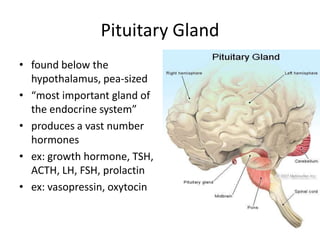
Pituitary Gland
• found below the
  hypothalamus, pea-sized
• “most important gland of
  the endocrine system”
• produces a vast number
  hormones
• ex: growth hormone, TSH,
  ACTH, LH, FSH, prolactin
• ex: vasopressin, oxytocin
Thyroid Gland
• found in the lower front
  part of the neck
• regulates body
  metabolism
• maintains normal blood
  pressure, heart rate,
  digestion
Parathyroid glands
• pair of glands adjacent
  to the thyroid gland
• regulates calcium in
  bone and blood
Adrenal glands
• found on top of your kidneys
• adrenal cortex and adrenal medulla
• outer: corticosteroids – regulate metabolism,
  salt and water balance
• inner: catecholamines – deals with physical
  and emotional stress (ex: adrenaline)
Pineal body
• regulates circadian rhythm
• SAD (seasonal affective disorder)
Pancreas
• has both exocrine and endocrine function
• “communicates” with the liver by hormones
• islets of Langerhans
  – insulin    
  – glucagon   
Homework
• Pheromones
• Sex hormones
  – androgens
  – estrogens

Endocrine system

  • 1.
  • 2.
    Endocrine System • Systemthat “communicates” to control body functions • Uses chemicals called hormones • Hormones come from glands • Unlike digestive glands, these glands are ductless *If they are ductless, how do they “communicate” with the body?
  • 3.
    Major Glands ofthe Endocrine System • hypothalamus • pituitary • thyroid • parathyroid glands • adrenal glands • pineal gland • pancreas* • reproductive organs (gonads)
  • 4.
    Hypothalamus • found inthe brain, lower central part • regulation of satiety, metabolism and body temperature • regulates the pituitary gland – somatostatin: stops release of growth hormone
  • 5.
    Pituitary Gland • foundbelow the hypothalamus, pea-sized • “most important gland of the endocrine system” • produces a vast number hormones • ex: growth hormone, TSH, ACTH, LH, FSH, prolactin • ex: vasopressin, oxytocin
  • 6.
    Thyroid Gland • foundin the lower front part of the neck • regulates body metabolism • maintains normal blood pressure, heart rate, digestion
  • 7.
    Parathyroid glands • pairof glands adjacent to the thyroid gland • regulates calcium in bone and blood
  • 8.
    Adrenal glands • foundon top of your kidneys • adrenal cortex and adrenal medulla • outer: corticosteroids – regulate metabolism, salt and water balance • inner: catecholamines – deals with physical and emotional stress (ex: adrenaline)
  • 9.
    Pineal body • regulatescircadian rhythm • SAD (seasonal affective disorder)
  • 10.
    Pancreas • has bothexocrine and endocrine function • “communicates” with the liver by hormones • islets of Langerhans – insulin  – glucagon 
  • 11.
    Homework • Pheromones • Sexhormones – androgens – estrogens