Biology Project
COLLENCHYMA
Annabelle Edwards
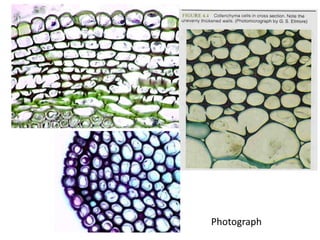
Photograph
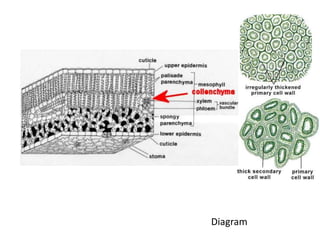
Diagram
Unique Structural Features
• The cell wall structure is a unique feature, The
thickenings are deposited unevenly; thickenings
are present at the corners of the cells, and
contain cellulose and pectin, collenchyma cells
show thin and thick wall portions depending on
the direction of the cut.
• Inter cellular spaces are absent
• A few chloroplasts may be present in the cells
• Collenchyma cells are considerably elongated
• Their cell walls don't contain lignin
Where is it found?
Collenchyma tissues are mainly found under the
epidermis in young stems in the large veins of
leaves. The cells are composed
of living, elongated cells running parallel to the
length of organs that it is found in.
What do they do?
Collenchyma is primarily a mechanical tissue
adapted for support of grow-ing organs. The
thick walls and close packing, make it a strong
tissue and because their cell walls don't contain
lignin, they are stretchy and can change size so
as a young leaf grows, collenchyma cells can
elongate and still give the leaf structure
Features linked to Function
• The cells are composed of living, elongated cells
running parallel to the length of organs that it is found
in. the cells have thick cellulose cell walls which
thickened at the corners. This makes the plants more
structure of the plant flexible whilst still holding
desired structure.
• Intercellular air spaces are absent or very small to
make them more closely packed increasing strength
• The cells contain living protoplasm and they sometimes
contain chloroplasts so that photosynthesis can take
place.

Collenchyma cell project

  • 1.
  • 2.
  • 3.
  • 4.
    Unique Structural Features •The cell wall structure is a unique feature, The thickenings are deposited unevenly; thickenings are present at the corners of the cells, and contain cellulose and pectin, collenchyma cells show thin and thick wall portions depending on the direction of the cut. • Inter cellular spaces are absent • A few chloroplasts may be present in the cells • Collenchyma cells are considerably elongated • Their cell walls don't contain lignin
  • 5.
    Where is itfound? Collenchyma tissues are mainly found under the epidermis in young stems in the large veins of leaves. The cells are composed of living, elongated cells running parallel to the length of organs that it is found in.
  • 6.
    What do theydo? Collenchyma is primarily a mechanical tissue adapted for support of grow-ing organs. The thick walls and close packing, make it a strong tissue and because their cell walls don't contain lignin, they are stretchy and can change size so as a young leaf grows, collenchyma cells can elongate and still give the leaf structure
  • 7.
    Features linked toFunction • The cells are composed of living, elongated cells running parallel to the length of organs that it is found in. the cells have thick cellulose cell walls which thickened at the corners. This makes the plants more structure of the plant flexible whilst still holding desired structure. • Intercellular air spaces are absent or very small to make them more closely packed increasing strength • The cells contain living protoplasm and they sometimes contain chloroplasts so that photosynthesis can take place.