Introduction to Bacteria


USDA NIFSI Food Safety in the Classroom©
 University of Tennessee, Knoxville 2006
What are bacteria?
              • Single celled organisms
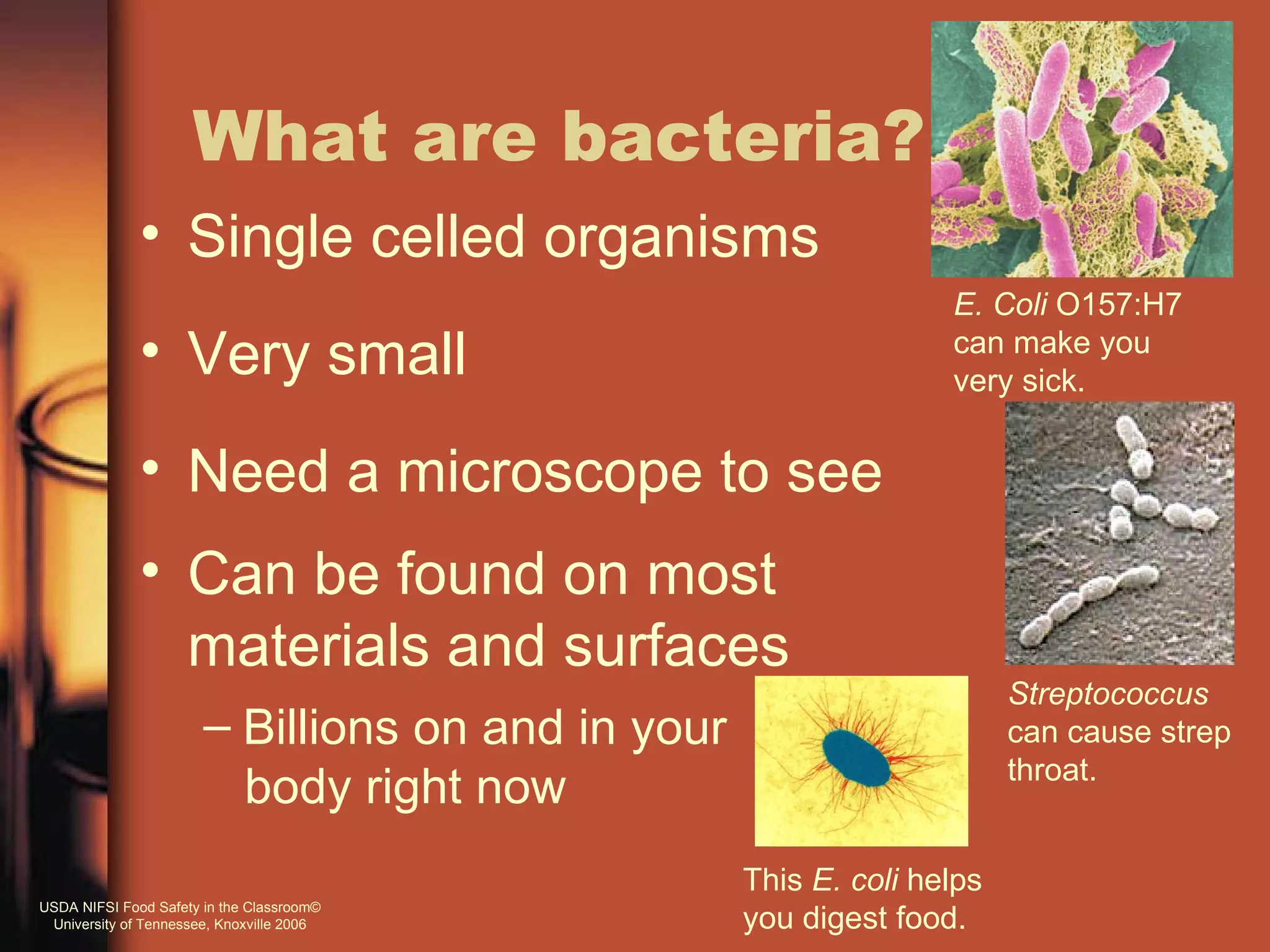
                                                                  E. Coli O157:H7
              • Very small                                        can make you
                                                                  very sick.


              • Need a microscope to see
              • Can be found on most
                materials and surfaces
                                                                        Streptococcus
                       – Billions on and in your                        can cause strep
                                                                        throat.
                         body right now
                                                   This E. coli helps
USDA NIFSI Food Safety in the Classroom©
 University of Tennessee, Knoxville 2006           you digest food.
What do they look like?
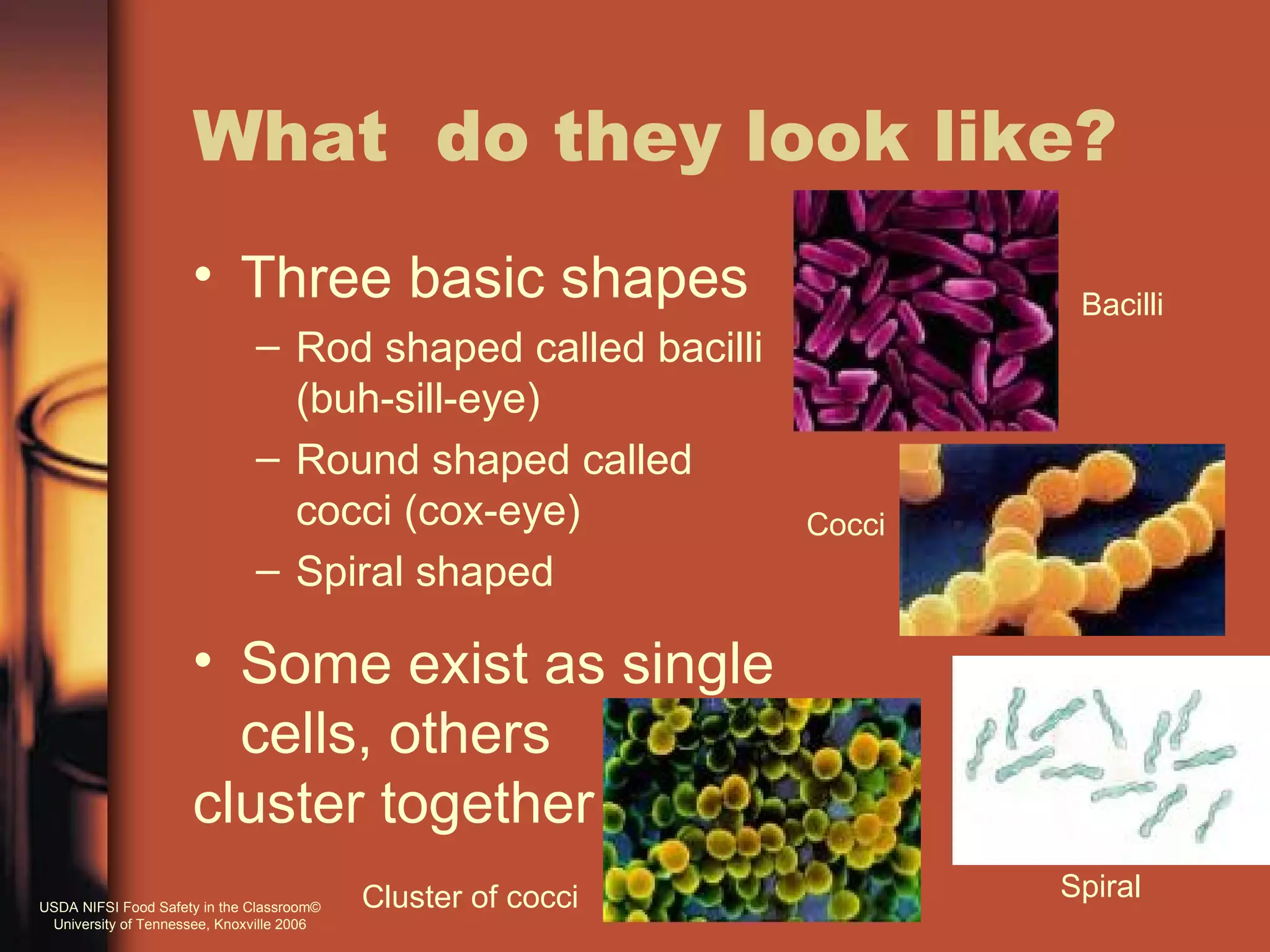
                     • Three basic shapes                              Bacilli
                              – Rod shaped called bacilli
                                (buh-sill-eye)
                              – Round shaped called
                                cocci (cox-eye)               Cocci
                              – Spiral shaped

                     • Some exist as single
                       cells, others
                     cluster together
USDA NIFSI Food Safety in the Classroom©   Cluster of cocci           Spiral
 University of Tennessee, Knoxville 2006
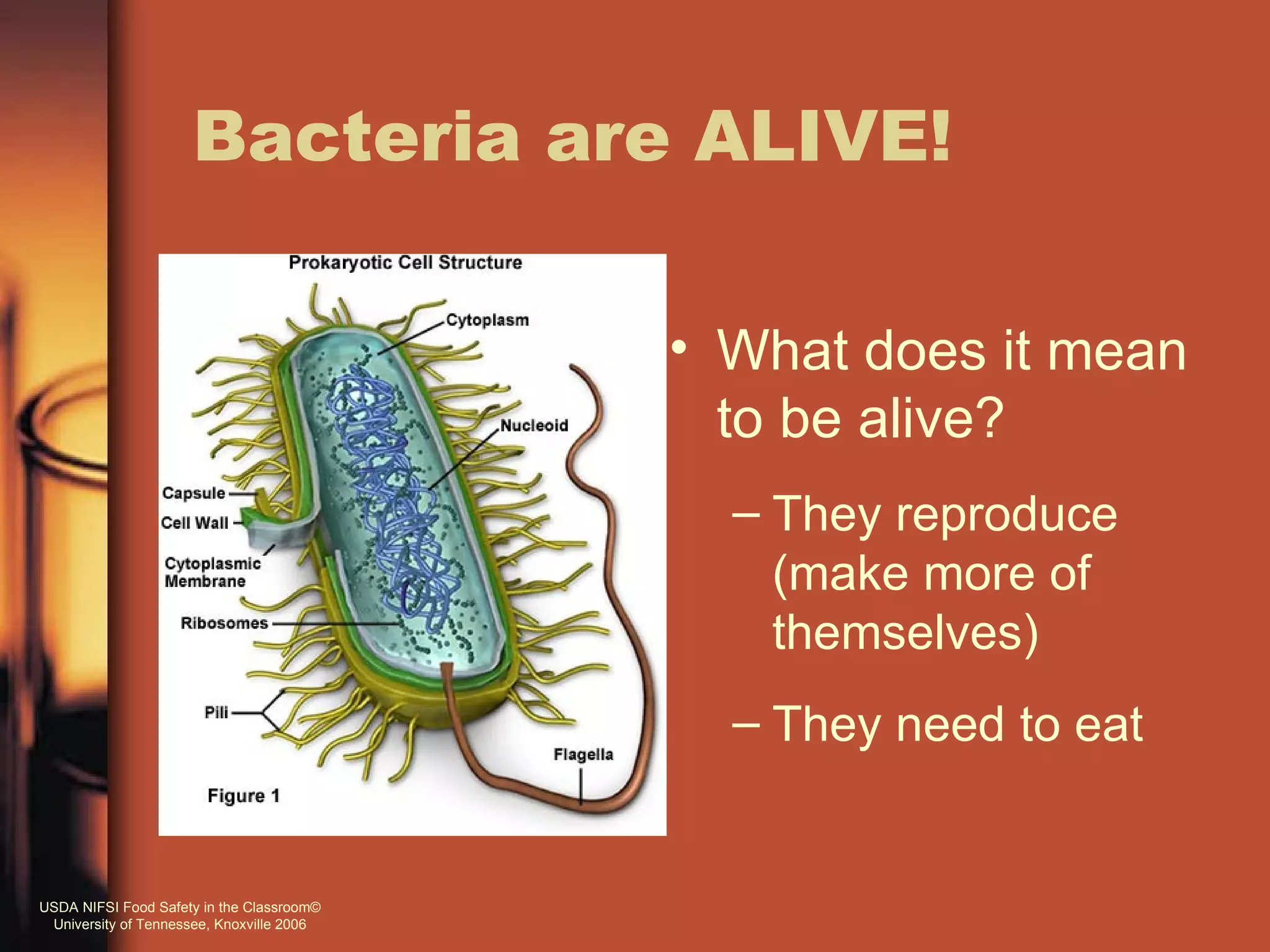
Bacteria are ALIVE!

                                           • What does it mean
                                             to be alive?
                                             – They reproduce
                                               (make more of
                                               themselves)
                                             – They need to eat


USDA NIFSI Food Safety in the Classroom©
 University of Tennessee, Knoxville 2006
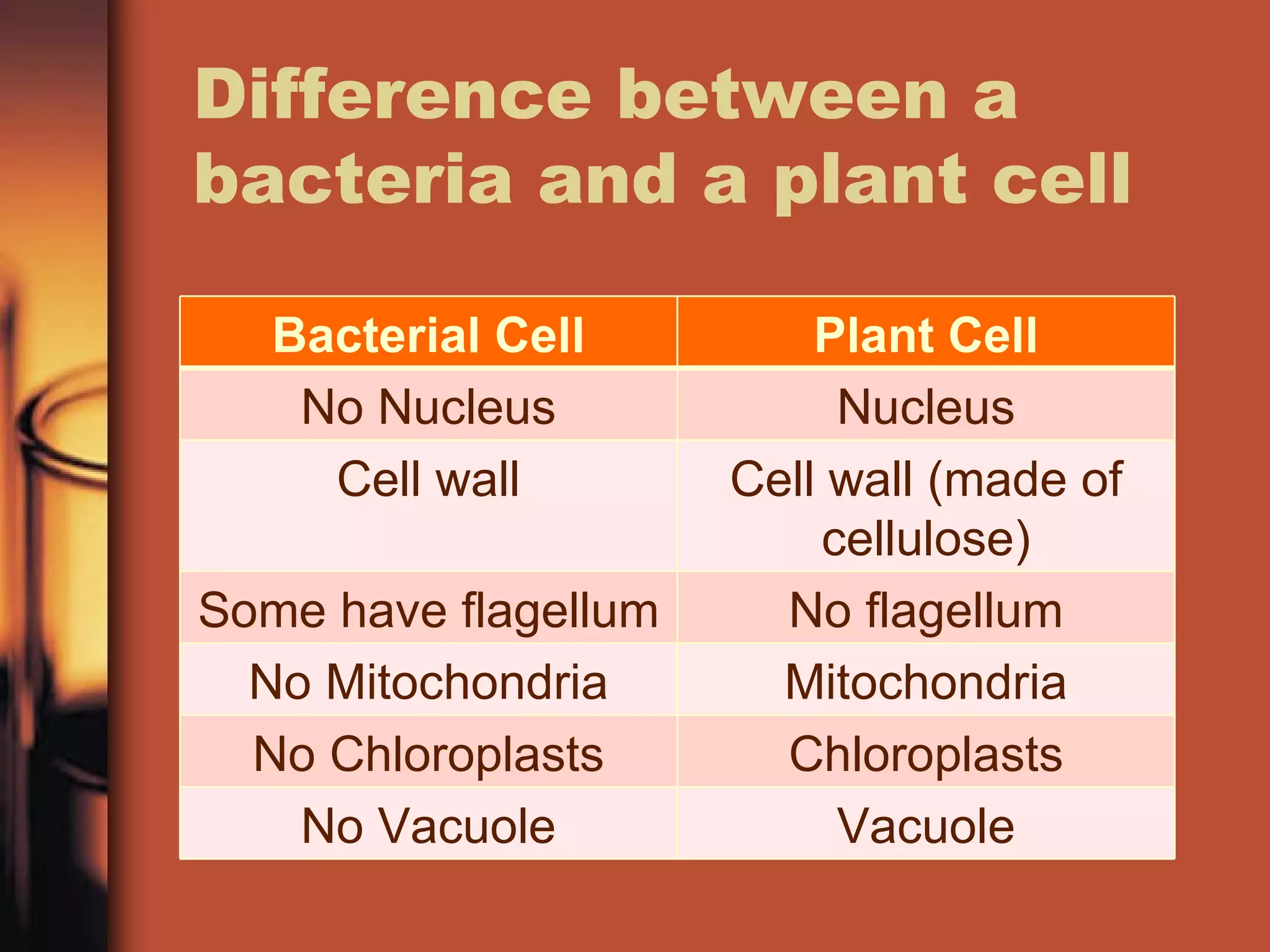
Difference between a
bacteria and a plant cell

   Bacterial Cell         Plant Cell
    No Nucleus             Nucleus
     Cell wall        Cell wall (made of
                          cellulose)
Some have flagellum     No flagellum
  No Mitochondria       Mitochondria
  No Chloroplasts       Chloroplasts
    No Vacuole             Vacuole
How do bacteria
                     reproduce?
                     • Grow in number not in size
                              – Humans grow in size from child to adult

                     • Make copies of themselves by
                       dividing in half – Binary Fission
                              – Human parents create a child


USDA NIFSI Food Safety in the Classroom©
 University of Tennessee, Knoxville 2006
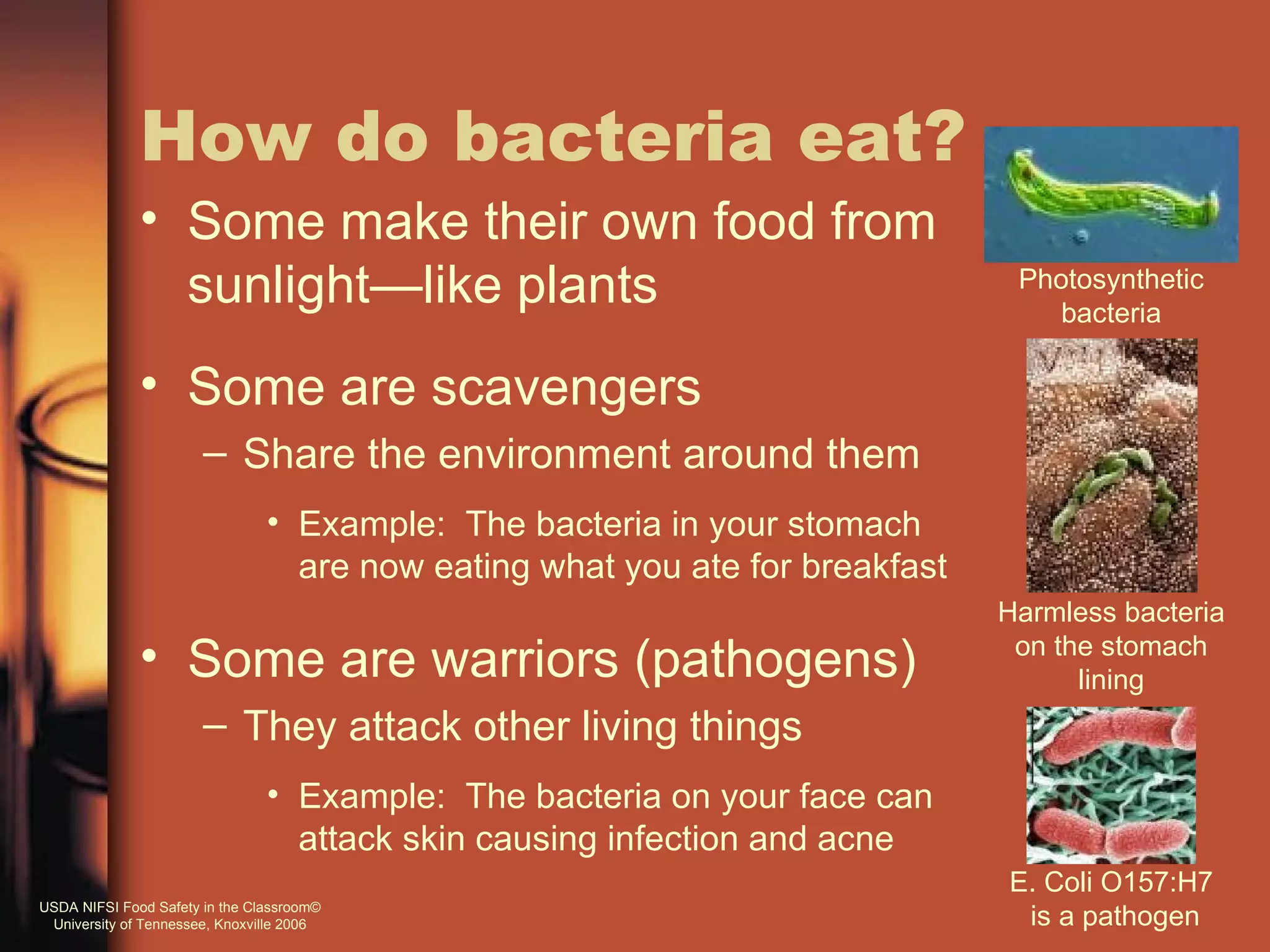
How do bacteria eat?
              • Some make their own food from
                sunlight—like plants                                           Photosynthetic
                                                                                  bacteria

              • Some are scavengers
                       – Share the environment around them
                                • Example: The bacteria in your stomach
                                  are now eating what you ate for breakfast
                                                                              Harmless bacteria
              • Some are warriors (pathogens)                                  on the stomach
                                                                                    lining
                       – They attack other living things
                                • Example: The bacteria on your face can
                                  attack skin causing infection and acne
                                                                              E. Coli O157:H7
USDA NIFSI Food Safety in the Classroom©
 University of Tennessee, Knoxville 2006                                       is a pathogen
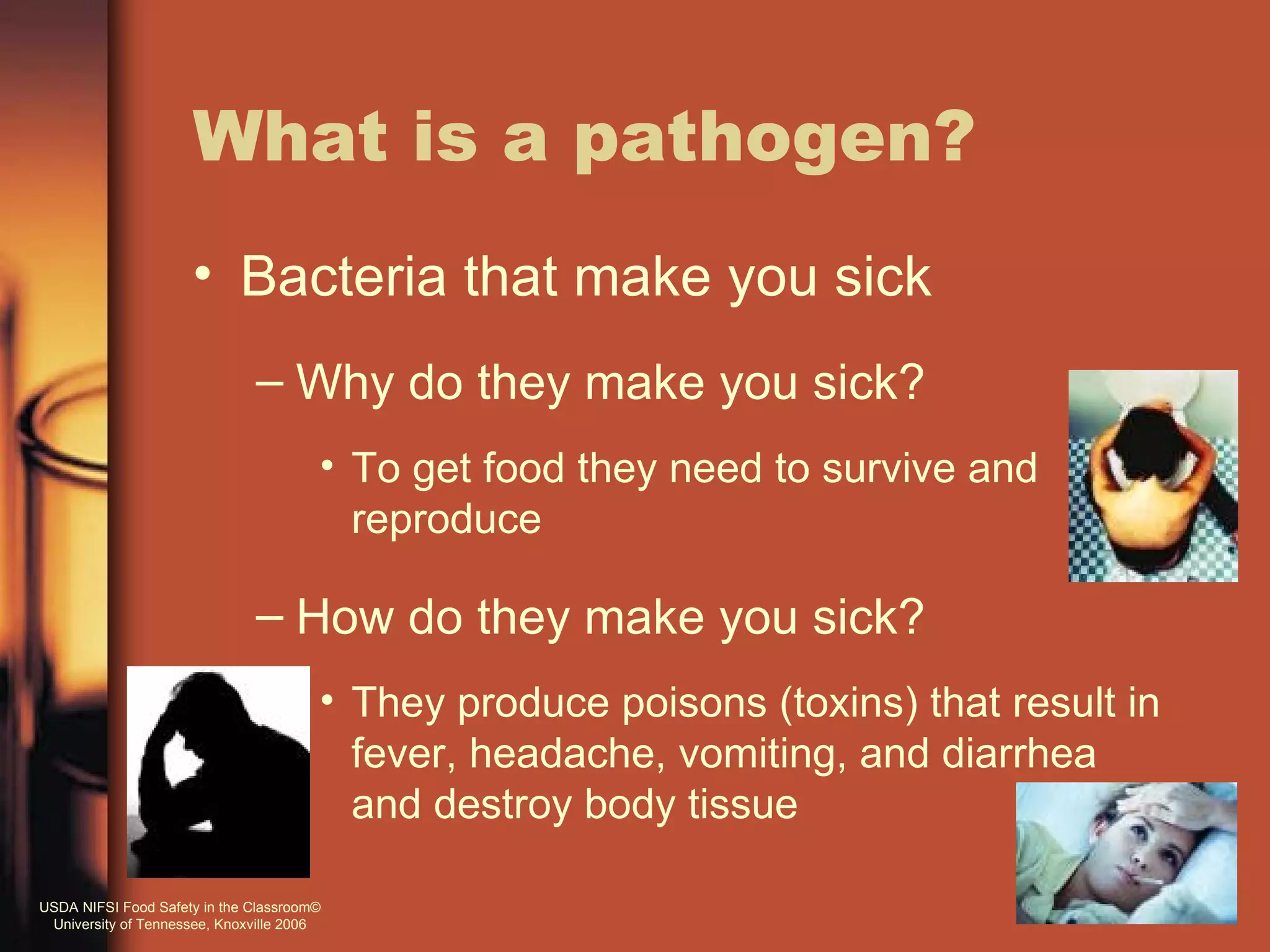
What is a pathogen?
                     • Bacteria that make you sick
                              – Why do they make you sick?
                                       • To get food they need to survive and
                                         reproduce

                              – How do they make you sick?
                                       • They produce poisons (toxins) that result in
                                         fever, headache, vomiting, and diarrhea
                                         and destroy body tissue

USDA NIFSI Food Safety in the Classroom©
 University of Tennessee, Knoxville 2006
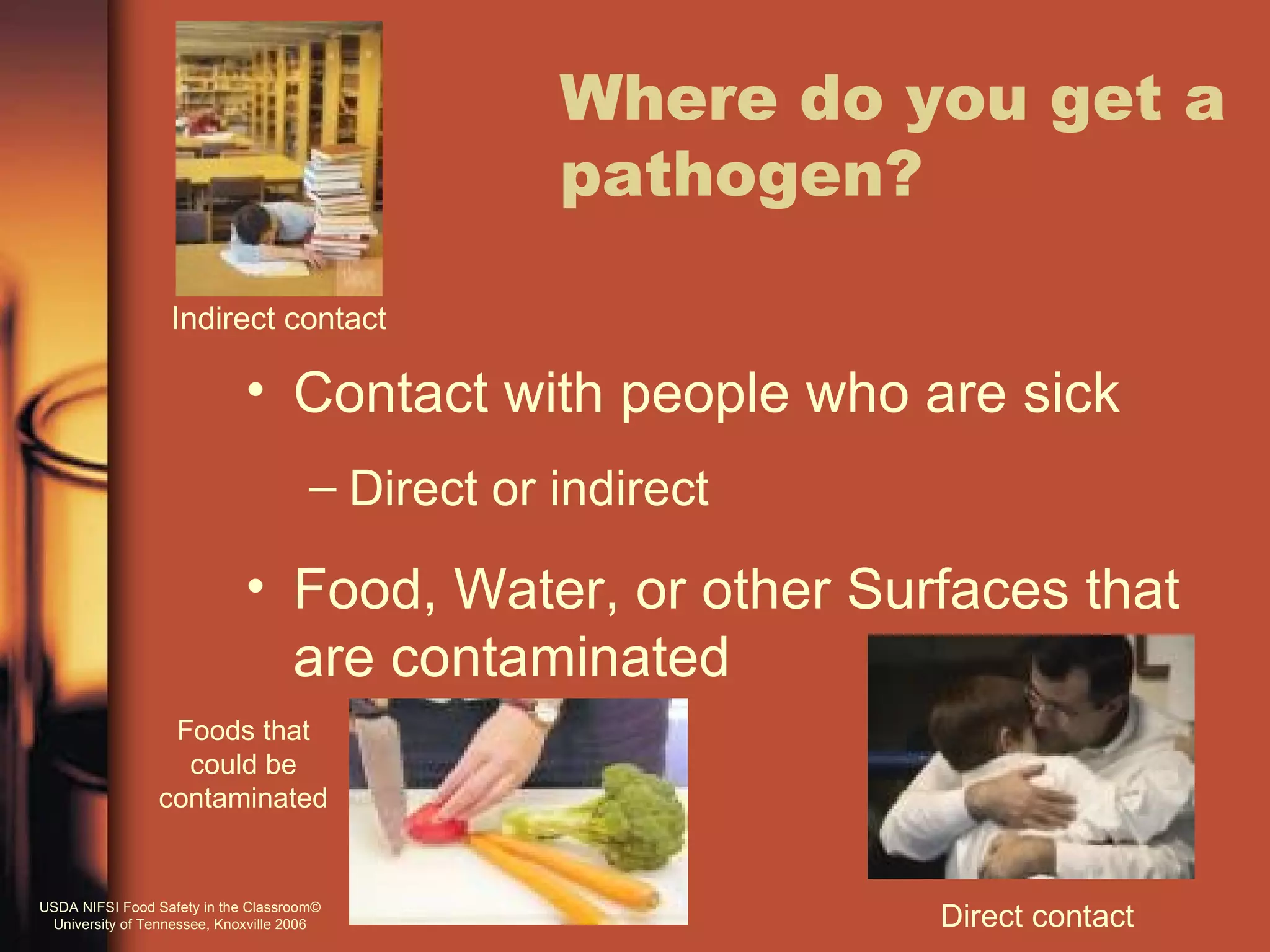
Where do you get a
                                                  pathogen?

                  Indirect contact

                             • Contact with people who are sick
                                      – Direct or indirect

                             • Food, Water, or other Surfaces that
                               are contaminated
                 Foods that
                  could be
                contaminated


USDA NIFSI Food Safety in the Classroom©
 University of Tennessee, Knoxville 2006                     Direct contact
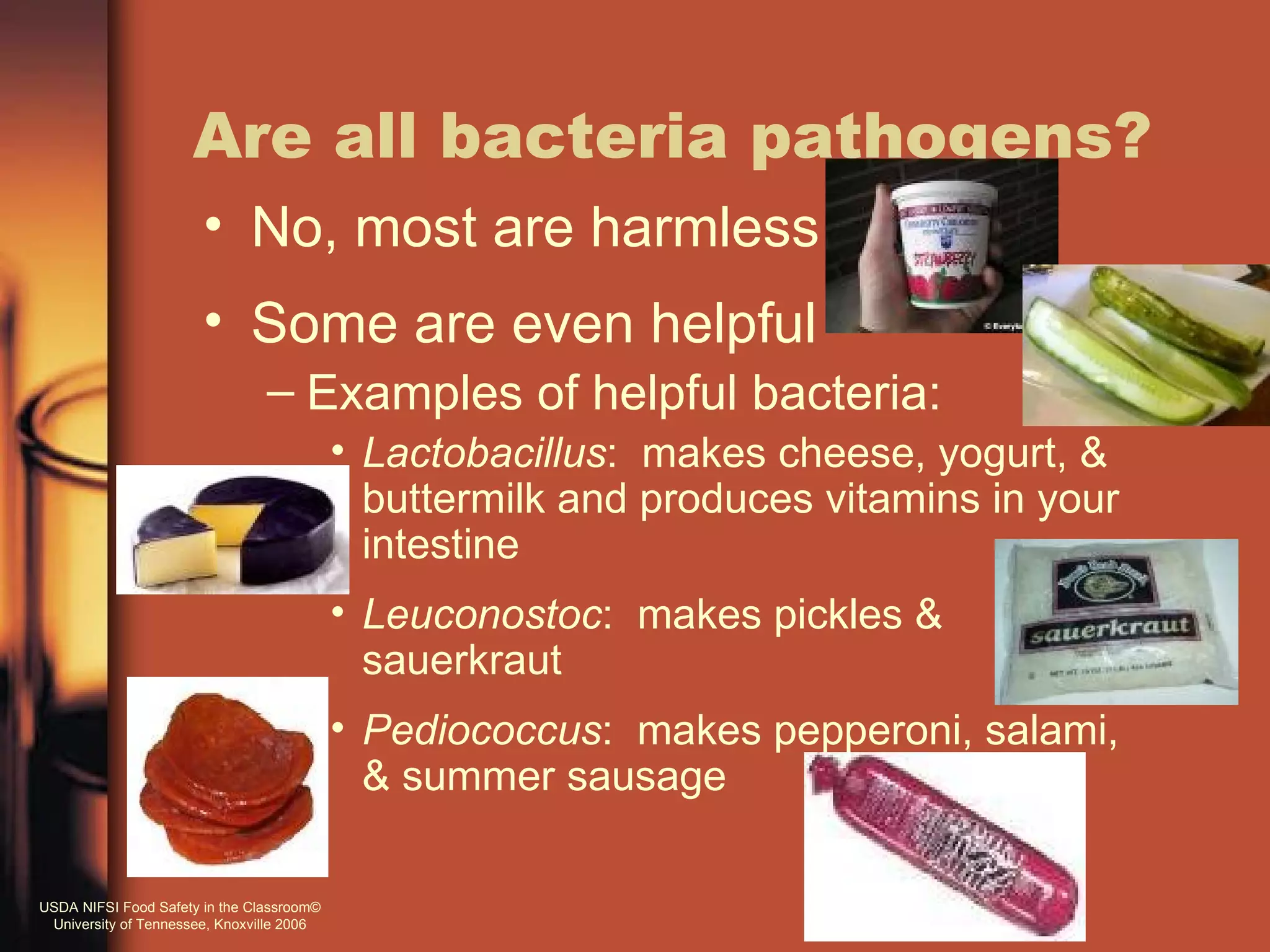
Are all bacteria pathogens?
                       • No, most are harmless
                       • Some are even helpful
                                – Examples of helpful bacteria:
                                           • Lactobacillus: makes cheese, yogurt, &
                                             buttermilk and produces vitamins in your
                                             intestine
                                           • Leuconostoc: makes pickles &
                                             sauerkraut
                                           • Pediococcus: makes pepperoni, salami,
                                             & summer sausage

USDA NIFSI Food Safety in the Classroom©
 University of Tennessee, Knoxville 2006
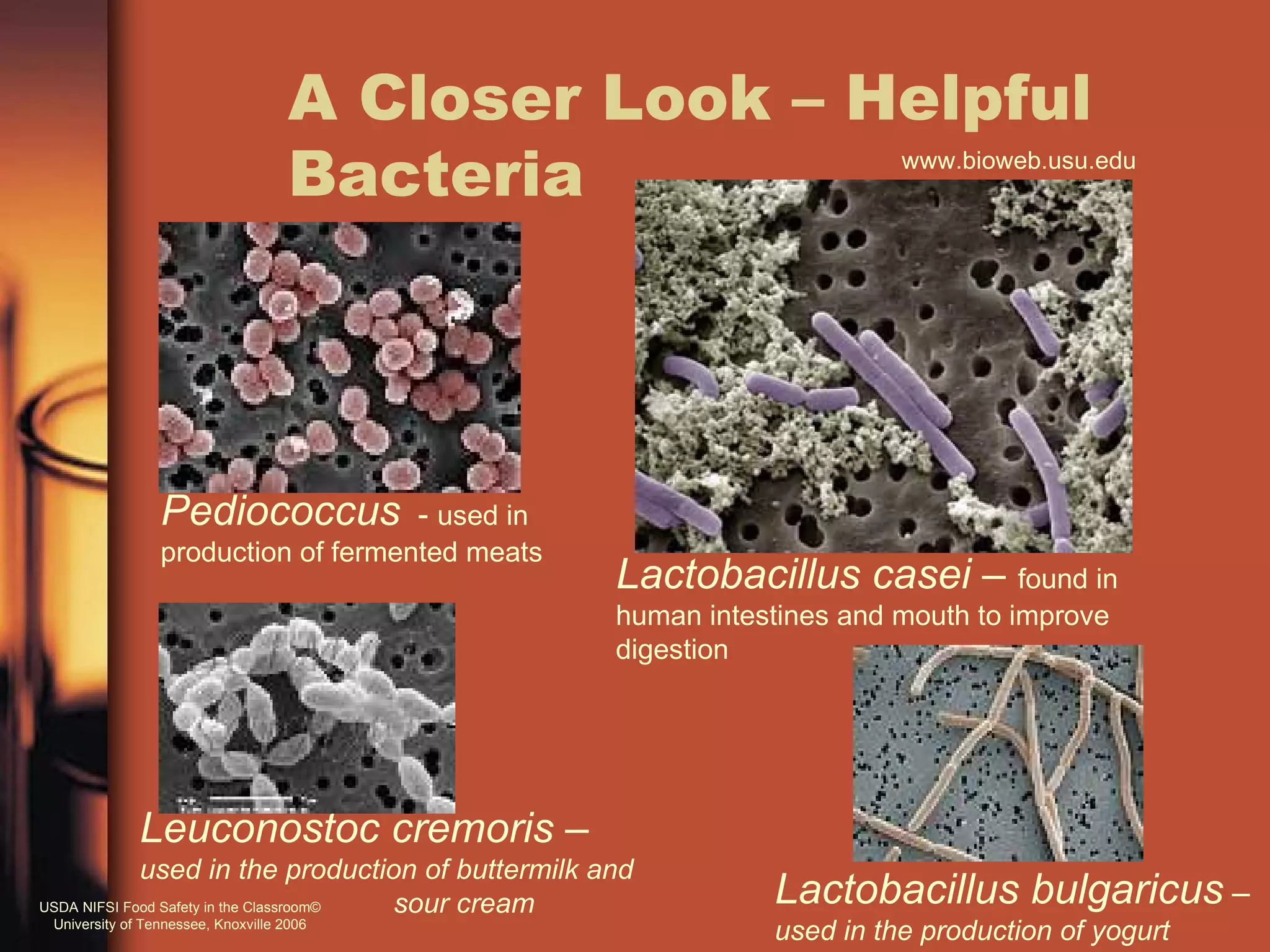
A Closer Look – Helpful
                                     Bacteria                               www.bioweb.usu.edu


                 Pediococcus               - used in
                 production of fermented meats
                                                       Lactobacillus casei – found in
                                                       human intestines and mouth to improve
                                                       digestion


              Leuconostoc cremoris –
             used in the production of buttermilk and
USDA NIFSI Food Safety in the Classroom© sour cream               Lactobacillus bulgaricus –
 University of Tennessee, Knoxville 2006
                                                                  used in the production of yogurt
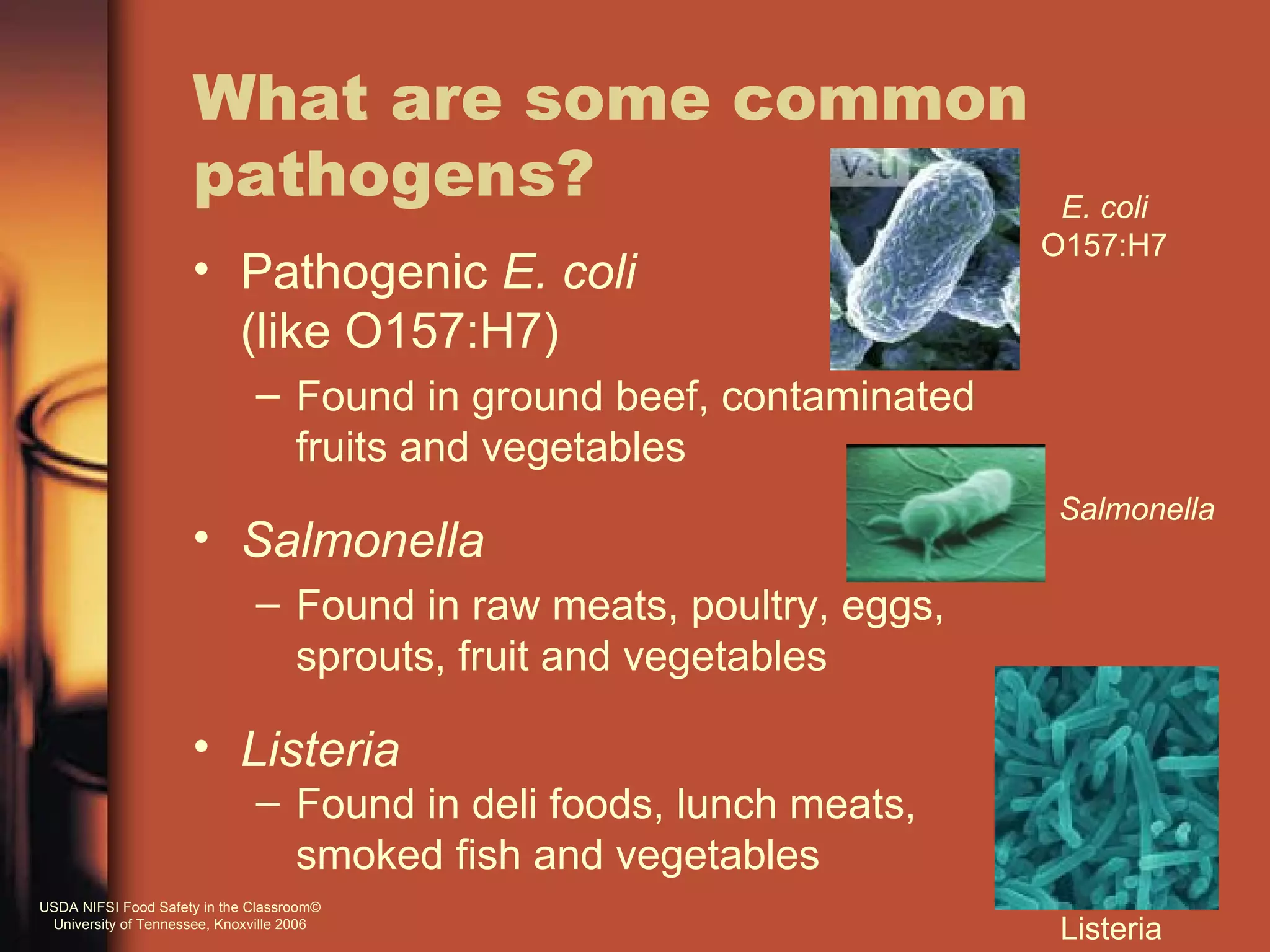
What are some common
                     pathogens?                                       E. coli
                                                                     O157:H7
                     • Pathogenic E. coli
                       (like O157:H7)
                              – Found in ground beef, contaminated
                                fruits and vegetables
                                                                      Salmonella
                     • Salmonella
                              – Found in raw meats, poultry, eggs,
                                sprouts, fruit and vegetables

                     • Listeria
                              – Found in deli foods, lunch meats,
                                smoked fish and vegetables
USDA NIFSI Food Safety in the Classroom©
 University of Tennessee, Knoxville 2006
                                                                      Listeria
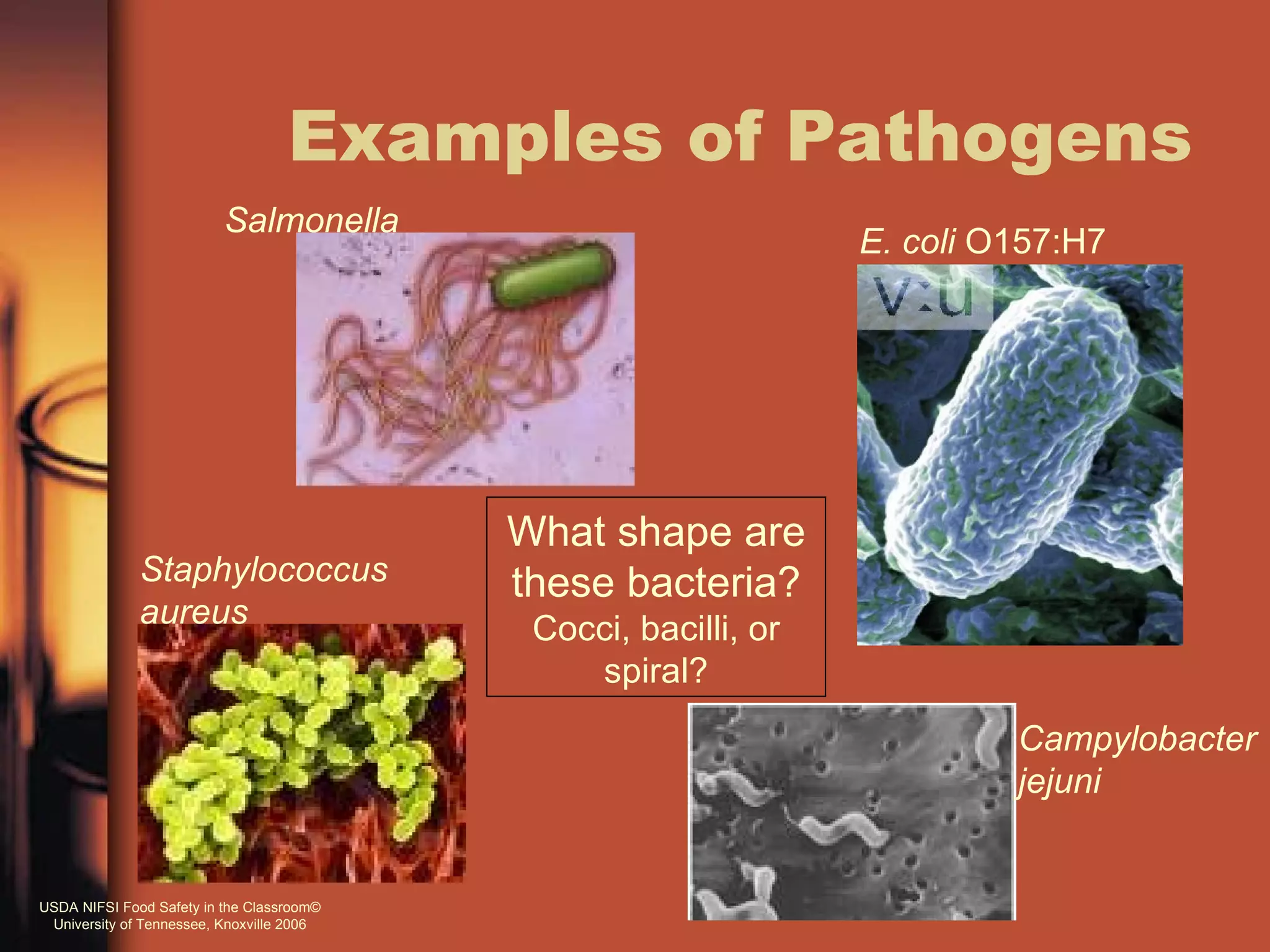
Examples of Pathogens
                          Salmonella
                                                                 E. coli O157:H7


                                           What shape are
              Staphylococcus               these bacteria?
              aureus                        Cocci, bacilli, or
                                               spiral?
                                                                          Campylobacter
                                                                          jejuni


USDA NIFSI Food Safety in the Classroom©
 University of Tennessee, Knoxville 2006
Review
                 • Bacteria are living organisms
                 • Most are harmless
                 • A few are pathogens that make
                   you sick
                 • You can reduce the risk of
                   getting sick by washing your
                   hands and handling food
                   properly.
USDA NIFSI Food Safety in the Classroom©
 University of Tennessee, Knoxville 2006
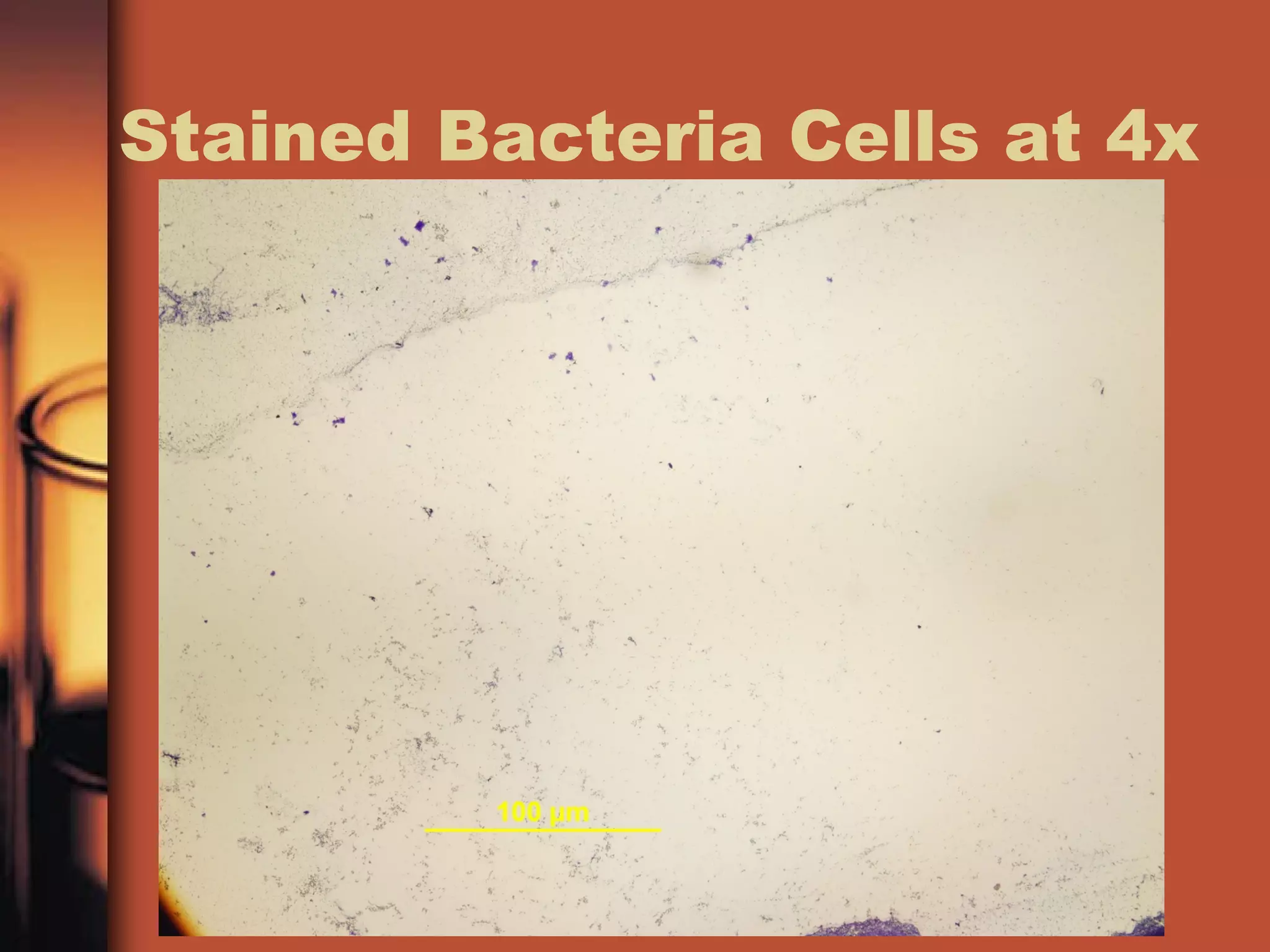
Stained Bacteria Cells at 4x
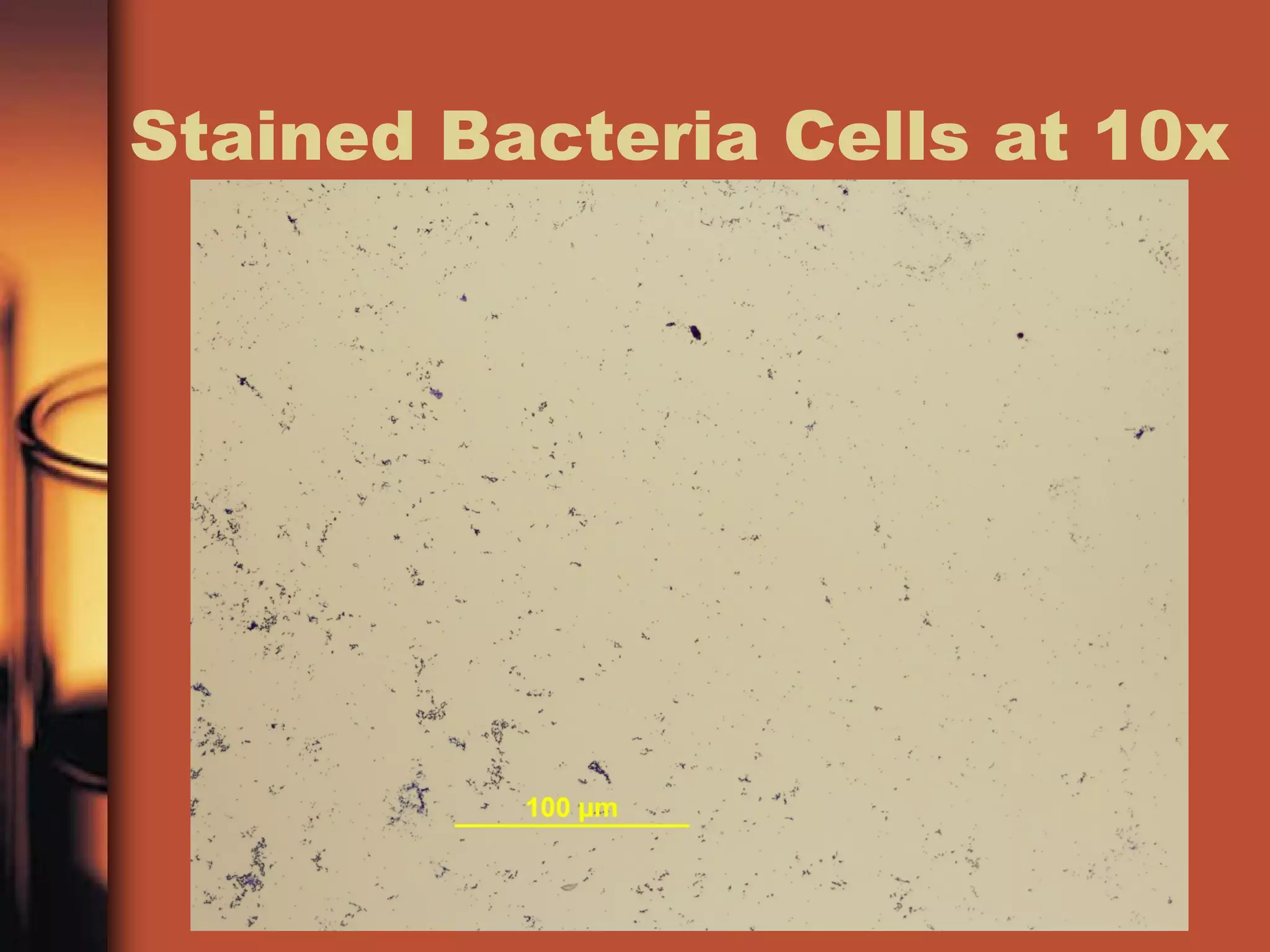
Stained Bacteria Cells at 10x
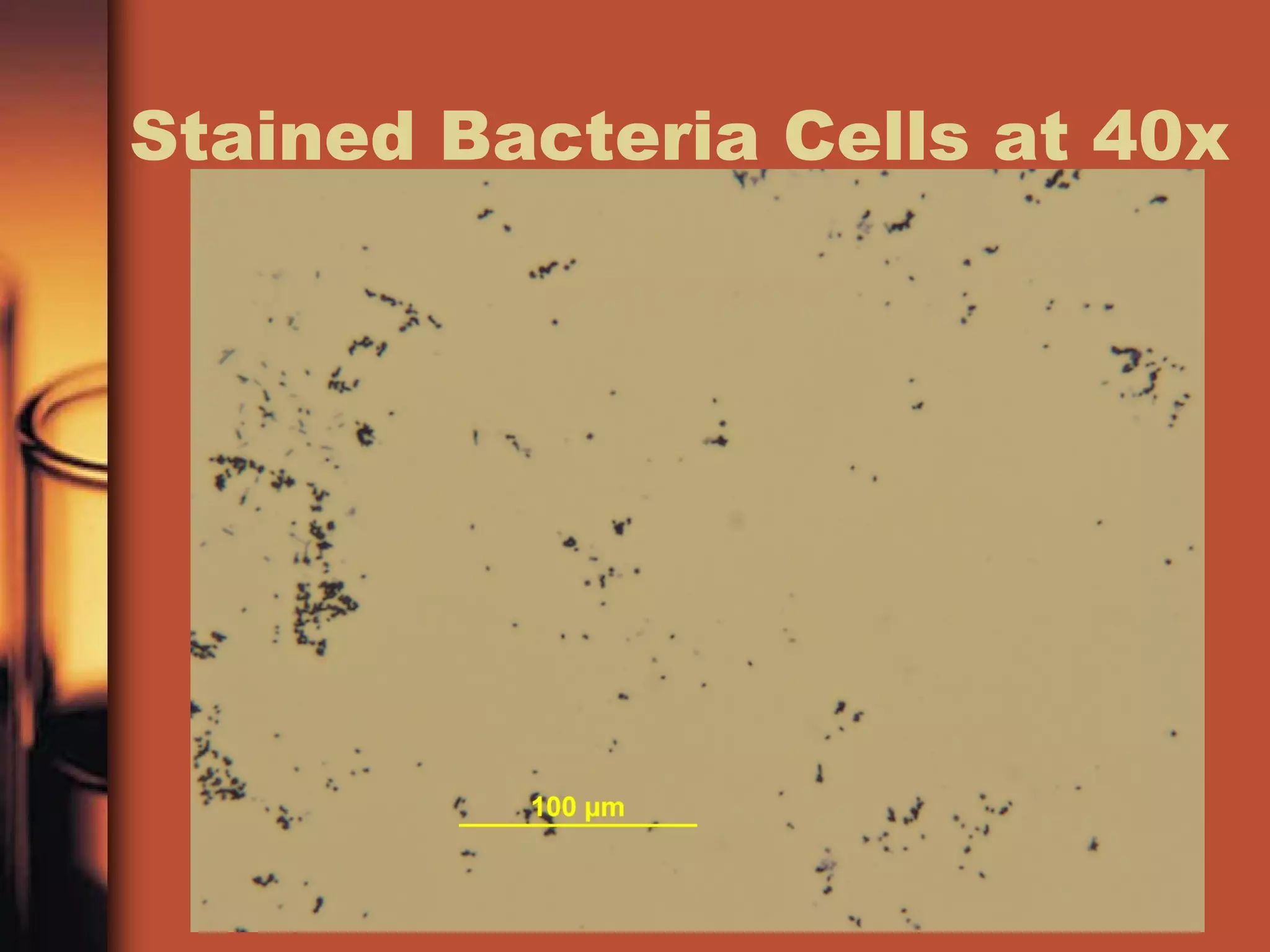
Stained Bacteria Cells at 40x

Introduction to bacteria

  • 1.
    Introduction to Bacteria USDANIFSI Food Safety in the Classroom© University of Tennessee, Knoxville 2006
  • 2.
    What are bacteria? • Single celled organisms E. Coli O157:H7 • Very small can make you very sick. • Need a microscope to see • Can be found on most materials and surfaces Streptococcus – Billions on and in your can cause strep throat. body right now This E. coli helps USDA NIFSI Food Safety in the Classroom© University of Tennessee, Knoxville 2006 you digest food.
  • 3.
    What do theylook like? • Three basic shapes Bacilli – Rod shaped called bacilli (buh-sill-eye) – Round shaped called cocci (cox-eye) Cocci – Spiral shaped • Some exist as single cells, others cluster together USDA NIFSI Food Safety in the Classroom© Cluster of cocci Spiral University of Tennessee, Knoxville 2006
  • 4.
    Bacteria are ALIVE! • What does it mean to be alive? – They reproduce (make more of themselves) – They need to eat USDA NIFSI Food Safety in the Classroom© University of Tennessee, Knoxville 2006
  • 5.
    Difference between a bacteriaand a plant cell Bacterial Cell Plant Cell No Nucleus Nucleus Cell wall Cell wall (made of cellulose) Some have flagellum No flagellum No Mitochondria Mitochondria No Chloroplasts Chloroplasts No Vacuole Vacuole
  • 6.
    How do bacteria reproduce? • Grow in number not in size – Humans grow in size from child to adult • Make copies of themselves by dividing in half – Binary Fission – Human parents create a child USDA NIFSI Food Safety in the Classroom© University of Tennessee, Knoxville 2006
  • 7.
    How do bacteriaeat? • Some make their own food from sunlight—like plants Photosynthetic bacteria • Some are scavengers – Share the environment around them • Example: The bacteria in your stomach are now eating what you ate for breakfast Harmless bacteria • Some are warriors (pathogens) on the stomach lining – They attack other living things • Example: The bacteria on your face can attack skin causing infection and acne E. Coli O157:H7 USDA NIFSI Food Safety in the Classroom© University of Tennessee, Knoxville 2006 is a pathogen
  • 8.
    What is apathogen? • Bacteria that make you sick – Why do they make you sick? • To get food they need to survive and reproduce – How do they make you sick? • They produce poisons (toxins) that result in fever, headache, vomiting, and diarrhea and destroy body tissue USDA NIFSI Food Safety in the Classroom© University of Tennessee, Knoxville 2006
  • 9.
    Where do youget a pathogen? Indirect contact • Contact with people who are sick – Direct or indirect • Food, Water, or other Surfaces that are contaminated Foods that could be contaminated USDA NIFSI Food Safety in the Classroom© University of Tennessee, Knoxville 2006 Direct contact
  • 10.
    Are all bacteriapathogens? • No, most are harmless • Some are even helpful – Examples of helpful bacteria: • Lactobacillus: makes cheese, yogurt, & buttermilk and produces vitamins in your intestine • Leuconostoc: makes pickles & sauerkraut • Pediococcus: makes pepperoni, salami, & summer sausage USDA NIFSI Food Safety in the Classroom© University of Tennessee, Knoxville 2006
  • 11.
    A Closer Look– Helpful Bacteria www.bioweb.usu.edu Pediococcus - used in production of fermented meats Lactobacillus casei – found in human intestines and mouth to improve digestion Leuconostoc cremoris – used in the production of buttermilk and USDA NIFSI Food Safety in the Classroom© sour cream Lactobacillus bulgaricus – University of Tennessee, Knoxville 2006 used in the production of yogurt
  • 12.
    What are somecommon pathogens? E. coli O157:H7 • Pathogenic E. coli (like O157:H7) – Found in ground beef, contaminated fruits and vegetables Salmonella • Salmonella – Found in raw meats, poultry, eggs, sprouts, fruit and vegetables • Listeria – Found in deli foods, lunch meats, smoked fish and vegetables USDA NIFSI Food Safety in the Classroom© University of Tennessee, Knoxville 2006 Listeria
  • 13.
    Examples of Pathogens Salmonella E. coli O157:H7 What shape are Staphylococcus these bacteria? aureus Cocci, bacilli, or spiral? Campylobacter jejuni USDA NIFSI Food Safety in the Classroom© University of Tennessee, Knoxville 2006
  • 14.
    Review • Bacteria are living organisms • Most are harmless • A few are pathogens that make you sick • You can reduce the risk of getting sick by washing your hands and handling food properly. USDA NIFSI Food Safety in the Classroom© University of Tennessee, Knoxville 2006
  • 15.
  • 16.
  • 17.