COLD CHAIN
Definition
“A system of storing and transporting the
vaccine, at a low temperature from the place
of manufacture to the actual vaccination site
is called cold chain”.
Importance of cold chain
1. Obtaining the vaccines from the manufacturers
2. Storing and transporting the vaccines
3. Maintaining the supply of vaccines
4. Having information about essential
equipments, supply of electricity etc
5. Keeping the vaccine at low temperature
6. Protecting the vaccine from sunlight exposure
7. Maintaining the potency of vaccines.
Components of cold chain
1. Apparatus/ equipments
2. Supplies
3. Manual efforts
4. Transportation
5. Communication
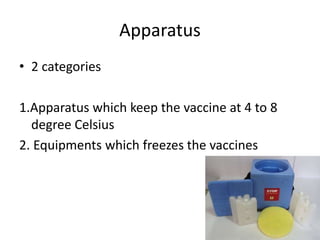
Apparatus
• 2 categories
1.Apparatus which keep the vaccine at 4 to 8
degree Celsius
2. Equipments which freezes the vaccines
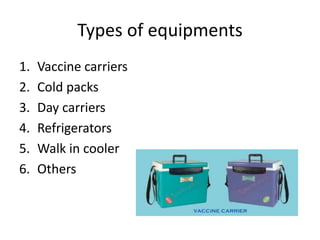
Types of equipments
1. Vaccine carriers
2. Cold packs
3. Day carriers
4. Refrigerators
5. Walk in cooler
6. Others
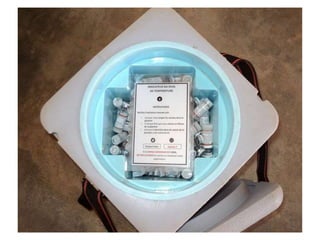
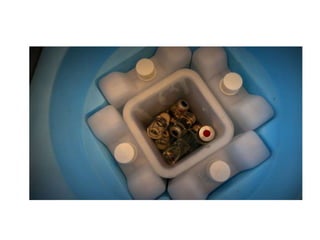
Vaccine carrier
• They are suitable to carry small quantities of
vaccine to health sub centers, villages and small
towns. i.e. 16 to 20 vials at a time.
• A square box made up of heat resistant material
and light in weight
• Four packs of ice are kept in these, along all four
sides
• Vaccines can kept up to 2 to 3 days
Cold boxes
• This can transport large quantities of vaccines
by vehicle to outreach sites.
• Box sizes are 5 liters and 20 liters
• It can preserve vaccine for up to 1 week
without any power supply.
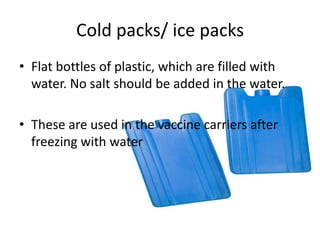
Cold packs/ ice packs
• Flat bottles of plastic, which are filled with
water. No salt should be added in the water.
• These are used in the vaccine carriers after
freezing with water
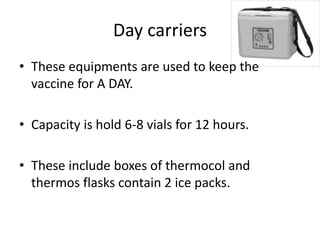
Day carriers
• These equipments are used to keep the
vaccine for A DAY.
• Capacity is hold 6-8 vials for 12 hours.
• These include boxes of thermocol and
thermos flasks contain 2 ice packs.
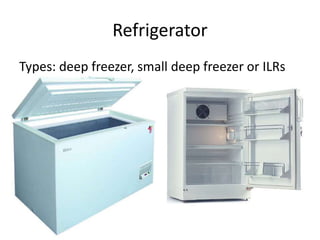
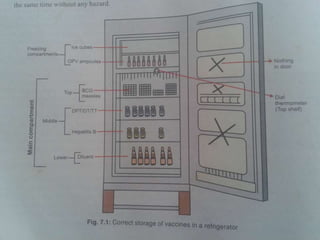
Refrigerator
Types: deep freezer, small deep freezer or ILRs
Types
• Deep freezer: 300liters
• ILR 300/240liters
• Used in all district level.
• It is also used to make ice packs and for
storing OPV & measles vaccines
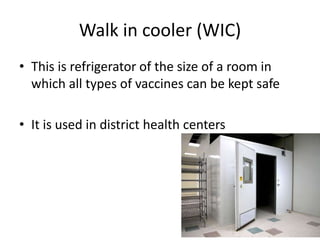
Walk in cooler (WIC)
• This is refrigerator of the size of a room in
which all types of vaccines can be kept safe
• It is used in district health centers
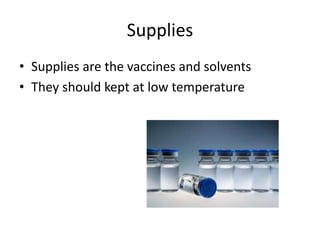
Supplies
• Supplies are the vaccines and solvents
• They should kept at low temperature
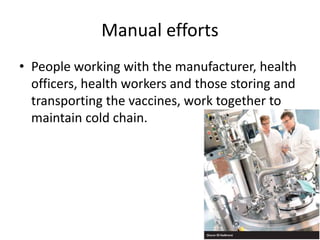
Manual efforts
• People working with the manufacturer, health
officers, health workers and those storing and
transporting the vaccines, work together to
maintain cold chain.
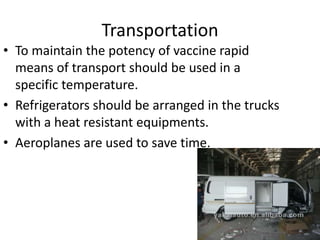
Transportation
• To maintain the potency of vaccine rapid
means of transport should be used in a
specific temperature.
• Refrigerators should be arranged in the trucks
with a heat resistant equipments.
• Aeroplanes are used to save time.
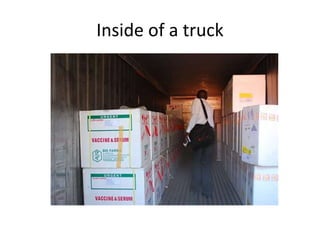
Inside of a truck
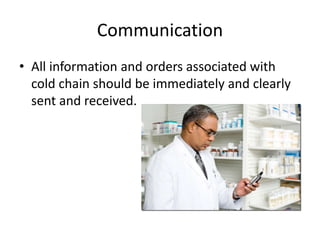
Communication
• All information and orders associated with
cold chain should be immediately and clearly
sent and received.
Methods of controlling cold chain
1. Keep the vaccine in appropriate conditions as
suggested by manufacturer
2. Follow all the precautions while transporting
vaccines
3. Record the temperature of storage place
twice a day and preparing the temperature
chart
4. Maintain the equipment of cold chain and the
appropriate functioning of its components,
conducting potency tests from time to time
5. Keep communication system effective and
latest
6. Train all the people associated with
vaccination, about the maintenance and
control of cold chain.
Cold chain

Cold chain

  • 1.
  • 2.
    Definition “A system ofstoring and transporting the vaccine, at a low temperature from the place of manufacture to the actual vaccination site is called cold chain”.
  • 3.
    Importance of coldchain 1. Obtaining the vaccines from the manufacturers 2. Storing and transporting the vaccines 3. Maintaining the supply of vaccines 4. Having information about essential equipments, supply of electricity etc 5. Keeping the vaccine at low temperature 6. Protecting the vaccine from sunlight exposure 7. Maintaining the potency of vaccines.
  • 4.
    Components of coldchain 1. Apparatus/ equipments 2. Supplies 3. Manual efforts 4. Transportation 5. Communication
  • 5.
    Apparatus • 2 categories 1.Apparatuswhich keep the vaccine at 4 to 8 degree Celsius 2. Equipments which freezes the vaccines
  • 6.
    Types of equipments 1.Vaccine carriers 2. Cold packs 3. Day carriers 4. Refrigerators 5. Walk in cooler 6. Others
  • 7.
    Vaccine carrier • Theyare suitable to carry small quantities of vaccine to health sub centers, villages and small towns. i.e. 16 to 20 vials at a time. • A square box made up of heat resistant material and light in weight • Four packs of ice are kept in these, along all four sides • Vaccines can kept up to 2 to 3 days
  • 10.
    Cold boxes • Thiscan transport large quantities of vaccines by vehicle to outreach sites. • Box sizes are 5 liters and 20 liters • It can preserve vaccine for up to 1 week without any power supply.
  • 11.
    Cold packs/ icepacks • Flat bottles of plastic, which are filled with water. No salt should be added in the water. • These are used in the vaccine carriers after freezing with water
  • 12.
    Day carriers • Theseequipments are used to keep the vaccine for A DAY. • Capacity is hold 6-8 vials for 12 hours. • These include boxes of thermocol and thermos flasks contain 2 ice packs.
  • 13.
    Refrigerator Types: deep freezer,small deep freezer or ILRs
  • 14.
    Types • Deep freezer:300liters • ILR 300/240liters
  • 15.
    • Used inall district level. • It is also used to make ice packs and for storing OPV & measles vaccines
  • 17.
    Walk in cooler(WIC) • This is refrigerator of the size of a room in which all types of vaccines can be kept safe • It is used in district health centers
  • 18.
    Supplies • Supplies arethe vaccines and solvents • They should kept at low temperature
  • 19.
    Manual efforts • Peopleworking with the manufacturer, health officers, health workers and those storing and transporting the vaccines, work together to maintain cold chain.
  • 20.
    Transportation • To maintainthe potency of vaccine rapid means of transport should be used in a specific temperature. • Refrigerators should be arranged in the trucks with a heat resistant equipments. • Aeroplanes are used to save time.
  • 21.
  • 22.
    Communication • All informationand orders associated with cold chain should be immediately and clearly sent and received.
  • 23.
    Methods of controllingcold chain 1. Keep the vaccine in appropriate conditions as suggested by manufacturer 2. Follow all the precautions while transporting vaccines 3. Record the temperature of storage place twice a day and preparing the temperature chart
  • 24.
    4. Maintain theequipment of cold chain and the appropriate functioning of its components, conducting potency tests from time to time 5. Keep communication system effective and latest 6. Train all the people associated with vaccination, about the maintenance and control of cold chain.