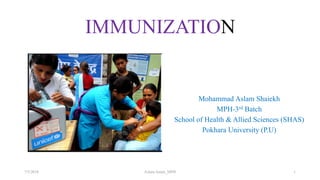
IMMUNIZATION
Mohammad Aslam Shaiekh
MPH-3rd Batch
School of Health & Allied Sciences (SHAS)
Pokhara University (P.U)
17/5/2018 Aslam Aman_MPH
Introduction
• Immunization is the process whereby a person is made immune or
resistant to an infectious disease, typically by the administration of a
vaccine.
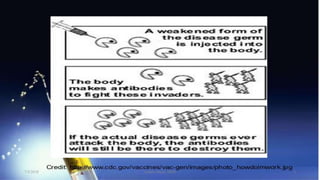
• Vaccines stimulate the body’s own immune system to protect the
person against subsequent infection or disease.
27/5/2018 Aslam Aman_MPH
Types of immunization
• Active immunization
• Natural active immunization
• Artificial active immunization
• Passive immunization
• Natural passive immunization
• Artificial passive immunization
37/5/2018 Aslam Aman_MPH
Types of vaccines
• Live attenuated vaccines: BCG, Oral polio, Measles, Rubella etc.
• Inactivated vaccines: Rabies, Salk (polio), Hepatitis B, JE, Influenza
etc
• Toxiod vaccines: Diptheria, Tetanus
47/5/2018 Aslam Aman_MPH
57/5/2018 Aslam Aman_MPH
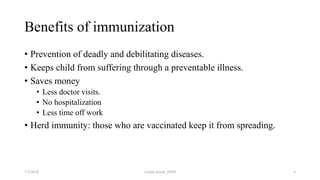
Benefits of immunization
• Prevention of deadly and debilitating diseases.
• Keeps child from suffering through a preventable illness.
• Saves money
• Less doctor visits.
• No hospitalization
• Less time off work
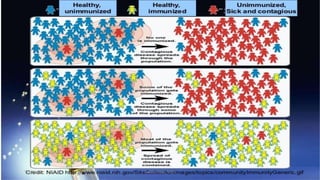
• Herd immunity: those who are vaccinated keep it from spreading.
67/5/2018 Aslam Aman_MPH
77/5/2018 Aslam Aman_MPH
87/5/2018 Aslam Aman_MPH
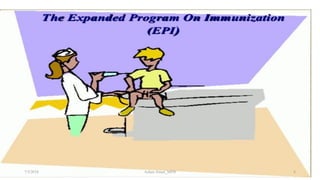
What is EPI?
• Extended program on immunization (EPI) is a WHO program, with
the goal to make vaccines available to all children throughout the
world.
97/5/2018 Aslam Aman_MPH
107/5/2018 Aslam Aman_MPH
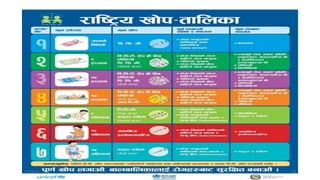
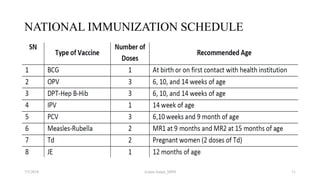
NATIONAL IMMUNIZATION SCHEDULE
117/5/2018 Aslam Aman_MPH
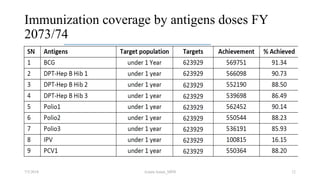
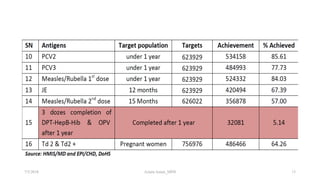
Immunization coverage by antigens doses FY
2073/74
127/5/2018 Aslam Aman_MPH
137/5/2018 Aslam Aman_MPH
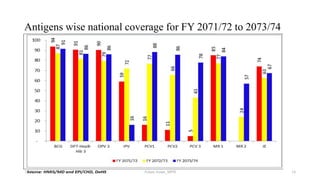
Antigens wise national coverage for FY 2071/72 to 2073/74
147/5/2018 Aslam Aman_MPH
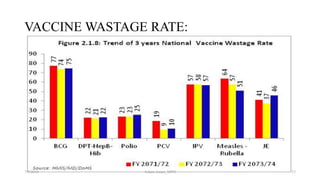
VACCINE WASTAGE RATE:
157/5/2018 Aslam Aman_MPH
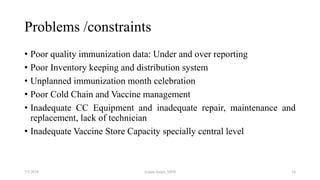
Problems /constraints
• Poor quality immunization data: Under and over reporting
• Poor Inventory keeping and distribution system
• Unplanned immunization month celebration
• Poor Cold Chain and Vaccine management
• Inadequate CC Equipment and inadequate repair, maintenance and
replacement, lack of technician
• Inadequate Vaccine Store Capacity specially central level
167/5/2018 Aslam Aman_MPH
Actions to be taken
• Joint supportive supervision of Immunization as per HMIS.
• Strengthen supportive supervision at all levels.
• Update inventory of cold chain equipment with their cold chain
capacity and vaccine, syringes, diluents etc. and use of stock control
register.
• Maintain maximum and minimum stock level. Always make vaccine
requisition by deducting the stock at hand from maximum stock level
of vaccine/syringes/diluents at all levels.
177/5/2018 Aslam Aman_MPH
• Utilize immunization month as an opportunity to intensify routine
immunization activities especially to ensure full immunization.
• Effective implementation of EVM training at all level.
• Provision of engineer and refrigerator technician at regional /
provincial level.
• Supply of cold chain spare parts. Replacement of ageing equipment
regular repair of cold chain equipment.
• Strengthen the vaccine stores with new buildings in central store
187/5/2018 Aslam Aman_MPH
References
• Park K. Park’s textbook of preventive and social medicine. 19th
edition. Jabalpur(India):Banarsidas Bhanot; 2007. p95-102.
• DoHS, Annual Report 2073/74 (2016/2017)
197/5/2018 Aslam Aman_MPH
207/5/2018 Aslam Aman_MPH

Immunization

  • 1.
    IMMUNIZATION Mohammad Aslam Shaiekh MPH-3rdBatch School of Health & Allied Sciences (SHAS) Pokhara University (P.U) 17/5/2018 Aslam Aman_MPH
  • 2.
    Introduction • Immunization isthe process whereby a person is made immune or resistant to an infectious disease, typically by the administration of a vaccine. • Vaccines stimulate the body’s own immune system to protect the person against subsequent infection or disease. 27/5/2018 Aslam Aman_MPH
  • 3.
    Types of immunization •Active immunization • Natural active immunization • Artificial active immunization • Passive immunization • Natural passive immunization • Artificial passive immunization 37/5/2018 Aslam Aman_MPH
  • 4.
    Types of vaccines •Live attenuated vaccines: BCG, Oral polio, Measles, Rubella etc. • Inactivated vaccines: Rabies, Salk (polio), Hepatitis B, JE, Influenza etc • Toxiod vaccines: Diptheria, Tetanus 47/5/2018 Aslam Aman_MPH
  • 5.
  • 6.
    Benefits of immunization •Prevention of deadly and debilitating diseases. • Keeps child from suffering through a preventable illness. • Saves money • Less doctor visits. • No hospitalization • Less time off work • Herd immunity: those who are vaccinated keep it from spreading. 67/5/2018 Aslam Aman_MPH
  • 7.
  • 8.
  • 9.
    What is EPI? •Extended program on immunization (EPI) is a WHO program, with the goal to make vaccines available to all children throughout the world. 97/5/2018 Aslam Aman_MPH
  • 10.
  • 11.
  • 12.
    Immunization coverage byantigens doses FY 2073/74 127/5/2018 Aslam Aman_MPH
  • 13.
  • 14.
    Antigens wise nationalcoverage for FY 2071/72 to 2073/74 147/5/2018 Aslam Aman_MPH
  • 15.
  • 16.
    Problems /constraints • Poorquality immunization data: Under and over reporting • Poor Inventory keeping and distribution system • Unplanned immunization month celebration • Poor Cold Chain and Vaccine management • Inadequate CC Equipment and inadequate repair, maintenance and replacement, lack of technician • Inadequate Vaccine Store Capacity specially central level 167/5/2018 Aslam Aman_MPH
  • 17.
    Actions to betaken • Joint supportive supervision of Immunization as per HMIS. • Strengthen supportive supervision at all levels. • Update inventory of cold chain equipment with their cold chain capacity and vaccine, syringes, diluents etc. and use of stock control register. • Maintain maximum and minimum stock level. Always make vaccine requisition by deducting the stock at hand from maximum stock level of vaccine/syringes/diluents at all levels. 177/5/2018 Aslam Aman_MPH
  • 18.
    • Utilize immunizationmonth as an opportunity to intensify routine immunization activities especially to ensure full immunization. • Effective implementation of EVM training at all level. • Provision of engineer and refrigerator technician at regional / provincial level. • Supply of cold chain spare parts. Replacement of ageing equipment regular repair of cold chain equipment. • Strengthen the vaccine stores with new buildings in central store 187/5/2018 Aslam Aman_MPH
  • 19.
    References • Park K.Park’s textbook of preventive and social medicine. 19th edition. Jabalpur(India):Banarsidas Bhanot; 2007. p95-102. • DoHS, Annual Report 2073/74 (2016/2017) 197/5/2018 Aslam Aman_MPH
  • 20.