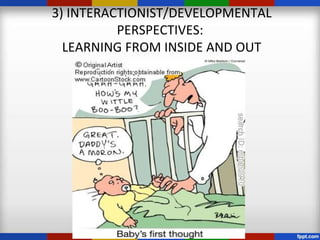
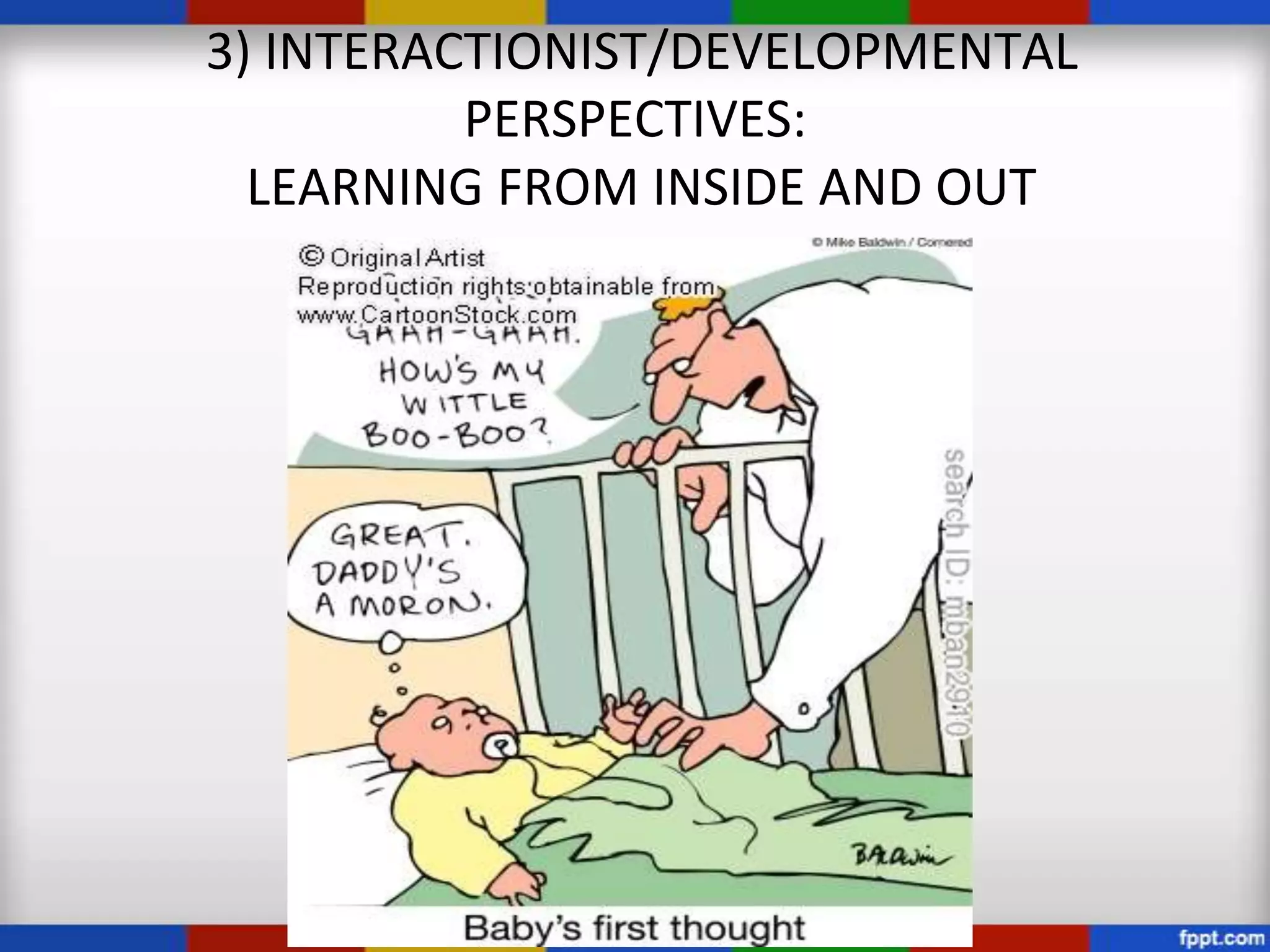
3) INTERACTIONIST/DEVELOPMENTAL
          PERSPECTIVES:
  LEARNING FROM INSIDE AND OUT
Problems of Innatism:

 Too much emphasis on
     the “final state”
  but not enough on the
developmental aspects of
   language acquisition.
• Language was
         ONE manifestation
of the cognitive and affective ability
        to deal with the world

             • Innatists
dealt with FORMS of the language,
 not with the FUNCTIONAL levels
   of meaning constructed from
      SOCIAL INTERACTION
INTERACTIONISM: Bruner

         Language acquisition
is an example of children’s ability to learn
            from experience.

      What children need to know
       is essentially available
            in the language
        they are exposed to.
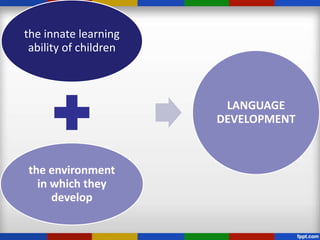
the innate learning
 ability of children


                        LANGUAGE
                       DEVELOPMENT


the environment
  in which they
     develop
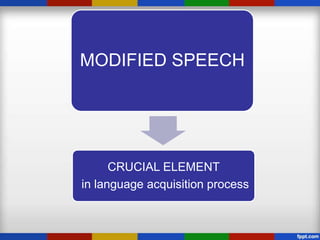
MODIFIED SPEECH


      CRUCIAL ELEMENT
in language acquisition process
CARETAKER TALK
• It is the way adults modify their speech
       when communicating with kids.

       • Slower rate of speech
             • Higher pitch
       • More varied intonation
  • Shorter simpler sentence patterns
         • Frequent repetition
             • Paraphrase
The Child's Language Environment


 • The child has MANY OPPORTUNITIES
 FOR USING the language to communicate
            to those around him.

• Much of THE LANGUAGE IS SIMPLIFIED
  to the level of understanding of the child.
The Child's Learning Strategies
 • The child in NOT INTERESTED IN
      LANGUAGE for its own sake.

• The child is NOT DISTURBED by the
   language he does not understand.

• The child ENJOYS THE REPETITIVE
events of his life, and uses this enjoyment
            to help him learn.
The Child's Learning Strategies

     • The child USES HIS PRIMARY
       INTERESTS to help him learn.
• The child directs his attention to things that
       are EASY TO UNDERSTAND.
 • The child possesses a natural desire TO
     CALL AN OBJECT BY ITS NAME.
The Child's Learning Strategies
• The child adds words to his speaking
vocabulary more easily IF HE ALREADY
KNOWS HOW TO PRONOUNCE THEM.

• The child IMMEDIATELY USES the
    language, and his SUCCESS IN
      COMMUNICATION BUILDS
            CONFIDENCE.
The Child's Learning Strategies

• The child uses his natural desire TO
PARTICIPATE IN THE LIFE AROUND
 HIM to help him learn new language.

 • The child brings TREMENDOUS
  INGENUITY to the task of learning.

First language acquisition (interactionism)

  • 1.
    3) INTERACTIONIST/DEVELOPMENTAL PERSPECTIVES: LEARNING FROM INSIDE AND OUT
  • 2.
    Problems of Innatism: Too much emphasis on the “final state” but not enough on the developmental aspects of language acquisition.
  • 3.
    • Language was ONE manifestation of the cognitive and affective ability to deal with the world • Innatists dealt with FORMS of the language, not with the FUNCTIONAL levels of meaning constructed from SOCIAL INTERACTION
  • 4.
    INTERACTIONISM: Bruner Language acquisition is an example of children’s ability to learn from experience. What children need to know is essentially available in the language they are exposed to.
  • 5.
    the innate learning ability of children LANGUAGE DEVELOPMENT the environment in which they develop
  • 6.
    MODIFIED SPEECH CRUCIAL ELEMENT in language acquisition process
  • 7.
    CARETAKER TALK • Itis the way adults modify their speech when communicating with kids. • Slower rate of speech • Higher pitch • More varied intonation • Shorter simpler sentence patterns • Frequent repetition • Paraphrase
  • 9.
    The Child's LanguageEnvironment • The child has MANY OPPORTUNITIES FOR USING the language to communicate to those around him. • Much of THE LANGUAGE IS SIMPLIFIED to the level of understanding of the child.
  • 10.
    The Child's LearningStrategies • The child in NOT INTERESTED IN LANGUAGE for its own sake. • The child is NOT DISTURBED by the language he does not understand. • The child ENJOYS THE REPETITIVE events of his life, and uses this enjoyment to help him learn.
  • 11.
    The Child's LearningStrategies • The child USES HIS PRIMARY INTERESTS to help him learn. • The child directs his attention to things that are EASY TO UNDERSTAND. • The child possesses a natural desire TO CALL AN OBJECT BY ITS NAME.
  • 12.
    The Child's LearningStrategies • The child adds words to his speaking vocabulary more easily IF HE ALREADY KNOWS HOW TO PRONOUNCE THEM. • The child IMMEDIATELY USES the language, and his SUCCESS IN COMMUNICATION BUILDS CONFIDENCE.
  • 13.
    The Child's LearningStrategies • The child uses his natural desire TO PARTICIPATE IN THE LIFE AROUND HIM to help him learn new language. • The child brings TREMENDOUS INGENUITY to the task of learning.