Downloaded 2,169 times
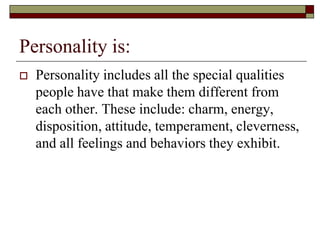
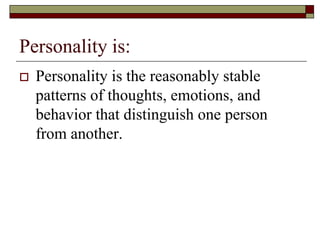
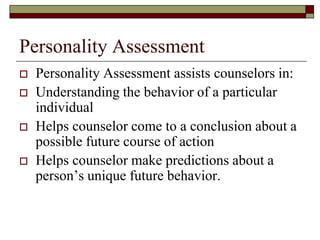
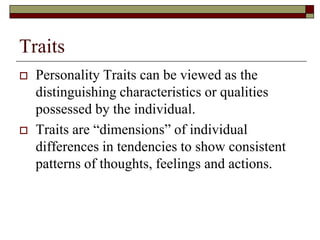
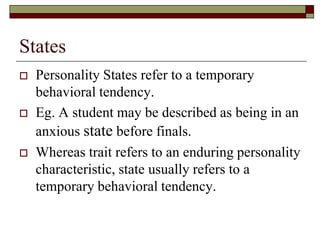
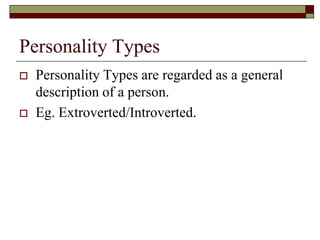
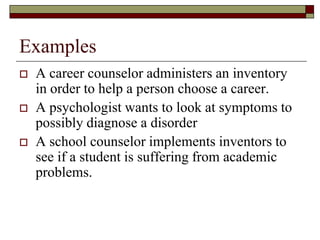
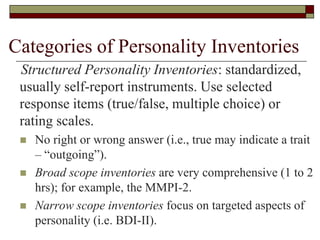
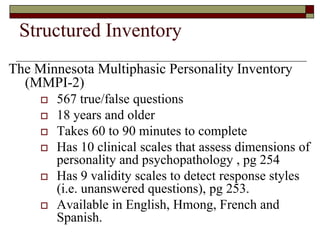
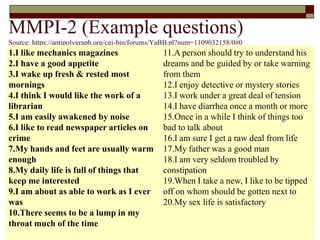
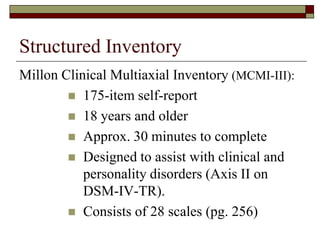
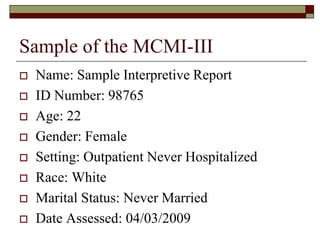
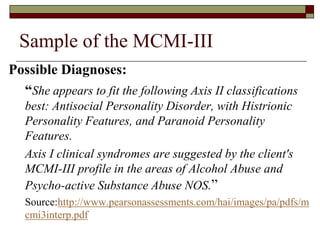
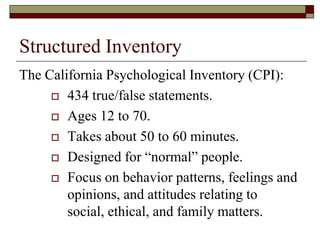
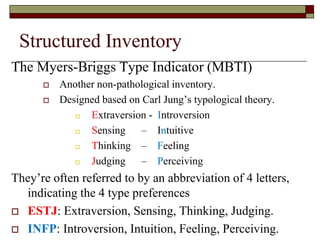
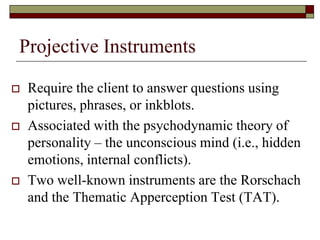
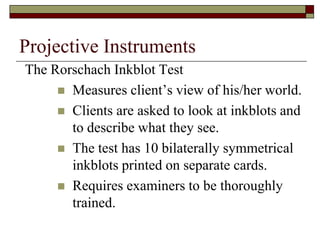
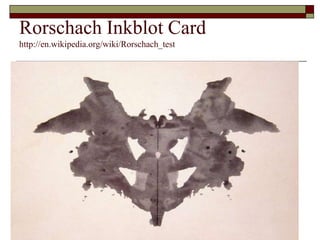
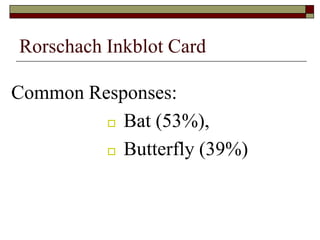

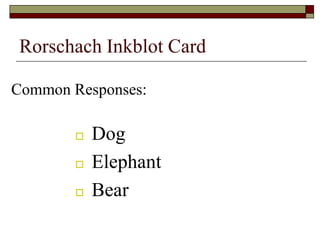
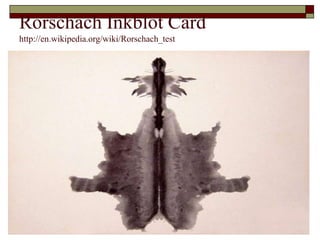
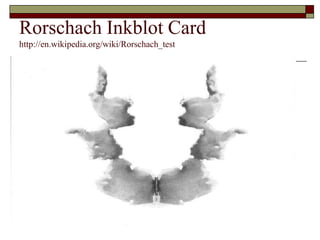
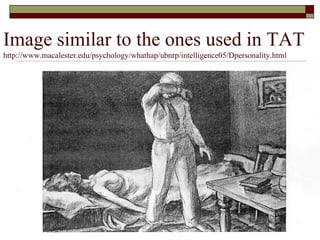
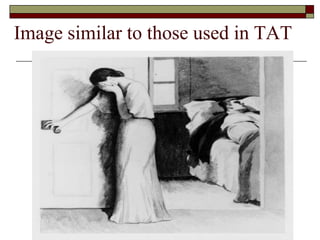
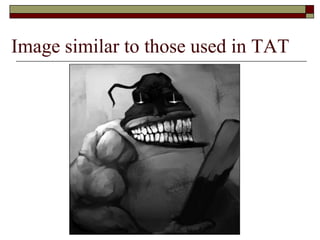
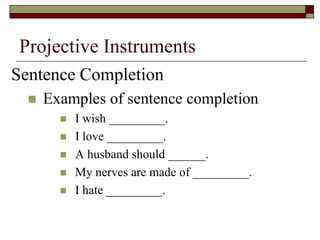
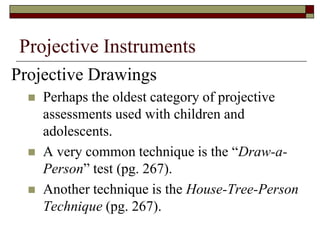
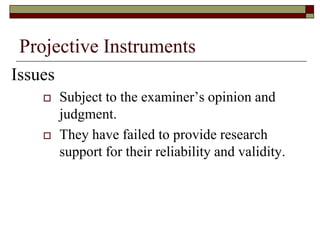
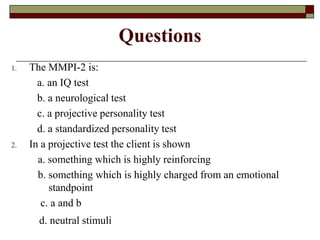
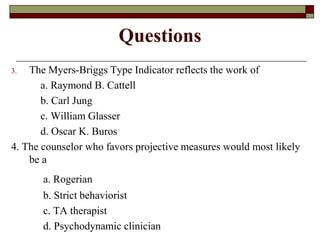
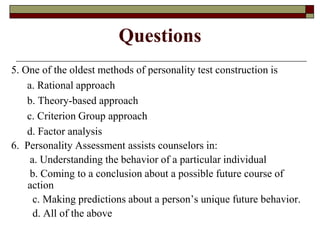
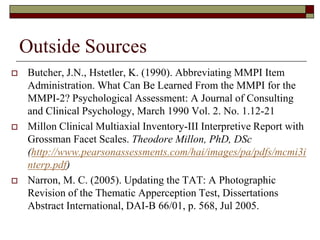

Personality assessments can help counselors understand individual behavior, determine appropriate courses of action, and predict future behavior. Personality includes traits, states, and types. Traits are consistent dimensions of individual differences while states are temporary tendencies. Types describe a person generally, such as introverted or extroverted. Structured personality inventories like the MMPI-2 and MCMI-III use standardized questions while projective tests like the Rorschach and TAT use ambiguous stimuli to project unconscious feelings. Personality assessments provide insight into clients but rely on the interpreter's judgment.


![prersonality & intrest test [Autosaved].pptx](https://cdn.slidesharecdn.com/ss_thumbnails/prersonalityintresttestautosaved-250709045622-c0440d7c-thumbnail.jpg?width=640&height=640&fit=bounds)


