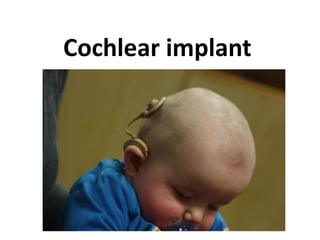
Cochlear implant
Definition
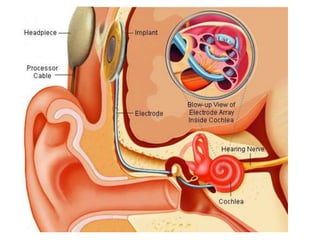
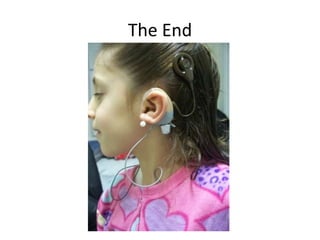
• Cochlear implants are surgically placed
electrical device that receive sound and
transmit the resulting electrical signals to
electrodes implanted in the cochlea of the ear.
• The signals stimulate cochlea, allowing patient
to hear.
• It is also known as Bionic ear.
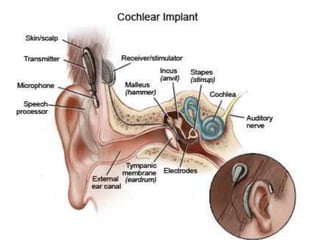
Parts of cochlear implant
• External
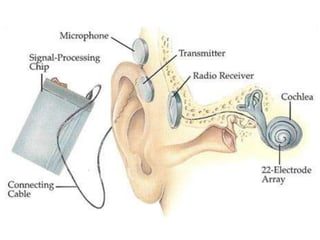
– Microphone
– Speech processor
– Transmitter

• Internal
– Receiver and stimulator
– An array of up to 22 electrodes
Mechanism
• Cochlear implants bypass damaged portion of
the ear & directly stimulate the auditory nerve
and later the brain recognizes it as sound.
Ideal candidate for cochlear
implantation
• Having severe to profound sensori-neural
deafness in both ears.
• Having a functioning auditory nerve.
• Approximately 70+ decibel hearing loss.
• Having good speech, language and
communication skills.
• Not benefitting enough from other kinds of
hearing aids.
• Having no medical reason to avoid surgery.
• Living in or desiring to live in the “hearing
world”.
• Having realistic expectations about result.
• Physically and mentally normal person.
• No medical contra-indications.
Complications
• Wound healing problems viz skin breakdown,
infection at surgical site and device coming
out.
• CSF leakage
• Meningitis
• Vertigo (temporary dizziness)
• Device failure
The End

Cochlear implant

  • 1.
  • 2.
    Definition • Cochlear implantsare surgically placed electrical device that receive sound and transmit the resulting electrical signals to electrodes implanted in the cochlea of the ear. • The signals stimulate cochlea, allowing patient to hear. • It is also known as Bionic ear.
  • 3.
    Parts of cochlearimplant • External – Microphone – Speech processor – Transmitter • Internal – Receiver and stimulator – An array of up to 22 electrodes
  • 7.
    Mechanism • Cochlear implantsbypass damaged portion of the ear & directly stimulate the auditory nerve and later the brain recognizes it as sound.
  • 8.
    Ideal candidate forcochlear implantation • Having severe to profound sensori-neural deafness in both ears. • Having a functioning auditory nerve. • Approximately 70+ decibel hearing loss. • Having good speech, language and communication skills. • Not benefitting enough from other kinds of hearing aids.
  • 9.
    • Having nomedical reason to avoid surgery. • Living in or desiring to live in the “hearing world”. • Having realistic expectations about result. • Physically and mentally normal person. • No medical contra-indications.
  • 10.
    Complications • Wound healingproblems viz skin breakdown, infection at surgical site and device coming out. • CSF leakage • Meningitis • Vertigo (temporary dizziness) • Device failure
  • 11.