CLIMATE
PART 1
LEARNING
OBJECTIVES
Define weather and Climate
Define
Identify the heat zones of the Earth
Identify
Explain the regional variations in climatic condition in
India.
Explain
Examine the climatic controls of the world and the
factors affecting climate in India.
Examine
Explain the pressure and wind system in India with
the help of map and videos.
Explain
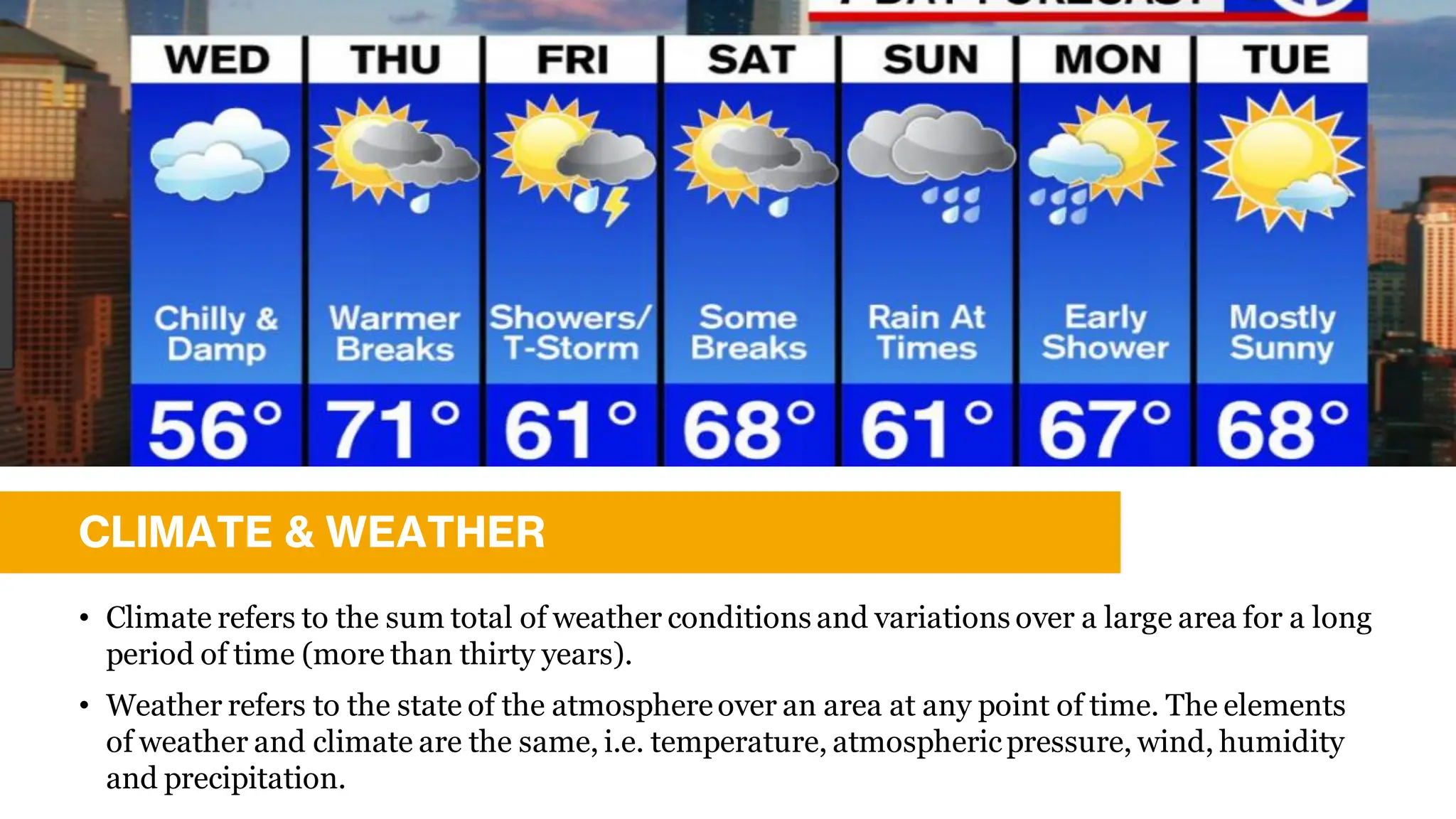
CLIMATE & WEATHER
• Climate refers to the sum total of weather conditions and variations over a large area for a long
period of time (more than thirty years).
• Weather refers to the state of the atmosphereover an area at any point of time. The elements
of weather and climate are the same, i.e. temperature, atmosphericpressure, wind, humidity
and precipitation.
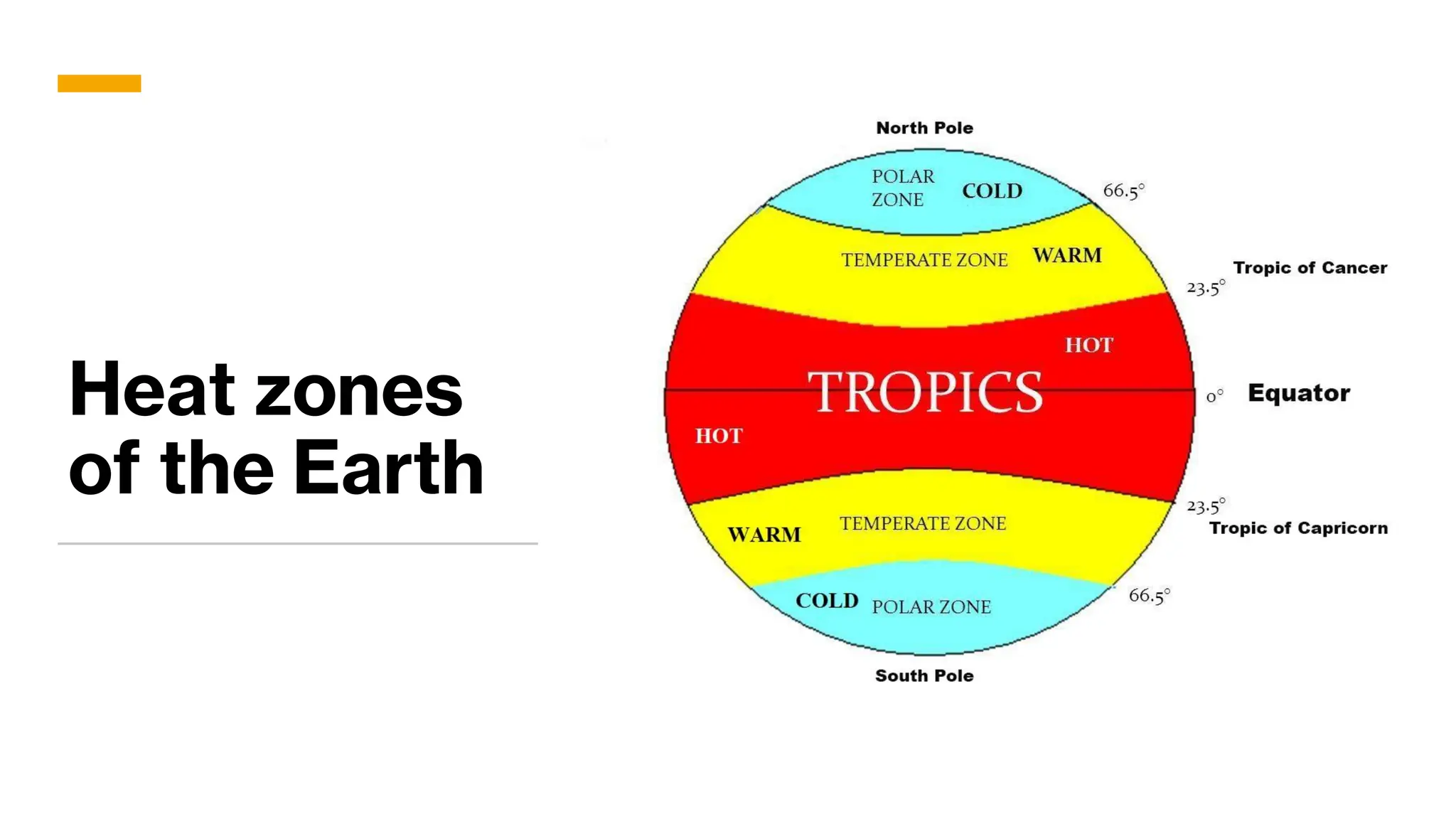
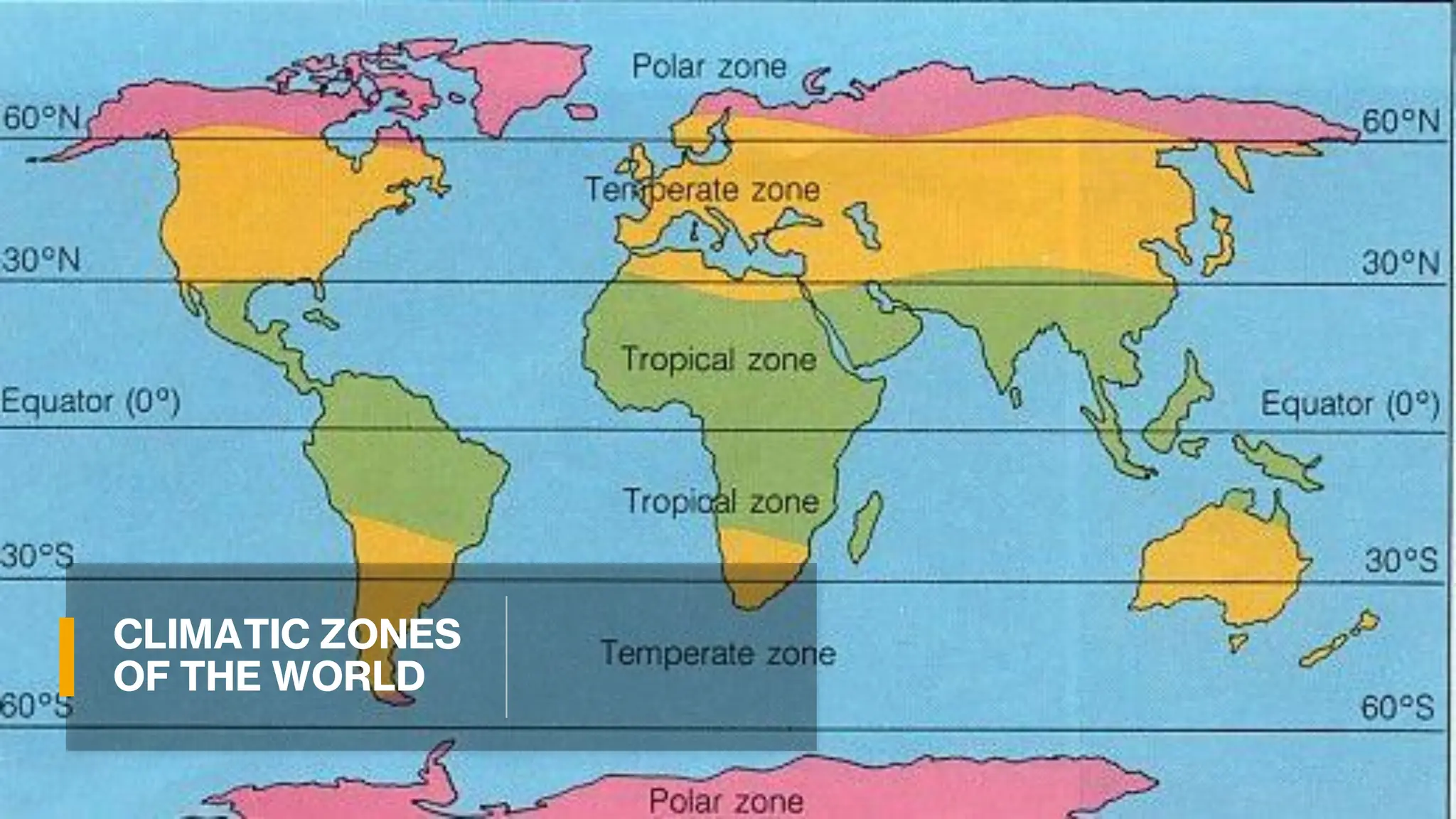
Heat zones
of the Earth
CLIMATIC ZONES
OF THE WORLD
WHAT TYPE OF
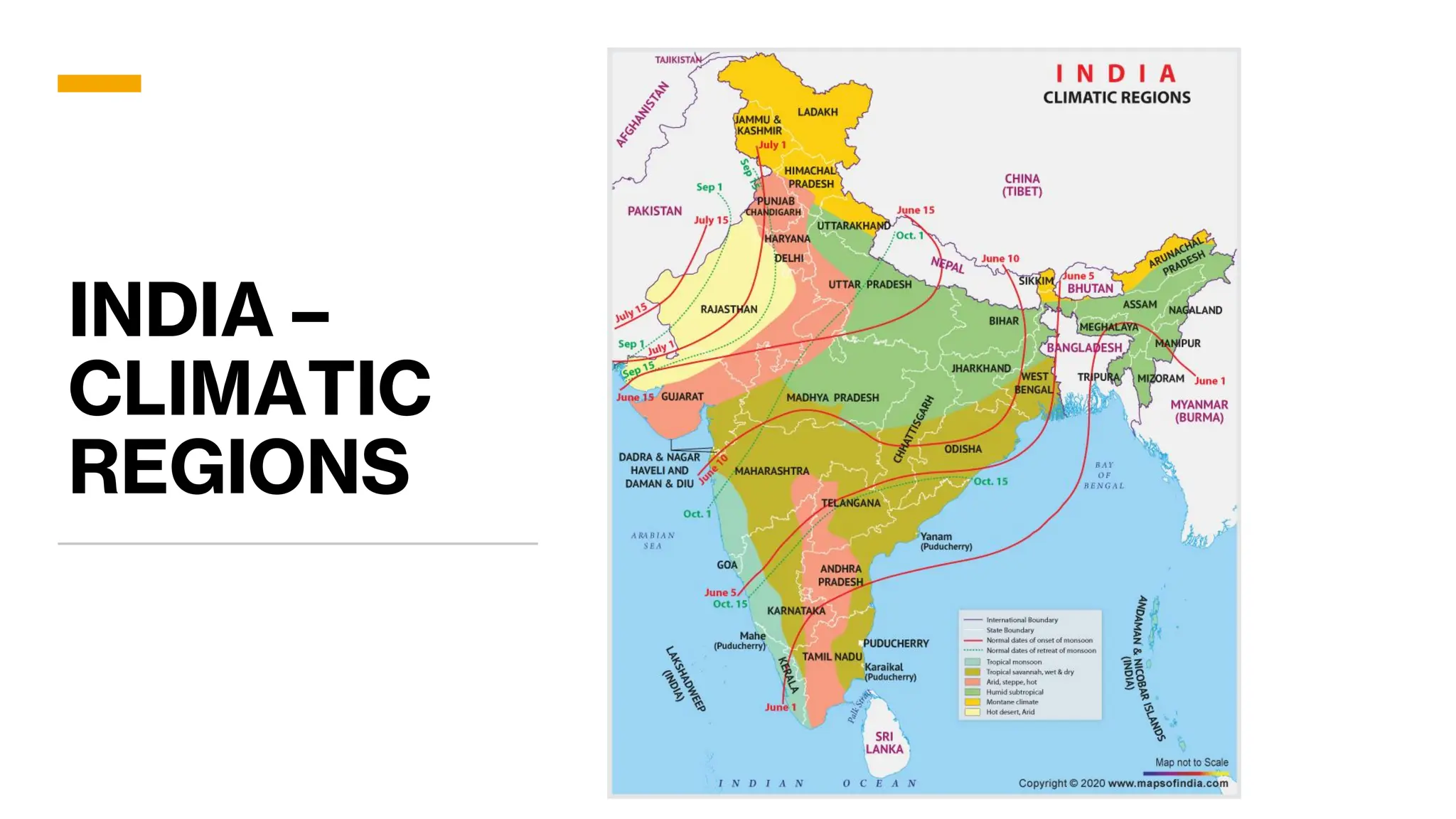
CLIMATE IN INDIA?
The climate of India is
described as the
‘monsoon’ type. In Asia,
this type of climate is
found mainly in the south
and the southeast.
Regional variations in climatic
conditions within the country.
PRECIPITATION TEMPERATURE
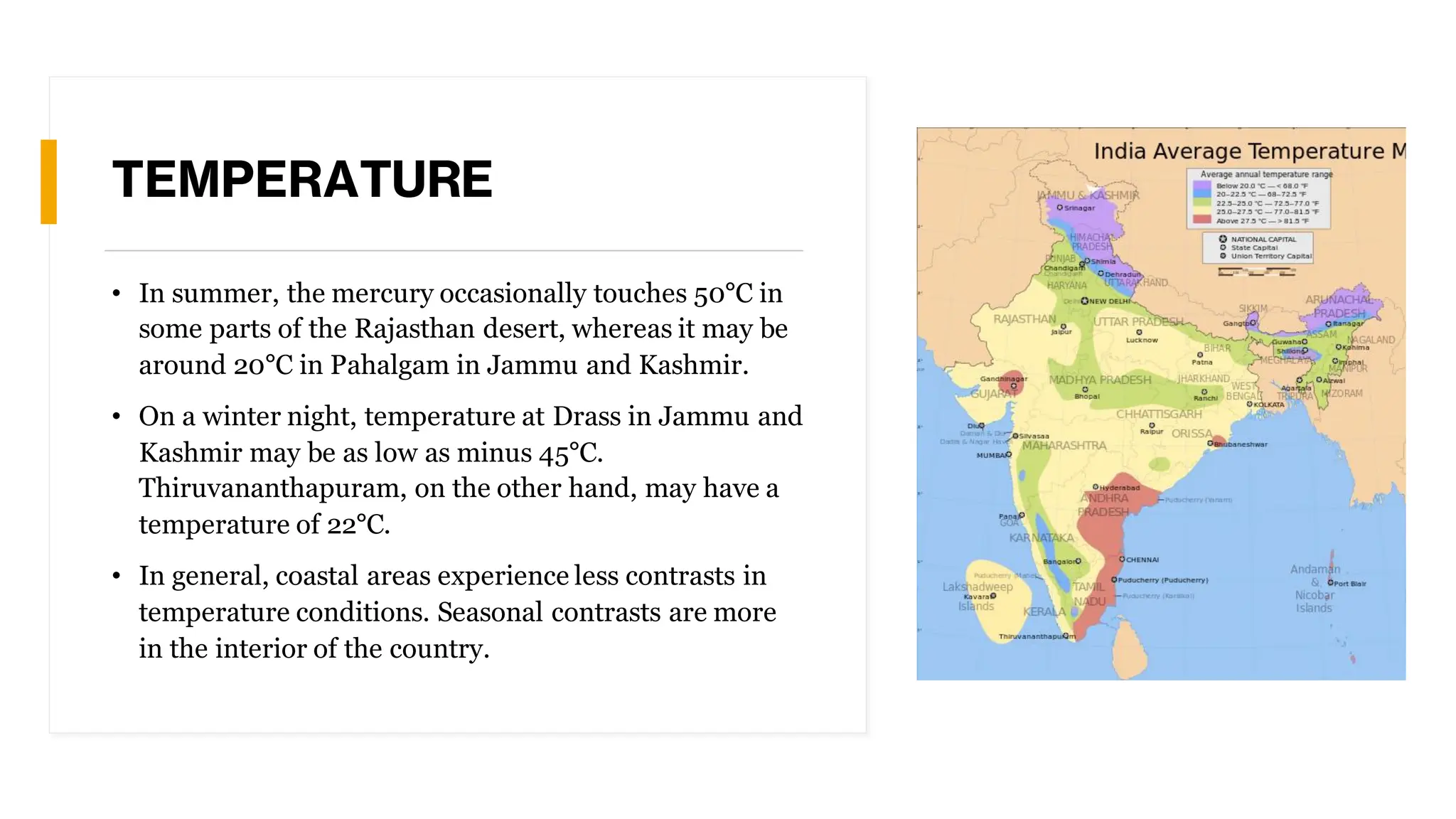
TEMPERATURE
• In summer, the mercury occasionally touches 50°C in
some parts of the Rajasthan desert, whereas it may be
around 20°C in Pahalgam in Jammu and Kashmir.
• On a winter night, temperature at Drass in Jammu and
Kashmir may be as low as minus 45°C.
Thiruvananthapuram, on the other hand, may have a
temperature of 22°C.
• In general, coastal areas experience less contrasts in
temperature conditions. Seasonal contrasts are more
in the interior of the country.
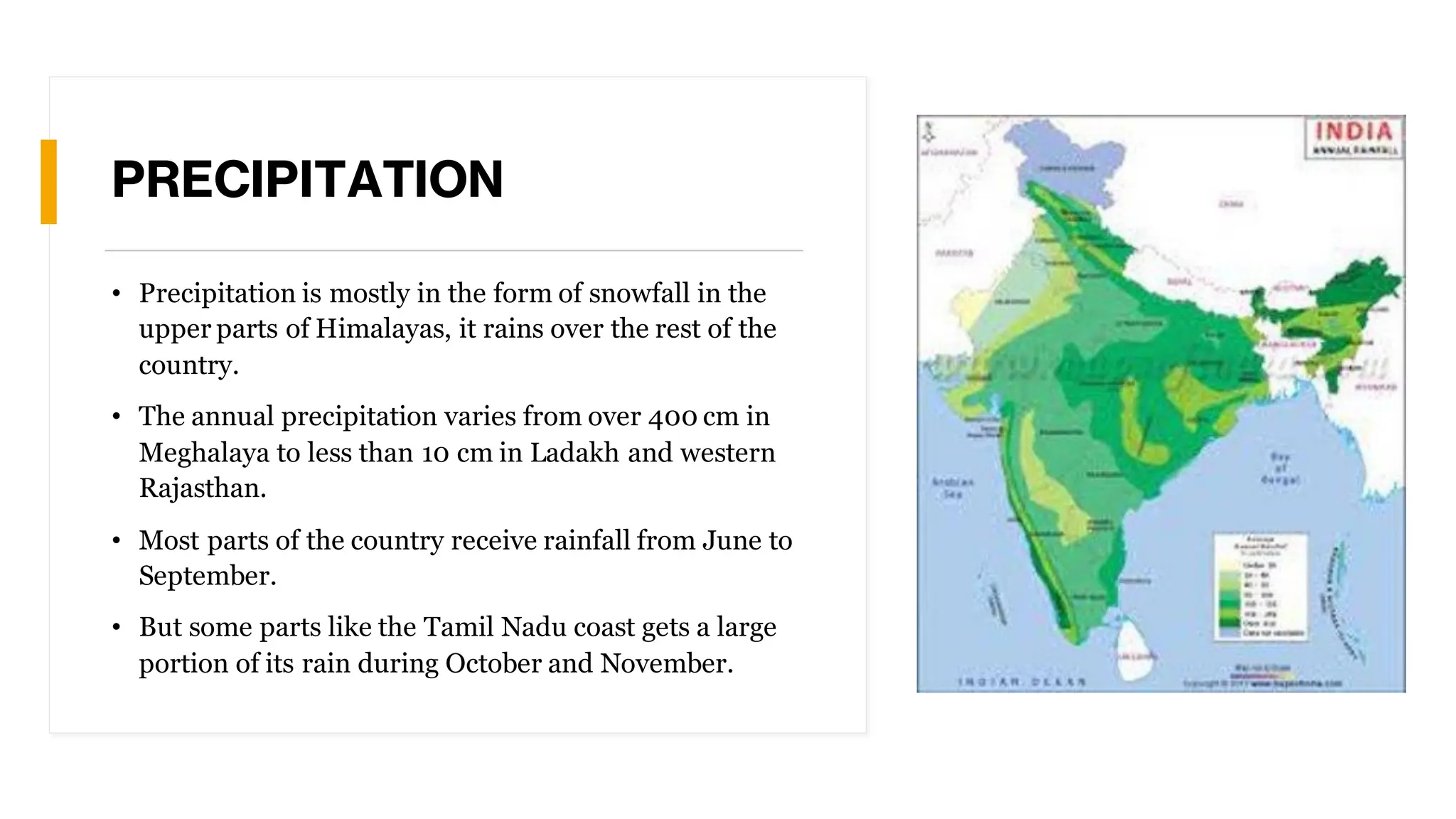
PRECIPITATION
• Precipitation is mostly in the form of snowfall in the
upper parts of Himalayas, it rains over the rest of the
country.
• The annual precipitation varies from over 400 cm in
Meghalaya to less than 10 cm in Ladakh and western
Rajasthan.
• Most parts of the country receive rainfall from June to
September.
• But some parts like the Tamil Nadu coast gets a large
portion of its rain during October and November.
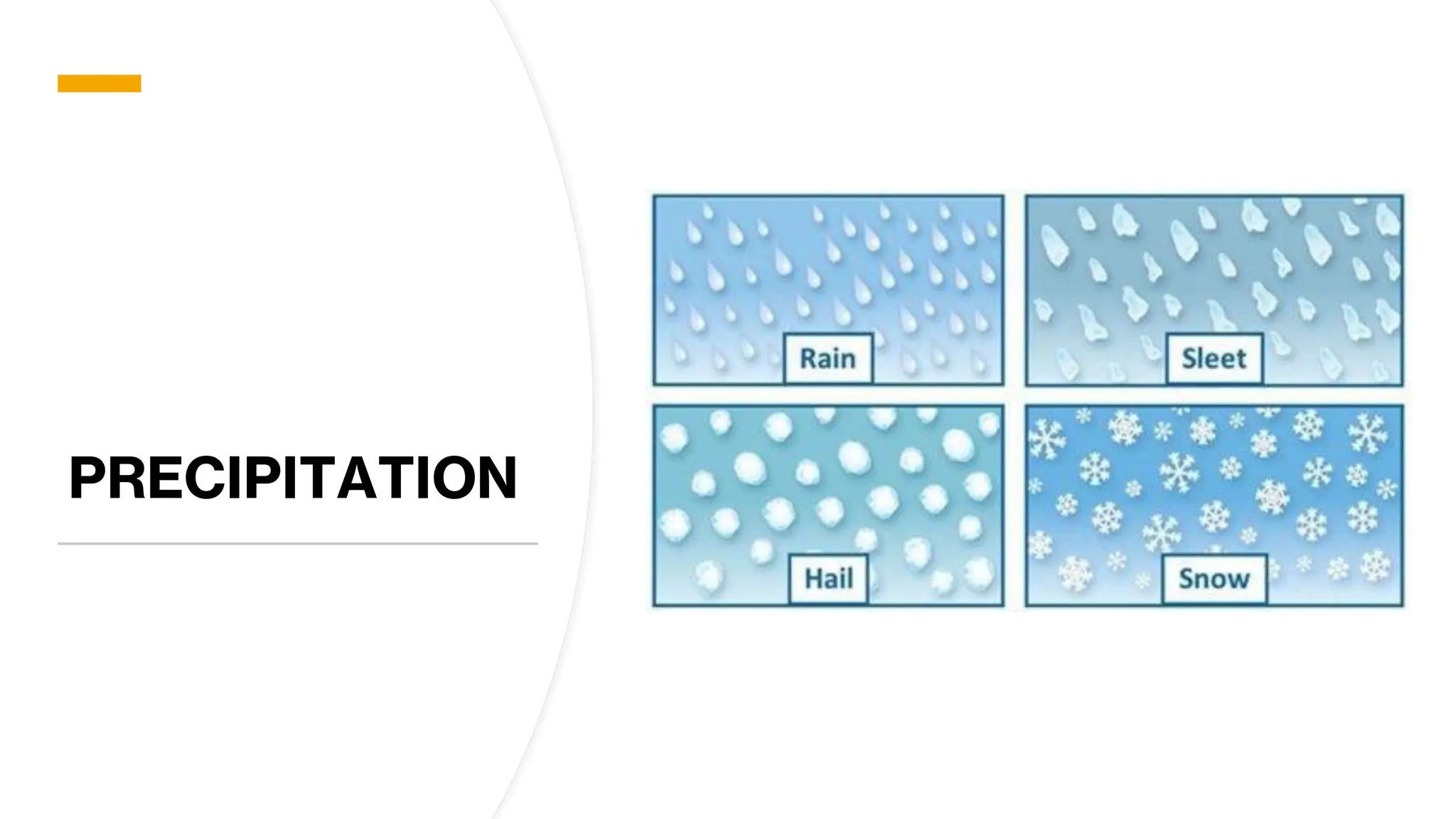
PRECIPITATION
INDIA –
CLIMATIC
REGIONS
• Why the houses in
Rajasthan have thick
walls and flat roofs?
• Why is it that the
houses in the Tarai
region and in Goa and
Mangalore have sloping
roofs?
• Why houses in Assam
are built on stilts?
CLIMATIC
CONTROLS
Latitude
Altitude
Distance from the sea (continentality)
Relief features
Ocean currents and
Pressure and wind system
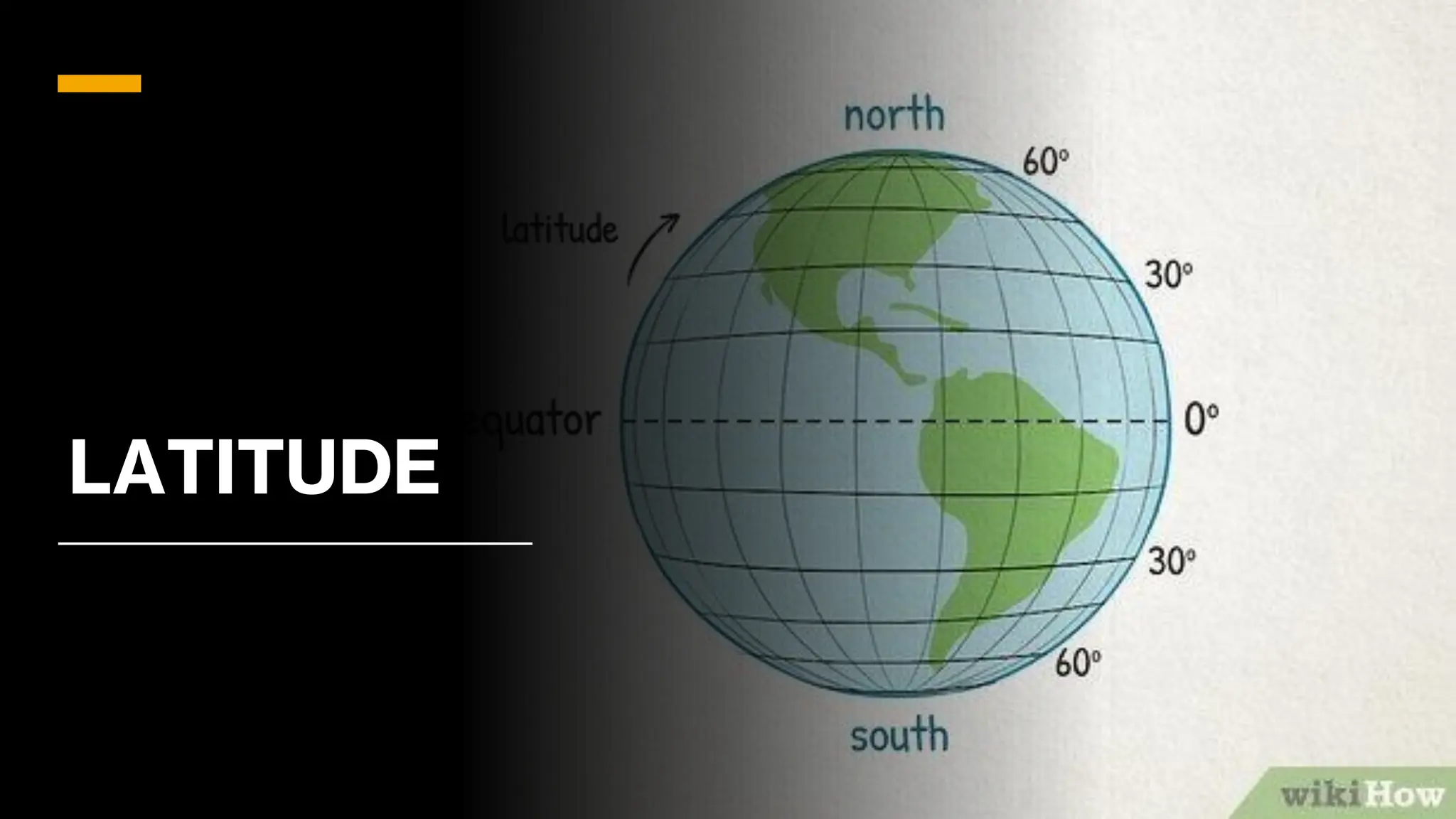
LATITUDE
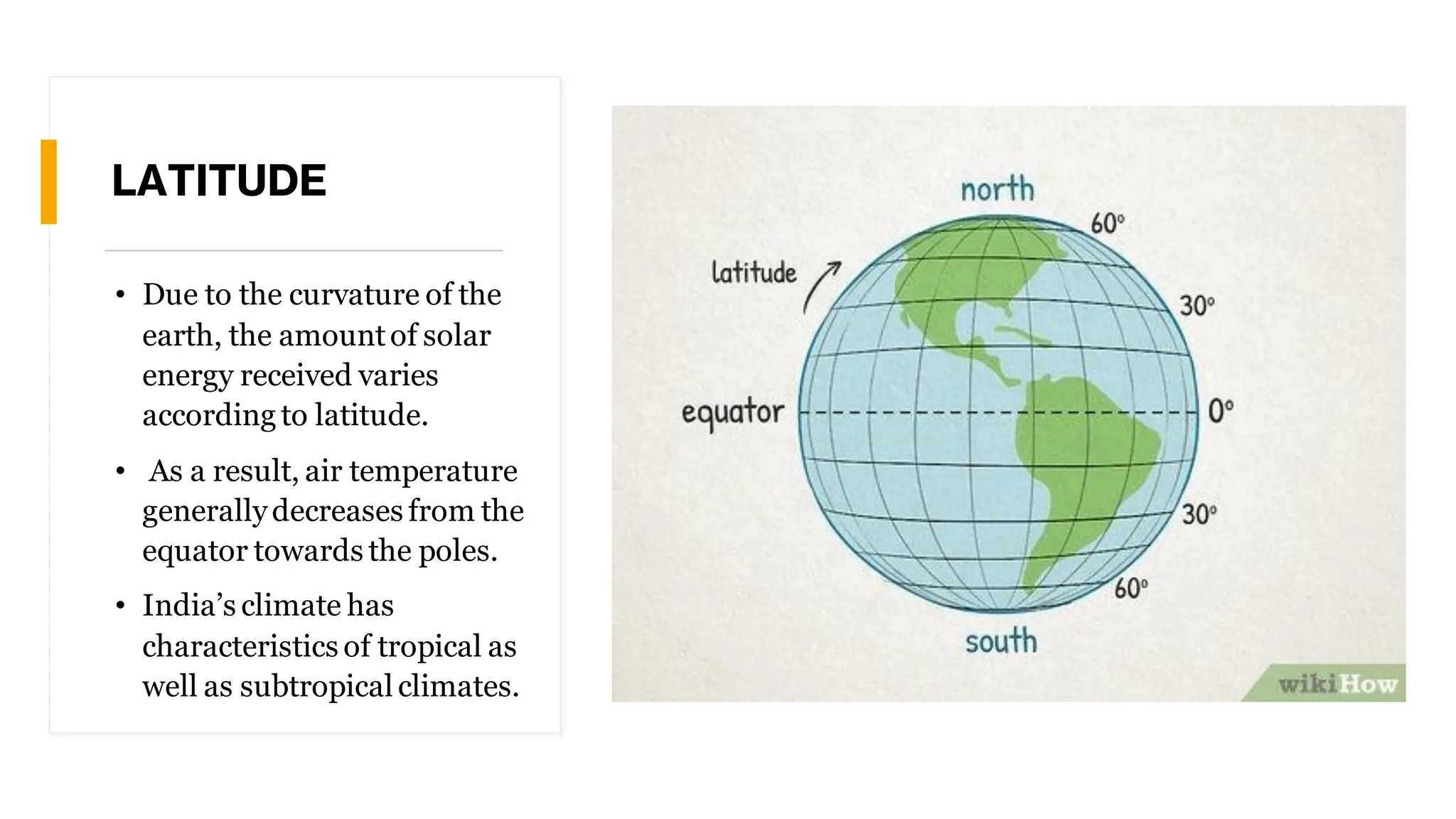
LATITUDE
• Due to the curvature of the
earth, the amountof solar
energy received varies
according to latitude.
• As a result, air temperature
generallydecreases from the
equator towards the poles.
• India’s climate has
characteristics of tropical as
well as subtropical climates.
ALTITUDE
• As one goes from the surface of the earth to
higher altitudes, the atmosphere becomes
less dense and temperature decreases.
• The hills are therefore cooler during
summers.
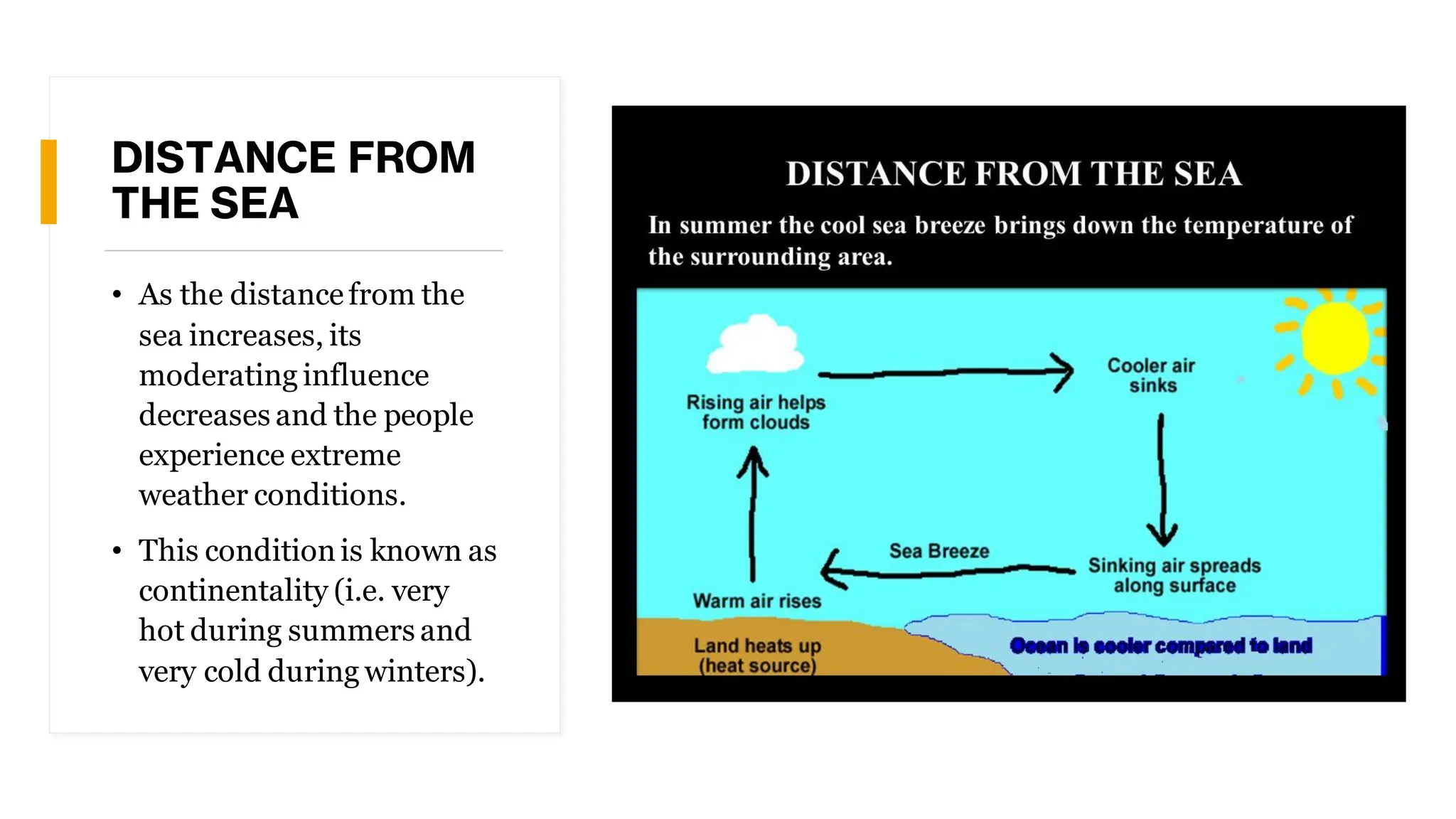
DISTANCE FROM
THE SEA
• As the distancefrom the
sea increases, its
moderating influence
decreases and the people
experience extreme
weather conditions.
• This condition is known as
continentality (i.e. very
hot during summers and
very cold during winters).
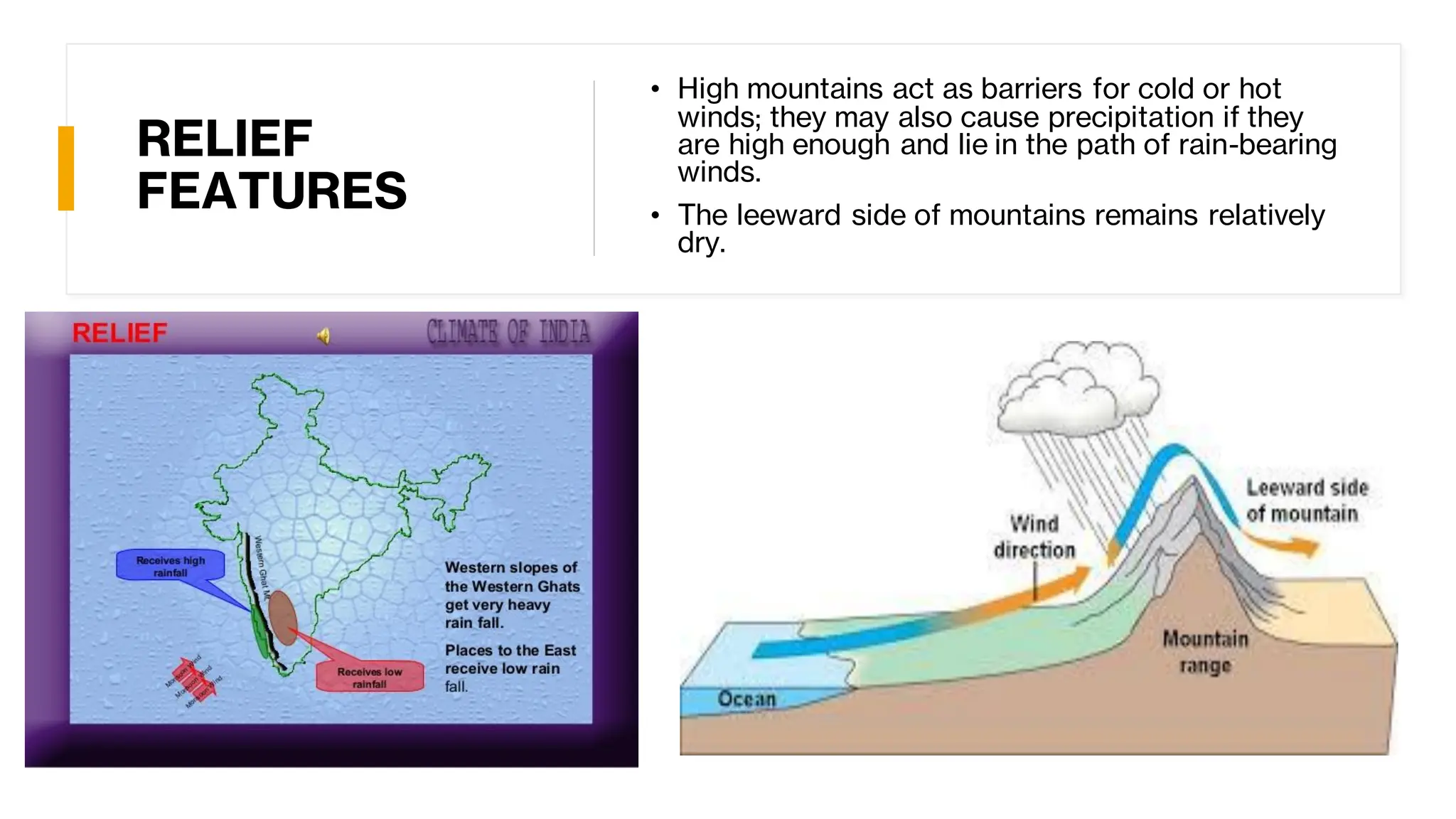
RELIEF
FEATURES
• High mountains act as barriers for cold or hot
winds; they may also cause precipitation if they
are high enough and lie in the path of rain-bearing
winds.
• The leeward side of mountains remains relatively
dry.
RELIEF FEATURES
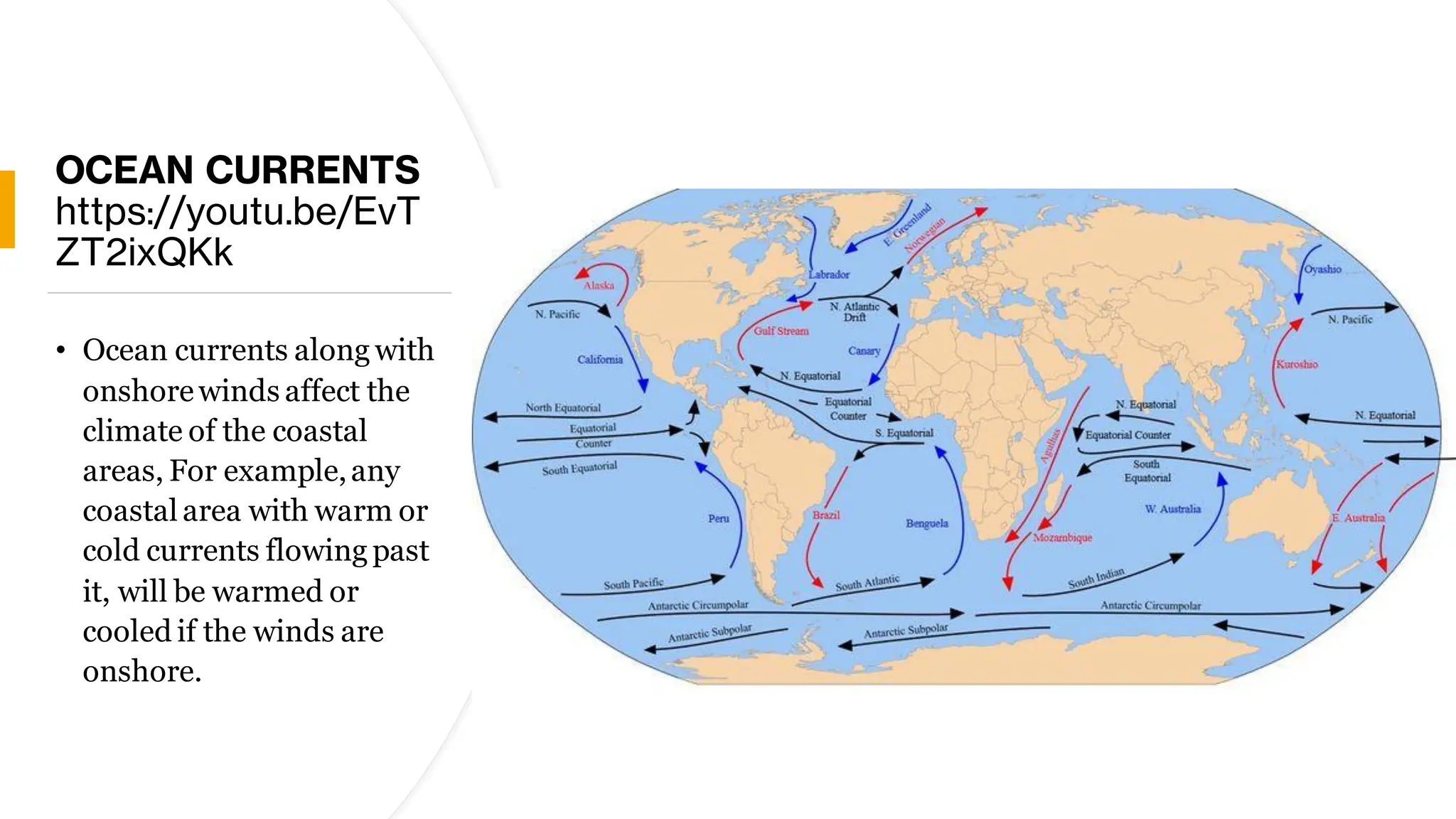
OCEAN CURRENTS
https://youtu.be/EvT
ZT2ixQKk
• Ocean currents along with
onshorewinds affect the
climate of the coastal
areas, For example,any
coastal area with warm or
cold currents flowing past
it, will be warmed or
cooled if the winds are
onshore.
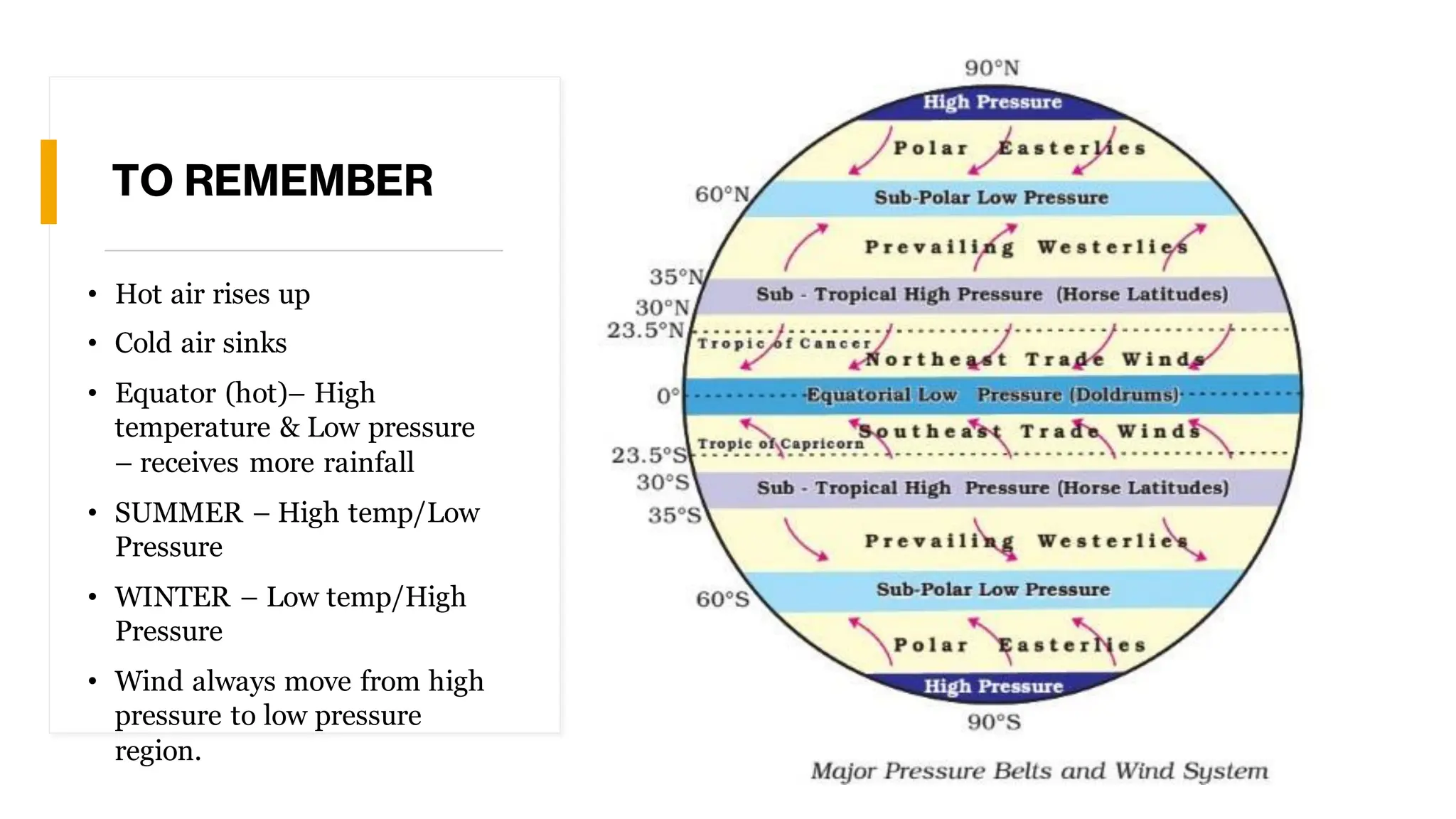
TO REMEMBER
• Hot air rises up
• Cold air sinks
• Equator (hot)– High
temperature & Low pressure
– receives more rainfall
• SUMMER – High temp/Low
Pressure
• WINTER – Low temp/High
Pressure
• Wind always move from high
pressure to low pressure
region.
CORIOLIS FORCE
https://youtu.be/bFp
3Q7LivJA
• Coriolis force: An apparent force
caused by the earth’s rotation.
• The Coriolis force is responsible
for deflecting winds towards the
right in the northern
hemisphereand towards the left
in the southernhemisphere.
This is also known as ‘Ferrel’s
Law’.
https://youtu.be/OvAIozhNZnE
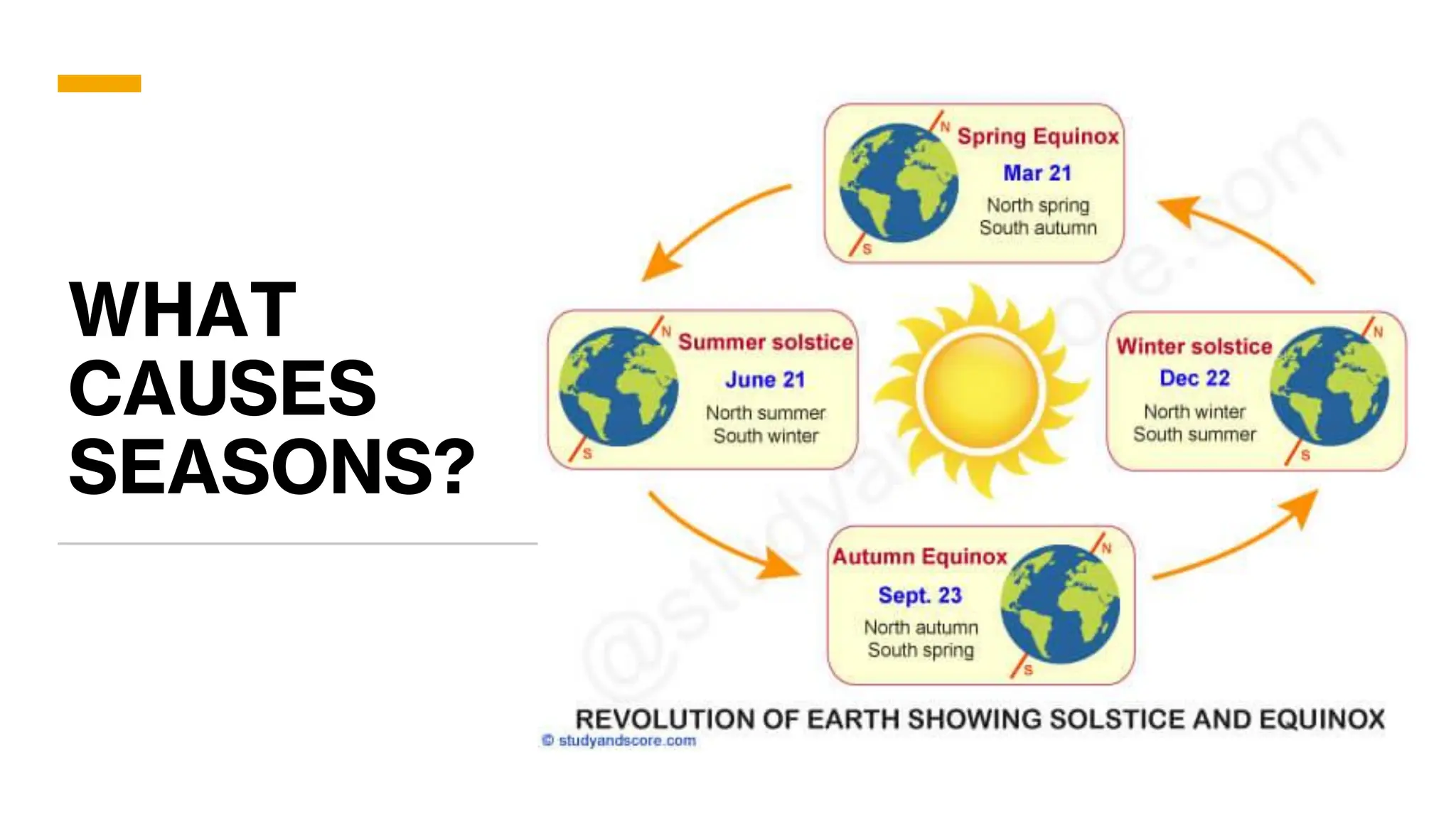
WHAT
CAUSES
SEASONS?
Check your
progress 1
1. Define climate.
2. Define weather.
3. What is the climate of India?
4. Define the term 'Monsoon'.
5. Why are hills cooler even during summer
season?
6. __________________________ is
responsiblefor deflecting winds towards Right
in the Northern hemisphereand towards
the left in the Southernhemisphere.
7. Why HimalayanMountain Range is said to be
a relief feature?

PPT Climate Chapter Geography Class 9 NCERT

  • 1.
  • 2.
    LEARNING OBJECTIVES Define weather andClimate Define Identify the heat zones of the Earth Identify Explain the regional variations in climatic condition in India. Explain Examine the climatic controls of the world and the factors affecting climate in India. Examine Explain the pressure and wind system in India with the help of map and videos. Explain
  • 3.
    CLIMATE & WEATHER •Climate refers to the sum total of weather conditions and variations over a large area for a long period of time (more than thirty years). • Weather refers to the state of the atmosphereover an area at any point of time. The elements of weather and climate are the same, i.e. temperature, atmosphericpressure, wind, humidity and precipitation.
  • 4.
  • 5.
  • 6.
    WHAT TYPE OF CLIMATEIN INDIA? The climate of India is described as the ‘monsoon’ type. In Asia, this type of climate is found mainly in the south and the southeast.
  • 7.
    Regional variations inclimatic conditions within the country. PRECIPITATION TEMPERATURE
  • 8.
    TEMPERATURE • In summer,the mercury occasionally touches 50°C in some parts of the Rajasthan desert, whereas it may be around 20°C in Pahalgam in Jammu and Kashmir. • On a winter night, temperature at Drass in Jammu and Kashmir may be as low as minus 45°C. Thiruvananthapuram, on the other hand, may have a temperature of 22°C. • In general, coastal areas experience less contrasts in temperature conditions. Seasonal contrasts are more in the interior of the country.
  • 9.
    PRECIPITATION • Precipitation ismostly in the form of snowfall in the upper parts of Himalayas, it rains over the rest of the country. • The annual precipitation varies from over 400 cm in Meghalaya to less than 10 cm in Ladakh and western Rajasthan. • Most parts of the country receive rainfall from June to September. • But some parts like the Tamil Nadu coast gets a large portion of its rain during October and November.
  • 10.
  • 11.
  • 12.
    • Why thehouses in Rajasthan have thick walls and flat roofs? • Why is it that the houses in the Tarai region and in Goa and Mangalore have sloping roofs? • Why houses in Assam are built on stilts?
  • 13.
    CLIMATIC CONTROLS Latitude Altitude Distance from thesea (continentality) Relief features Ocean currents and Pressure and wind system
  • 14.
  • 15.
    LATITUDE • Due tothe curvature of the earth, the amountof solar energy received varies according to latitude. • As a result, air temperature generallydecreases from the equator towards the poles. • India’s climate has characteristics of tropical as well as subtropical climates.
  • 16.
    ALTITUDE • As onegoes from the surface of the earth to higher altitudes, the atmosphere becomes less dense and temperature decreases. • The hills are therefore cooler during summers.
  • 17.
    DISTANCE FROM THE SEA •As the distancefrom the sea increases, its moderating influence decreases and the people experience extreme weather conditions. • This condition is known as continentality (i.e. very hot during summers and very cold during winters).
  • 19.
    RELIEF FEATURES • High mountainsact as barriers for cold or hot winds; they may also cause precipitation if they are high enough and lie in the path of rain-bearing winds. • The leeward side of mountains remains relatively dry.
  • 20.
  • 21.
    OCEAN CURRENTS https://youtu.be/EvT ZT2ixQKk • Oceancurrents along with onshorewinds affect the climate of the coastal areas, For example,any coastal area with warm or cold currents flowing past it, will be warmed or cooled if the winds are onshore.
  • 22.
    TO REMEMBER • Hotair rises up • Cold air sinks • Equator (hot)– High temperature & Low pressure – receives more rainfall • SUMMER – High temp/Low Pressure • WINTER – Low temp/High Pressure • Wind always move from high pressure to low pressure region.
  • 23.
    CORIOLIS FORCE https://youtu.be/bFp 3Q7LivJA • Coriolisforce: An apparent force caused by the earth’s rotation. • The Coriolis force is responsible for deflecting winds towards the right in the northern hemisphereand towards the left in the southernhemisphere. This is also known as ‘Ferrel’s Law’. https://youtu.be/OvAIozhNZnE
  • 24.
  • 25.
    Check your progress 1 1.Define climate. 2. Define weather. 3. What is the climate of India? 4. Define the term 'Monsoon'. 5. Why are hills cooler even during summer season? 6. __________________________ is responsiblefor deflecting winds towards Right in the Northern hemisphereand towards the left in the Southernhemisphere. 7. Why HimalayanMountain Range is said to be a relief feature?