What is Climate
Climate refers to the sum total of
weather conditions and variations over
a large area for a long period of time.
.
The climate record
also includes extreme
values such as record
high temperatures or
record amounts of
rainfall.
It is the long term
weather of that
area which
remains at least
30 Years
What is Weather
Weather is the state atmosphere at any point
in time and space, it changes every
moment.
Example:
Cloudy, dry,
windy, wet
weather.
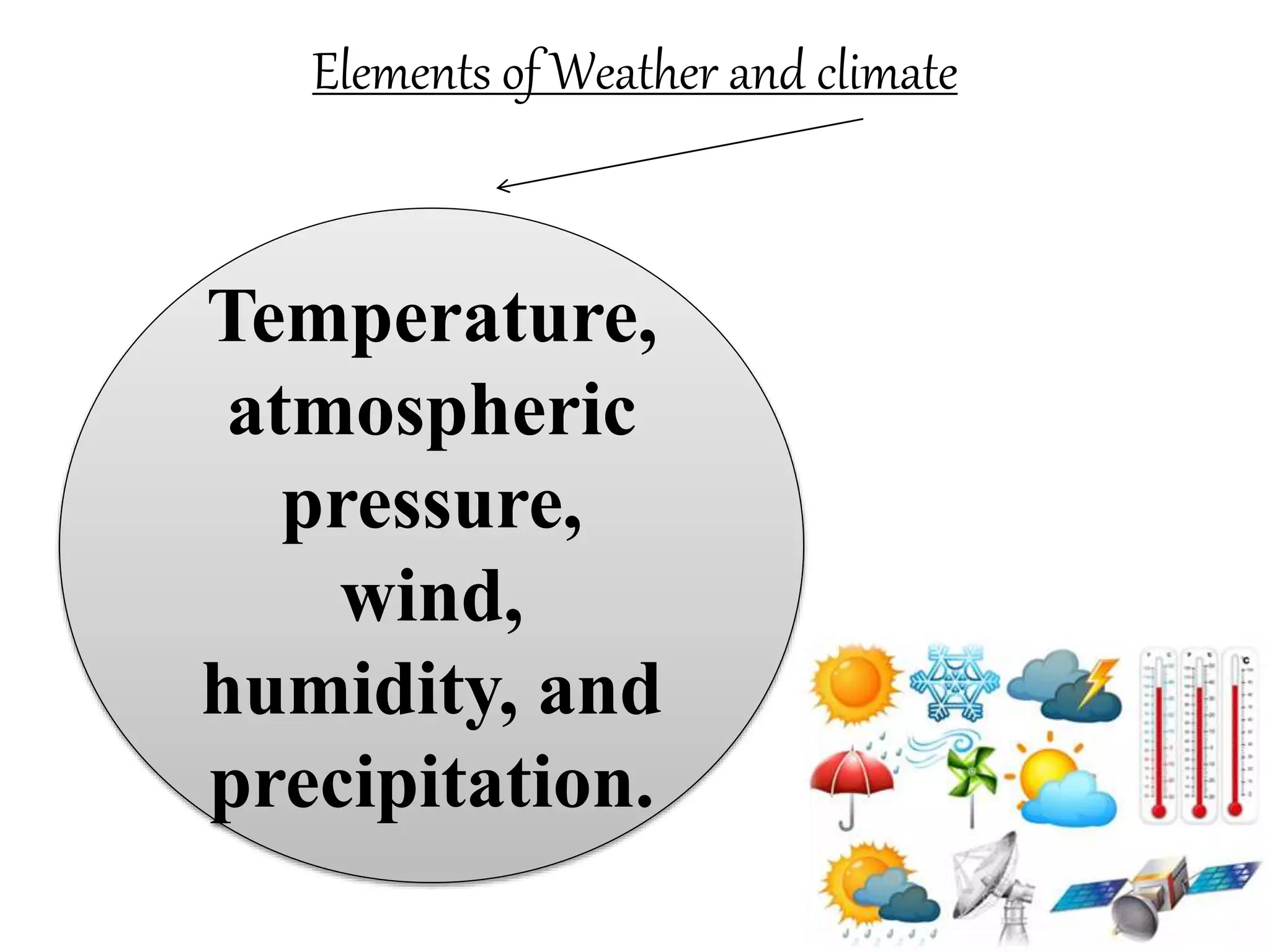
Elements of Weather and climate
Temperature,
atmospheric
pressure,
wind,
humidity, and
precipitation.
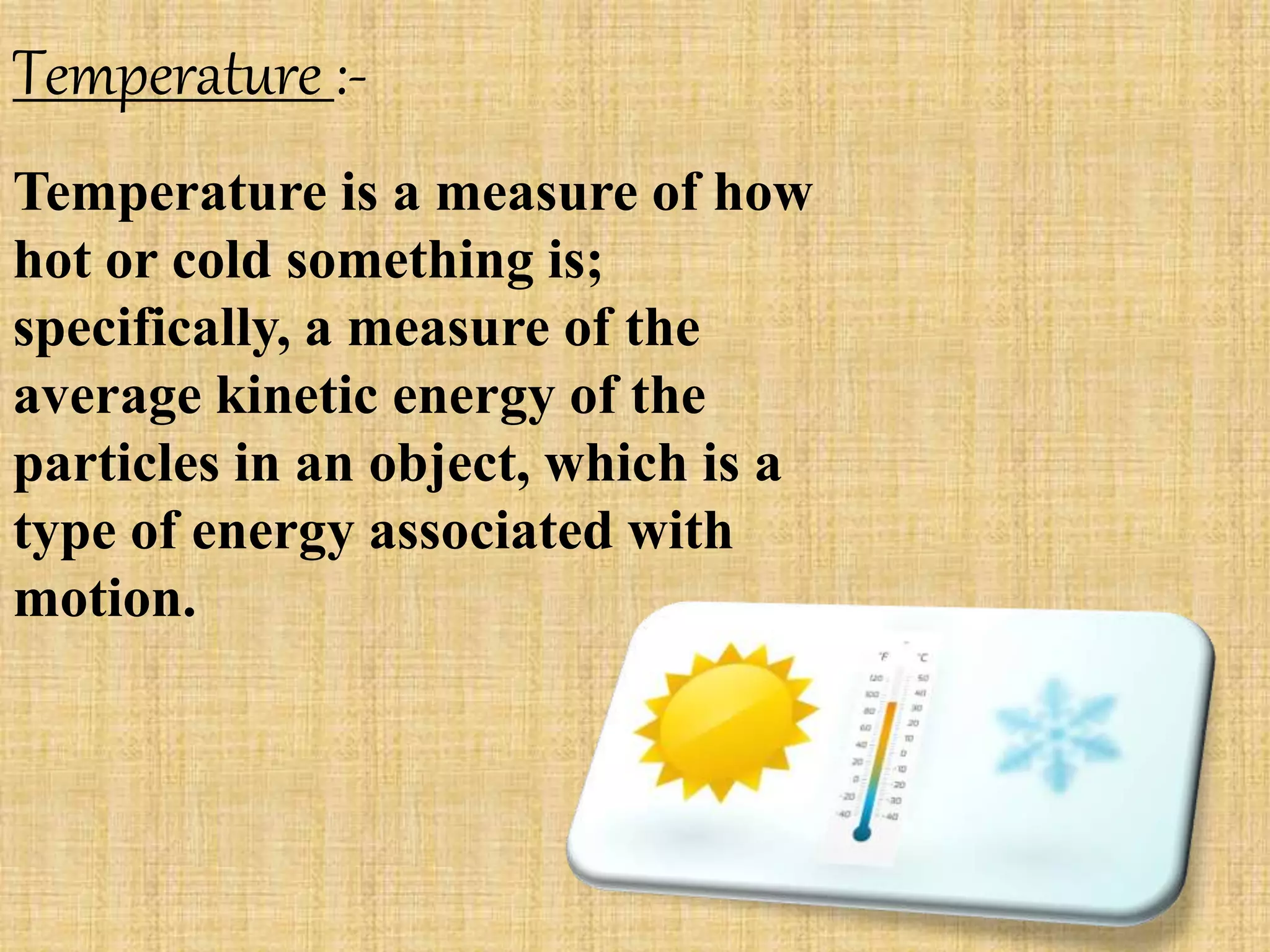
Temperature :-
Temperature is a measure of how
hot or cold something is;
specifically, a measure of the
average kinetic energy of the
particles in an object, which is a
type of energy associated with
motion.
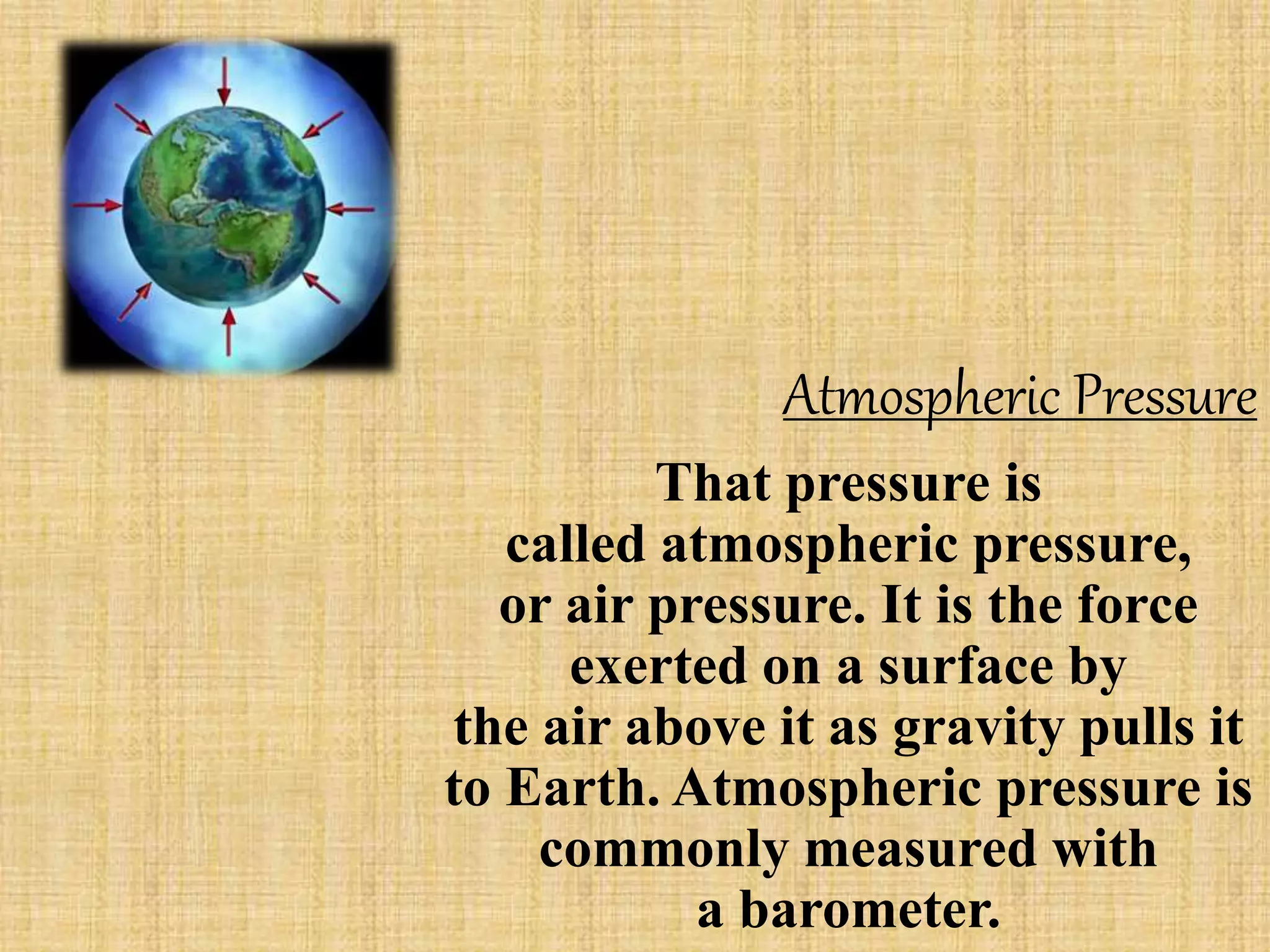
Atmospheric Pressure
That pressure is
called atmospheric pressure,
or air pressure. It is the force
exerted on a surface by
the air above it as gravity pulls it
to Earth. Atmospheric pressure is
commonly measured with
a barometer.
Wind
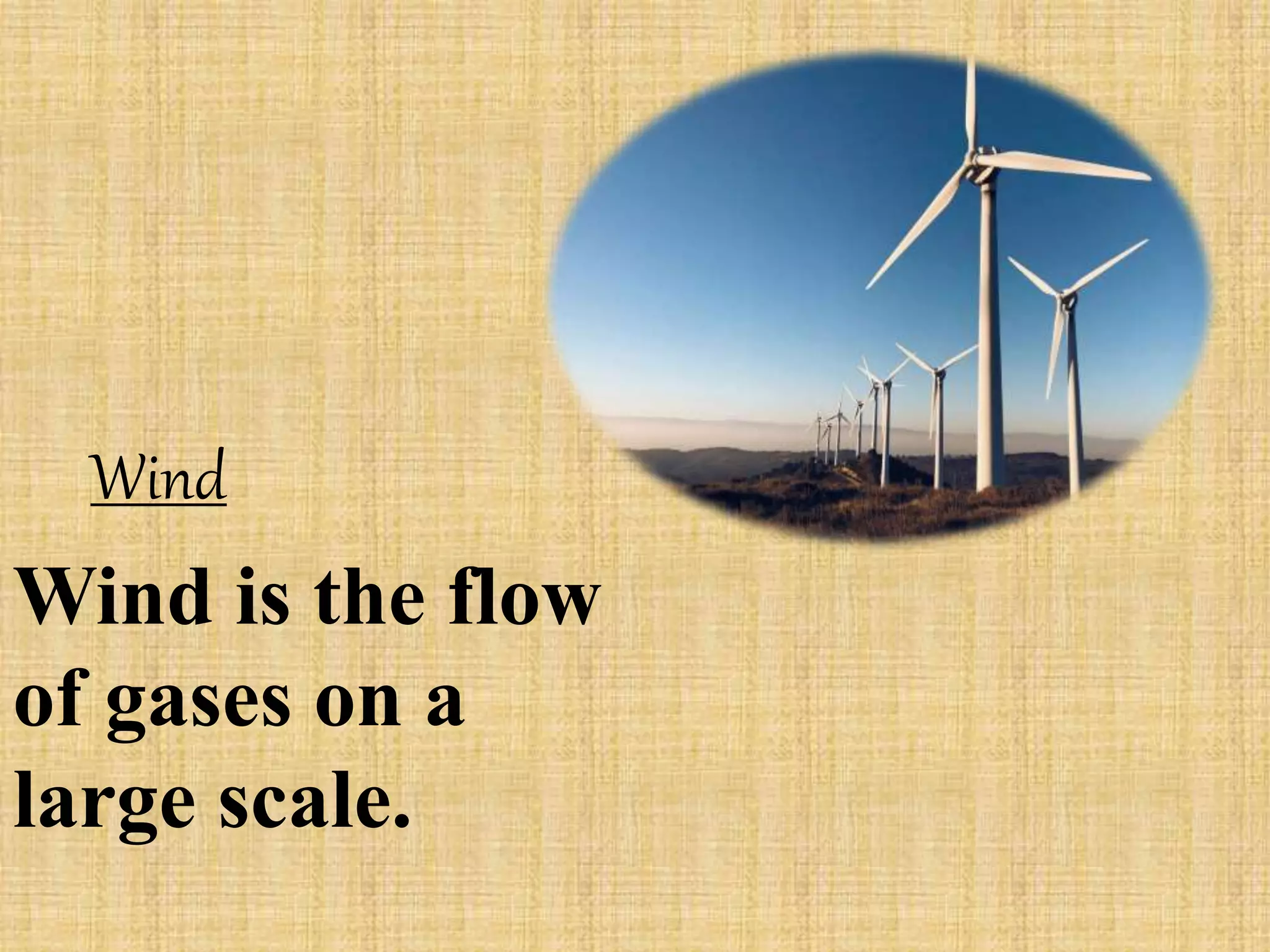
Wind is the flow
of gases on a
large scale.
Humidity
A quantity
representing the
amount of water
vapour in the
atmosphere or in a
gas.
Falling products of condensation
in the atmosphere, as rain, snow,
or hail. the amount of rain, snow,
hail, etc., that has fallen at a
given place within a given period,
usually expressed in inches or
centimetres of water.
Monsoon
The word monsoon is derived from the Arabic word
‘mausim’ which literally means SEASON.
‘MONSOON’ refers to the seasonal reversal in the
wind direction during a year.
The world is divided into a number of climatic
Regions. The climate of India is described as the
‘monsoon’ type. This type of climate is found in South
and Southeast Asia.
Two Important elements- Temperature & Precipitation,
often vary from place to place and Season to season.
Climatic Control
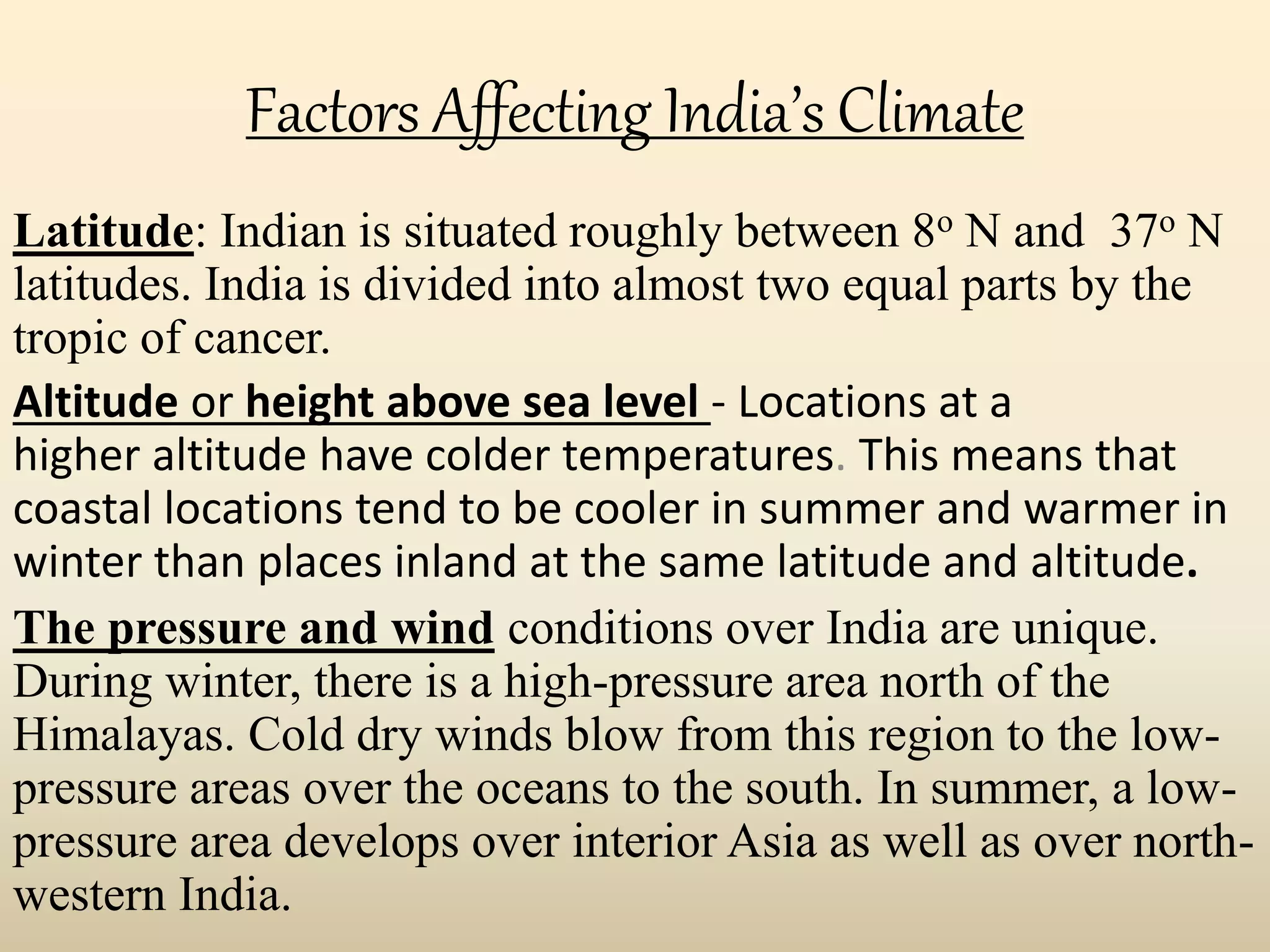
Six major Control of Climate of any place-
Latitude, altitude, pressure and wind system,
distance from the sea, ocean currents and relief
features.
Factors Affecting India’s Climate
Latitude: Indian is situated roughly between 8o N and 37o N
latitudes. India is divided into almost two equal parts by the
tropic of cancer.
Altitude or height above sea level - Locations at a
higher altitude have colder temperatures. This means that
coastal locations tend to be cooler in summer and warmer in
winter than places inland at the same latitude and altitude.
The pressure and wind conditions over India are unique.
During winter, there is a high-pressure area north of the
Himalayas. Cold dry winds blow from this region to the low-
pressure areas over the oceans to the south. In summer, a low-
pressure area develops over interior Asia as well as over north-
western India.
The Indian Monsoon
The Climate of India is strongly influenced by
monsoon winds. The sailors who came to India in
historic times were on of the first to have noticed the
phenomenon of the monsoon. They benefited from the
reversal of the wind system as they came by sailing
ships at the mercy of winds. The Arabs, who had also
come to India as traders named this season reversal of
the wind system ‘monsoon’.
The Onset Of The Monsoon And Withdrawal
Withdrawal or the retreat of the monsoon is a more
gradual process. The withdrawal of
the monsoon begins in north-western states of India
by early September. By mid-October, it withdraws
completely from the northern half of the peninsula.
The withdrawal from the southern half of the
peninsula is fairly rapid.
The Seasons
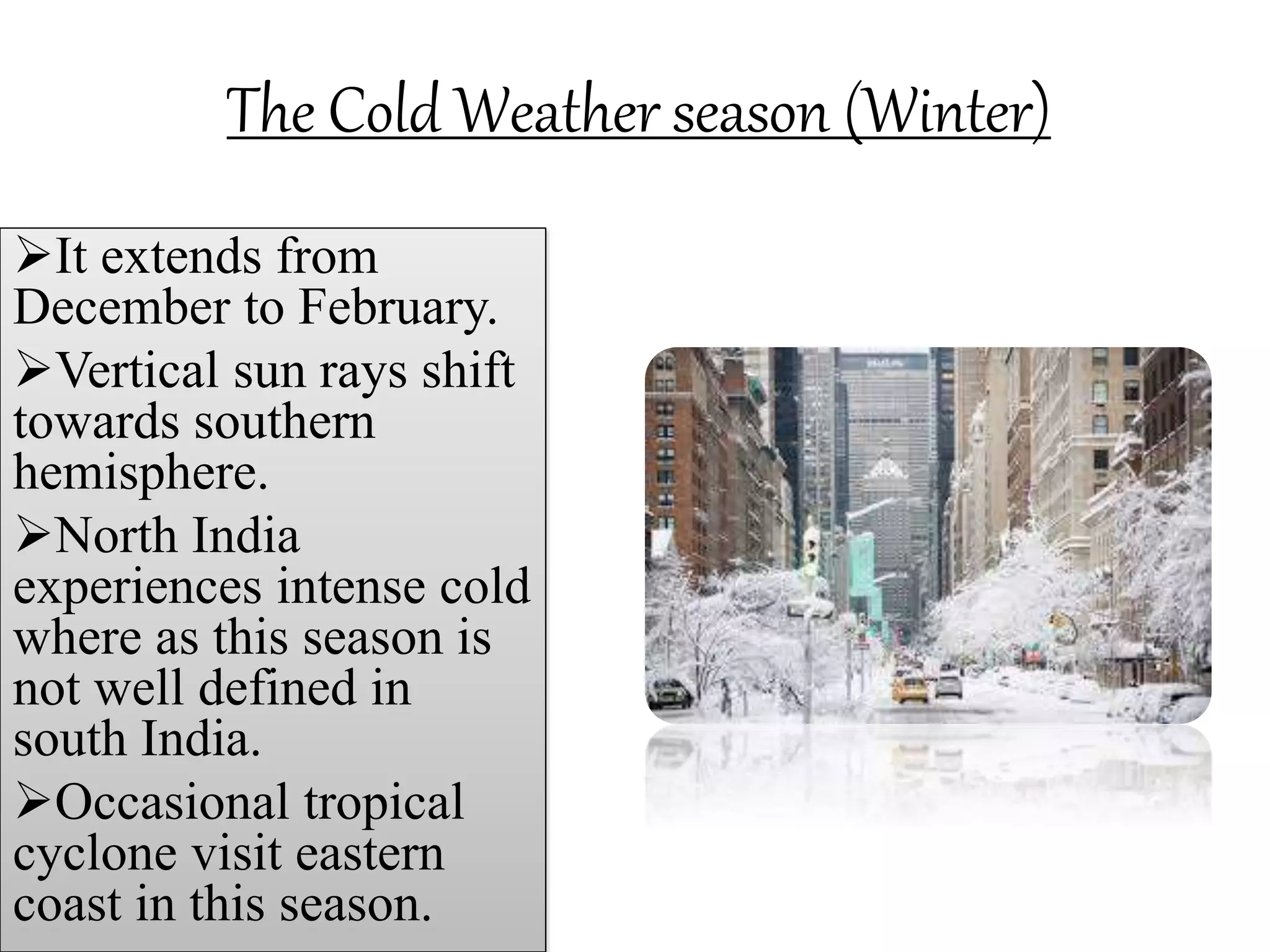
The Cold Weather season (Winter)
It extends from
December to February.
Vertical sun rays shift
towards southern
hemisphere.
North India
experiences intense cold
where as this season is
not well defined in
south India.
Occasional tropical
cyclone visit eastern
coast in this season.
The Hot Weather Season (Summer)
It extends from March to
May.
Vertical sun rays shift
towards northern
hemisphere.
The Temperature gradually
rises from south to north.
Highest Temperature
experiences in Karnataka in
March, M.P. in April and
Rajasthan in May.
Advancing Monsoon (The Rainy Season)
It extends June to
September.
Intense heating in north
west India creates low
pressure region.
Low pressure attract the
wind from the surrounding
Region.
After having rains for a
few days sometime monsoon
fails to occur for one or
more weeks is known as
break in the monsoon.
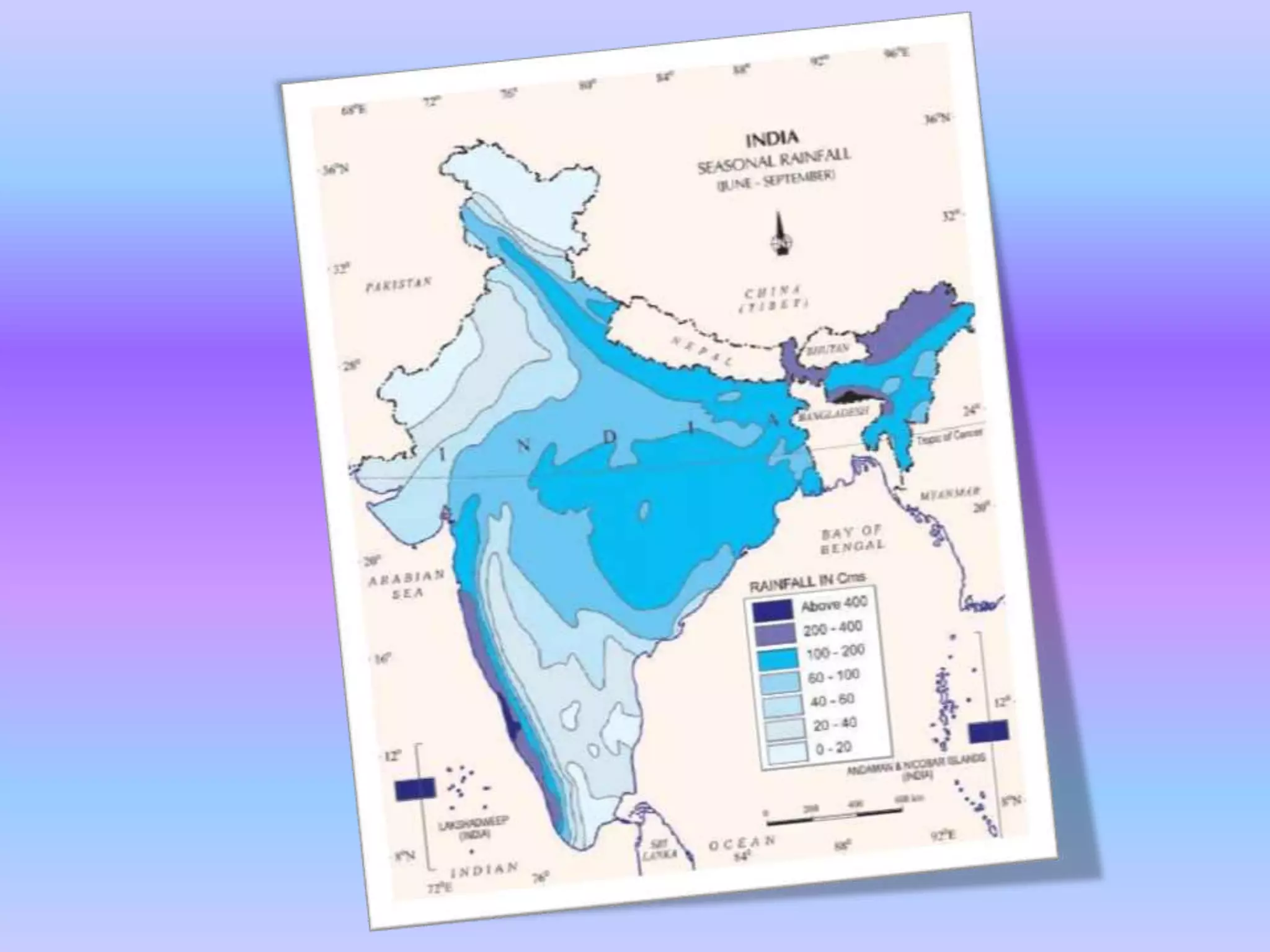
Distribution Of Rainfall
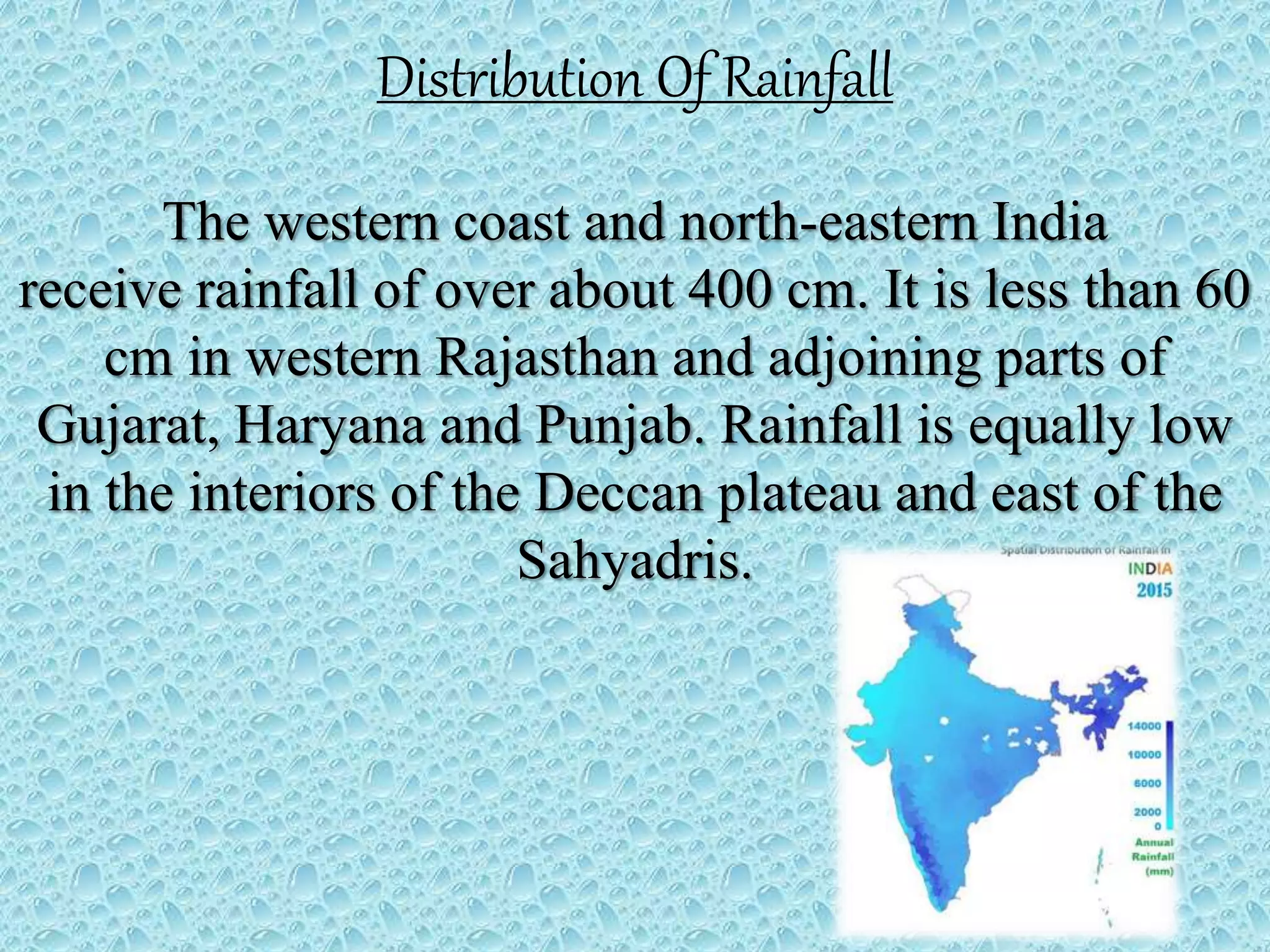
The western coast and north-eastern India
receive rainfall of over about 400 cm. It is less than 60
cm in western Rajasthan and adjoining parts of
Gujarat, Haryana and Punjab. Rainfall is equally low
in the interiors of the Deccan plateau and east of the
Sahyadris.
The Himalayas protect the subcontinent from extremely
cold winds from central Asia. This enables northern India
to have uniformly higher temperatures when compared to
other areas on the same latitudes.
Similarly, the peninsular plateau, under the influence of
the sea form three sides, has moderate temperatures.
The unifying influence of the monsoon on the Indian
subcontinent is quite perceptible. The seasonal alteration
of the wind systems and the associated weather conditions
provide a rhythmic cycle of seasons.
CLIMATE- class 9

CLIMATE- class 9

  • 2.
    What is Climate Climaterefers to the sum total of weather conditions and variations over a large area for a long period of time. . The climate record also includes extreme values such as record high temperatures or record amounts of rainfall. It is the long term weather of that area which remains at least 30 Years
  • 3.
    What is Weather Weatheris the state atmosphere at any point in time and space, it changes every moment. Example: Cloudy, dry, windy, wet weather.
  • 4.
    Elements of Weatherand climate Temperature, atmospheric pressure, wind, humidity, and precipitation.
  • 5.
    Temperature :- Temperature isa measure of how hot or cold something is; specifically, a measure of the average kinetic energy of the particles in an object, which is a type of energy associated with motion.
  • 6.
    Atmospheric Pressure That pressureis called atmospheric pressure, or air pressure. It is the force exerted on a surface by the air above it as gravity pulls it to Earth. Atmospheric pressure is commonly measured with a barometer.
  • 7.
    Wind Wind is theflow of gases on a large scale.
  • 8.
    Humidity A quantity representing the amountof water vapour in the atmosphere or in a gas. Falling products of condensation in the atmosphere, as rain, snow, or hail. the amount of rain, snow, hail, etc., that has fallen at a given place within a given period, usually expressed in inches or centimetres of water.
  • 9.
    Monsoon The word monsoonis derived from the Arabic word ‘mausim’ which literally means SEASON. ‘MONSOON’ refers to the seasonal reversal in the wind direction during a year. The world is divided into a number of climatic Regions. The climate of India is described as the ‘monsoon’ type. This type of climate is found in South and Southeast Asia. Two Important elements- Temperature & Precipitation, often vary from place to place and Season to season.
  • 10.
    Climatic Control Six majorControl of Climate of any place- Latitude, altitude, pressure and wind system, distance from the sea, ocean currents and relief features.
  • 11.
    Factors Affecting India’sClimate Latitude: Indian is situated roughly between 8o N and 37o N latitudes. India is divided into almost two equal parts by the tropic of cancer. Altitude or height above sea level - Locations at a higher altitude have colder temperatures. This means that coastal locations tend to be cooler in summer and warmer in winter than places inland at the same latitude and altitude. The pressure and wind conditions over India are unique. During winter, there is a high-pressure area north of the Himalayas. Cold dry winds blow from this region to the low- pressure areas over the oceans to the south. In summer, a low- pressure area develops over interior Asia as well as over north- western India.
  • 12.
    The Indian Monsoon TheClimate of India is strongly influenced by monsoon winds. The sailors who came to India in historic times were on of the first to have noticed the phenomenon of the monsoon. They benefited from the reversal of the wind system as they came by sailing ships at the mercy of winds. The Arabs, who had also come to India as traders named this season reversal of the wind system ‘monsoon’.
  • 13.
    The Onset OfThe Monsoon And Withdrawal Withdrawal or the retreat of the monsoon is a more gradual process. The withdrawal of the monsoon begins in north-western states of India by early September. By mid-October, it withdraws completely from the northern half of the peninsula. The withdrawal from the southern half of the peninsula is fairly rapid.
  • 14.
  • 15.
    The Cold Weatherseason (Winter) It extends from December to February. Vertical sun rays shift towards southern hemisphere. North India experiences intense cold where as this season is not well defined in south India. Occasional tropical cyclone visit eastern coast in this season.
  • 16.
    The Hot WeatherSeason (Summer) It extends from March to May. Vertical sun rays shift towards northern hemisphere. The Temperature gradually rises from south to north. Highest Temperature experiences in Karnataka in March, M.P. in April and Rajasthan in May.
  • 17.
    Advancing Monsoon (TheRainy Season) It extends June to September. Intense heating in north west India creates low pressure region. Low pressure attract the wind from the surrounding Region. After having rains for a few days sometime monsoon fails to occur for one or more weeks is known as break in the monsoon.
  • 18.
    Distribution Of Rainfall Thewestern coast and north-eastern India receive rainfall of over about 400 cm. It is less than 60 cm in western Rajasthan and adjoining parts of Gujarat, Haryana and Punjab. Rainfall is equally low in the interiors of the Deccan plateau and east of the Sahyadris.
  • 21.
    The Himalayas protectthe subcontinent from extremely cold winds from central Asia. This enables northern India to have uniformly higher temperatures when compared to other areas on the same latitudes. Similarly, the peninsular plateau, under the influence of the sea form three sides, has moderate temperatures. The unifying influence of the monsoon on the Indian subcontinent is quite perceptible. The seasonal alteration of the wind systems and the associated weather conditions provide a rhythmic cycle of seasons.