CLIL COMPENDIUM
www.clilcompendium.com
CLIL Dimensions
 There are 5 dimensions related to:


 Culture
 Environment
 Language
 Content
 Learning
1. The Culture Dimension -
             CULTIX
 A. Build intercultural knowledge &
  understanding
 B. Develop intercultural communication
  skills
 C. Learn about specific neighbouring
  countries/regions and/or minority
  groups
 D. Introduce the wider cultural context
2. The Environment Dimension -
             ENTIX

 A. Prepare for internationalisation,
  specifically EU integration
 B. Access International Certification
 C. Enhance school profile
3. The Language Dimension -
            LANTIX
 A. Improve overall target language
  competence
 B. Develop oral communication skills
 C. Deepen awareness of both mother
  tongue and target language
 D. Develop plurilingual interests and
  attitudes
 E. Introduce a target language
4. The Content Dimension
            -CONTIX

 A. Provide opportunities to study
  content through different perspectives
 B. Access subject-specific target
  language terminology
 C. Prepare for future studies and/or
  working life
5. The Learning Dimension -
            LEARNTIX

 A. Complement individual learning
  strategies
 B. Diversify methods & forms of
  classroom practice
 C. Increase learner motivation
CLIL in Brief

 Learning & Acquiring Languages


 Natural Ways of Picking up Languages
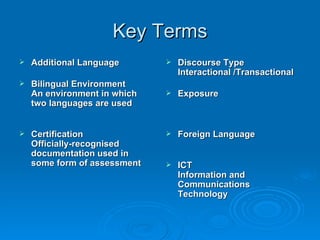
Key Terms
   Additional Language          Discourse Type
                                  Interactional /Transactional
   Bilingual Environment
    An environment in which      Exposure
    two languages are used


   Certification                Foreign Language
    Officially-recognised
    documentation used in
    some form of assessment      ICT
                                  Information and
                                  Communications
                                  Technology
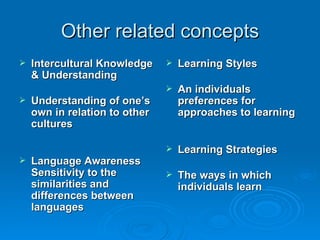
Other related concepts
   Intercultural Knowledge       Learning Styles
    & Understanding
                                  An individuals
   Understanding of one’s         preferences for
    own in relation to other       approaches to learning
    cultures

                                  Learning Strategies
   Language Awareness
    Sensitivity to the            The ways in which
    similarities and               individuals learn
    differences between
    languages
View Examples
 http://www.youtube.com/watch?v=-Czdg8-6mJ
  Interview with David Marsh

 http://www.youtube.com/watch?NR=1&v=9Hh
  Why CLIL?
 CLIL Science In English
 http://www.youtube.com/watch?v=If9x_NDz61
 CLILSolar System
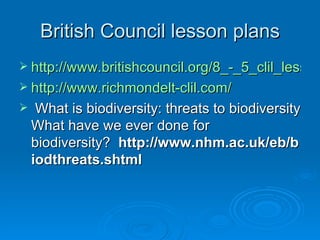
British Council lesson plans
 http://www.britishcouncil.org/8_-_5_clil_lesson
 http://www.richmondelt-clil.com/
    What is biodiversity: threats to biodiversity
    What have we ever done for
    biodiversity? http://www.nhm.ac.uk/eb/b
    iodthreats.shtml
British Council
 http://www.teachingenglish.org.uk/clil

CLIL Compendium

  • 1.
  • 2.
    CLIL Dimensions  Thereare 5 dimensions related to:  Culture  Environment  Language  Content  Learning
  • 3.
    1. The CultureDimension - CULTIX  A. Build intercultural knowledge & understanding  B. Develop intercultural communication skills  C. Learn about specific neighbouring countries/regions and/or minority groups  D. Introduce the wider cultural context
  • 4.
    2. The EnvironmentDimension - ENTIX  A. Prepare for internationalisation, specifically EU integration  B. Access International Certification  C. Enhance school profile
  • 5.
    3. The LanguageDimension - LANTIX  A. Improve overall target language competence  B. Develop oral communication skills  C. Deepen awareness of both mother tongue and target language  D. Develop plurilingual interests and attitudes  E. Introduce a target language
  • 6.
    4. The ContentDimension -CONTIX  A. Provide opportunities to study content through different perspectives  B. Access subject-specific target language terminology  C. Prepare for future studies and/or working life
  • 7.
    5. The LearningDimension - LEARNTIX  A. Complement individual learning strategies  B. Diversify methods & forms of classroom practice  C. Increase learner motivation
  • 8.
    CLIL in Brief Learning & Acquiring Languages  Natural Ways of Picking up Languages
  • 9.
    Key Terms  Additional Language  Discourse Type Interactional /Transactional  Bilingual Environment An environment in which  Exposure two languages are used  Certification  Foreign Language Officially-recognised documentation used in some form of assessment  ICT Information and Communications Technology
  • 10.
    Other related concepts  Intercultural Knowledge  Learning Styles & Understanding  An individuals  Understanding of one’s preferences for own in relation to other approaches to learning cultures  Learning Strategies  Language Awareness Sensitivity to the  The ways in which similarities and individuals learn differences between languages
  • 11.
    View Examples  http://www.youtube.com/watch?v=-Czdg8-6mJ Interview with David Marsh  http://www.youtube.com/watch?NR=1&v=9Hh Why CLIL?  CLIL Science In English  http://www.youtube.com/watch?v=If9x_NDz61  CLILSolar System
  • 12.
    British Council lessonplans  http://www.britishcouncil.org/8_-_5_clil_lesson  http://www.richmondelt-clil.com/  What is biodiversity: threats to biodiversity What have we ever done for biodiversity? http://www.nhm.ac.uk/eb/b iodthreats.shtml
  • 13.