EFFECTIVE CLASSROOM
MANAGEMENT AND CONTROL
BEING AN ORIENTATION PROGRAMME ORGANIZED
FOR
YEWA CENTRAL COLLEGE OF EDUCATION ABEOKUTA,
OGUN STATE, NIGERIA
MEET THE FACILITATOR
RASHEED, Oluwasegun Kazeem Ph.D
(+234)-8051700164, (+234)-7066867887
kazeemrasheed1440@gmail.com
MNAEAP, EMPM, MNIM, MTRCN, MACSN, CT, Dip. Digital
Mkt., CEAF, CME, W10FE, CMIE, FMIE, MAPROCON,
AMIBRN, MCIEMA (USA)
Lead Principal Facilitator at HEED – A - DINK CONSULT
 CLASSROOM: THIS IS A STRATEGIC
PLACE USED FOR TEACHING AND
LEARNING.
 MANAGEMENT: THIS IS THE ACT OF
CONTROLLING THE HUMAN FACTOR IN
AN ORGANIZATION TOWARDS
ACHIEVING ORGANIZATIONAL GOALS.
 CONTROL: THIS IS THE METHOD OF
MAKING THINGS IN ORDER FOR
DESIRED GOAL.
DEFINITION OF
CONCEPTS
What is Classroom Management?
 It is the act of managing both human and material
resources in the classroom towards achieving optimum
understanding.
 It’s effective discipline
 It’s being prepared for class
 It’s the act of motivating students
 It’s providing a safe, comfortable learning environment
 It’s building act of students’ self esteem
 It’s being creative and imaginative in daily lessons
Why is Classroom Management Important?
 Satisfaction and enjoyment in teaching
are dependent upon leading students to
cooperate
 Classroom management issues are of
highest concern for teachers and
learners achievement.
Principles of Successful Classroom
Management
 Deal with disruptive behaviors but also manage to
minimize off-task, non-disruptive behaviors
 Teach students to manage their own behavior
 Students learn to be on-task and engaged in the
learning activities you have planned for them
Techniques for Better Classroom Control
 Focus attention on entire class
 Don’t talk over student chatter
 Silence can be EFFECTIVE not DORMANT
 Use APPOPRIATE voice so students really have to listen to what you’re
saying
 Direct your instruction so that students know what is going to happen
 Monitor groups of students to check progress
 Move around the room so students have to pay attention more readily
 Give students non-verbal cues
 Engage in low profile intervention of disruptions
 Make sure classroom is comfortable and safe
 Plan your lessons to ensure you fill the period with learning activities
 Come to class prepared
 Show confidence in your teaching
 Learn student names as quickly as possible
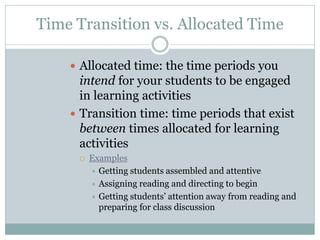
Time Transition vs. Allocated Time
 Allocated time: the time periods you
intend for your students to be engaged
in learning activities
 Transition time: time periods that exist
between times allocated for learning
activities
 Examples
 Getting students assembled and attentive
 Assigning reading and directing to begin
 Getting students’ attention away from reading and
preparing for class discussion
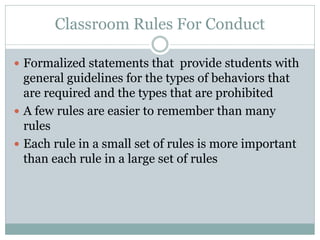
Classroom Rules For Conduct
 Formalized statements that provide students with
general guidelines for the types of behaviors that
are required and the types that are prohibited
 A few rules are easier to remember than many
rules
 Each rule in a small set of rules is more important
than each rule in a large set of rules
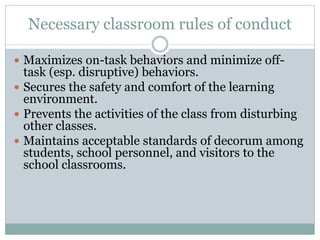
Necessary classroom rules of conduct
 Maximizes on-task behaviors and minimize off-
task (esp. disruptive) behaviors.
 Secures the safety and comfort of the learning
environment.
 Prevents the activities of the class from disturbing
other classes.
 Maintains acceptable standards of decorum among
students, school personnel, and visitors to the
school classrooms.
Dealing with
Classroom
Behavior
1. Attention Seeking Behavior
 Attention-seeking students prefer being punished,
admonished, or criticized to being ignored.
 Give attention to the student when he or she is on-
task and cooperating.
 “Catch them being good!” – and let them know you
caught them.
2. Power Seeking Behavior
 Power-seeking students attempt to provoke teachers
into a struggle of wills.
 In most cases, the teacher should direct attention to
other members of the class.
3. Behavior: Rambling -- wandering around and
off the subject. Using far-fetched examples or
analogies.
POSSIBLE RESPONSES:
 Re-focus attention by restating relevant
point.
 Direct questions to group that is back on
the subject
 Ask how topic relates to current topic
being discussed.
 Use visual aids, begin to write on board,
turn on overhead projector.
 Say: "Would you summarize your main
point please?" or "Are you asking...?"
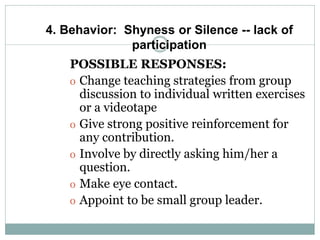
4. Behavior: Shyness or Silence -- lack of
participation
POSSIBLE RESPONSES:
o Change teaching strategies from group
discussion to individual written exercises
or a videotape
o Give strong positive reinforcement for
any contribution.
o Involve by directly asking him/her a
question.
o Make eye contact.
o Appoint to be small group leader.
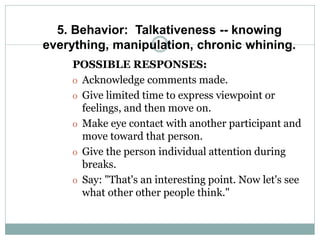
5. Behavior: Talkativeness -- knowing
everything, manipulation, chronic whining.
POSSIBLE RESPONSES:
o Acknowledge comments made.
o Give limited time to express viewpoint or
feelings, and then move on.
o Make eye contact with another participant and
move toward that person.
o Give the person individual attention during
breaks.
o Say: "That's an interesting point. Now let's see
what other other people think."

EFFECTIVE CLASSROOM MANAGEMENT AND CONTR

  • 1.
    EFFECTIVE CLASSROOM MANAGEMENT ANDCONTROL BEING AN ORIENTATION PROGRAMME ORGANIZED FOR YEWA CENTRAL COLLEGE OF EDUCATION ABEOKUTA, OGUN STATE, NIGERIA
  • 2.
    MEET THE FACILITATOR RASHEED,Oluwasegun Kazeem Ph.D (+234)-8051700164, (+234)-7066867887 kazeemrasheed1440@gmail.com MNAEAP, EMPM, MNIM, MTRCN, MACSN, CT, Dip. Digital Mkt., CEAF, CME, W10FE, CMIE, FMIE, MAPROCON, AMIBRN, MCIEMA (USA) Lead Principal Facilitator at HEED – A - DINK CONSULT
  • 3.
     CLASSROOM: THISIS A STRATEGIC PLACE USED FOR TEACHING AND LEARNING.  MANAGEMENT: THIS IS THE ACT OF CONTROLLING THE HUMAN FACTOR IN AN ORGANIZATION TOWARDS ACHIEVING ORGANIZATIONAL GOALS.  CONTROL: THIS IS THE METHOD OF MAKING THINGS IN ORDER FOR DESIRED GOAL. DEFINITION OF CONCEPTS
  • 4.
    What is ClassroomManagement?  It is the act of managing both human and material resources in the classroom towards achieving optimum understanding.  It’s effective discipline  It’s being prepared for class  It’s the act of motivating students  It’s providing a safe, comfortable learning environment  It’s building act of students’ self esteem  It’s being creative and imaginative in daily lessons
  • 5.
    Why is ClassroomManagement Important?  Satisfaction and enjoyment in teaching are dependent upon leading students to cooperate  Classroom management issues are of highest concern for teachers and learners achievement.
  • 6.
    Principles of SuccessfulClassroom Management  Deal with disruptive behaviors but also manage to minimize off-task, non-disruptive behaviors  Teach students to manage their own behavior  Students learn to be on-task and engaged in the learning activities you have planned for them
  • 7.
    Techniques for BetterClassroom Control  Focus attention on entire class  Don’t talk over student chatter  Silence can be EFFECTIVE not DORMANT  Use APPOPRIATE voice so students really have to listen to what you’re saying  Direct your instruction so that students know what is going to happen  Monitor groups of students to check progress  Move around the room so students have to pay attention more readily  Give students non-verbal cues  Engage in low profile intervention of disruptions  Make sure classroom is comfortable and safe  Plan your lessons to ensure you fill the period with learning activities  Come to class prepared  Show confidence in your teaching  Learn student names as quickly as possible
  • 9.
    Time Transition vs.Allocated Time  Allocated time: the time periods you intend for your students to be engaged in learning activities  Transition time: time periods that exist between times allocated for learning activities  Examples  Getting students assembled and attentive  Assigning reading and directing to begin  Getting students’ attention away from reading and preparing for class discussion
  • 10.
    Classroom Rules ForConduct  Formalized statements that provide students with general guidelines for the types of behaviors that are required and the types that are prohibited  A few rules are easier to remember than many rules  Each rule in a small set of rules is more important than each rule in a large set of rules
  • 11.
    Necessary classroom rulesof conduct  Maximizes on-task behaviors and minimize off- task (esp. disruptive) behaviors.  Secures the safety and comfort of the learning environment.  Prevents the activities of the class from disturbing other classes.  Maintains acceptable standards of decorum among students, school personnel, and visitors to the school classrooms.
  • 13.
  • 14.
    1. Attention SeekingBehavior  Attention-seeking students prefer being punished, admonished, or criticized to being ignored.  Give attention to the student when he or she is on- task and cooperating.  “Catch them being good!” – and let them know you caught them.
  • 15.
    2. Power SeekingBehavior  Power-seeking students attempt to provoke teachers into a struggle of wills.  In most cases, the teacher should direct attention to other members of the class.
  • 16.
    3. Behavior: Rambling-- wandering around and off the subject. Using far-fetched examples or analogies. POSSIBLE RESPONSES:  Re-focus attention by restating relevant point.  Direct questions to group that is back on the subject  Ask how topic relates to current topic being discussed.  Use visual aids, begin to write on board, turn on overhead projector.  Say: "Would you summarize your main point please?" or "Are you asking...?"
  • 17.
    4. Behavior: Shynessor Silence -- lack of participation POSSIBLE RESPONSES: o Change teaching strategies from group discussion to individual written exercises or a videotape o Give strong positive reinforcement for any contribution. o Involve by directly asking him/her a question. o Make eye contact. o Appoint to be small group leader.
  • 18.
    5. Behavior: Talkativeness-- knowing everything, manipulation, chronic whining. POSSIBLE RESPONSES: o Acknowledge comments made. o Give limited time to express viewpoint or feelings, and then move on. o Make eye contact with another participant and move toward that person. o Give the person individual attention during breaks. o Say: "That's an interesting point. Now let's see what other other people think."