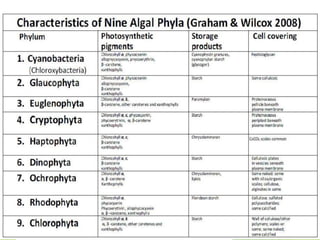
Classification of Algae
For diverse reasons, the taxonomy of
algae is not settled yet. There is still
an ongoing battle about the
composition of eukaryotic
supergroups, for example, and until
that is resolved, it can be hard to
define taxonomic levels included
within supergroups.
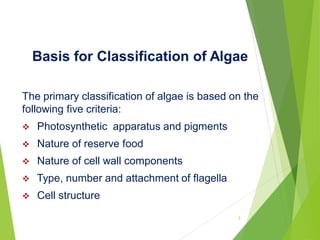
Basis for Classification of Algae
The primary classification of algae is based on the
following five criteria:
 Photosynthetic apparatus and pigments
 Nature of reserve food
 Nature of cell wall components
 Type, number and attachment of flagella
 Cell structure
3
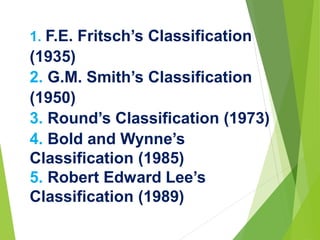
1. F.E. Fritsch’s Classification
(1935)
2. G.M. Smith’s Classification
(1950)
3. Round’s Classification (1973)
4. Bold and Wynne’s
Classification (1985)
5. Robert Edward Lee’s
Classification (1989)
CLASSIFICATION OF ALGAE
PROPOSED BY F.E. FRITSCH (1935)
The most comprehensive and authorative
classification of algae was given by F.E
Fritsch (1935) in his book ‘The Structure
and Reproduction of the Algae’.
His classification was based on such
criteria as pigmentation, types of flagella,
assimilatory products, thallus structure
and methods of reproduction.
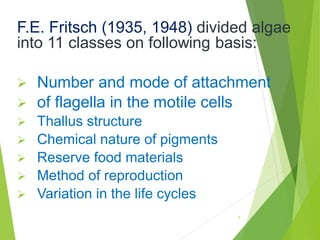
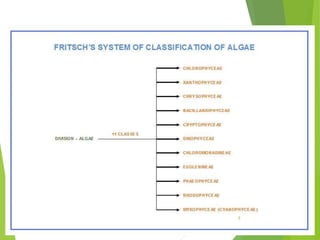
F.E. Fritsch (1935, 1948) divided algae
into 11 classes on following basis:
 Number and mode of attachment
 of flagella in the motile cells
 Thallus structure
 Chemical nature of pigments
 Reserve food materials
 Method of reproduction
 Variation in the life cycles
7
8
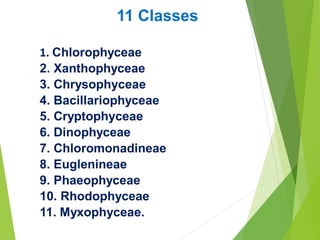
11 Classes
1. Chlorophyceae
2. Xanthophyceae
3. Chrysophyceae
4. Bacillariophyceae
5. Cryptophyceae
6. Dinophyceae
7. Chloromonadineae
8. Euglenineae
9. Phaeophyceae
10. Rhodophyceae
11. Myxophyceae.
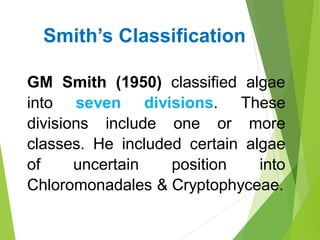
GM Smith (1950) classified algae
into seven divisions. These
divisions include one or more
classes. He included certain algae
of uncertain position into
Chloromonadales & Cryptophyceae.
Smith’s Classification
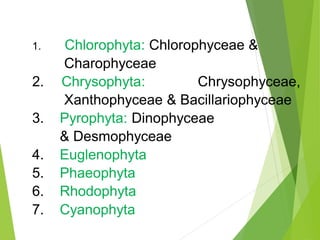
1. Chlorophyta: Chlorophyceae &
Charophyceae
2. Chrysophyta: Chrysophyceae,
Xanthophyceae & Bacillariophyceae
3. Pyrophyta: Dinophyceae
& Desmophyceae
4. Euglenophyta
5. Phaeophyta
6. Rhodophyta
7. Cyanophyta
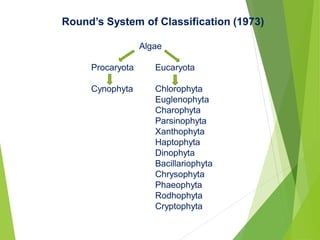
Round’s System of Classification (1973)
Algae
Procaryota Eucaryota
Cynophyta Chlorophyta
Euglenophyta
Charophyta
Parsinophyta
Xanthophyta
Haptophyta
Dinophyta
Bacillariophyta
Chrysophyta
Phaeophyta
Rodhophyta
Cryptophyta
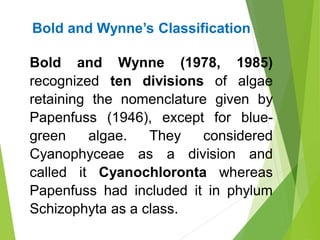
Bold and Wynne (1978, 1985)
recognized ten divisions of algae
retaining the nomenclature given by
Papenfuss (1946), except for blue-
green algae. They considered
Cyanophyceae as a division and
called it Cyanochloronta whereas
Papenfuss had included it in phylum
Schizophyta as a class.
Bold and Wynne’s Classification
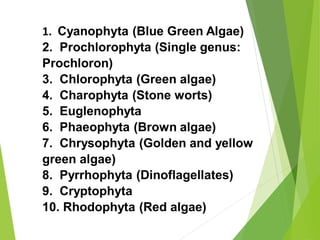
1. Cyanophyta (Blue Green Algae)
2. Prochlorophyta (Single genus:
Prochloron)
3. Chlorophyta (Green algae)
4. Charophyta (Stone worts)
5. Euglenophyta
6. Phaeophyta (Brown algae)
7. Chrysophyta (Golden and yellow
green algae)
8. Pyrrhophyta (Dinoflagellates)
9. Cryptophyta
10. Rhodophyta (Red algae)
Robert Edward Lee’s
Classification
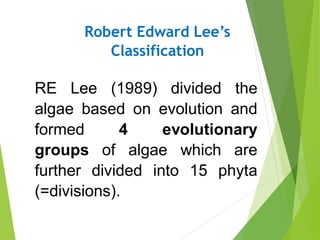
RE Lee (1989) divided the
algae based on evolution and
formed 4 evolutionary
groups of algae which are
further divided into 15 phyta
(=divisions).
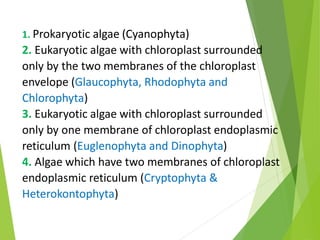
1. Prokaryotic algae (Cyanophyta)
2. Eukaryotic algae with chloroplast surrounded
only by the two membranes of the chloroplast
envelope (Glaucophyta, Rhodophyta and
Chlorophyta)
3. Eukaryotic algae with chloroplast surrounded
only by one membrane of chloroplast endoplasmic
reticulum (Euglenophyta and Dinophyta)
4. Algae which have two membranes of chloroplast
endoplasmic reticulum (Cryptophyta &
Heterokontophyta)
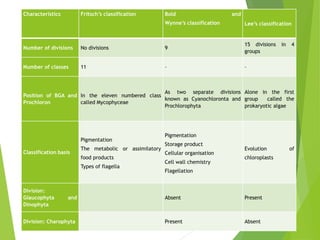
Characteristics Fritsch’s classification Bold and
Wynne’s classification Lee’s classification
Number of divisions No divisions 9
15 divisions in 4
groups
Number of classes 11 – –
Position of BGA and
Prochloron
In the eleven numbered class
called Mycophyceae
As two separate divisions
known as Cyanochloronta and
Prochlorophyta
Alone in the first
group called the
prokaryotic algae
Classification basis
Pigmentation
The metabolic or assimilatory
food products
Types of flagella
Pigmentation
Storage product
Cellular organisation
Cell wall chemistry
Flagellation
Evolution of
chloroplasts
Division:
Glaucophyta and
Dinophyta
Absent Present
Division: Charophyta Present Absent
Algae
By
Graham
&
Wilcox
2nd Edition
A very good website of
algae
www.algaebase.org

Classification of algae.pdf

  • 1.
  • 2.
    For diverse reasons,the taxonomy of algae is not settled yet. There is still an ongoing battle about the composition of eukaryotic supergroups, for example, and until that is resolved, it can be hard to define taxonomic levels included within supergroups.
  • 3.
    Basis for Classificationof Algae The primary classification of algae is based on the following five criteria:  Photosynthetic apparatus and pigments  Nature of reserve food  Nature of cell wall components  Type, number and attachment of flagella  Cell structure 3
  • 4.
    1. F.E. Fritsch’sClassification (1935) 2. G.M. Smith’s Classification (1950) 3. Round’s Classification (1973) 4. Bold and Wynne’s Classification (1985) 5. Robert Edward Lee’s Classification (1989)
  • 5.
    CLASSIFICATION OF ALGAE PROPOSEDBY F.E. FRITSCH (1935)
  • 6.
    The most comprehensiveand authorative classification of algae was given by F.E Fritsch (1935) in his book ‘The Structure and Reproduction of the Algae’. His classification was based on such criteria as pigmentation, types of flagella, assimilatory products, thallus structure and methods of reproduction.
  • 7.
    F.E. Fritsch (1935,1948) divided algae into 11 classes on following basis:  Number and mode of attachment  of flagella in the motile cells  Thallus structure  Chemical nature of pigments  Reserve food materials  Method of reproduction  Variation in the life cycles 7
  • 8.
  • 9.
    11 Classes 1. Chlorophyceae 2.Xanthophyceae 3. Chrysophyceae 4. Bacillariophyceae 5. Cryptophyceae 6. Dinophyceae 7. Chloromonadineae 8. Euglenineae 9. Phaeophyceae 10. Rhodophyceae 11. Myxophyceae.
  • 10.
    GM Smith (1950)classified algae into seven divisions. These divisions include one or more classes. He included certain algae of uncertain position into Chloromonadales & Cryptophyceae. Smith’s Classification
  • 11.
    1. Chlorophyta: Chlorophyceae& Charophyceae 2. Chrysophyta: Chrysophyceae, Xanthophyceae & Bacillariophyceae 3. Pyrophyta: Dinophyceae & Desmophyceae 4. Euglenophyta 5. Phaeophyta 6. Rhodophyta 7. Cyanophyta
  • 12.
    Round’s System ofClassification (1973) Algae Procaryota Eucaryota Cynophyta Chlorophyta Euglenophyta Charophyta Parsinophyta Xanthophyta Haptophyta Dinophyta Bacillariophyta Chrysophyta Phaeophyta Rodhophyta Cryptophyta
  • 13.
    Bold and Wynne(1978, 1985) recognized ten divisions of algae retaining the nomenclature given by Papenfuss (1946), except for blue- green algae. They considered Cyanophyceae as a division and called it Cyanochloronta whereas Papenfuss had included it in phylum Schizophyta as a class. Bold and Wynne’s Classification
  • 14.
    1. Cyanophyta (BlueGreen Algae) 2. Prochlorophyta (Single genus: Prochloron) 3. Chlorophyta (Green algae) 4. Charophyta (Stone worts) 5. Euglenophyta 6. Phaeophyta (Brown algae) 7. Chrysophyta (Golden and yellow green algae) 8. Pyrrhophyta (Dinoflagellates) 9. Cryptophyta 10. Rhodophyta (Red algae)
  • 15.
    Robert Edward Lee’s Classification RELee (1989) divided the algae based on evolution and formed 4 evolutionary groups of algae which are further divided into 15 phyta (=divisions).
  • 16.
    1. Prokaryotic algae(Cyanophyta) 2. Eukaryotic algae with chloroplast surrounded only by the two membranes of the chloroplast envelope (Glaucophyta, Rhodophyta and Chlorophyta) 3. Eukaryotic algae with chloroplast surrounded only by one membrane of chloroplast endoplasmic reticulum (Euglenophyta and Dinophyta) 4. Algae which have two membranes of chloroplast endoplasmic reticulum (Cryptophyta & Heterokontophyta)
  • 17.
    Characteristics Fritsch’s classificationBold and Wynne’s classification Lee’s classification Number of divisions No divisions 9 15 divisions in 4 groups Number of classes 11 – – Position of BGA and Prochloron In the eleven numbered class called Mycophyceae As two separate divisions known as Cyanochloronta and Prochlorophyta Alone in the first group called the prokaryotic algae Classification basis Pigmentation The metabolic or assimilatory food products Types of flagella Pigmentation Storage product Cellular organisation Cell wall chemistry Flagellation Evolution of chloroplasts Division: Glaucophyta and Dinophyta Absent Present Division: Charophyta Present Absent
  • 18.
  • 20.
    A very goodwebsite of algae www.algaebase.org