The document discusses energy flow in ecosystems, emphasizing the roles of producers, consumers, and decomposers in energy acquisition and trophic levels. It introduces the energy pyramid and the rule of 10, which states that only 10% of energy is passed to the next trophic level while the remainder is used or lost as heat. Additionally, it explains food chains and food webs as frameworks for understanding organism interactions in feeding relationships.
Two basic conceptsabout
ecosystem;
1. How is energy used by organisms?
2. How organisms acquire minerals
and other inorganic substances?
3.
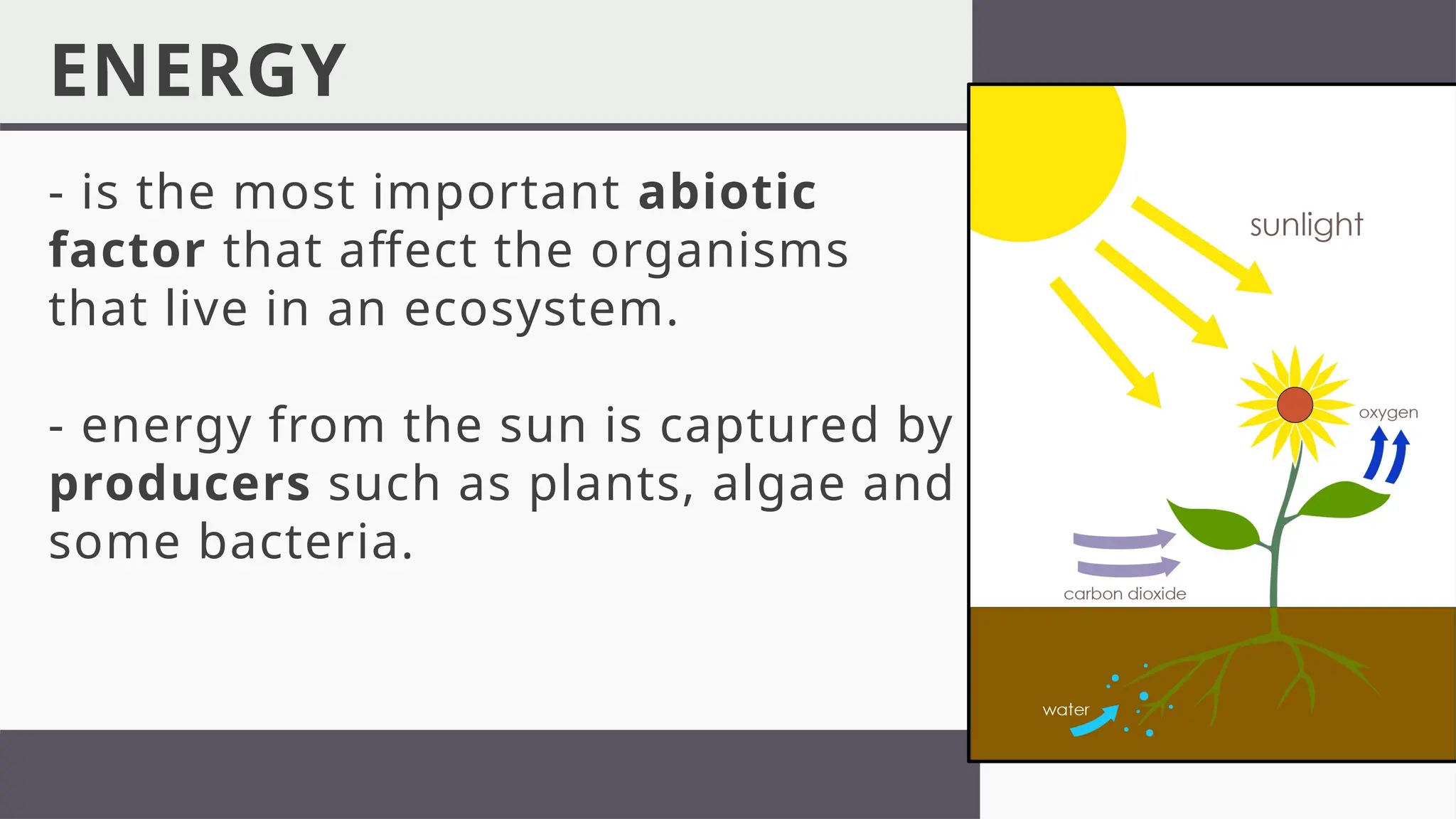
- is themost important abiotic
factor that affect the organisms
that live in an ecosystem.
- energy from the sun is captured by
producers such as plants, algae and
some bacteria.
ENERGY
DECOMPOSERS
- the onethat breaks down dead
organisms and animals.
- obtain energy from wastes, such as
feces and leaf litter.
- Fungi, such as mushrooms and
some bacteria, such as
Pseudomonas are decomposers.
- Detritivores are feed on dead or
decaying organic matter from plants
and animals, as well as fecal matter.
10.
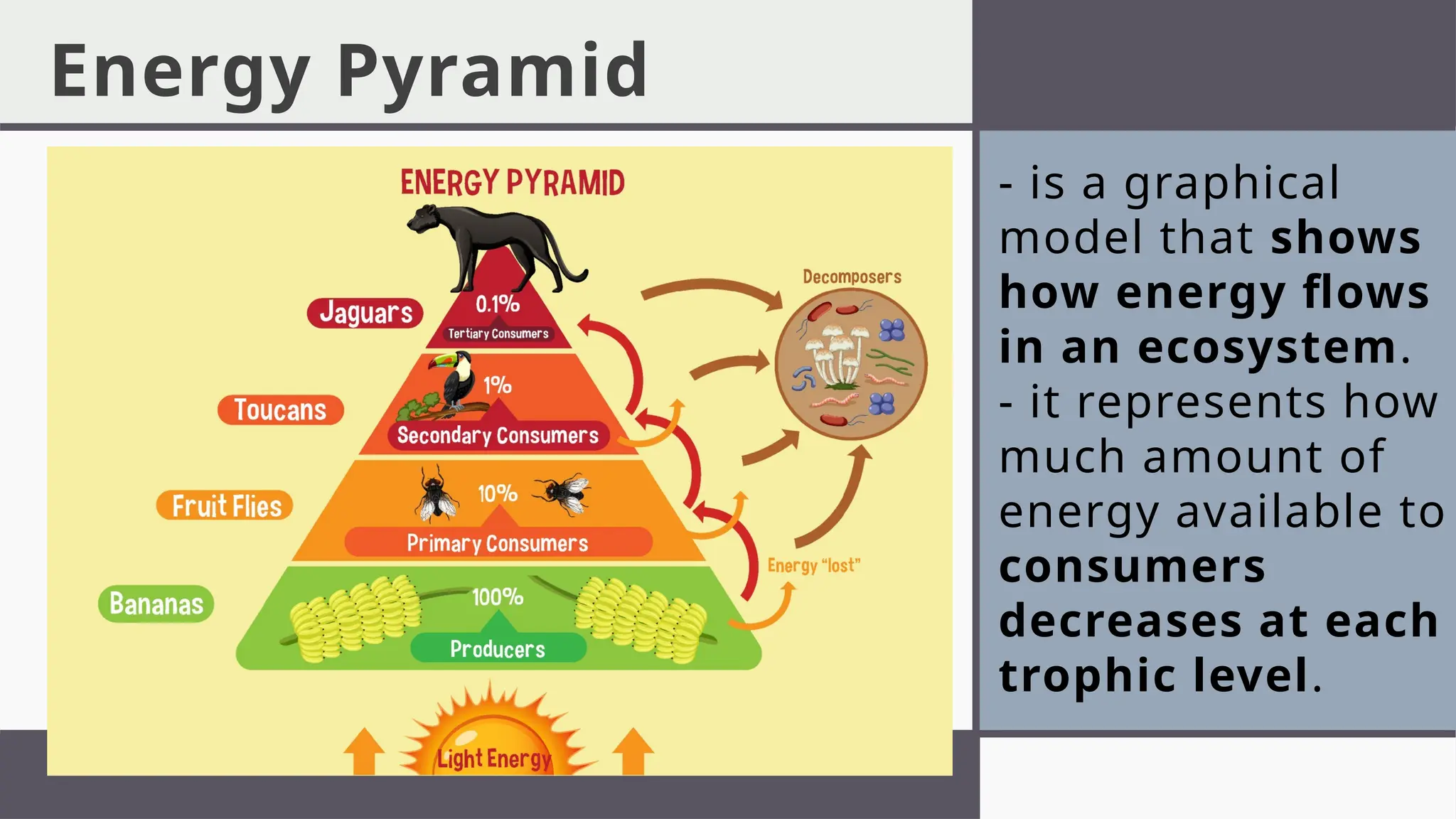
Energy Pyramid
- isa graphical
model that shows
how energy flows
in an ecosystem.
- it represents how
much amount of
energy available to
consumers
decreases at each
trophic level.
11.
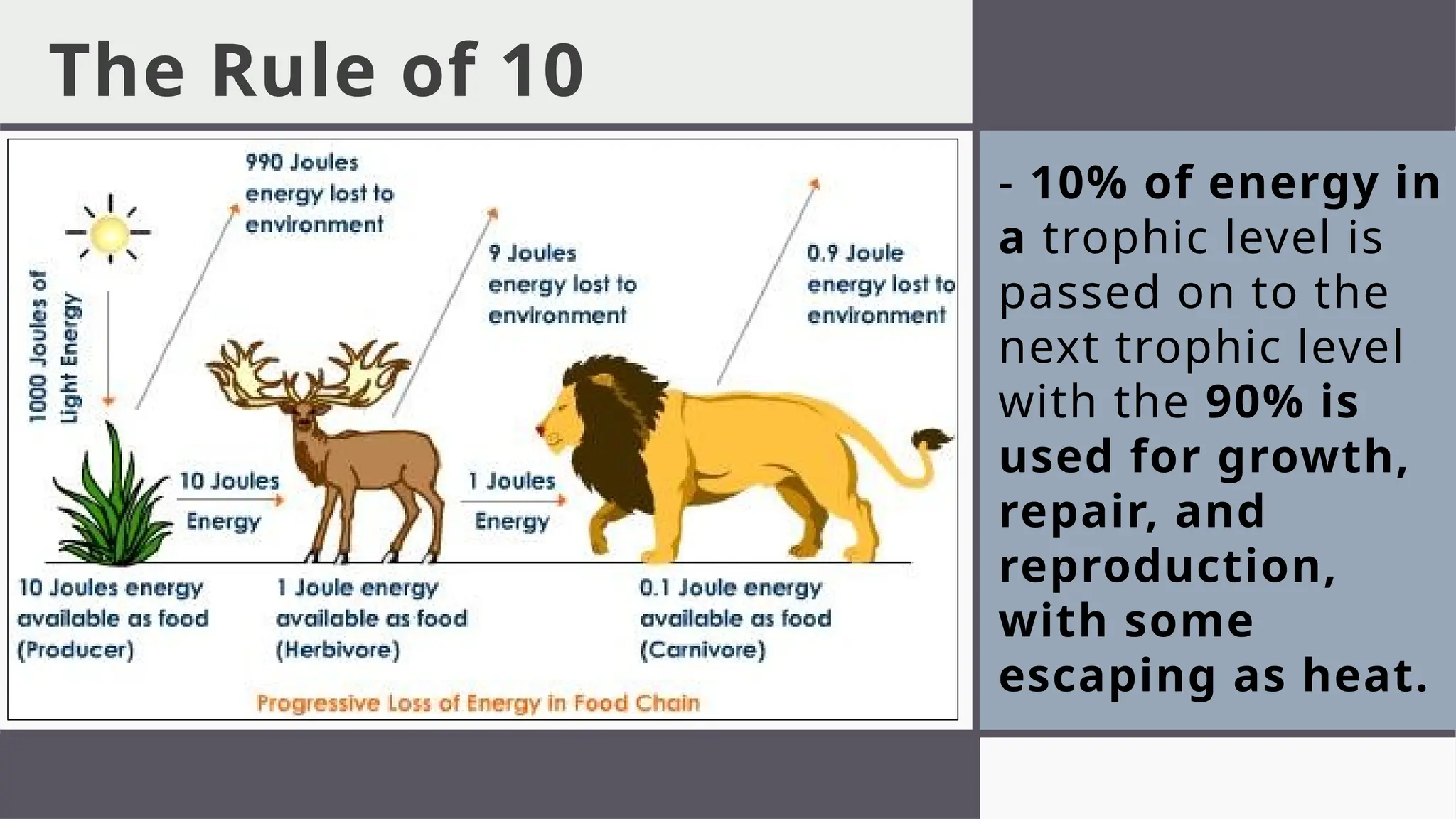
The Rule of10
- 10% of energy in
a trophic level is
passed on to the
next trophic level
with the 90% is
used for growth,
repair, and
reproduction,
with some
escaping as heat.
12.
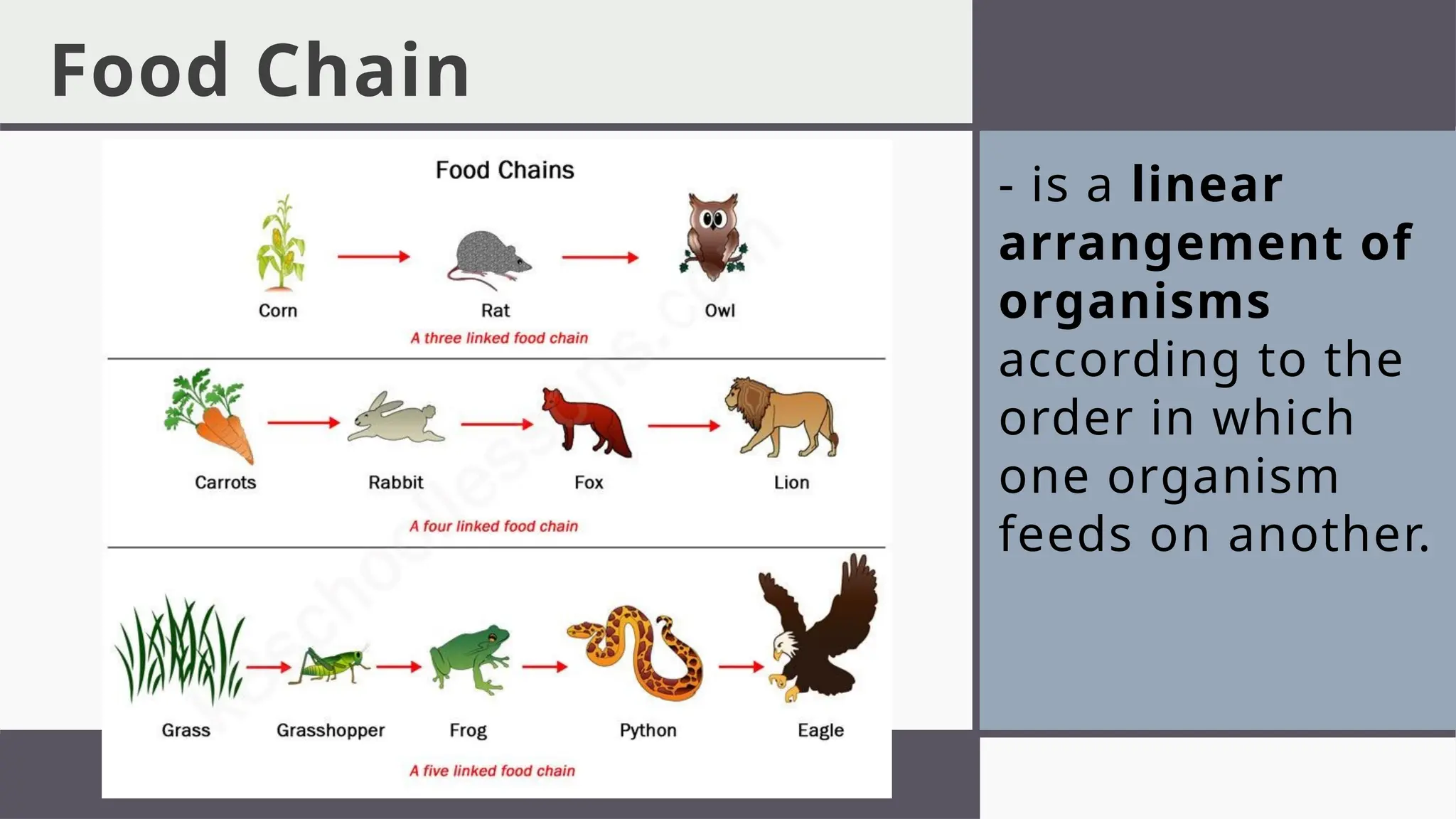
Food Chain
- isa linear
arrangement of
organisms
according to the
order in which
one organism
feeds on another.