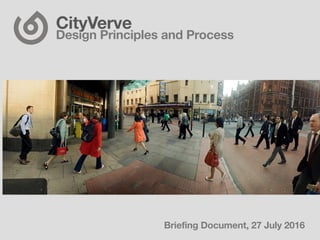
CityVerve 

Design Principles and Process
Briefing Document, 27 July 2016
What you get
Human centred design methods and
tools.

Understanding of user needs.

Insights on best practice and
common barriers to user
acceptance.

Engagement with citizens and users,
visibility and attention.
What you give
Time to attend human centred design
workshops.

Be ready to be challenged and adapt
your solution to user feedback.

Engage citizens as contributors and
stakeholders.

Be open and share learnings from the
process.

Human Centred Design Advice and Support
Human centred design leads to products and services that are usable, 

useful and likely to be used. CityVerve project teams will be introduced 

to human centred and participatory design methods, and supported to 

implement them during design, deployment and analysis.
FutureGov

FutureGov the digital and design
company for public services, are
collaborating with FutureEverything
on Human Centred Design support. 

Simone Carrier

Head of Service Design

Matt Skinner

Head of Product Design

Chris Evans

Product Designer

Drew Hemment

Creative Director

Daniel Santos

Design Lead

Vimla Appadoo

Service Designer

Feimatta Conteh

Programme Manager

Natalie Kane

Curator and Editor

Tom Rowlands

Producer

Callum Kirkwood

Junior Producer

Human Centred Design CityVerve Team
FutureEverything, Manchester’s innovation lab for digital culture and smarter
cities, is lead on human centred design and culture & public realm in CityVerve.
WE, CITIZENS OF ALL CITIES, TAKE THE FATE OF THE PLACES WE LIVE
IN INTO OUR OWN HANDS. WE CARE ABOUT THE BUILDINGS AND THE
PARKS, THE SHOPS, THE SCHOOLS, THE ROADS AND THE TREES. BUT
ABOVE ALL, WE CARE ABOUT THE QUALITY OF THE LIFE WE LIVE IN
OUR CITIES. WE KNOW THAT OUR LIVES ARE INTERCONNECTED, AND
WHAT WE DO HERE WILL IMPACT THE OUTCOMES OVER THERE. WHILE
WE CAN NEVER PREDICT THE EVENTUAL EFFECT OF OUR ACTIONS, WE
TAKE FULL RESPONSIBILITY TO MAKE THIS WORLD A BETTER PLACE.
Frank Kresin, A Manifesto for Smart Citizens, in Drew Hemment & Anthony
Townsend (eds), Smart Citizens, FutureEverything Publications, 2013

Smart Citizens
We engage citizens as stakeholders and contributors not just users.
01. DON’T BELIEVE THE HYPE
02. DESIGN USEFUL THINGS
03. AIM FOR THE WIN-WIN-WIN
04. KEEP EVERYONE AND EVERY THING SECURE
05. BUILD AND PROMOTE A CULTURE OF PRIVACY
06. BE DELIBERATE ABOUT WHAT DATA WE COLLECT
07. MAKE THE PARTIES ASSOCIATED WITH AN IOT PRODUCT EXPLICIT
08. EMPOWER USERS TO BE THE MASTERS OF THEIR OWN DOMAIN
09. DESIGN THINGS FOR THEIR LIFETIME
10. IN THE END, WE ARE HUMAN BEINGS
iotmanifesto.org @iotmanifesto

IoT Design Principles
We will draw on and contribute to work on best practice so we can
address barriers to user acceptance.
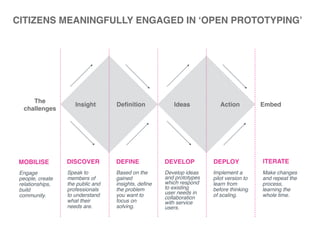
CITIZENS MEANINGFULLY ENGAGED IN ‘OPEN PROTOTYPING’
The
challenges
Insight Definition ActionIdeas Embed
DISCOVER DEFINE DEVELOP DEPLOY
Speak to
members of
the public and
professionals
to understand
what their
needs are.
Based on the
gained
insights, define
the problem
you want to
focus on
solving.
Develop ideas
and prototypes
which respond
to existing
user needs in
collaboration
with service
users.
Implement a
pilot version to
learn from
before thinking
of scaling.
MOBILISE
Engage
people, create
relationships,
build
community.
ITERATE
Make changes
and repeat the
process,
learning the
whole time.
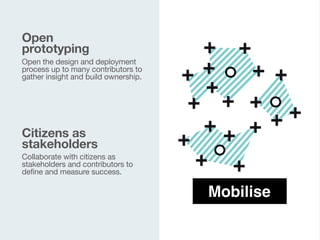
Open the design and deployment
process up to many contributors to
gather insight and build ownership.

Open 

prototyping
Collaborate with citizens as
stakeholders and contributors to
define and measure success.

Citizens as
stakeholders
Mobilise
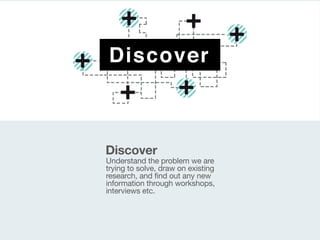
Understand the problem we are
trying to solve, draw on existing
research, and find out any new
information through workshops,
interviews etc.


Discover
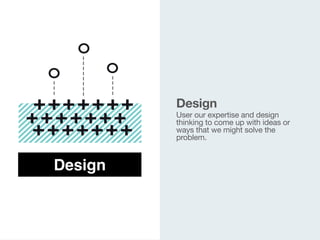
User our expertise and design
thinking to come up with ideas or
ways that we might solve the
problem.


Design
Design
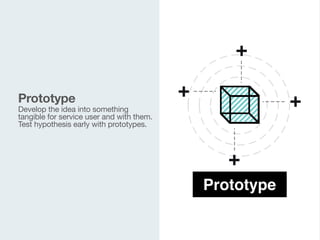
Develop the idea into something
tangible for service user and with them.
Test hypothesis early with prototypes.


Prototype
Prototype
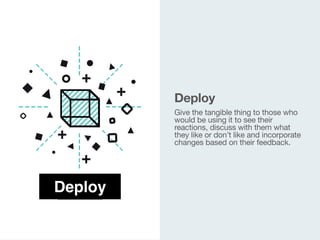
Give the tangible thing to those who
would be using it to see their
reactions, discuss with them what
they like or don’t like and incorporate
changes based on their feedback.


Deploy
Deploy
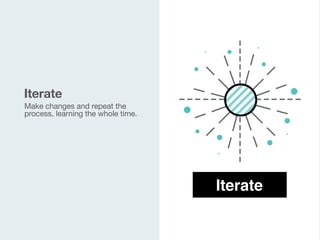
Make changes and repeat the
process, learning the whole time.


Iterate
Iterate

CityVerve Design Principles and Process

  • 1.
    CityVerve 
 Design Principlesand Process Briefing Document, 27 July 2016
  • 2.
    What you get Humancentred design methods and tools. Understanding of user needs. Insights on best practice and common barriers to user acceptance. Engagement with citizens and users, visibility and attention. What you give Time to attend human centred design workshops. Be ready to be challenged and adapt your solution to user feedback. Engage citizens as contributors and stakeholders. Be open and share learnings from the process. Human Centred Design Advice and Support Human centred design leads to products and services that are usable, 
 useful and likely to be used. CityVerve project teams will be introduced 
 to human centred and participatory design methods, and supported to 
 implement them during design, deployment and analysis.
  • 3.
    FutureGov
 FutureGov the digitaland design company for public services, are collaborating with FutureEverything on Human Centred Design support. Simone Carrier
 Head of Service Design Matt Skinner
 Head of Product Design Chris Evans
 Product Designer Drew Hemment
 Creative Director Daniel Santos
 Design Lead Vimla Appadoo
 Service Designer Feimatta Conteh
 Programme Manager Natalie Kane
 Curator and Editor Tom Rowlands
 Producer Callum Kirkwood
 Junior Producer Human Centred Design CityVerve Team FutureEverything, Manchester’s innovation lab for digital culture and smarter cities, is lead on human centred design and culture & public realm in CityVerve.
  • 4.
    WE, CITIZENS OFALL CITIES, TAKE THE FATE OF THE PLACES WE LIVE IN INTO OUR OWN HANDS. WE CARE ABOUT THE BUILDINGS AND THE PARKS, THE SHOPS, THE SCHOOLS, THE ROADS AND THE TREES. BUT ABOVE ALL, WE CARE ABOUT THE QUALITY OF THE LIFE WE LIVE IN OUR CITIES. WE KNOW THAT OUR LIVES ARE INTERCONNECTED, AND WHAT WE DO HERE WILL IMPACT THE OUTCOMES OVER THERE. WHILE WE CAN NEVER PREDICT THE EVENTUAL EFFECT OF OUR ACTIONS, WE TAKE FULL RESPONSIBILITY TO MAKE THIS WORLD A BETTER PLACE. Frank Kresin, A Manifesto for Smart Citizens, in Drew Hemment & Anthony Townsend (eds), Smart Citizens, FutureEverything Publications, 2013 Smart Citizens We engage citizens as stakeholders and contributors not just users.
  • 5.
    01. DON’T BELIEVETHE HYPE 02. DESIGN USEFUL THINGS 03. AIM FOR THE WIN-WIN-WIN 04. KEEP EVERYONE AND EVERY THING SECURE 05. BUILD AND PROMOTE A CULTURE OF PRIVACY 06. BE DELIBERATE ABOUT WHAT DATA WE COLLECT 07. MAKE THE PARTIES ASSOCIATED WITH AN IOT PRODUCT EXPLICIT 08. EMPOWER USERS TO BE THE MASTERS OF THEIR OWN DOMAIN 09. DESIGN THINGS FOR THEIR LIFETIME 10. IN THE END, WE ARE HUMAN BEINGS iotmanifesto.org @iotmanifesto IoT Design Principles We will draw on and contribute to work on best practice so we can address barriers to user acceptance.
  • 6.
    CITIZENS MEANINGFULLY ENGAGEDIN ‘OPEN PROTOTYPING’ The challenges Insight Definition ActionIdeas Embed DISCOVER DEFINE DEVELOP DEPLOY Speak to members of the public and professionals to understand what their needs are. Based on the gained insights, define the problem you want to focus on solving. Develop ideas and prototypes which respond to existing user needs in collaboration with service users. Implement a pilot version to learn from before thinking of scaling. MOBILISE Engage people, create relationships, build community. ITERATE Make changes and repeat the process, learning the whole time.
  • 7.
    Open the designand deployment process up to many contributors to gather insight and build ownership. Open 
 prototyping Collaborate with citizens as stakeholders and contributors to define and measure success. Citizens as stakeholders Mobilise
  • 8.
    Understand the problemwe are trying to solve, draw on existing research, and find out any new information through workshops, interviews etc. 
 Discover
  • 9.
    User our expertiseand design thinking to come up with ideas or ways that we might solve the problem. 
 Design Design
  • 10.
    Develop the ideainto something tangible for service user and with them. Test hypothesis early with prototypes. 
 Prototype Prototype
  • 11.
    Give the tangiblething to those who would be using it to see their reactions, discuss with them what they like or don’t like and incorporate changes based on their feedback. 
 Deploy Deploy
  • 12.
    Make changes andrepeat the process, learning the whole time. 
 Iterate Iterate