
CRISIS RESPONSEDESIGN CAMPJonas Landgren (PhD)CrisisResponseLabViktoria InstituteUniversity of Gothenburg
BACKGROUNDObjectives?Research on crisisresponse?A design perspective?
ObjectivesExplore the world with a DESIGN PERSPECTIVE.exposed to field workexposed to design worklearn from insane team workLearn to make use of the opportunities that exisisteven in condensed time frames and with a small budget.WHY ARE WE DOING RESEARCH ON ”CRISIS RESPONSE”?
SHORT TERM,PRACTICAL REASONSLONG TERM,AGENDA DRIVEN
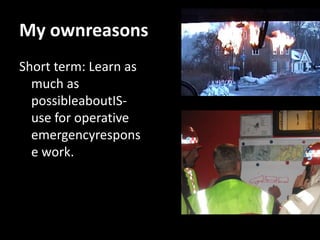
My ownreasonsShort term: Learn as much as possibleaboutIS-use for operative emergencyresponse work.
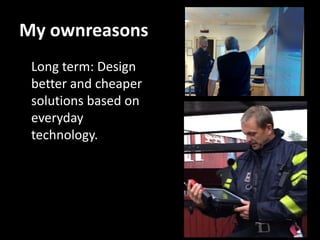
My ownreasons	Long term: Design better and cheaper solutions based on everyday technology.
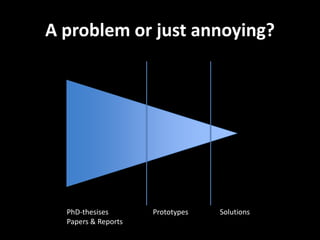
A problem or just annoying?SolutionsPhD-thesisesPapers & ReportsPrototypes
WE ARE DESIGNERSWE ARE DEALING WITH REAL WORLD DESIGN PROBLEMS
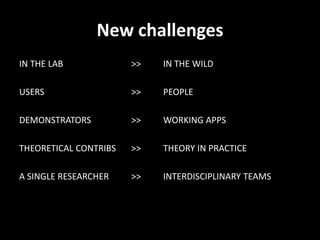
New challengesIN THE LAB 					>> 		IN THE WILDUSERS 						>> 		PEOPLEDEMONSTRATORS 			>> 		WORKING APPSTHEORETICAL CONTRIBS 	>> 		THEORY IN PRACTICEA SINGLE RESEARCHER 		>> 		INTERDISCIPLINARY TEAMS
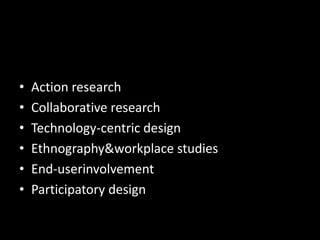
Action researchCollaborative researchTechnology-centric designEthnography & workplace studiesEnd-userinvolvementParticipatory design
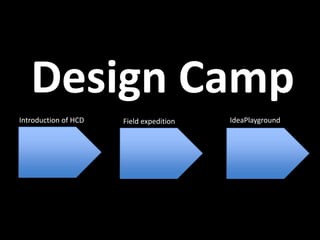
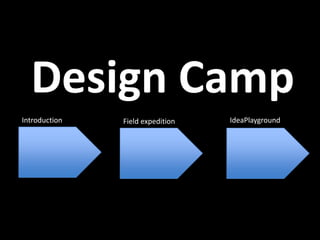
Design CampIdeaPlaygroundIntroduction of HCDField expedition
HUMAN CENTRED DESIGN FOR CRISIS RESPONSE RESEARCH
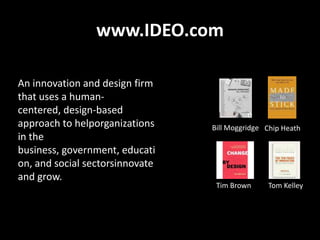
www.IDEO.com	An innovation and design firm that uses a human-centered, design-based approach to helporganizations in the business, government, education, and social sectorsinnovate and grow.Bill MoggridgeChip HeathTom KelleyTim Brown
HCD-Toolkitcreated by IDEOwww.ideo.comOpen-Source
DisclaimerTHE HCD-toolkit is NOT perfect nor complete.But, it provides INSPIRATION to learnmoreaboutusing a design perspective for your research.
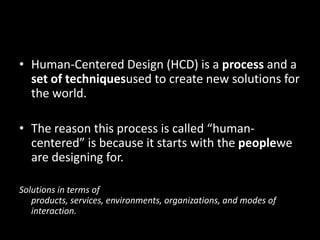
Human-Centered Design (HCD) is a process and a set of techniquesused to create new solutions for the world.The reason this process is called “human-centered” is because it starts with the peoplewe are designing for. Solutions in terms of products, services, environments, organizations, and modes of interaction.
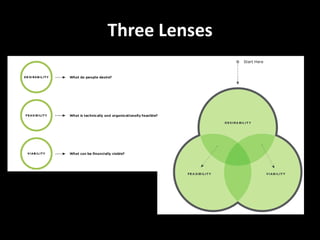
Three Lenses
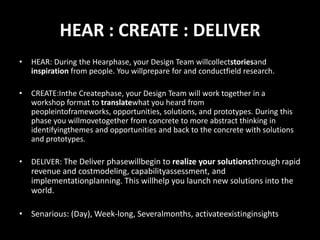
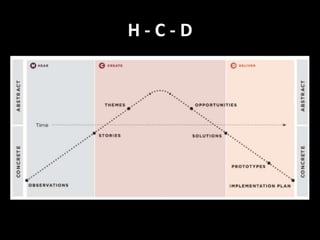
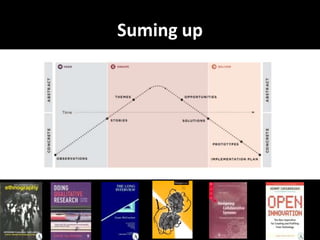
HEAR : CREATE : DELIVERHEAR: During the Hearphase, your Design Team willcollectstoriesand inspiration from people. You willprepare for and conductfield research.CREATE:Inthe Createphase, your Design Team will work together in a workshop format to translatewhat you heard from peopleintoframeworks, opportunities, solutions, and prototypes. During this phase you willmovetogether from concrete to more abstract thinking in identifyingthemes and opportunities and back to the concrete with solutions and prototypes.DELIVER: The Deliver phasewillbegin to realize your solutionsthrough rapid revenue and costmodeling, capabilityassessment, and implementationplanning. This willhelp you launch new solutions into the world.Senarious: (Day), Week-long, Severalmonths, activateexistinginsights
H - C - D
HEAR
HEAR THEORYinspireimagination and informintuition about new opportunities and ideas.Qualitativemethodscanhelpunveilpeople’s social, political, economic, and culturalopportunitiesand barriers in theirownwords.Deep understanding, not broad coverage
Hear StepsIdentify a Design ChallengeIdentify People to Speak WithChoose Research Methods (Individual and Group Interviews, In-ContextImmersion)Develop an Interview Approach (Guide, Scenario-basedquestions, Techniques)Develop Your Mindset (Beginners, Observe v. Interpret)
Identify a Design ChallengeA good Design Challenge should be:» Framed in human terms (ratherthan technology, product, or service functionality)» Broad enough to allow you to discoverthe areas of unexpectedvalue» Narrowenough to make the topicmanageable
CREATE
CREATETo move from research to real-world solutions, you will go througha process of synthesis and translation.This is the mostabstract pointof the process whereconcreteneeds of individuals are transformedintohigh-levelinsightsabout the larger population and system frameworksare created.Duringthis phase, solutions are created with only theDesirabilityfilter in mind.
CREATE THEORYSynthesistakesus from inspiration to ideas, from storiestosolutions.Brainstorming makes usthinkexpansively and withoutconstraints.Prototypingis aboutbuilding to think.
Create StepsShareStoriesIdentifyPatterns (Extract Key Insights, FindThemes, CreateFrameworks)CreateOpportunity AreasBrainstorm New SolutionsMake IdeasTangibleGather Feedback
MAKE IDEAS TANGIBLEPrototyping is aboutbuiding to think - whatever it takesto communicatethe idea. Prototypingallows you to quicklyand cheaplymake ideastangible so theycan be testedand evaluated by others - beforeyou’vehad time to fall in love with them.BUILD TO THINK : 	ROUGH, RAPID, RIGHT: ANSWERING QUESTIONS
GATHER FEEDBACK	A great way to get honest feedback is to takeseveralexecutionsoutto people. Whenthere is onlyoneconceptavailable, peoplemaybe reluctant to criticize. However, whenallowed to compare and contrast, peopletend to speakmorehonestly.
DELIVER
DeliverOncethe design team has createdmanydesirable solutions, it is time to considerhow to make thesefeasible and viable. The Deliver phasewillcatapult the topideastowardimplementation.
DELIVER THEORYDelivering solutions starts with creatinglow-investment, low-costwaysof tryingout your ideas in a real-worldcontext.Implementation is an iterative process that willlikelyrequiremanyprototypes, mini-pilotsand pilots to perfect the solution and support system.This process invites you to work in the belief that new things are possible.
Deliver StepsDevelop a Sustainable Revenue Model (CustomerValue Proposition, Revenue Sources, Stakeholder Incentives)IdentifyCapabilitiesRequired for Delivering Solutions (Distribution, Requirements v. Capabilities, Potential Partners)Plan a Pipeline of Solutions
PLAN MINI-PILOTS & ITERATIONFor each solution in your pipeline, it is important to identify simple, low-investmentnext steps to keep the ideasalive. One way to keepiteratingand learning is to plan mini-pilotsbeforelarge-scalepilots or full-scaleimplementation.For eachmini-pilot, ask threequestions:» Whatresourceswill I need to test out this idea?» What key questionsdoes this mini-pilotneed to answer?» Howwillwemeasure the success of this mini-pilot?>> MINI-PILOT PLANNING WORKSHEET >>
Suming up
Design CampIdeaPlaygroundIntroductionField expedition
Field Expedition Downtown TilburgTheme: Designing for Citizen Crisis Preparedness and Response Explorepeoplesdesire on new innovative services on crisispreparedness and response
Theme: Designing for Citizen CrisisPreparedness and Response Field Expedition: 14:00-16:00IdeaPlayground: 16:00-18:00
FIELD EXPEDITION14:00 -16:00
Make a set of interviewsObserve whatpeopledo and howplacesfunction.Train station, Shopping malls, pubs & restaurants, street shops etc.
Formulate a set of simple intreviewquestionsTry to get peoplesstories and thinking”Describe……””Based on your experience,…….”
Form design groups (3-4 people)Equip the group with a camera, Notebooks and a confidence….
IDEA PLAYGROUND16:00 – 18:00
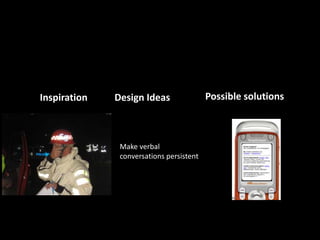
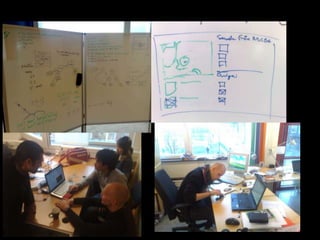
Possible solutionsInspirationDesign IdeasMake verbalconversations persistent
Identify design opportunitiesFocus on a fewinsightsMaterialize your design ideasMake visible the material from the field workProvide simple design mockupsShare your insights and ideas
Human Centered Design Talk

Human Centered Design Talk

  • 1.
    CRISIS RESPONSEDESIGN CAMPJonasLandgren (PhD)CrisisResponseLabViktoria InstituteUniversity of Gothenburg
  • 2.
  • 3.
    ObjectivesExplore the worldwith a DESIGN PERSPECTIVE.exposed to field workexposed to design worklearn from insane team workLearn to make use of the opportunities that exisisteven in condensed time frames and with a small budget.WHY ARE WE DOING RESEARCH ON ”CRISIS RESPONSE”?
  • 4.
  • 5.
    My ownreasonsShort term:Learn as much as possibleaboutIS-use for operative emergencyresponse work.
  • 6.
    My ownreasons Long term:Design better and cheaper solutions based on everyday technology.
  • 7.
    A problem orjust annoying?SolutionsPhD-thesisesPapers & ReportsPrototypes
  • 8.
    WE ARE DESIGNERSWEARE DEALING WITH REAL WORLD DESIGN PROBLEMS
  • 9.
    New challengesIN THELAB >> IN THE WILDUSERS >> PEOPLEDEMONSTRATORS >> WORKING APPSTHEORETICAL CONTRIBS >> THEORY IN PRACTICEA SINGLE RESEARCHER >> INTERDISCIPLINARY TEAMS
  • 10.
    Action researchCollaborative researchTechnology-centricdesignEthnography & workplace studiesEnd-userinvolvementParticipatory design
  • 11.
  • 12.
    HUMAN CENTRED DESIGNFOR CRISIS RESPONSE RESEARCH
  • 13.
    www.IDEO.com An innovation anddesign firm that uses a human-centered, design-based approach to helporganizations in the business, government, education, and social sectorsinnovate and grow.Bill MoggridgeChip HeathTom KelleyTim Brown
  • 14.
  • 15.
    DisclaimerTHE HCD-toolkit isNOT perfect nor complete.But, it provides INSPIRATION to learnmoreaboutusing a design perspective for your research.
  • 16.
    Human-Centered Design (HCD)is a process and a set of techniquesused to create new solutions for the world.The reason this process is called “human-centered” is because it starts with the peoplewe are designing for. Solutions in terms of products, services, environments, organizations, and modes of interaction.
  • 17.
  • 18.
    HEAR : CREATE: DELIVERHEAR: During the Hearphase, your Design Team willcollectstoriesand inspiration from people. You willprepare for and conductfield research.CREATE:Inthe Createphase, your Design Team will work together in a workshop format to translatewhat you heard from peopleintoframeworks, opportunities, solutions, and prototypes. During this phase you willmovetogether from concrete to more abstract thinking in identifyingthemes and opportunities and back to the concrete with solutions and prototypes.DELIVER: The Deliver phasewillbegin to realize your solutionsthrough rapid revenue and costmodeling, capabilityassessment, and implementationplanning. This willhelp you launch new solutions into the world.Senarious: (Day), Week-long, Severalmonths, activateexistinginsights
  • 19.
  • 20.
  • 21.
    HEAR THEORYinspireimagination andinformintuition about new opportunities and ideas.Qualitativemethodscanhelpunveilpeople’s social, political, economic, and culturalopportunitiesand barriers in theirownwords.Deep understanding, not broad coverage
  • 22.
    Hear StepsIdentify aDesign ChallengeIdentify People to Speak WithChoose Research Methods (Individual and Group Interviews, In-ContextImmersion)Develop an Interview Approach (Guide, Scenario-basedquestions, Techniques)Develop Your Mindset (Beginners, Observe v. Interpret)
  • 23.
    Identify a DesignChallengeA good Design Challenge should be:» Framed in human terms (ratherthan technology, product, or service functionality)» Broad enough to allow you to discoverthe areas of unexpectedvalue» Narrowenough to make the topicmanageable
  • 24.
  • 25.
    CREATETo move fromresearch to real-world solutions, you will go througha process of synthesis and translation.This is the mostabstract pointof the process whereconcreteneeds of individuals are transformedintohigh-levelinsightsabout the larger population and system frameworksare created.Duringthis phase, solutions are created with only theDesirabilityfilter in mind.
  • 26.
    CREATE THEORYSynthesistakesus frominspiration to ideas, from storiestosolutions.Brainstorming makes usthinkexpansively and withoutconstraints.Prototypingis aboutbuilding to think.
  • 27.
    Create StepsShareStoriesIdentifyPatterns (ExtractKey Insights, FindThemes, CreateFrameworks)CreateOpportunity AreasBrainstorm New SolutionsMake IdeasTangibleGather Feedback
  • 28.
    MAKE IDEAS TANGIBLEPrototypingis aboutbuiding to think - whatever it takesto communicatethe idea. Prototypingallows you to quicklyand cheaplymake ideastangible so theycan be testedand evaluated by others - beforeyou’vehad time to fall in love with them.BUILD TO THINK : ROUGH, RAPID, RIGHT: ANSWERING QUESTIONS
  • 29.
    GATHER FEEDBACK A greatway to get honest feedback is to takeseveralexecutionsoutto people. Whenthere is onlyoneconceptavailable, peoplemaybe reluctant to criticize. However, whenallowed to compare and contrast, peopletend to speakmorehonestly.
  • 30.
  • 31.
    DeliverOncethe design teamhas createdmanydesirable solutions, it is time to considerhow to make thesefeasible and viable. The Deliver phasewillcatapult the topideastowardimplementation.
  • 32.
    DELIVER THEORYDelivering solutionsstarts with creatinglow-investment, low-costwaysof tryingout your ideas in a real-worldcontext.Implementation is an iterative process that willlikelyrequiremanyprototypes, mini-pilotsand pilots to perfect the solution and support system.This process invites you to work in the belief that new things are possible.
  • 33.
    Deliver StepsDevelop aSustainable Revenue Model (CustomerValue Proposition, Revenue Sources, Stakeholder Incentives)IdentifyCapabilitiesRequired for Delivering Solutions (Distribution, Requirements v. Capabilities, Potential Partners)Plan a Pipeline of Solutions
  • 34.
    PLAN MINI-PILOTS &ITERATIONFor each solution in your pipeline, it is important to identify simple, low-investmentnext steps to keep the ideasalive. One way to keepiteratingand learning is to plan mini-pilotsbeforelarge-scalepilots or full-scaleimplementation.For eachmini-pilot, ask threequestions:» Whatresourceswill I need to test out this idea?» What key questionsdoes this mini-pilotneed to answer?» Howwillwemeasure the success of this mini-pilot?>> MINI-PILOT PLANNING WORKSHEET >>
  • 35.
  • 36.
  • 37.
    Field Expedition DowntownTilburgTheme: Designing for Citizen Crisis Preparedness and Response Explorepeoplesdesire on new innovative services on crisispreparedness and response
  • 38.
    Theme: Designing forCitizen CrisisPreparedness and Response Field Expedition: 14:00-16:00IdeaPlayground: 16:00-18:00
  • 39.
  • 40.
    Make a setof interviewsObserve whatpeopledo and howplacesfunction.Train station, Shopping malls, pubs & restaurants, street shops etc.
  • 41.
    Formulate a setof simple intreviewquestionsTry to get peoplesstories and thinking”Describe……””Based on your experience,…….”
  • 42.
    Form design groups(3-4 people)Equip the group with a camera, Notebooks and a confidence….
  • 43.
  • 44.
    Possible solutionsInspirationDesign IdeasMakeverbalconversations persistent
  • 45.
    Identify design opportunitiesFocuson a fewinsightsMaterialize your design ideasMake visible the material from the field workProvide simple design mockupsShare your insights and ideas