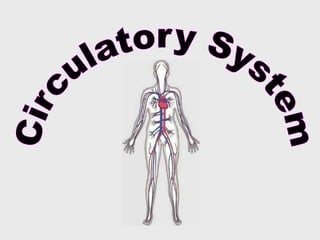
Circulatory System
What is the circulatory system?    The circulatory system carries nutrient and wastes around the body.
The Heart and blood vessels together make up theCirculatory System.
How does this system work?lungspulmonary arterypulmonary veinhead & armsaortamain veinLeft Rightliverdigestive systemkidneys legs Circulatory System
LungsBody cellsOur circulatory system is a double circulatory system. This means it has two parts parts.  the right side of the system deals with  deoxygenated blood.the left side of the system deals with  oxygenated blood.
The HeartArtery to Head and BodyArtery to LungsVein from Head and BodyVein from LungsRight AtriumLeft AtriumvalvevalveLeft VentricleRight Ventricle
	The heart beat begins when the	heart muscles  relax and blood	flows into the atria.How does the Heart work?STEP ONE
The atria then contract and	the valves open to allow blood	into the ventricles.How does the Heart work?STEP TWO
The valves close to stop bloodflowing backwards.The ventricles contractejecting blood from the heart.At the same time, the atria areRelaxing again and filling withblood.How does the Heart work?STEP THREEThe cycle then repeats.
The ARTERY-carry blood away from the heart.the elastic fibres allow the artery to stretch under pressurethick muscle and elastic fibresthe thick muscle can contract to push the blood along.
The VEINVeins carry blood towards the heart.veins have valves to stop the blood from going in the wrong direction.thin muscle and elastic fibresbody muscles surround the veins so that when they contract they squeeze the veins and push the blood along the vessel.
The CAPILLARYCapillaries link Arteries with Veinsthey exchange materials between the blood and other body cells.the wall of a capillaryis only one cell thick
SUMMARYArteries take blood ______ from the heart. The walls of an artery are made up of thick _________ walls and elastic fibres. Veins carry blood ________ the heart and also have valves. The _________ link arteries and veins, and have a one cell thick wall. awaymusculartowardscapillaries
Heart BeatMeasure in bpm, beats per minute.	 Specialised tissues produce electrical signals which flow down through the heart, causing the atria to contract, then the ventricles.
ECG - Electrocardiogram	Used for diagnosis.
Normal sinus rhythm	Between 60 and 100 bpm	Regular electrical signal that stimulates rhythmic contractions of the cardiac muscle
BradycardiaBrady=Slow<60bpm
PacemakerHelps heart keep pace if heart rhythm is too slow
TachycardiaTachy = Fast>100bpm
Atrial FibrillationErratic electrical signals prevent the atria from relaxing (filling) and contracting (ejecting)
Ventricular FibrillationErratic electrical signals prevent the ventricles from relaxing and contracting. Can be lethal in minutes! An electric shock is required to restore normal rhythm.
Defibrillator
Implantable Defibrillator	Sends an electric shock directly into the heart. 	Restores normal sinus rhythm if in ventricular tachycardia or ventricular fibrillation.

Circulatory system 2010

  • 1.
  • 2.
    What is thecirculatory system? The circulatory system carries nutrient and wastes around the body.
  • 3.
    The Heart andblood vessels together make up theCirculatory System.
  • 4.
    How does thissystem work?lungspulmonary arterypulmonary veinhead & armsaortamain veinLeft Rightliverdigestive systemkidneys legs Circulatory System
  • 5.
    LungsBody cellsOur circulatorysystem is a double circulatory system. This means it has two parts parts. the right side of the system deals with deoxygenated blood.the left side of the system deals with oxygenated blood.
  • 6.
    The HeartArtery toHead and BodyArtery to LungsVein from Head and BodyVein from LungsRight AtriumLeft AtriumvalvevalveLeft VentricleRight Ventricle
  • 7.
    The heart beatbegins when the heart muscles relax and blood flows into the atria.How does the Heart work?STEP ONE
  • 8.
    The atria thencontract and the valves open to allow blood into the ventricles.How does the Heart work?STEP TWO
  • 9.
    The valves closeto stop bloodflowing backwards.The ventricles contractejecting blood from the heart.At the same time, the atria areRelaxing again and filling withblood.How does the Heart work?STEP THREEThe cycle then repeats.
  • 10.
    The ARTERY-carry bloodaway from the heart.the elastic fibres allow the artery to stretch under pressurethick muscle and elastic fibresthe thick muscle can contract to push the blood along.
  • 11.
    The VEINVeins carryblood towards the heart.veins have valves to stop the blood from going in the wrong direction.thin muscle and elastic fibresbody muscles surround the veins so that when they contract they squeeze the veins and push the blood along the vessel.
  • 12.
    The CAPILLARYCapillaries linkArteries with Veinsthey exchange materials between the blood and other body cells.the wall of a capillaryis only one cell thick
  • 13.
    SUMMARYArteries take blood______ from the heart. The walls of an artery are made up of thick _________ walls and elastic fibres. Veins carry blood ________ the heart and also have valves. The _________ link arteries and veins, and have a one cell thick wall. awaymusculartowardscapillaries
  • 14.
    Heart BeatMeasure inbpm, beats per minute. Specialised tissues produce electrical signals which flow down through the heart, causing the atria to contract, then the ventricles.
  • 15.
  • 16.
    Normal sinus rhythm Between60 and 100 bpm Regular electrical signal that stimulates rhythmic contractions of the cardiac muscle
  • 17.
  • 18.
    PacemakerHelps heart keeppace if heart rhythm is too slow
  • 19.
  • 20.
    Atrial FibrillationErratic electricalsignals prevent the atria from relaxing (filling) and contracting (ejecting)
  • 21.
    Ventricular FibrillationErratic electricalsignals prevent the ventricles from relaxing and contracting. Can be lethal in minutes! An electric shock is required to restore normal rhythm.
  • 22.
  • 23.
    Implantable Defibrillator Sends anelectric shock directly into the heart. Restores normal sinus rhythm if in ventricular tachycardia or ventricular fibrillation.