Circulatory
   System

     Reported by:
Christian Mike Tangonan
   Jian Lyn Saavedra
 Angelica Mae Cadungog
Josh Christian Protacio
Waureen Greece Naranja
Circulatory System
- is also known as the body’s transport system.

- regulates the flow of nutritive fluids and
materials, wastes substances and water in the
bodies of living organisms.

- it’s main functions are to deliver food and oxygen
to the cells and to pick up the cells’ waste materials
and carbon dioxide.

-consists of the blood, the blood vessels and the
heart.
Types of Circulatory
               System
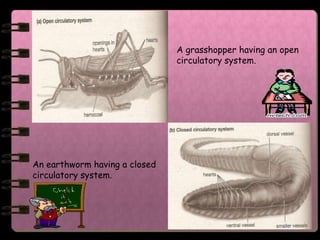
a. Open Circulatory System

  - are present in many invertebrates including antropods
  and mollusks.

  - an animal with open circulatory system has one or more
  hearts, a network of blood vessels, a large space within
  the body called a hemocoel.
Types of Circulatory
                System
b. Closed Circulatory System

   - are present in some invertebrates including
   earthworm and very active mollusks (such as squids
   and octopuses) .
   - are also a characteristic of all
   vertebrate, including human.
   - in this condition, blood is confined in the heart and
   a continuous series of blood vessels.
A grasshopper having an open
                               circulatory system.


An earthworm having a closed
circulatory system.
The
Human
Blood
Blood

- is not red in reality. It is a clear, pale yellow liquid,
almost like water.

- circulates through the entire body, feeding supplying
and even defending the cells or tissues that make up the
body.
Components of the
              Blood
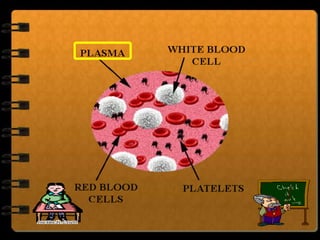
a. Plasma

    - comprises 50-60 % of the blood.
    - the serum, which is the clear yellowish liquid part of
    the plasma gives the color of blood.

    - it transports bloods, particularly erythrocytes.

    - carries food to the cells and picks up waste material .
Components of the
                 Blood
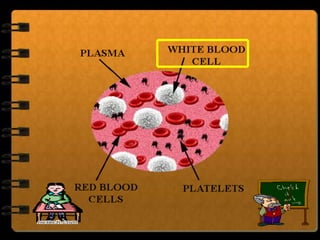
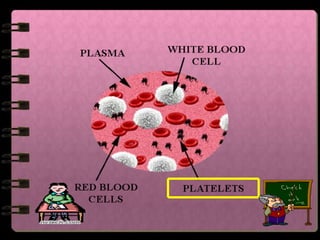
b. Blood Cells

    - are solid components of the blood.
    - makes up the:

       • Red Blood Cells or Erythrocytes

       • White Blood Cells or Leukocytes

       • Platelets or Thrombocytes
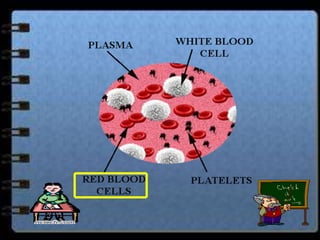
Erythrocytes

- a very small, round disc-shaped cells which are thinned
out in the center.

- are the most abundant cells in the blood.


- have a pigment called hemoglobin, which contains iron
and carries oxygen. Also gives red color to erythrocytes.
Leukocytes

- protects the body against foreign invading substances
particularly bacteria.

-classified into two:

      • Granulocyte


      • Agranulocyte
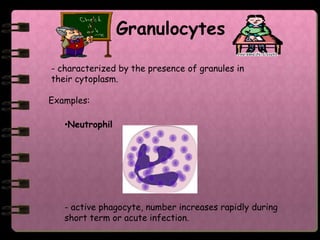
Granulocytes

- characterized by the presence of granules in
their cytoplasm.

Examples:

   •Neutrophil


   - active phagocyte, number increases rapidly during
   short term or acute infection.
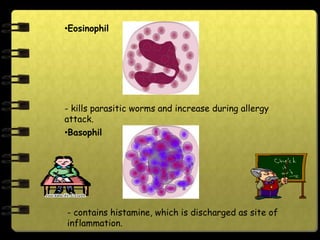
•Eosinophil


- kills parasitic worms and increase during allergy
attack.
•Basophil


- contains histamine, which is discharged as site of
inflammation.
Agranulocytes

- characterized by the absence of granules in
their cytoplasm.

Examples:

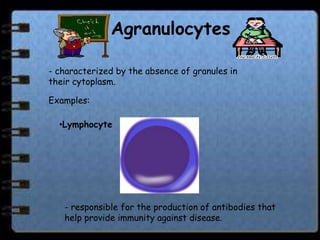
  •Lymphocyte


   - responsible for the production of antibodies that
   help provide immunity against disease.
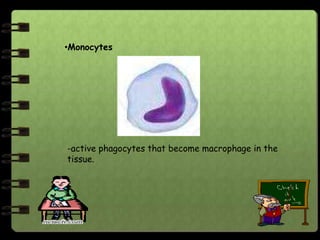
•Monocytes


-active phagocytes that become macrophage in the
tissue.
Thrombocytes

- smallest blood vessels for blood clotting.

 - contain and release a substance called
thromboplastin, a type of protein needed in blood
clotting.
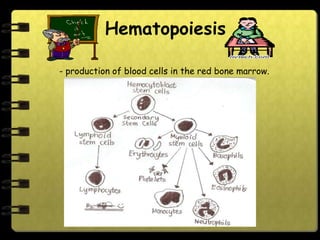
Hematopoiesis

- production of blood cells in the red bone marrow.
Blood
Vessels
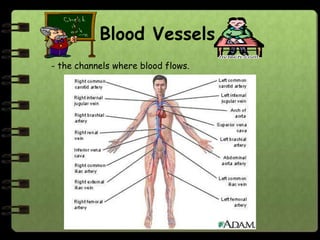
Blood Vessels
- the channels where blood flows.
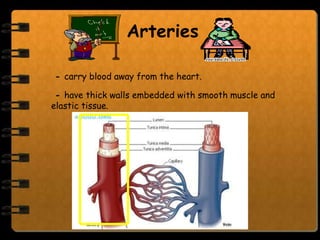
Arteries

- carry blood away from the heart.

 - have thick walls embedded with smooth muscle and
elastic tissue.
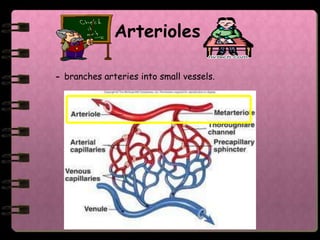
Arterioles

- branches arteries into small vessels.
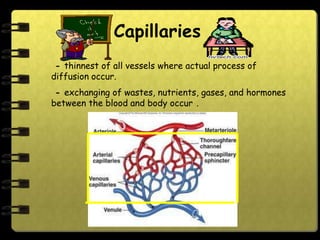
Capillaries
 - thinnest of all vessels where actual process of
diffusion occur.
 - exchanging of wastes, nutrients, gases, and hormones
between the blood and body occur .
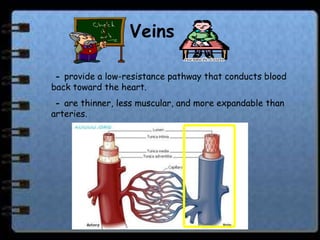
Veins

 - provide a low-resistance pathway that conducts blood
back toward the heart.
 - are thinner, less muscular, and more expandable than
arteries.
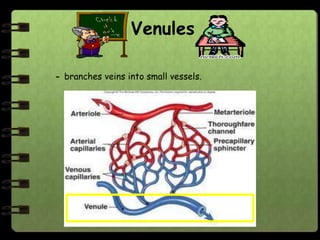
Venules

- branches veins into small vessels.
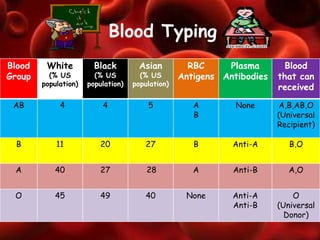
Blood Typing
Blood    White          Black         Asian         RBC     Plasma        Blood
Group     (% US         (% US         (% US       Antigens Antibodies   that can
        population)   population)   population)
                                                                        received

 AB          4            4             5            A        None      A,B,AB,O
                                                     B                  (Universal
                                                                        Recipient)

 B          11            20            27           B       Anti-A        B,O


 A          40            27            28           A       Anti-B        A,O


 O          45            49            40         None      Anti-A         O
                                                             Anti-B     (Universal
                                                                          Donor)
The
Human
Heart
Heart

- a muscular organ responsible for pumping blood within
the circulatory system throughout the body.

- a muscular pump located between the lungs and above
the diaphragm.

- can pump about 10 000 litres of blood daily.

- works and contracts about 70 times a minute.
Parts of the Heart
          and its Functions
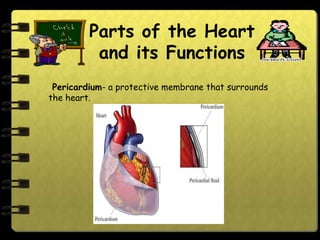
 Pericardium- a protective membrane that surrounds
the heart.
Parts of the Heart
           and its Functions
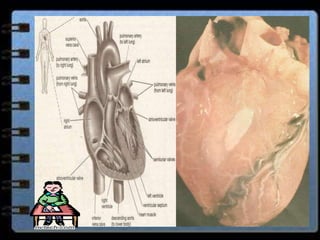
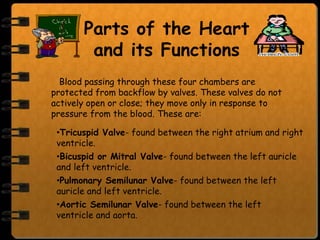
There are four chambers found inside the heart namely:

 •Right Atrium- collects deoxygenated blood from the
 body.

 •Right Ventricle- pumps deoxygenated blood out of the
 heart and to the lungs for oxygenation.
Parts of the Heart
           and its Functions

•Left Atrium- receives oxygenated blood from the lungs.

•Left Ventricle- more muscular than the right ventricle
because of the amount of the blood that is to be pushed
out of the heart.
Parts of the Heart
        and its Functions
  Blood passing through these four chambers are
protected from backflow by valves. These valves do not
actively open or close; they move only in response to
pressure from the blood. These are:

 •Tricuspid Valve- found between the right atrium and right
 ventricle.
 •Bicuspid or Mitral Valve- found between the left auricle
 and left ventricle.
 •Pulmonary Semilunar Valve- found between the left
 auricle and left ventricle.
 •Aortic Semilunar Valve- found between the left
 ventricle and aorta.
Parts of the Heart
         and its Functions
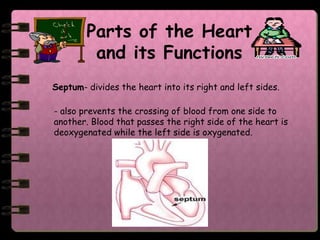
Septum- divides the heart into its right and left sides.

- also prevents the crossing of blood from one side to
another. Blood that passes the right side of the heart is
deoxygenated while the left side is oxygenated.
Parts of the Heart
         and its Functions
 The pumping tubes or vessels to and from the heart
consist of large arteries and veins. These are:

 •Superior Vena Cava- located at the upper part of the
 heart and brings blood from head and arms.
 •Inferior Vena Cava- located at the lower part of the
 heart and brings blood from the lower parts of the
 body.
 •Pulmonary Artery- carries deoxygenated blood from
 the right ventricle of the heart to the lungs.
 •Pulmonary Vein- brings back oxygenated blood from the
 lungs to the left atrium of the heart.
 •Aorta- the largest artery in the heart.
The
Cardiac
 Cycle
Cardiac Cycle

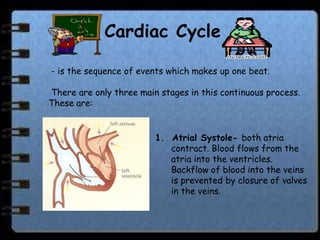
- is the sequence of events which makes up one beat.

There are only three main stages in this continuous process.
These are:


                         1. Atrial Systole- both atria
                            contract. Blood flows from the
                            atria into the ventricles.
                            Backflow of blood into the veins
                            is prevented by closure of valves
                            in the veins.
Cardiac Cycle


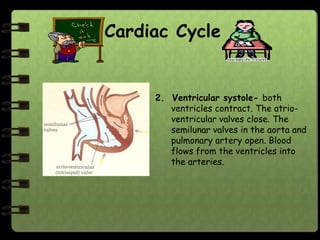
     2. Ventricular systole- both
        ventricles contract. The atrio-
        ventricular valves close. The
        semilunar valves in the aorta and
        pulmonary artery open. Blood
        flows from the ventricles into
        the arteries.
Cardiac Cycle


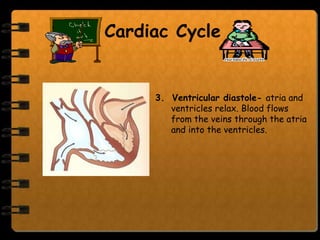
     3. Ventricular diastole- atria and
        ventricles relax. Blood flows
        from the veins through the atria
        and into the ventricles.
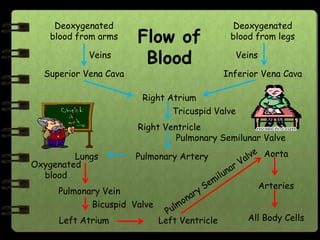
Blood
Circulation
Deoxygenated                               Deoxygenated
   blood from arms     Flow of                 blood from legs

            Veins
                        Blood                   Veins

  Superior Vena Cava                          Inferior Vena Cava

                        Right Atrium
                               Tricuspid Valve
                       Right Ventricle
                                Pulmonary Semilunar Valve

         Lungs         Pulmonary Artery                  Aorta
Oxygenated
  blood
                                                        Arteries
     Pulmonary Vein
            Bicuspid Valve
     Left Atrium             Left Ventricle        All Body Cells
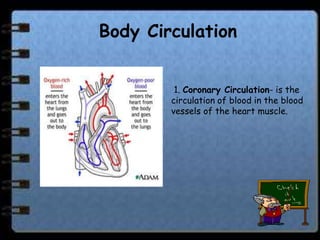
Body Circulation


         1. Coronary Circulation- is the
        circulation of blood in the blood
        vessels of the heart muscle.
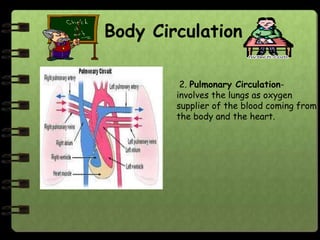
Body Circulation

         2. Pulmonary Circulation-
        involves the lungs as oxygen
        supplier of the blood coming from
        the body and the heart.
Body Circulation

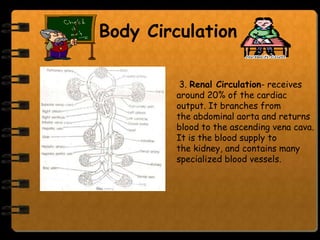
         3. Renal Circulation- receives
        around 20% of the cardiac
        output. It branches from
        the abdominal aorta and returns
        blood to the ascending vena cava.
        It is the blood supply to
        the kidney, and contains many
        specialized blood vessels.
Body Circulation

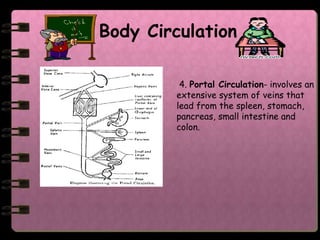
         4. Portal Circulation- involves an
        extensive system of veins that
        lead from the spleen, stomach,
        pancreas, small intestine and
        colon.
Body Circulation

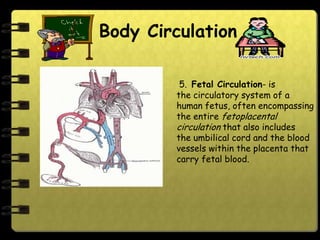
         5. Fetal Circulation- is
        the circulatory system of a
        human fetus, often encompassing
        the entire fetoplacental
        circulation that also includes
        the umbilical cord and the blood
        vessels within the placenta that
        carry fetal blood.
Body Circulation

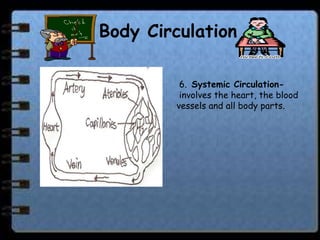
         6. Systemic Circulation-
         involves the heart, the blood
        vessels and all body parts.
Some Common
 Diseases of
 Circulatory
   System
Some Common
              Diseases of
          Circulatory System
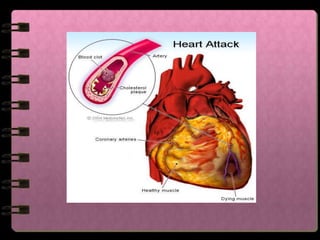
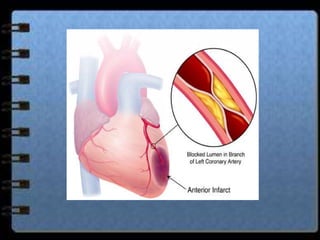
Coronary Heart Disease- is the number one disease that
causes death and invalidism. This is due to too much
cholesterol in the blood and uncontrolled high blood
pressure. It occurs when the supply of blood to parts of the
heart is cut off. The blood cannot reach the heart. The
arteries that carry blood to the heart are clogged.
 Treatment/ Prevention:
 •Eat a healthy diet.
 •Control your cholesterol and blood pressure
 •Manage stress and get help for depression.
Some Common
              Diseases of
          Circulatory System
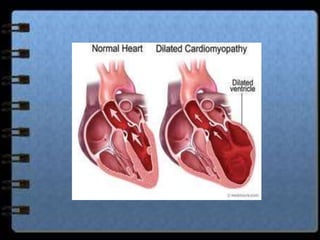
Cardiomyopathy- is caused due to weakening of the heart
muscles or myocardium. In the early stages, the ventricular
muscles or muscles of the lower heart chamber are affected.
If left untreated, it spreads to the upper heart muscles.
Treatment/ Prevention:
•Quit smoking
•Eat healthfully—a healthy diet low in cholesterol
•Seek out regular exercise
•Maintaining a healthy weight
•Limiting alcohol consumption—heavy consumption should be
avoided
Some Common
                Diseases of
            Circulatory System
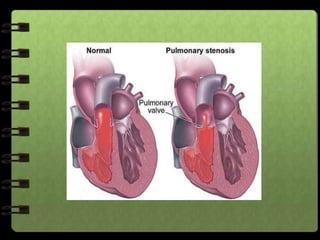
 Congenital heart defect - is present at birth and may be
 mild or severe. The fetus may show incomplete and/or
 abnormal development of the heart organ, causing symptoms
 like heart murmur in infants.
Treatment/ Prevention:
•Avoid alcohol and other drugs during pregnancy.
•Doctors should be made aware that a woman is pregnant before
prescribing any medications for her.
•A blood test should be done early in the pregnancy to see if the
woman is immune to rubella. If the mother is not immune, she must
avoid any possible exposure to rubella and should be immunized
immediately following delivery.
Some Common
               Diseases of
           Circulatory System
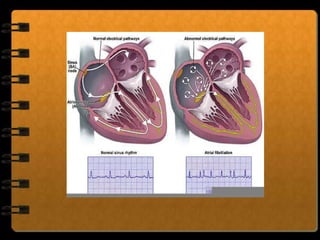
Arrhythmia- is irregular heart rhythm, in which the heart
beats abnormally at a slower or faster rate. In most cases,
arrhythmia is congenital and results from a heart defect.
Based on the severity of arrhythmia, medication, surgical
procedure and implanting pacemakers are followed in order to
regulate heart rhythm.
 Treatment/ Prevention:
 •Making healthy lifestyle choices.
 •Maintaining a healthy weight.
 •Stopping smoking and avoiding secondhand smoke.
 •Avoiding unnecessary stress, such as anger, anxiety or fear, and
 finding ways to manage or control stressful situations that
 cannot be avoided.
Some Common
                Diseases of
            Circulatory System
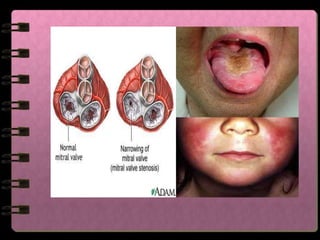
Rheumatic Fever- is an inflammatory disease caused due to
Group A streptococcal infection. It is so called owing to its
similarity to rheumatism which involves medical problems
affecting the connective tissues and joints. Typically, rheumatic
fever develops two to three weeks after being afflicted by
streptococcal infections such as strep throat or scarlet fever.

 Treatment/ Prevention:
 •Use penicillin to combat existing infections
 •Order bed rest until the acute stages of the
 disease have passed.
Some Common
               Diseases of
           Circulatory System
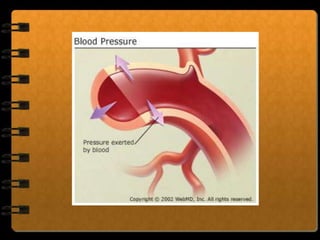
Hypertension- the heart is having to work harder than it should
to pump the blood around the body. It is also a condition in
which the blood pressure in the arteries is chronically
elevated. Hypertension can be caused by several factors like
over-eating, worry, anxiety, and tension. The common symptoms
are headache and dizziness.

 Treatment/ Prevention:
 •Rest, both mental and physical,
 • Eat low sodium diet
 • weight reduction.
Some Common
               Diseases of
           Circulatory System
Hypotension- is a disease caused by poor diet or by some
chronic disease. Occasionally, Hypotension is accompanied by a
feeling of weakness, headache, shortness of breath, dizziness,
inability to concentrate, and digestive disturbances.
Some Common
              Diseases of
          Circulatory System
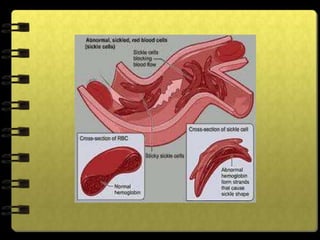
Anemia- is mainly due to iron deficiency. This is a disease
or a condition wherein a person lacks hemoglobin in the
blood. In iron-deficiency anemia, the hemoglobin count is
low. This may be caused by a diet that does not contain
enough iron. Certain foods like raisins and liver are rich in
iron. These foods may be included in the diet to prevent
this type of anemia.

Treatment/ Prevention:
•Rest, whole blood, supplemental iron,
and replacement of dietary
deficiencies are the recommended treatment
measures.
Some Common
             Diseases of
         Circulatory System
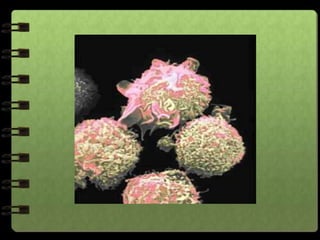
Leukemia- is also known as cancer of the blood. This is
caused by an abnormal increase in the leukocytes (WBC) of
the blood. In leukemia, there is an uncontrolled production
of leukocytes either in red bone marrow or in the lymphoid
tissue. The WBCs count is high but non-functional. The
person with leukemia has a low resistance to infections.

Treatment/ Prevention:
•Evacuate the patient to a medical facility
Some Common
             Diseases of
         Circulatory System
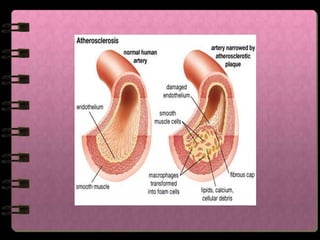
Atherosclerosis- is a hardening of the arteries caused
by the build-up of a fatty substance (cholesterol) on
their walls. Such build-up is called plaque. As they
develop, they tend to protrude into the blood vessel and
interfere with the flow of blood.
Treatment/ Prevention:
•Eat a healthy diet.
•Control your cholesterol and blood pressure
•Manage stress and get help for depression.
Rest! Nitroglycerine is thedrug of choice.Amyl nitrite is sometimesused.


                                          Some Common
                                           Diseases of
                                       Circulatory System
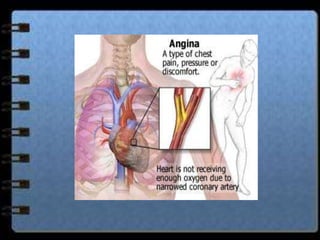
                    Angina- is pain or discomfort in the chest area, which is
                    caused due to blockage in the blood vessels leading to the
                    heart. The symptoms of angina are observed when there is
                    insufficient supply of oxygen and blood to the heart
                    muscles.
                       Treatment/ Prevention:
                       •Rest
                       •Nitroglycerine is the drug of choice.
                       •Amyl nitrite is some times used.
Some Simple
   ways of
 caring our
 Circulatory
   System
Some Simple ways
             of caring our
          Circulatory System
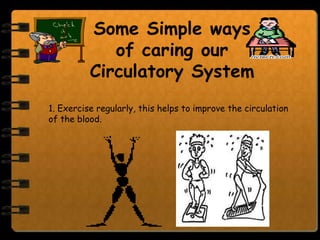
1. Exercise regularly, this helps to improve the circulation
of the blood.
Simple ways of
               caring our
          Circulatory System
2. Eat a well balanced diet.
Simple ways of
              caring our
         Circulatory System
3. Avoid eating too much saturated fat. Use beneficial
fats and oils.
Simple ways of
              caring our
         Circulatory System
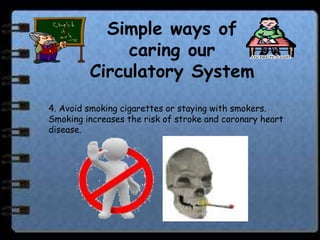
4. Avoid smoking cigarettes or staying with smokers.
Smoking increases the risk of stroke and coronary heart
disease.
Simple ways of
               caring our
          Circulatory System
5. Try to reduce stress.
Simple ways of
               caring our
          Circulatory System
6. And the important one is to have a positive outlook in
life.

Circulatory system

  • 1.
    Circulatory System Reported by: Christian Mike Tangonan Jian Lyn Saavedra Angelica Mae Cadungog Josh Christian Protacio Waureen Greece Naranja
  • 2.
    Circulatory System - isalso known as the body’s transport system. - regulates the flow of nutritive fluids and materials, wastes substances and water in the bodies of living organisms. - it’s main functions are to deliver food and oxygen to the cells and to pick up the cells’ waste materials and carbon dioxide. -consists of the blood, the blood vessels and the heart.
  • 3.
    Types of Circulatory System a. Open Circulatory System - are present in many invertebrates including antropods and mollusks. - an animal with open circulatory system has one or more hearts, a network of blood vessels, a large space within the body called a hemocoel.
  • 4.
    Types of Circulatory System b. Closed Circulatory System - are present in some invertebrates including earthworm and very active mollusks (such as squids and octopuses) . - are also a characteristic of all vertebrate, including human. - in this condition, blood is confined in the heart and a continuous series of blood vessels.
  • 5.
    A grasshopper havingan open circulatory system. An earthworm having a closed circulatory system.
  • 6.
  • 7.
    Blood - is notred in reality. It is a clear, pale yellow liquid, almost like water. - circulates through the entire body, feeding supplying and even defending the cells or tissues that make up the body.
  • 8.
    Components of the Blood a. Plasma - comprises 50-60 % of the blood. - the serum, which is the clear yellowish liquid part of the plasma gives the color of blood. - it transports bloods, particularly erythrocytes. - carries food to the cells and picks up waste material .
  • 10.
    Components of the Blood b. Blood Cells - are solid components of the blood. - makes up the: • Red Blood Cells or Erythrocytes • White Blood Cells or Leukocytes • Platelets or Thrombocytes
  • 11.
    Erythrocytes - a verysmall, round disc-shaped cells which are thinned out in the center. - are the most abundant cells in the blood. - have a pigment called hemoglobin, which contains iron and carries oxygen. Also gives red color to erythrocytes.
  • 13.
    Leukocytes - protects thebody against foreign invading substances particularly bacteria. -classified into two: • Granulocyte • Agranulocyte
  • 15.
    Granulocytes - characterized bythe presence of granules in their cytoplasm. Examples: •Neutrophil - active phagocyte, number increases rapidly during short term or acute infection.
  • 16.
    •Eosinophil - kills parasiticworms and increase during allergy attack. •Basophil - contains histamine, which is discharged as site of inflammation.
  • 17.
    Agranulocytes - characterized bythe absence of granules in their cytoplasm. Examples: •Lymphocyte - responsible for the production of antibodies that help provide immunity against disease.
  • 18.
    •Monocytes -active phagocytes thatbecome macrophage in the tissue.
  • 19.
    Thrombocytes - smallest bloodvessels for blood clotting. - contain and release a substance called thromboplastin, a type of protein needed in blood clotting.
  • 21.
    Hematopoiesis - production ofblood cells in the red bone marrow.
  • 22.
  • 23.
    Blood Vessels - thechannels where blood flows.
  • 24.
    Arteries - carry bloodaway from the heart. - have thick walls embedded with smooth muscle and elastic tissue.
  • 25.
    Arterioles - branches arteriesinto small vessels.
  • 26.
    Capillaries - thinnestof all vessels where actual process of diffusion occur. - exchanging of wastes, nutrients, gases, and hormones between the blood and body occur .
  • 27.
    Veins - providea low-resistance pathway that conducts blood back toward the heart. - are thinner, less muscular, and more expandable than arteries.
  • 28.
    Venules - branches veinsinto small vessels.
  • 29.
    Blood Typing Blood White Black Asian RBC Plasma Blood Group (% US (% US (% US Antigens Antibodies that can population) population) population) received AB 4 4 5 A None A,B,AB,O B (Universal Recipient) B 11 20 27 B Anti-A B,O A 40 27 28 A Anti-B A,O O 45 49 40 None Anti-A O Anti-B (Universal Donor)
  • 30.
  • 31.
    Heart - a muscularorgan responsible for pumping blood within the circulatory system throughout the body. - a muscular pump located between the lungs and above the diaphragm. - can pump about 10 000 litres of blood daily. - works and contracts about 70 times a minute.
  • 33.
    Parts of theHeart and its Functions Pericardium- a protective membrane that surrounds the heart.
  • 34.
    Parts of theHeart and its Functions There are four chambers found inside the heart namely: •Right Atrium- collects deoxygenated blood from the body. •Right Ventricle- pumps deoxygenated blood out of the heart and to the lungs for oxygenation.
  • 35.
    Parts of theHeart and its Functions •Left Atrium- receives oxygenated blood from the lungs. •Left Ventricle- more muscular than the right ventricle because of the amount of the blood that is to be pushed out of the heart.
  • 36.
    Parts of theHeart and its Functions Blood passing through these four chambers are protected from backflow by valves. These valves do not actively open or close; they move only in response to pressure from the blood. These are: •Tricuspid Valve- found between the right atrium and right ventricle. •Bicuspid or Mitral Valve- found between the left auricle and left ventricle. •Pulmonary Semilunar Valve- found between the left auricle and left ventricle. •Aortic Semilunar Valve- found between the left ventricle and aorta.
  • 37.
    Parts of theHeart and its Functions Septum- divides the heart into its right and left sides. - also prevents the crossing of blood from one side to another. Blood that passes the right side of the heart is deoxygenated while the left side is oxygenated.
  • 38.
    Parts of theHeart and its Functions The pumping tubes or vessels to and from the heart consist of large arteries and veins. These are: •Superior Vena Cava- located at the upper part of the heart and brings blood from head and arms. •Inferior Vena Cava- located at the lower part of the heart and brings blood from the lower parts of the body. •Pulmonary Artery- carries deoxygenated blood from the right ventricle of the heart to the lungs. •Pulmonary Vein- brings back oxygenated blood from the lungs to the left atrium of the heart. •Aorta- the largest artery in the heart.
  • 39.
  • 40.
    Cardiac Cycle - isthe sequence of events which makes up one beat. There are only three main stages in this continuous process. These are: 1. Atrial Systole- both atria contract. Blood flows from the atria into the ventricles. Backflow of blood into the veins is prevented by closure of valves in the veins.
  • 41.
    Cardiac Cycle 2. Ventricular systole- both ventricles contract. The atrio- ventricular valves close. The semilunar valves in the aorta and pulmonary artery open. Blood flows from the ventricles into the arteries.
  • 42.
    Cardiac Cycle 3. Ventricular diastole- atria and ventricles relax. Blood flows from the veins through the atria and into the ventricles.
  • 43.
  • 44.
    Deoxygenated Deoxygenated blood from arms Flow of blood from legs Veins Blood Veins Superior Vena Cava Inferior Vena Cava Right Atrium Tricuspid Valve Right Ventricle Pulmonary Semilunar Valve Lungs Pulmonary Artery Aorta Oxygenated blood Arteries Pulmonary Vein Bicuspid Valve Left Atrium Left Ventricle All Body Cells
  • 45.
    Body Circulation 1. Coronary Circulation- is the circulation of blood in the blood vessels of the heart muscle.
  • 46.
    Body Circulation 2. Pulmonary Circulation- involves the lungs as oxygen supplier of the blood coming from the body and the heart.
  • 47.
    Body Circulation 3. Renal Circulation- receives around 20% of the cardiac output. It branches from the abdominal aorta and returns blood to the ascending vena cava. It is the blood supply to the kidney, and contains many specialized blood vessels.
  • 48.
    Body Circulation 4. Portal Circulation- involves an extensive system of veins that lead from the spleen, stomach, pancreas, small intestine and colon.
  • 49.
    Body Circulation 5. Fetal Circulation- is the circulatory system of a human fetus, often encompassing the entire fetoplacental circulation that also includes the umbilical cord and the blood vessels within the placenta that carry fetal blood.
  • 50.
    Body Circulation 6. Systemic Circulation- involves the heart, the blood vessels and all body parts.
  • 51.
    Some Common Diseasesof Circulatory System
  • 52.
    Some Common Diseases of Circulatory System Coronary Heart Disease- is the number one disease that causes death and invalidism. This is due to too much cholesterol in the blood and uncontrolled high blood pressure. It occurs when the supply of blood to parts of the heart is cut off. The blood cannot reach the heart. The arteries that carry blood to the heart are clogged. Treatment/ Prevention: •Eat a healthy diet. •Control your cholesterol and blood pressure •Manage stress and get help for depression.
  • 54.
    Some Common Diseases of Circulatory System Cardiomyopathy- is caused due to weakening of the heart muscles or myocardium. In the early stages, the ventricular muscles or muscles of the lower heart chamber are affected. If left untreated, it spreads to the upper heart muscles. Treatment/ Prevention: •Quit smoking •Eat healthfully—a healthy diet low in cholesterol •Seek out regular exercise •Maintaining a healthy weight •Limiting alcohol consumption—heavy consumption should be avoided
  • 56.
    Some Common Diseases of Circulatory System Congenital heart defect - is present at birth and may be mild or severe. The fetus may show incomplete and/or abnormal development of the heart organ, causing symptoms like heart murmur in infants. Treatment/ Prevention: •Avoid alcohol and other drugs during pregnancy. •Doctors should be made aware that a woman is pregnant before prescribing any medications for her. •A blood test should be done early in the pregnancy to see if the woman is immune to rubella. If the mother is not immune, she must avoid any possible exposure to rubella and should be immunized immediately following delivery.
  • 58.
    Some Common Diseases of Circulatory System Arrhythmia- is irregular heart rhythm, in which the heart beats abnormally at a slower or faster rate. In most cases, arrhythmia is congenital and results from a heart defect. Based on the severity of arrhythmia, medication, surgical procedure and implanting pacemakers are followed in order to regulate heart rhythm. Treatment/ Prevention: •Making healthy lifestyle choices. •Maintaining a healthy weight. •Stopping smoking and avoiding secondhand smoke. •Avoiding unnecessary stress, such as anger, anxiety or fear, and finding ways to manage or control stressful situations that cannot be avoided.
  • 60.
    Some Common Diseases of Circulatory System Rheumatic Fever- is an inflammatory disease caused due to Group A streptococcal infection. It is so called owing to its similarity to rheumatism which involves medical problems affecting the connective tissues and joints. Typically, rheumatic fever develops two to three weeks after being afflicted by streptococcal infections such as strep throat or scarlet fever. Treatment/ Prevention: •Use penicillin to combat existing infections •Order bed rest until the acute stages of the disease have passed.
  • 62.
    Some Common Diseases of Circulatory System Hypertension- the heart is having to work harder than it should to pump the blood around the body. It is also a condition in which the blood pressure in the arteries is chronically elevated. Hypertension can be caused by several factors like over-eating, worry, anxiety, and tension. The common symptoms are headache and dizziness. Treatment/ Prevention: •Rest, both mental and physical, • Eat low sodium diet • weight reduction.
  • 64.
    Some Common Diseases of Circulatory System Hypotension- is a disease caused by poor diet or by some chronic disease. Occasionally, Hypotension is accompanied by a feeling of weakness, headache, shortness of breath, dizziness, inability to concentrate, and digestive disturbances.
  • 66.
    Some Common Diseases of Circulatory System Anemia- is mainly due to iron deficiency. This is a disease or a condition wherein a person lacks hemoglobin in the blood. In iron-deficiency anemia, the hemoglobin count is low. This may be caused by a diet that does not contain enough iron. Certain foods like raisins and liver are rich in iron. These foods may be included in the diet to prevent this type of anemia. Treatment/ Prevention: •Rest, whole blood, supplemental iron, and replacement of dietary deficiencies are the recommended treatment measures.
  • 68.
    Some Common Diseases of Circulatory System Leukemia- is also known as cancer of the blood. This is caused by an abnormal increase in the leukocytes (WBC) of the blood. In leukemia, there is an uncontrolled production of leukocytes either in red bone marrow or in the lymphoid tissue. The WBCs count is high but non-functional. The person with leukemia has a low resistance to infections. Treatment/ Prevention: •Evacuate the patient to a medical facility
  • 70.
    Some Common Diseases of Circulatory System Atherosclerosis- is a hardening of the arteries caused by the build-up of a fatty substance (cholesterol) on their walls. Such build-up is called plaque. As they develop, they tend to protrude into the blood vessel and interfere with the flow of blood. Treatment/ Prevention: •Eat a healthy diet. •Control your cholesterol and blood pressure •Manage stress and get help for depression.
  • 72.
    Rest! Nitroglycerine isthedrug of choice.Amyl nitrite is sometimesused. Some Common Diseases of Circulatory System Angina- is pain or discomfort in the chest area, which is caused due to blockage in the blood vessels leading to the heart. The symptoms of angina are observed when there is insufficient supply of oxygen and blood to the heart muscles. Treatment/ Prevention: •Rest •Nitroglycerine is the drug of choice. •Amyl nitrite is some times used.
  • 74.
    Some Simple ways of caring our Circulatory System
  • 75.
    Some Simple ways of caring our Circulatory System 1. Exercise regularly, this helps to improve the circulation of the blood.
  • 76.
    Simple ways of caring our Circulatory System 2. Eat a well balanced diet.
  • 77.
    Simple ways of caring our Circulatory System 3. Avoid eating too much saturated fat. Use beneficial fats and oils.
  • 78.
    Simple ways of caring our Circulatory System 4. Avoid smoking cigarettes or staying with smokers. Smoking increases the risk of stroke and coronary heart disease.
  • 79.
    Simple ways of caring our Circulatory System 5. Try to reduce stress.
  • 80.
    Simple ways of caring our Circulatory System 6. And the important one is to have a positive outlook in life.