CIPROFLOXACIN
“Success In Life Is A Result Of Decision. Failure In
Life Is A Result Of Decision”
Group: WinnerzKlub Inc.
Year: 2019
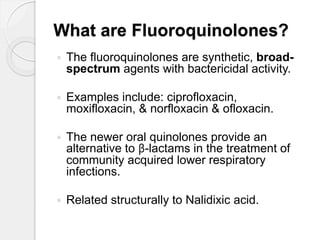
What are Fluoroquinolones?
 The fluoroquinolones are synthetic, broad-
spectrum agents with bactericidal activity.
 Examples include: ciprofloxacin,
moxifloxacin, & norfloxacin & ofloxacin.
 The newer oral quinolones provide an
alternative to β-lactams in the treatment of
community acquired lower respiratory
infections.
 Related structurally to Nalidixic acid.
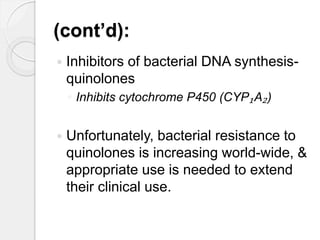
(cont’d):
 Inhibitors of bacterial DNA synthesis-
quinolones
◦ Inhibits cytochrome P450 (CYP₁A₂)
 Unfortunately, bacterial resistance to
quinolones is increasing world-wide, &
appropriate use is needed to extend
their clinical use.
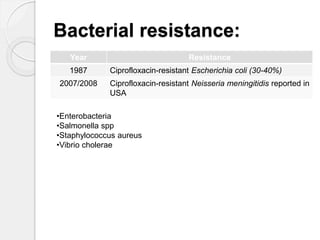
Bacterial resistance:
Year Resistance
1987 Ciprofloxacin-resistant Escherichia coli (30-40%)
2007/2008 Ciprofloxacin-resistant Neisseria meningitidis reported in
USA
•Enterobacteria
•Salmonella spp
•Staphylococcus aureus
•Vibrio cholerae
Ciprofloxacin:
 Is an example of a fluoroquinolone.
 Is not ototoxic.
 Ciprofloxacin & moxifloxacin are the
only quinolones available for
parenteral use.
 Used in ocular infections.
 Metabolized in liver and highly
dependent on kidneys for excretion.
Mechanism of action:
 Interfere with bacterial topoisomerase
II (DNA gyrase) & topoisomerase IV.
◦ the enzymes involved in the supercoiling
of DNA that is necessary for the
duplication, transcription & repair of
bacterial DNA.
PARAMETERS:
 Oral bioavailability is 50-70%.
 Half-life: 4hours
 May be used for lower UTIs.
 Usually administered in dosage of
500ml twice daily.
 NB: Avoid in childhood and pregnancy
& in pts. taking corticosteroids.
◦ Should not be used in pts. with tendonitis.
ACTIONS:
 Ciprofloxacin ear drops (0.3%) & eye
drops for severe conjunctivitis & bacterial
keratitis.
 Useful in gram (-)ve septicaemia, skin &
bone infections, urinary & respiratory
tract infections, some sexually
transmitted diseases such as gonorrhea
& in severe cases of travelers' diarrhea.
 As alternative (single dose) in
meningococcal meningitis
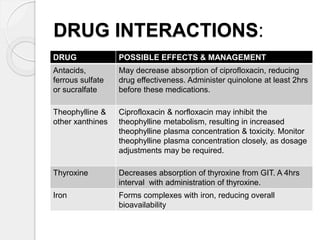
DRUG INTERACTIONS:
DRUG POSSIBLE EFFECTS & MANAGEMENT
Antacids,
ferrous sulfate
or sucralfate
May decrease absorption of ciprofloxacin, reducing
drug effectiveness. Administer quinolone at least 2hrs
before these medications.
Theophylline &
other xanthines
Ciprofloxacin & norfloxacin may inhibit the
theophylline metabolism, resulting in increased
theophylline plasma concentration & toxicity. Monitor
theophylline plasma concentration closely, as dosage
adjustments may be required.
Thyroxine Decreases absorption of thyroxine from GIT. A 4hrs
interval with administration of thyroxine.
Iron Forms complexes with iron, reducing overall
bioavailability
Side Effects:
 Gastric disturbances
 Photosensitive rashes
 Occasional neurotoxicity
Sa Oji:
 Sources:
◦ Pharmacology for Health Professionals,
4th Ed., B.Bryant & K.Knights.
◦ Clinical Medicine, 8th Ed., Kumar and
Clarks.

Ciprofloxacin Antibiotic

  • 1.
    CIPROFLOXACIN “Success In LifeIs A Result Of Decision. Failure In Life Is A Result Of Decision” Group: WinnerzKlub Inc. Year: 2019
  • 2.
    What are Fluoroquinolones? The fluoroquinolones are synthetic, broad- spectrum agents with bactericidal activity.  Examples include: ciprofloxacin, moxifloxacin, & norfloxacin & ofloxacin.  The newer oral quinolones provide an alternative to β-lactams in the treatment of community acquired lower respiratory infections.  Related structurally to Nalidixic acid.
  • 3.
    (cont’d):  Inhibitors ofbacterial DNA synthesis- quinolones ◦ Inhibits cytochrome P450 (CYP₁A₂)  Unfortunately, bacterial resistance to quinolones is increasing world-wide, & appropriate use is needed to extend their clinical use.
  • 4.
    Bacterial resistance: Year Resistance 1987Ciprofloxacin-resistant Escherichia coli (30-40%) 2007/2008 Ciprofloxacin-resistant Neisseria meningitidis reported in USA •Enterobacteria •Salmonella spp •Staphylococcus aureus •Vibrio cholerae
  • 5.
    Ciprofloxacin:  Is anexample of a fluoroquinolone.  Is not ototoxic.  Ciprofloxacin & moxifloxacin are the only quinolones available for parenteral use.  Used in ocular infections.  Metabolized in liver and highly dependent on kidneys for excretion.
  • 6.
    Mechanism of action: Interfere with bacterial topoisomerase II (DNA gyrase) & topoisomerase IV. ◦ the enzymes involved in the supercoiling of DNA that is necessary for the duplication, transcription & repair of bacterial DNA.
  • 7.
    PARAMETERS:  Oral bioavailabilityis 50-70%.  Half-life: 4hours  May be used for lower UTIs.  Usually administered in dosage of 500ml twice daily.  NB: Avoid in childhood and pregnancy & in pts. taking corticosteroids. ◦ Should not be used in pts. with tendonitis.
  • 8.
    ACTIONS:  Ciprofloxacin eardrops (0.3%) & eye drops for severe conjunctivitis & bacterial keratitis.  Useful in gram (-)ve septicaemia, skin & bone infections, urinary & respiratory tract infections, some sexually transmitted diseases such as gonorrhea & in severe cases of travelers' diarrhea.  As alternative (single dose) in meningococcal meningitis
  • 9.
    DRUG INTERACTIONS: DRUG POSSIBLEEFFECTS & MANAGEMENT Antacids, ferrous sulfate or sucralfate May decrease absorption of ciprofloxacin, reducing drug effectiveness. Administer quinolone at least 2hrs before these medications. Theophylline & other xanthines Ciprofloxacin & norfloxacin may inhibit the theophylline metabolism, resulting in increased theophylline plasma concentration & toxicity. Monitor theophylline plasma concentration closely, as dosage adjustments may be required. Thyroxine Decreases absorption of thyroxine from GIT. A 4hrs interval with administration of thyroxine. Iron Forms complexes with iron, reducing overall bioavailability
  • 10.
    Side Effects:  Gastricdisturbances  Photosensitive rashes  Occasional neurotoxicity
  • 11.
    Sa Oji:  Sources: ◦Pharmacology for Health Professionals, 4th Ed., B.Bryant & K.Knights. ◦ Clinical Medicine, 8th Ed., Kumar and Clarks.