outline
 Introduction
 Pharmacokinetics
 Pharmacodynamics
 Interactions
 Resistance
 Side effect
 Dosage forms
Introduction
 Ciprofloxacin is an antibiotic. It belongs to a group of
antibiotics called fluoroquinolones
 It is a broad spectrum antibacterial drug to which most
Gram-negative bacteria are highly susceptible in vitro
and many Gram-positive bacteria are susceptible or
moderately susceptible
 Depending on their concentration, fluoroquinolones may
exhibit bacteriostatic or bactericidal activities
 It is formulated for oral, intravenous, intratympanic,
ophthalmic, and otic administration for a number of
bacterial infections
 Ciprofloxacin is a second generation fluoroquinolone
that has spawned many derivative antibiotics
Pharmacokinetics
1-Absorption :
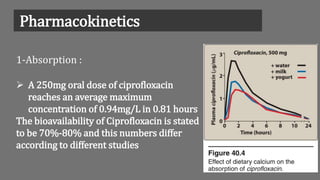
 A 250mg oral dose of ciprofloxacin
reaches an average maximum
concentration of 0.94mg/L in 0.81 hours
The bioavailability of Ciprofloxacin is stated
to be 70%-80% and this numbers differ
according to different studies
2-Metabolism :
 Ciprofloxacin is primarily metabolized by CYP1A2 The
primary metabolites oxociprofloxacin and sulociprofloxacin
make up 3-8% of the total dose each Ciprofloxacin is also
converted to the minor metabolites desethylene ciprofloxacin
and formylciprofloxacin These 4 metabolites account for 15%
of a total oral dose
3-Distribution :
 ciprofloxacin concentrations in serum, muscle 0.20mg/kg
respectively. Thus, ciprofloxacin is distributed effectively
throughout the extravascular space following i.v. as well as
oral administration
4-Elemenation :
 The serum elimination half-life in subjects with normal
renal function is approximately 4 hours
 Approximately 40 to 50% of an orally administered dose is
excreted in the urine as unchanged drug
 Half-life :
The average half life following a 250mg oral dose was
4.71 hours and 3.65 hours following a 100mg intravenous
dose Generally the half life is reported as 4 hours
Pharmacodynamics
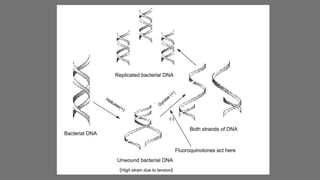
 Mechanism of action:
Inhibition of DNA synthesis
Interfere with bacterial topoisomerase
II (DNA gyrase) & topoisomerase IV. the enzymes involved in
the supercoiling of DNA that is necessary for the duplication,
transcription & repair of bacterial DNA
 Therapeutic :
It is used to treat serious infections, or infections when
other anitbiotics have not worked.
It's used to treat bacterial infections, such as:
 chest infections (including pneumonia)
 skin and bone infections
 sexually transmitted infections (STIs)
 conjunctivitis
 eye infections
 ear infections
 It can be used to help stop people getting
meningitis if they have been really close to someone
with the infection
 Toxicity :
Cipro toxicity leads to toxic aldehyde formation, peroxynitrite formation,
leading to oxidative stress and cell death, thus making these antibiotics toxic
to every organ in the body including the brain, musculoskeletal system,
heart, kidneys, lungs, nervous system, and connective tissue. 1. Tendon
rupture or swelling of the tendon (tendinitis) 2. Worsening of myasthenia
gravis (a disease which causes muscle weakness). -Tendon problems can
happen in people of all ages who take ciprofloxacin 3.swelling of the lips,
tongue, face 4.trouble breathing or swallowing 5.rapid heartbeat 6.Serious
heart rhythm changes
interactions
 Co-administration of CIPRO with other drugs primarily
metabolized by CYP1A2 results in increased plasma
concentrations of these drugs and could lead to clinically
significant adverse events of the co-administered drug
 Example of drugs that Ciprofloxacin will interact with it is:anti-
coagulant drugs, NSAIDs, theophylline , quinidine
 Food Interactions
 Do not take this medicine alone with milk, yogurt, or other
dairy products. Do not drink any juice with calcium added
when you take this medicine. It is okay to have dairy products
or juice as part of a larger meal when you take this medicine
 Limit caffeine intake
Resistance
 the A subunit of DNA gyrase is a target of ciprofloxacin and
other quinolones. Ciprofloxacin resistance appears to occur
both by mutation in this target and by alteration of drug
permeation through the outer membrane of the cell
 During the last decade the resistance rate of urinary Escherichia
coli (E. coli) to fluoroquinolones such as ciprofloxacin has
increased
Side effects
 Like all medicines, ciprofloxacin can cause side effects although not
everyone gets them ,Common side effects of ciprofloxacin happen
in more than 1 in 100 people for instance :
 feeling sick (nausea) after taking the tablets or liquid
 diarrhea after taking the tablets or liquid
 red or uncomfortable eye with a stinging, burning
 Ciprofloxacin falls into category C. There are no well-
controlled studies that have been done in pregnant
women. Ciprofloxacin should be used during
pregnancy only if the possible benefit outweighs the
possible risk to the unborn baby
Dosage forms
 Ciprofloxacin is usually administered orally as a twice daily
regimen in a total daily dosage of 500 to 1500mg
depending on the nature and severity of the infection
 The recommended dosage of ciprofloxacin administered
intravenously is 100mg twice daily in urinary tract
infections and 200mg twice daily in other infections
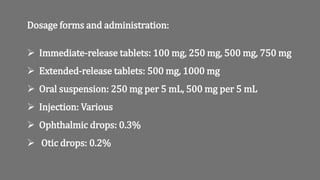
Dosage forms and administration:
 Immediate-release tablets: 100 mg, 250 mg, 500 mg, 750 mg
 Extended-release tablets: 500 mg, 1000 mg
 Oral suspension: 250 mg per 5 mL, 500 mg per 5 mL
 Injection: Various
 Ophthalmic drops: 0.3%
 Otic drops: 0.2%
Thank you

Presentation2 copy.pptx

  • 2.
    outline  Introduction  Pharmacokinetics Pharmacodynamics  Interactions  Resistance  Side effect  Dosage forms
  • 3.
    Introduction  Ciprofloxacin isan antibiotic. It belongs to a group of antibiotics called fluoroquinolones  It is a broad spectrum antibacterial drug to which most Gram-negative bacteria are highly susceptible in vitro and many Gram-positive bacteria are susceptible or moderately susceptible  Depending on their concentration, fluoroquinolones may exhibit bacteriostatic or bactericidal activities
  • 4.
     It isformulated for oral, intravenous, intratympanic, ophthalmic, and otic administration for a number of bacterial infections  Ciprofloxacin is a second generation fluoroquinolone that has spawned many derivative antibiotics
  • 5.
    Pharmacokinetics 1-Absorption :  A250mg oral dose of ciprofloxacin reaches an average maximum concentration of 0.94mg/L in 0.81 hours The bioavailability of Ciprofloxacin is stated to be 70%-80% and this numbers differ according to different studies
  • 6.
    2-Metabolism :  Ciprofloxacinis primarily metabolized by CYP1A2 The primary metabolites oxociprofloxacin and sulociprofloxacin make up 3-8% of the total dose each Ciprofloxacin is also converted to the minor metabolites desethylene ciprofloxacin and formylciprofloxacin These 4 metabolites account for 15% of a total oral dose
  • 7.
    3-Distribution :  ciprofloxacinconcentrations in serum, muscle 0.20mg/kg respectively. Thus, ciprofloxacin is distributed effectively throughout the extravascular space following i.v. as well as oral administration 4-Elemenation :  The serum elimination half-life in subjects with normal renal function is approximately 4 hours  Approximately 40 to 50% of an orally administered dose is excreted in the urine as unchanged drug
  • 8.
     Half-life : Theaverage half life following a 250mg oral dose was 4.71 hours and 3.65 hours following a 100mg intravenous dose Generally the half life is reported as 4 hours
  • 9.
    Pharmacodynamics  Mechanism ofaction: Inhibition of DNA synthesis Interfere with bacterial topoisomerase II (DNA gyrase) & topoisomerase IV. the enzymes involved in the supercoiling of DNA that is necessary for the duplication, transcription & repair of bacterial DNA
  • 11.
     Therapeutic : Itis used to treat serious infections, or infections when other anitbiotics have not worked. It's used to treat bacterial infections, such as:  chest infections (including pneumonia)  skin and bone infections  sexually transmitted infections (STIs)  conjunctivitis  eye infections  ear infections
  • 12.
     It canbe used to help stop people getting meningitis if they have been really close to someone with the infection
  • 13.
     Toxicity : Ciprotoxicity leads to toxic aldehyde formation, peroxynitrite formation, leading to oxidative stress and cell death, thus making these antibiotics toxic to every organ in the body including the brain, musculoskeletal system, heart, kidneys, lungs, nervous system, and connective tissue. 1. Tendon rupture or swelling of the tendon (tendinitis) 2. Worsening of myasthenia gravis (a disease which causes muscle weakness). -Tendon problems can happen in people of all ages who take ciprofloxacin 3.swelling of the lips, tongue, face 4.trouble breathing or swallowing 5.rapid heartbeat 6.Serious heart rhythm changes
  • 14.
    interactions  Co-administration ofCIPRO with other drugs primarily metabolized by CYP1A2 results in increased plasma concentrations of these drugs and could lead to clinically significant adverse events of the co-administered drug  Example of drugs that Ciprofloxacin will interact with it is:anti- coagulant drugs, NSAIDs, theophylline , quinidine
  • 15.
     Food Interactions Do not take this medicine alone with milk, yogurt, or other dairy products. Do not drink any juice with calcium added when you take this medicine. It is okay to have dairy products or juice as part of a larger meal when you take this medicine  Limit caffeine intake
  • 16.
    Resistance  the Asubunit of DNA gyrase is a target of ciprofloxacin and other quinolones. Ciprofloxacin resistance appears to occur both by mutation in this target and by alteration of drug permeation through the outer membrane of the cell  During the last decade the resistance rate of urinary Escherichia coli (E. coli) to fluoroquinolones such as ciprofloxacin has increased
  • 17.
    Side effects  Likeall medicines, ciprofloxacin can cause side effects although not everyone gets them ,Common side effects of ciprofloxacin happen in more than 1 in 100 people for instance :  feeling sick (nausea) after taking the tablets or liquid  diarrhea after taking the tablets or liquid  red or uncomfortable eye with a stinging, burning
  • 18.
     Ciprofloxacin fallsinto category C. There are no well- controlled studies that have been done in pregnant women. Ciprofloxacin should be used during pregnancy only if the possible benefit outweighs the possible risk to the unborn baby
  • 19.
    Dosage forms  Ciprofloxacinis usually administered orally as a twice daily regimen in a total daily dosage of 500 to 1500mg depending on the nature and severity of the infection  The recommended dosage of ciprofloxacin administered intravenously is 100mg twice daily in urinary tract infections and 200mg twice daily in other infections
  • 20.
    Dosage forms andadministration:  Immediate-release tablets: 100 mg, 250 mg, 500 mg, 750 mg  Extended-release tablets: 500 mg, 1000 mg  Oral suspension: 250 mg per 5 mL, 500 mg per 5 mL  Injection: Various  Ophthalmic drops: 0.3%  Otic drops: 0.2%
  • 21.

Editor's Notes

  • #12 trimethoprime
  • #22 Alternatives ; : sulfamethoxazole , Bactrim , trimethoprime