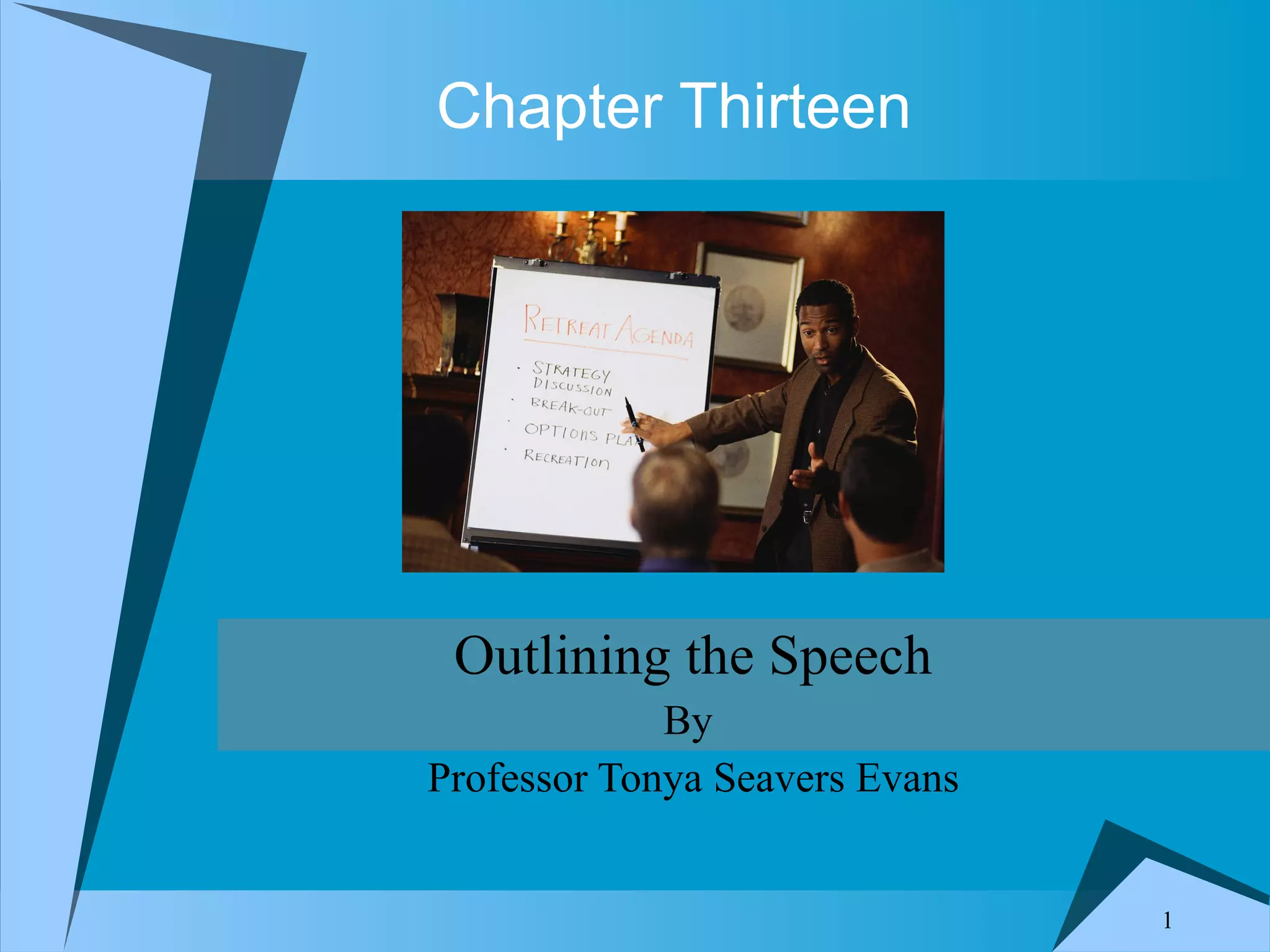


Chapter Thirteen Outlining the Speech By  Professor Tonya Seavers Evans
Types of Outlines
A  working outline a.k.a. preparation, rough draft Specific purpose and thesis statements, main points, supporting material, and transitions.
A  formal outline Full-sentences Entire speech, worded very nearly like the speaker intends to say it with a title page and bibliography
A  speaking outline (a.k.a. delivery, key-word) Used when practicing and presenting your speech; the words and format are condensed to encourage eye contact rather than reading.
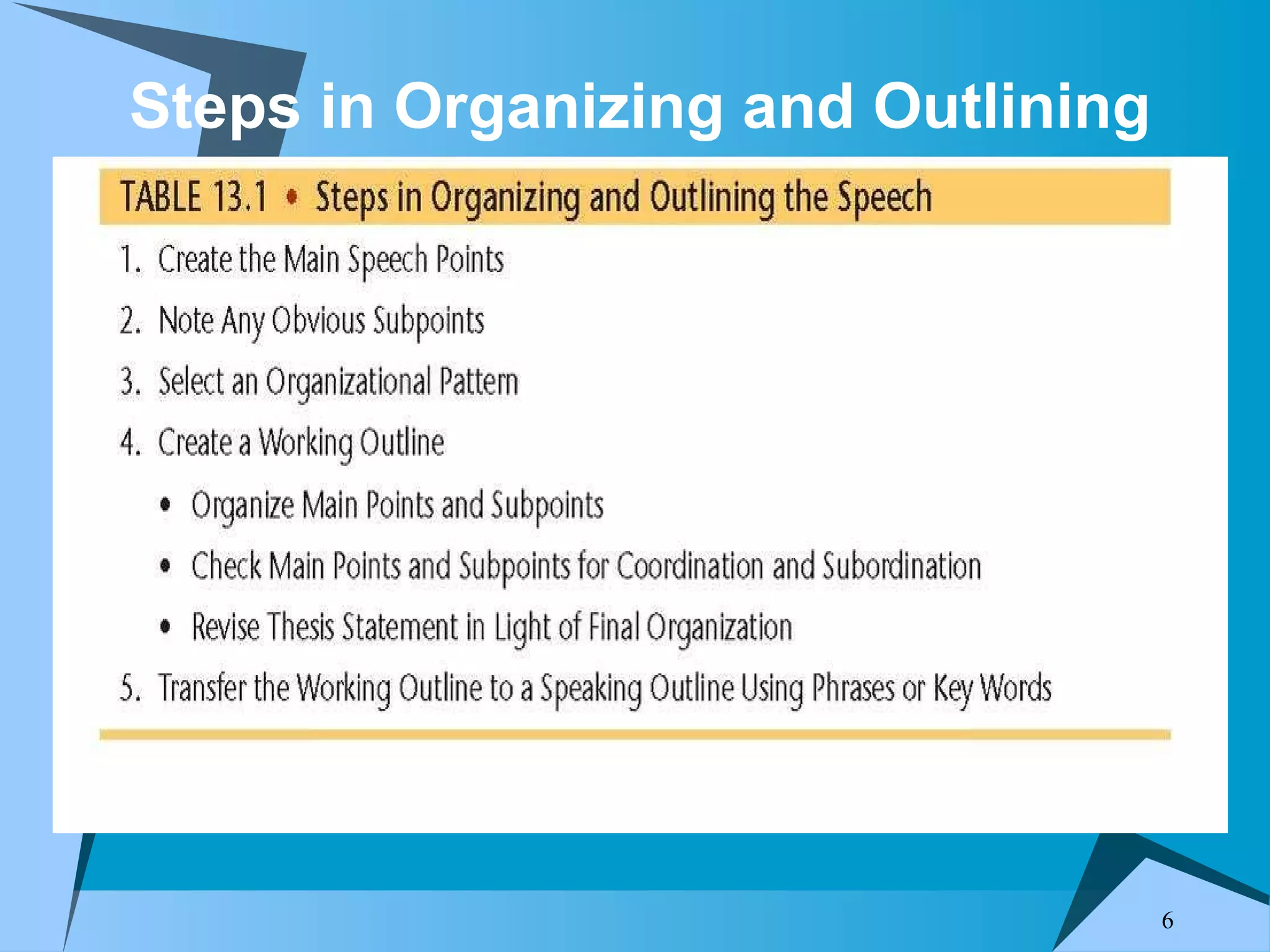
Steps in Organizing and Outlining
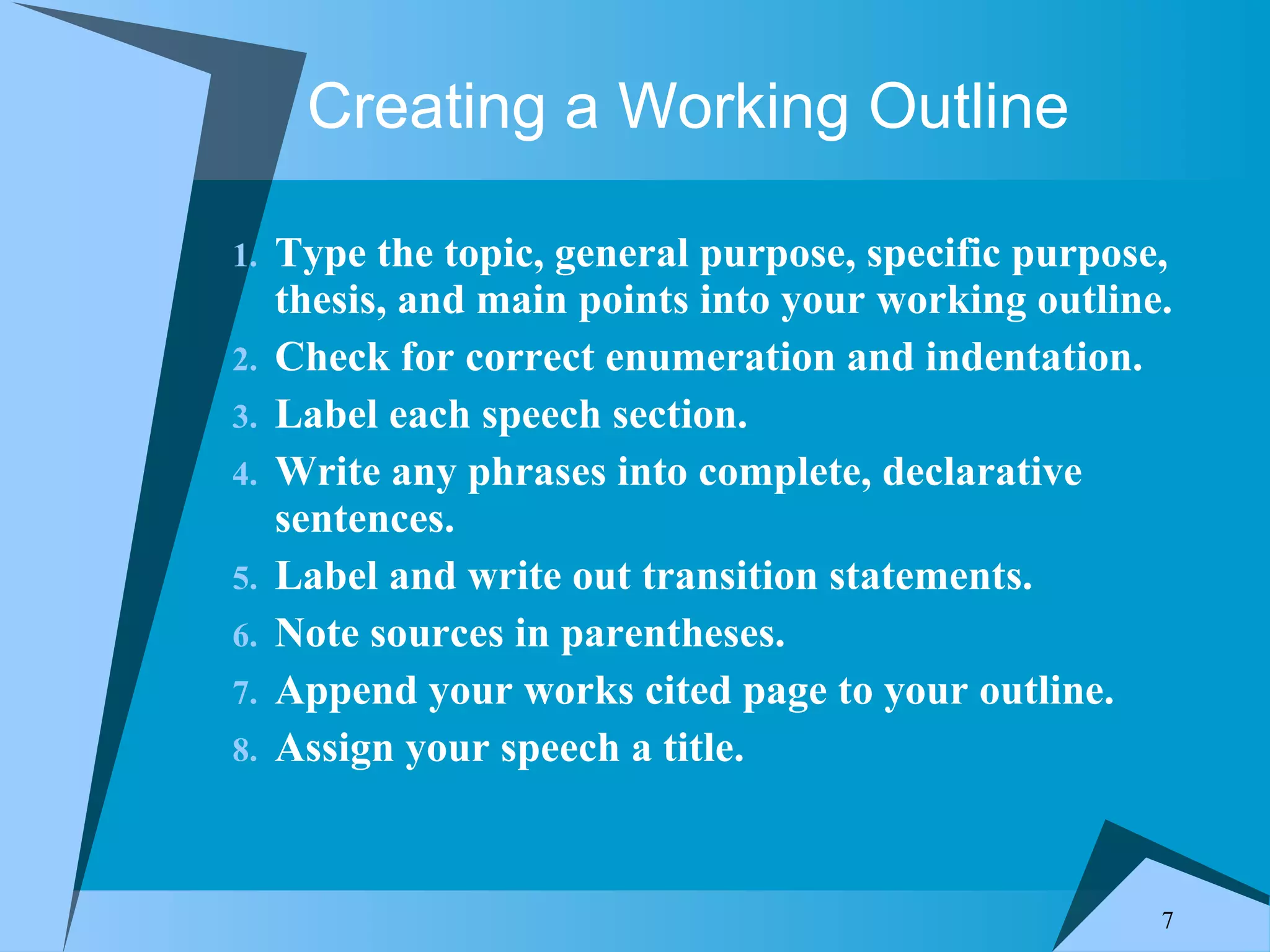
Creating a Working Outline Type the topic, general purpose, specific purpose, thesis, and main points into your working outline. Check for correct enumeration and indentation. Label each speech section. Write any phrases into complete, declarative sentences. Label and write out transition statements. Note sources in parentheses. Append your works cited page to your outline. Assign your speech a title.
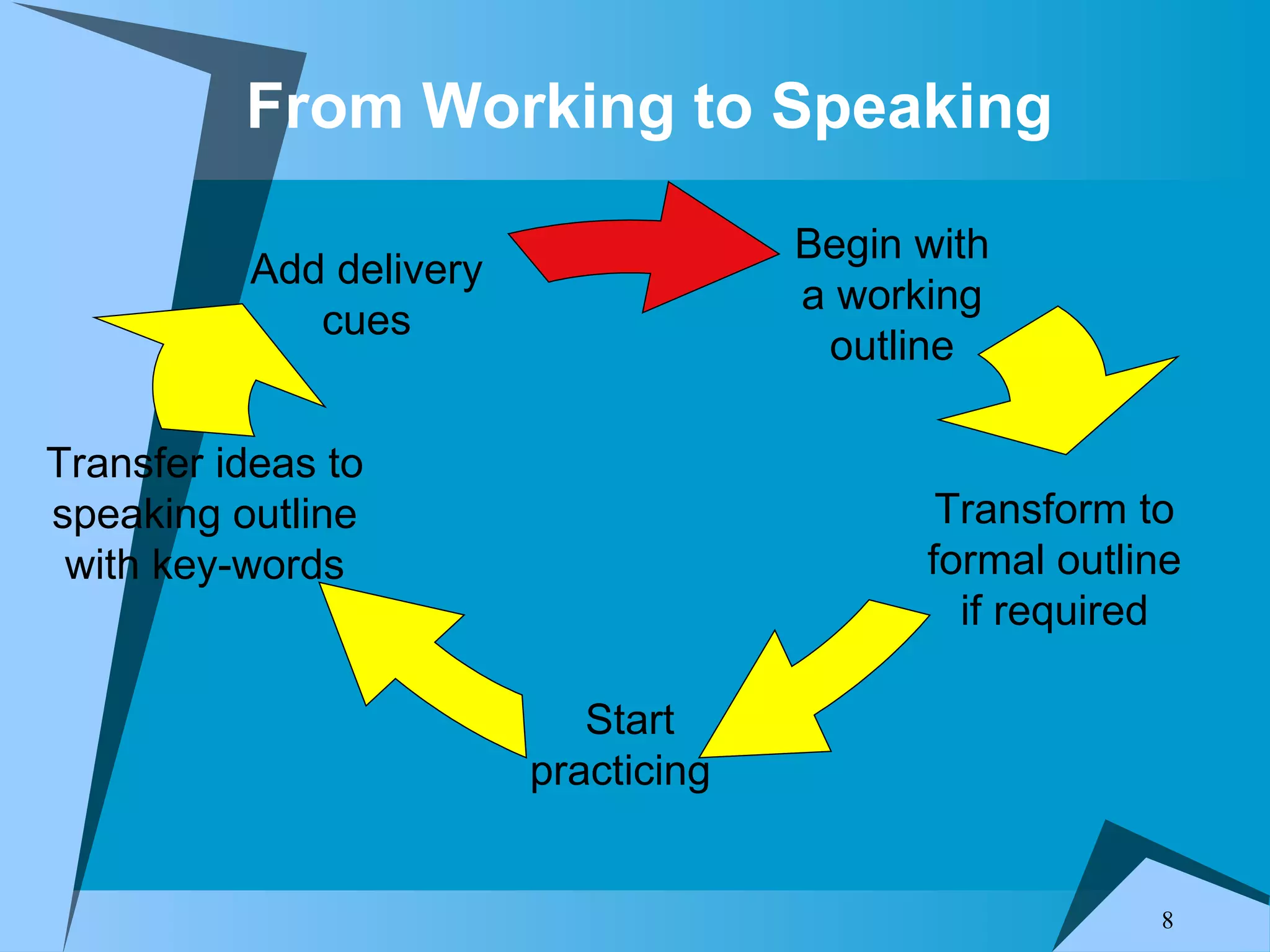
From Working to Speaking Begin with a working outline Transfer ideas to speaking outline with key-words Add delivery cues Transform to formal outline if required Start practicing
Bibliography O’ Hair, Dan, Stewart, Rob, Rubenstein, Hannah,  A Speaker’s Guidebook , Bedford St. Martin (2009)

Chp13 Outlining the Speech

  • 1.
    Chapter Thirteen Outliningthe Speech By Professor Tonya Seavers Evans
  • 2.
  • 3.
    A workingoutline a.k.a. preparation, rough draft Specific purpose and thesis statements, main points, supporting material, and transitions.
  • 4.
    A formaloutline Full-sentences Entire speech, worded very nearly like the speaker intends to say it with a title page and bibliography
  • 5.
    A speakingoutline (a.k.a. delivery, key-word) Used when practicing and presenting your speech; the words and format are condensed to encourage eye contact rather than reading.
  • 6.
    Steps in Organizingand Outlining
  • 7.
    Creating a WorkingOutline Type the topic, general purpose, specific purpose, thesis, and main points into your working outline. Check for correct enumeration and indentation. Label each speech section. Write any phrases into complete, declarative sentences. Label and write out transition statements. Note sources in parentheses. Append your works cited page to your outline. Assign your speech a title.
  • 8.
    From Working toSpeaking Begin with a working outline Transfer ideas to speaking outline with key-words Add delivery cues Transform to formal outline if required Start practicing
  • 9.
    Bibliography O’ Hair,Dan, Stewart, Rob, Rubenstein, Hannah, A Speaker’s Guidebook , Bedford St. Martin (2009)