Developing Your
4   Purpose and Topic
General Purpose
 The speaker’s overall objective
  • To inform
  • To persuade
  • To entertain
Determining Your General Purpose
   Speaking to inform
   Speaking to persuade
   Speaking to entertain
   Keeping your general purpose in mind
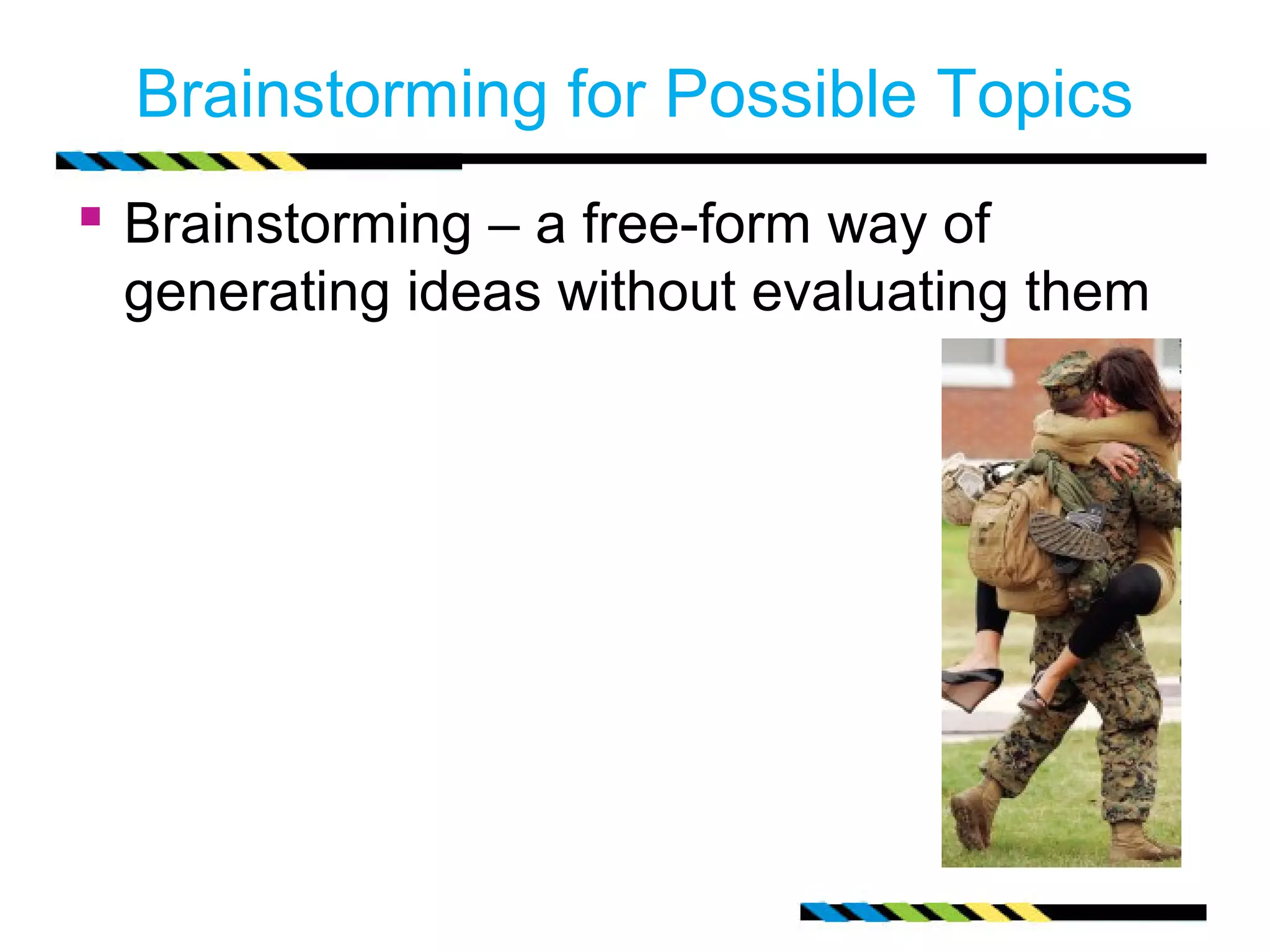
Brainstorming for Possible Topics
 Brainstorming – a free-form way of
 generating ideas without evaluating them
Evaluating and Selecting Topic Ideas
   Consider your own interests
   Consider the audience
   Consider resource availability
   Consider time
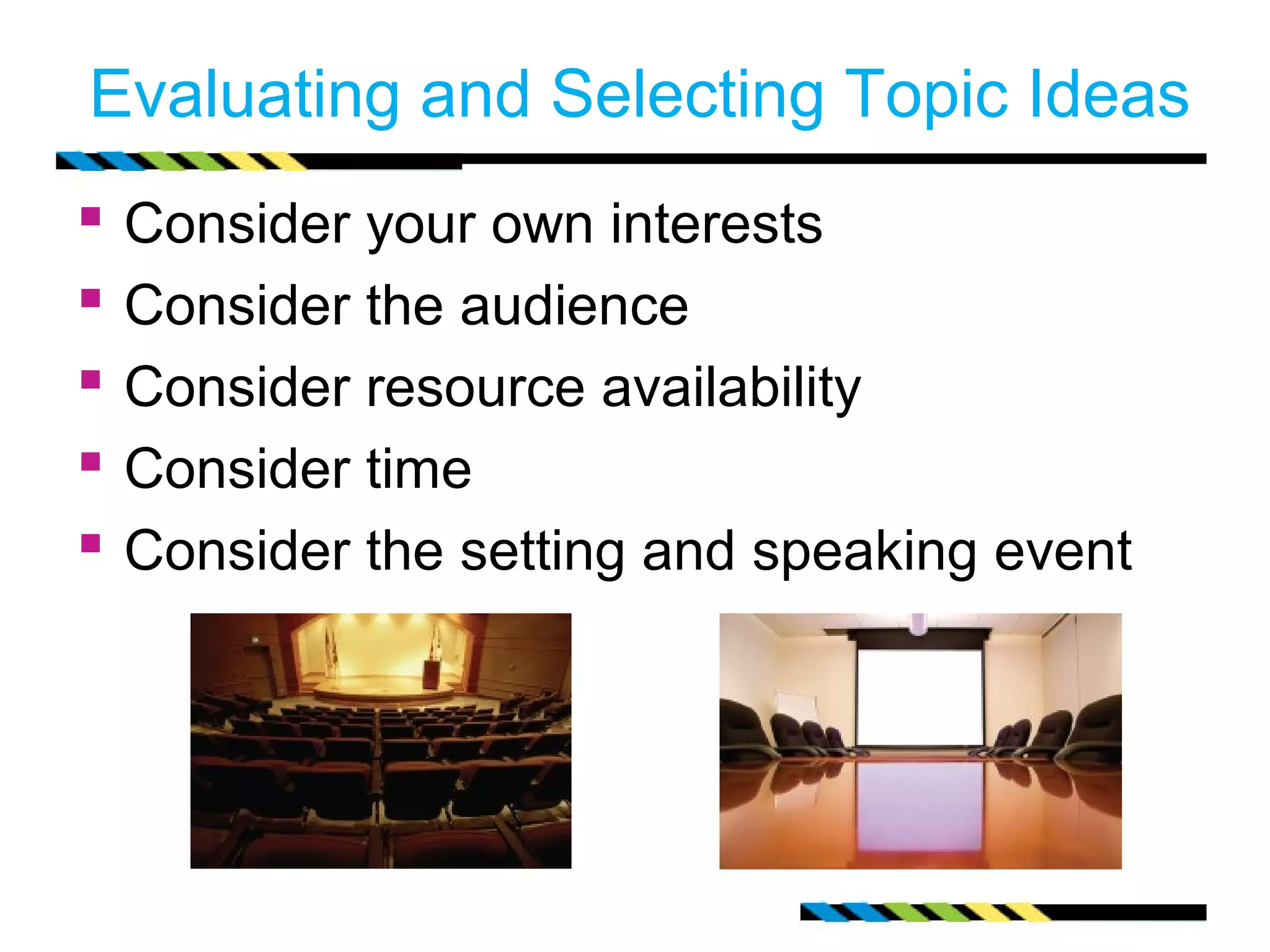
   Consider the setting and speaking event
Identifying Your Speech Purpose
 Specific purpose – what you want to
 achieve in your speech

 What message do you want the audience
 to receive from your standpoint
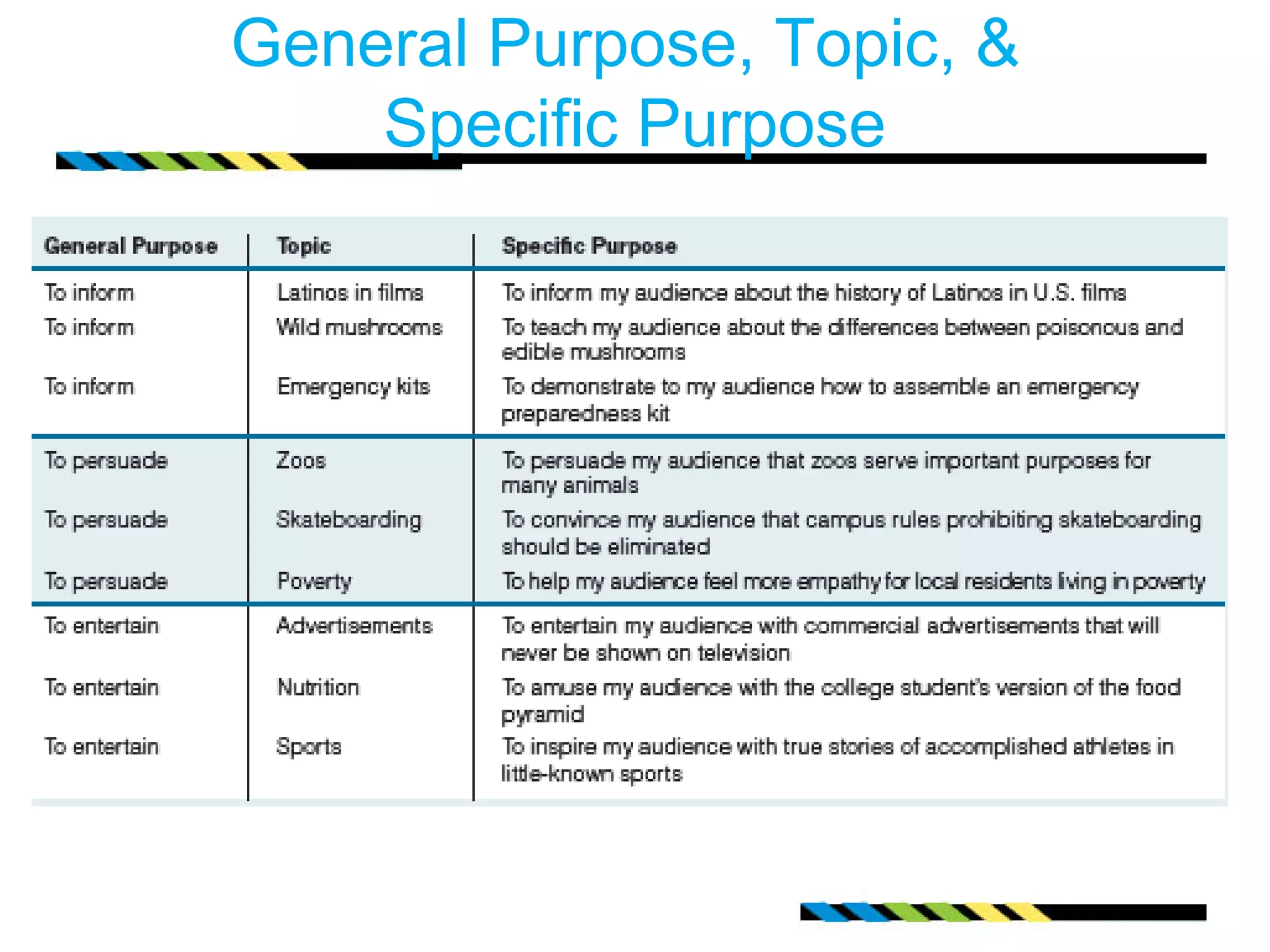
General Purpose, Topic, &
    Specific Purpose
Phrasing Your Thesis/ Stand Point

 Thesis – summarizes your plan for
 achieving the specific purpose; a single
 descriptive sentence that captures the
 essence or central idea of a speech

 Stand point—a physical or mental position
 from which viewpoints are viewed
Building Your Working Outline

 An outline that guides you during the initial
  stages of topic development, helping to
  keep you focused on your general
  purpose and clarify your specific purpose
Building Your Working Outline Cont.


Brainstorming for topic development
Grouping ideas to select main points
Writing the thesis/standpoint
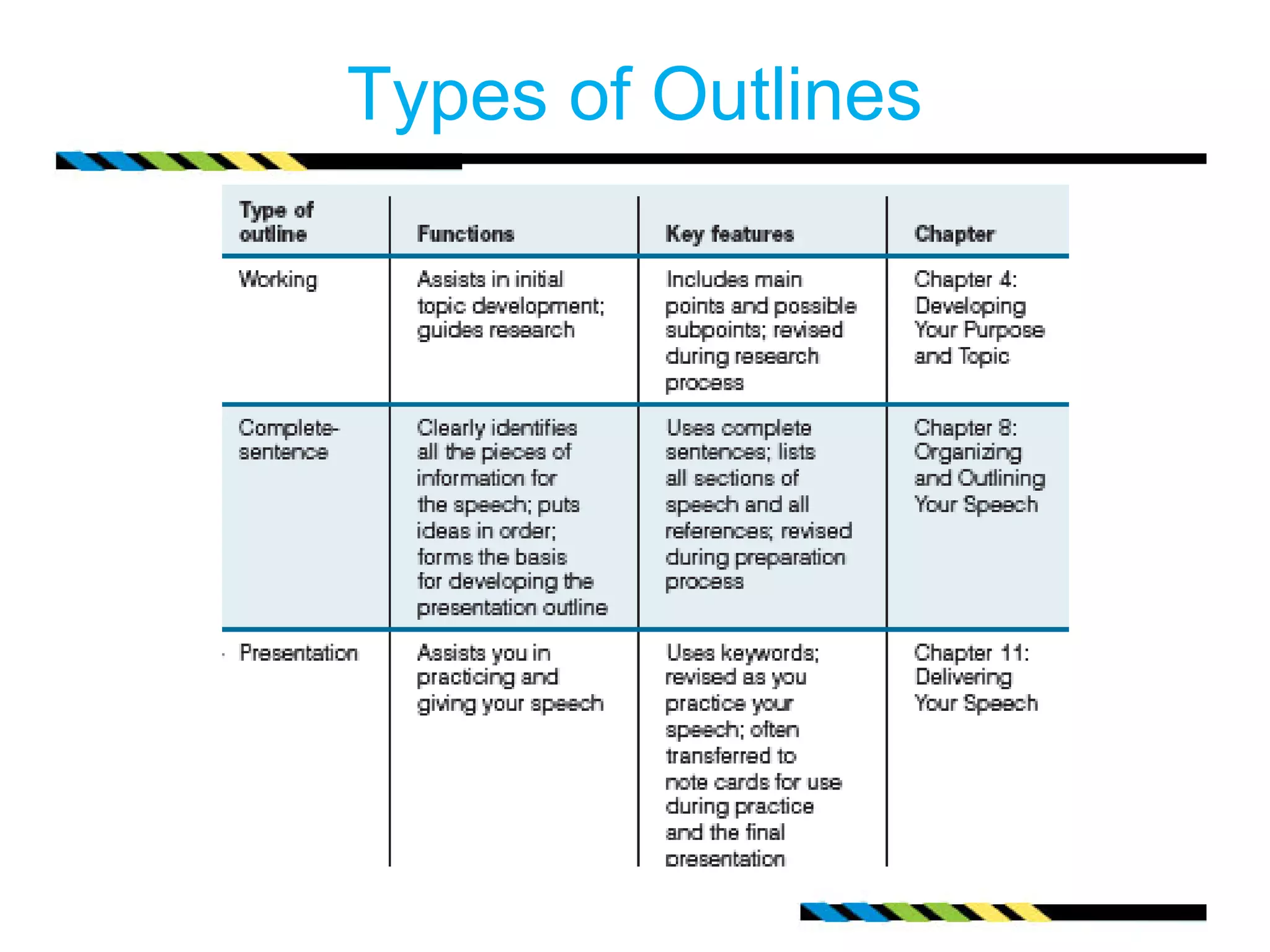
Types of Outlines
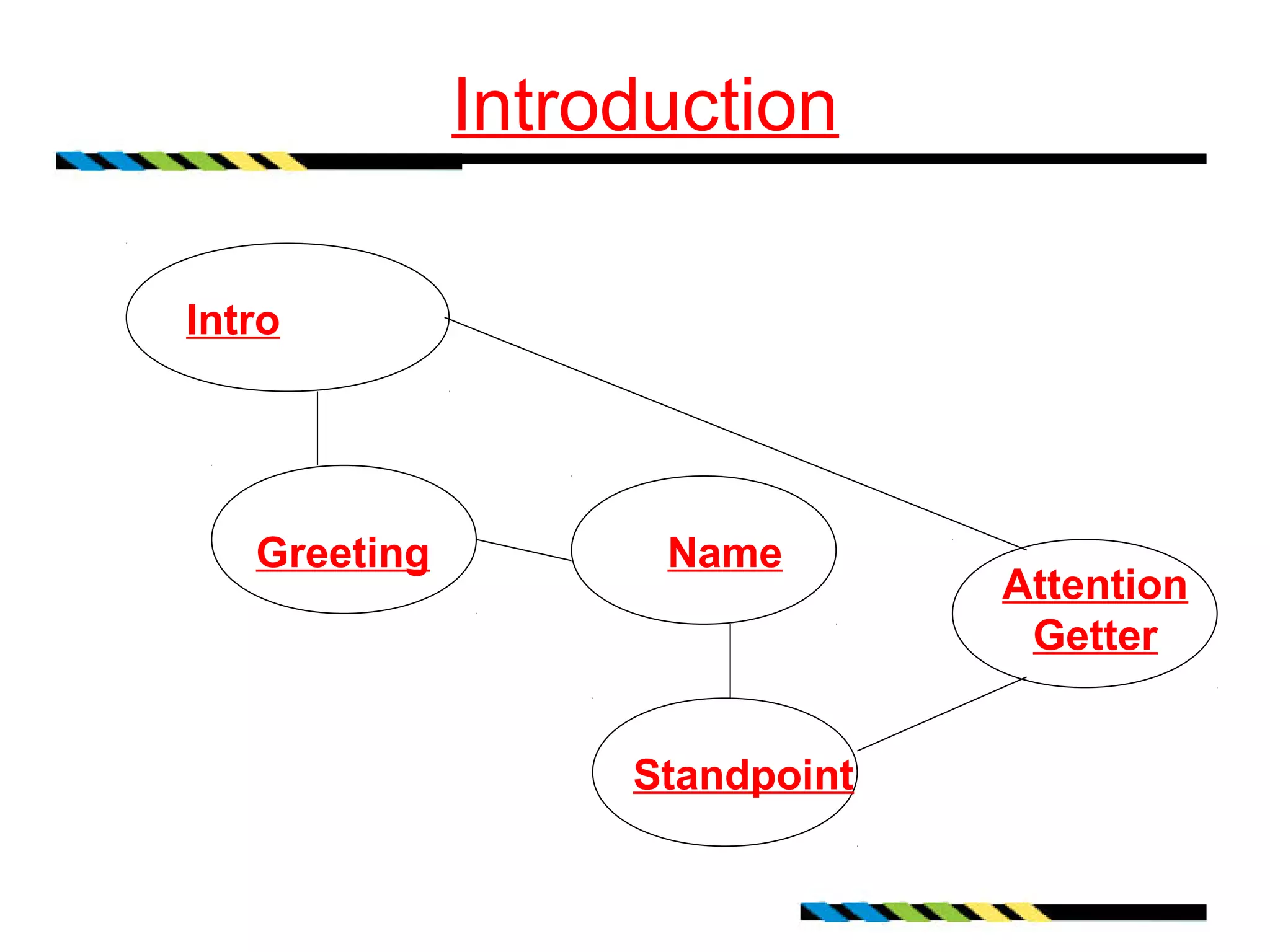
Introduction

Intro


   Greeting         Name
                                Attention
                                 Getter


                   Standpoint
Major Speech Parts

                Introduction
Arouse the audience members’ attention with a
quotation, question or short story
Introduce both names (full names)
Greetings
Clearly state the standpoint at the end of the introduction
Body of A Persuasive Speech

• Transition into the main point of the
  discussion
• Focus on Detail/Supporting
  Research/Statistics/data
• Attention Getters
• Give examples to build on argument/ view
  point
• Create a writing style that is
  conversational
• Make Audience feel like they are a part of

  your discussion
The Conclusion of A Persuasive Speech


Restate the standpoint
Leave the audience something to think
about/finding/supporting materials/data
Relevant Websites
 Developing your thesis
 Framing a thesis statement

Chapter 4 Developing and researching your speech parts

  • 1.
    Developing Your 4 Purpose and Topic
  • 2.
    General Purpose  Thespeaker’s overall objective • To inform • To persuade • To entertain
  • 3.
    Determining Your GeneralPurpose  Speaking to inform  Speaking to persuade  Speaking to entertain  Keeping your general purpose in mind
  • 4.
    Brainstorming for PossibleTopics  Brainstorming – a free-form way of generating ideas without evaluating them
  • 5.
    Evaluating and SelectingTopic Ideas  Consider your own interests  Consider the audience  Consider resource availability  Consider time  Consider the setting and speaking event
  • 6.
    Identifying Your SpeechPurpose  Specific purpose – what you want to achieve in your speech  What message do you want the audience to receive from your standpoint
  • 7.
    General Purpose, Topic,& Specific Purpose
  • 8.
    Phrasing Your Thesis/Stand Point  Thesis – summarizes your plan for achieving the specific purpose; a single descriptive sentence that captures the essence or central idea of a speech  Stand point—a physical or mental position from which viewpoints are viewed
  • 9.
    Building Your WorkingOutline  An outline that guides you during the initial stages of topic development, helping to keep you focused on your general purpose and clarify your specific purpose
  • 10.
    Building Your WorkingOutline Cont. Brainstorming for topic development Grouping ideas to select main points Writing the thesis/standpoint
  • 11.
  • 12.
    Introduction Intro Greeting Name Attention Getter Standpoint
  • 13.
    Major Speech Parts Introduction Arouse the audience members’ attention with a quotation, question or short story Introduce both names (full names) Greetings Clearly state the standpoint at the end of the introduction
  • 14.
    Body of APersuasive Speech • Transition into the main point of the discussion • Focus on Detail/Supporting Research/Statistics/data • Attention Getters • Give examples to build on argument/ view point • Create a writing style that is conversational • Make Audience feel like they are a part of your discussion
  • 15.
    The Conclusion ofA Persuasive Speech Restate the standpoint Leave the audience something to think about/finding/supporting materials/data
  • 16.
    Relevant Websites  Developingyour thesis  Framing a thesis statement