Downloaded 278 times
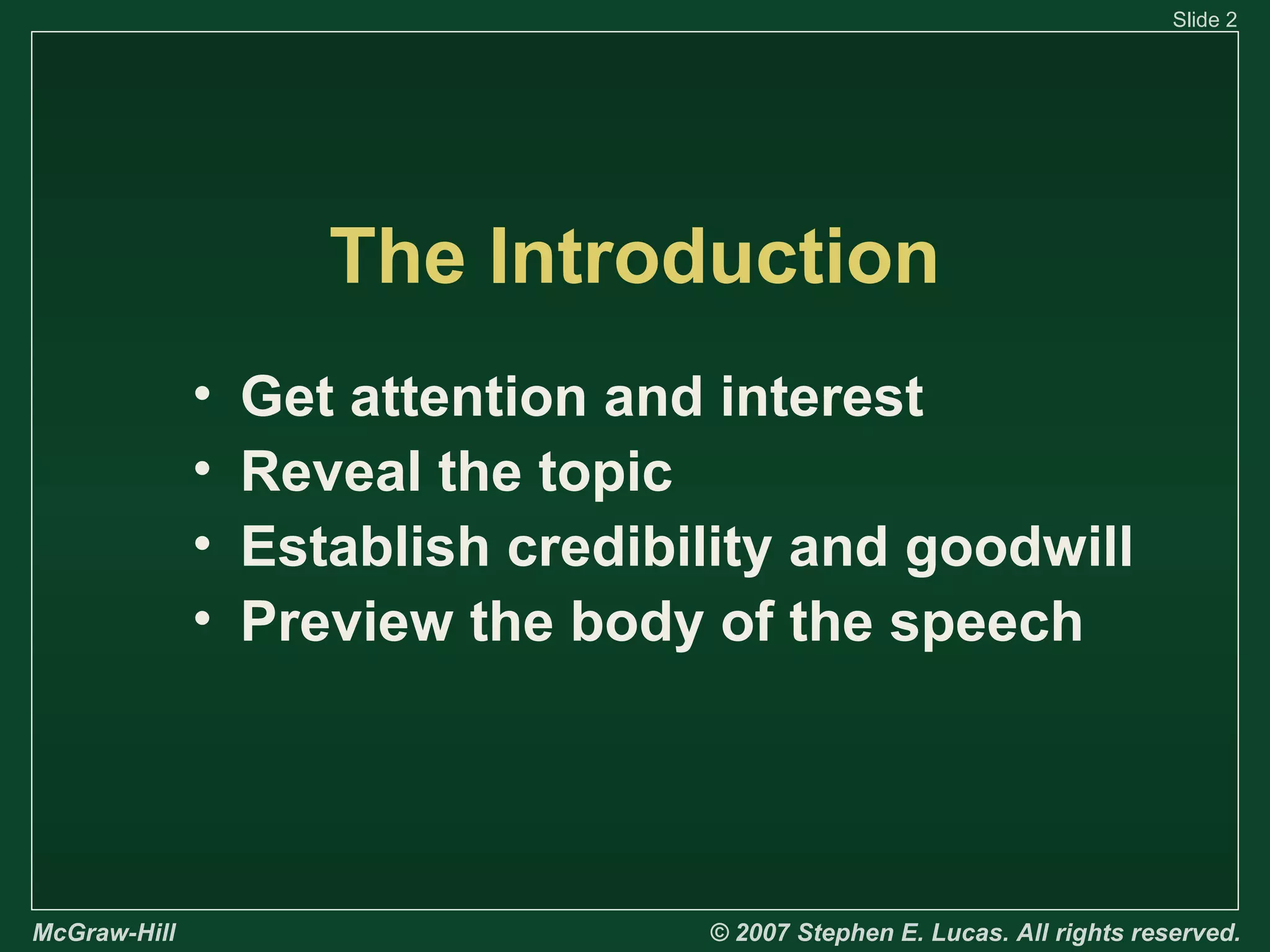
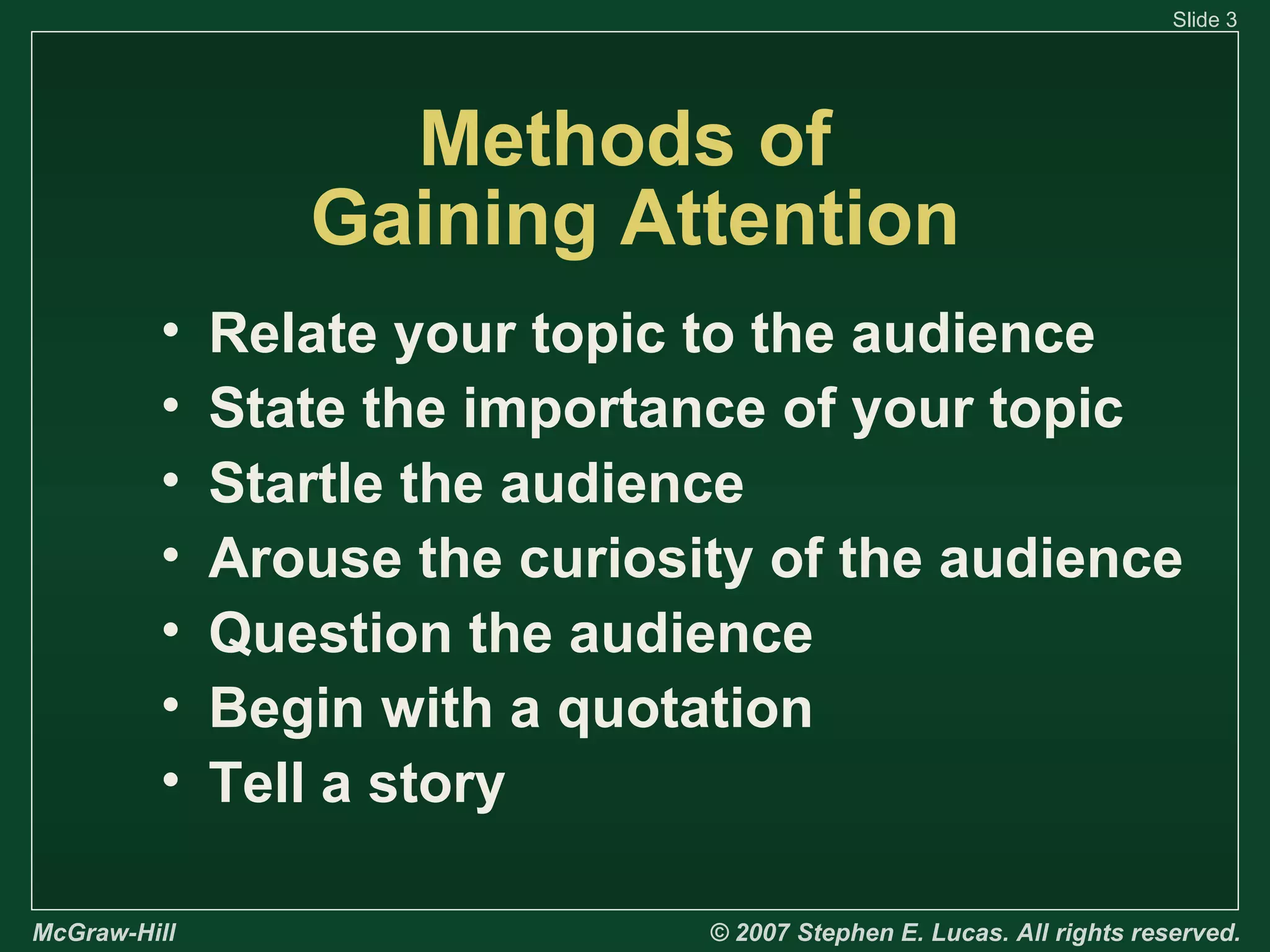
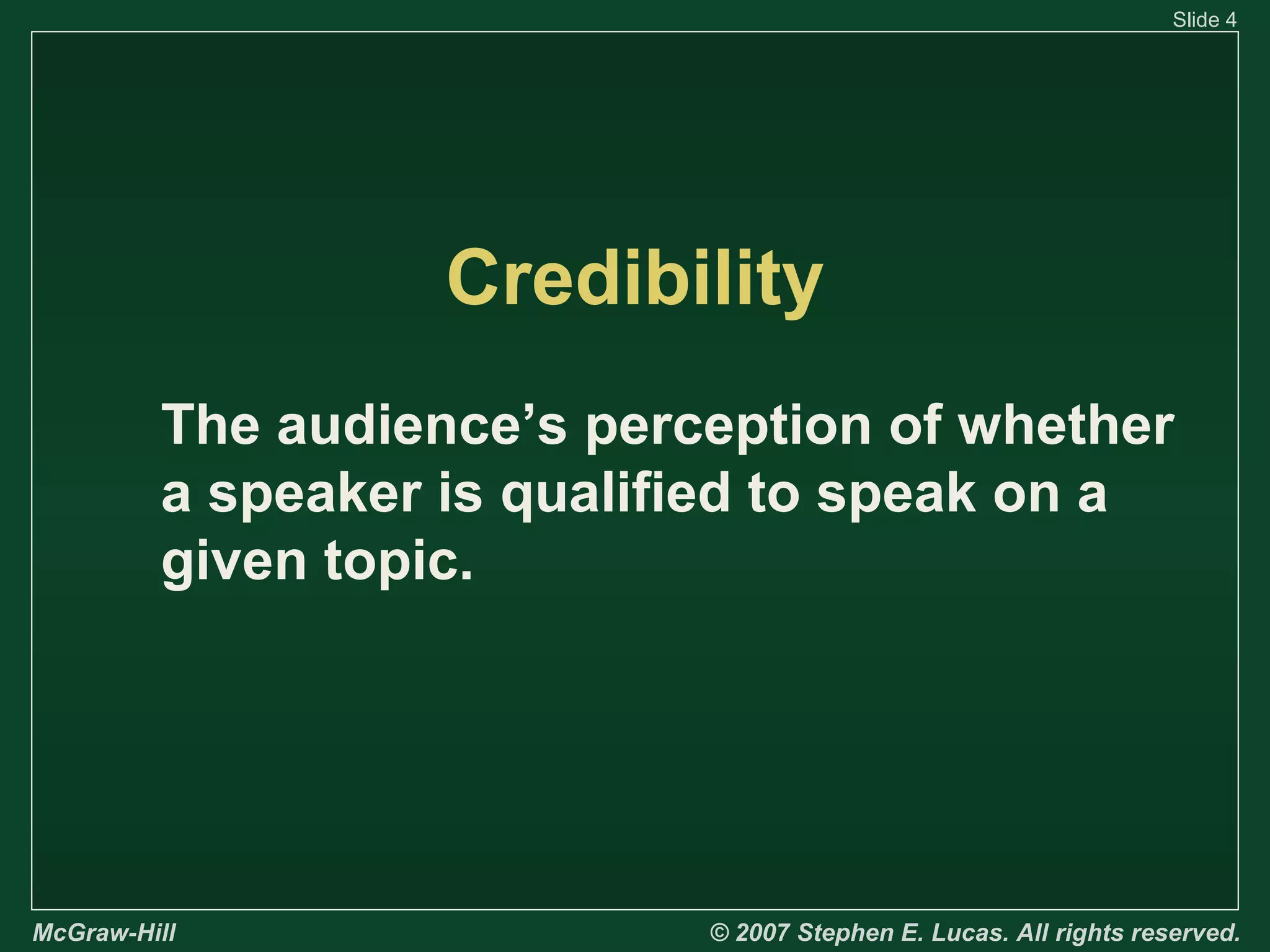
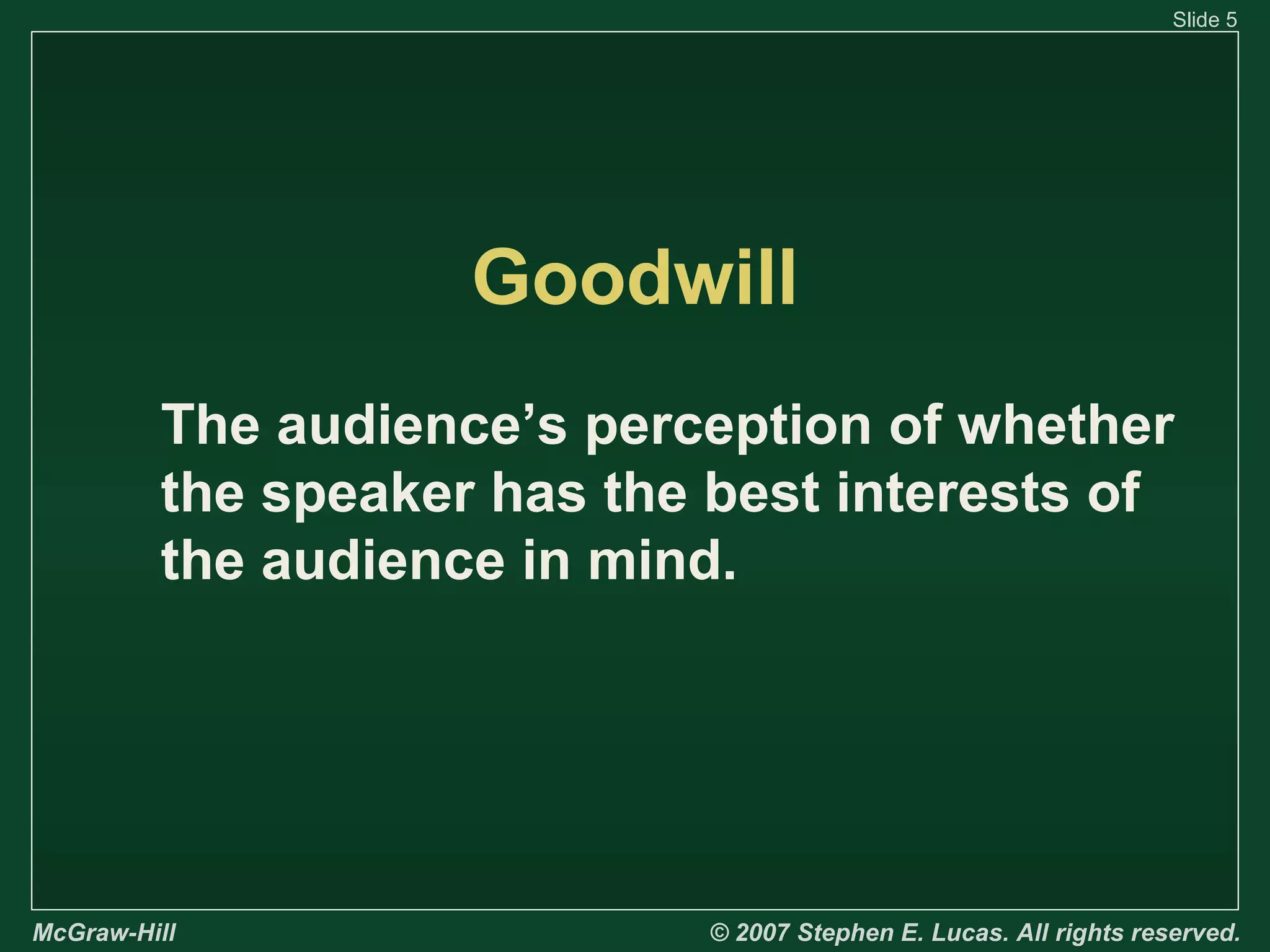
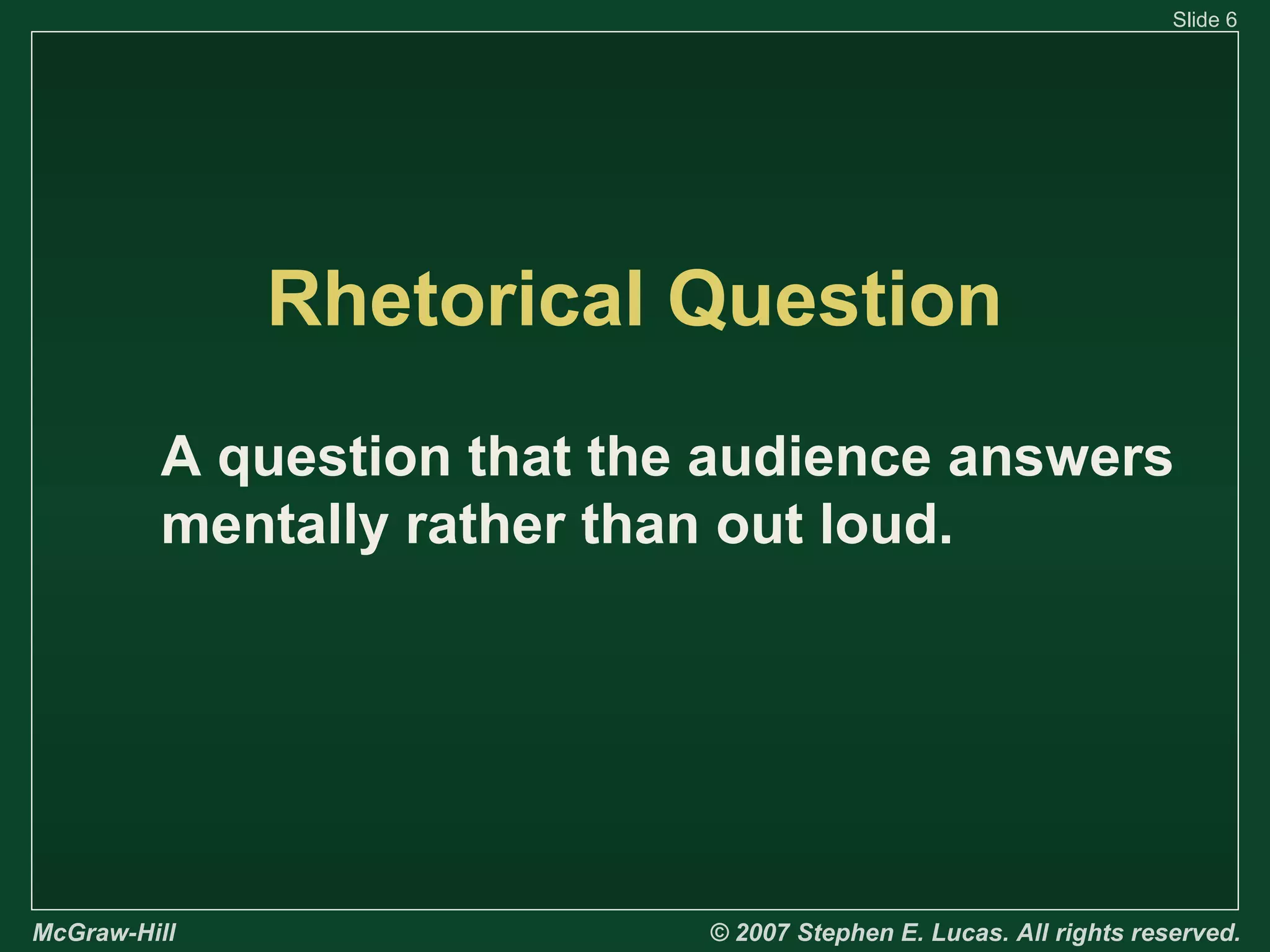

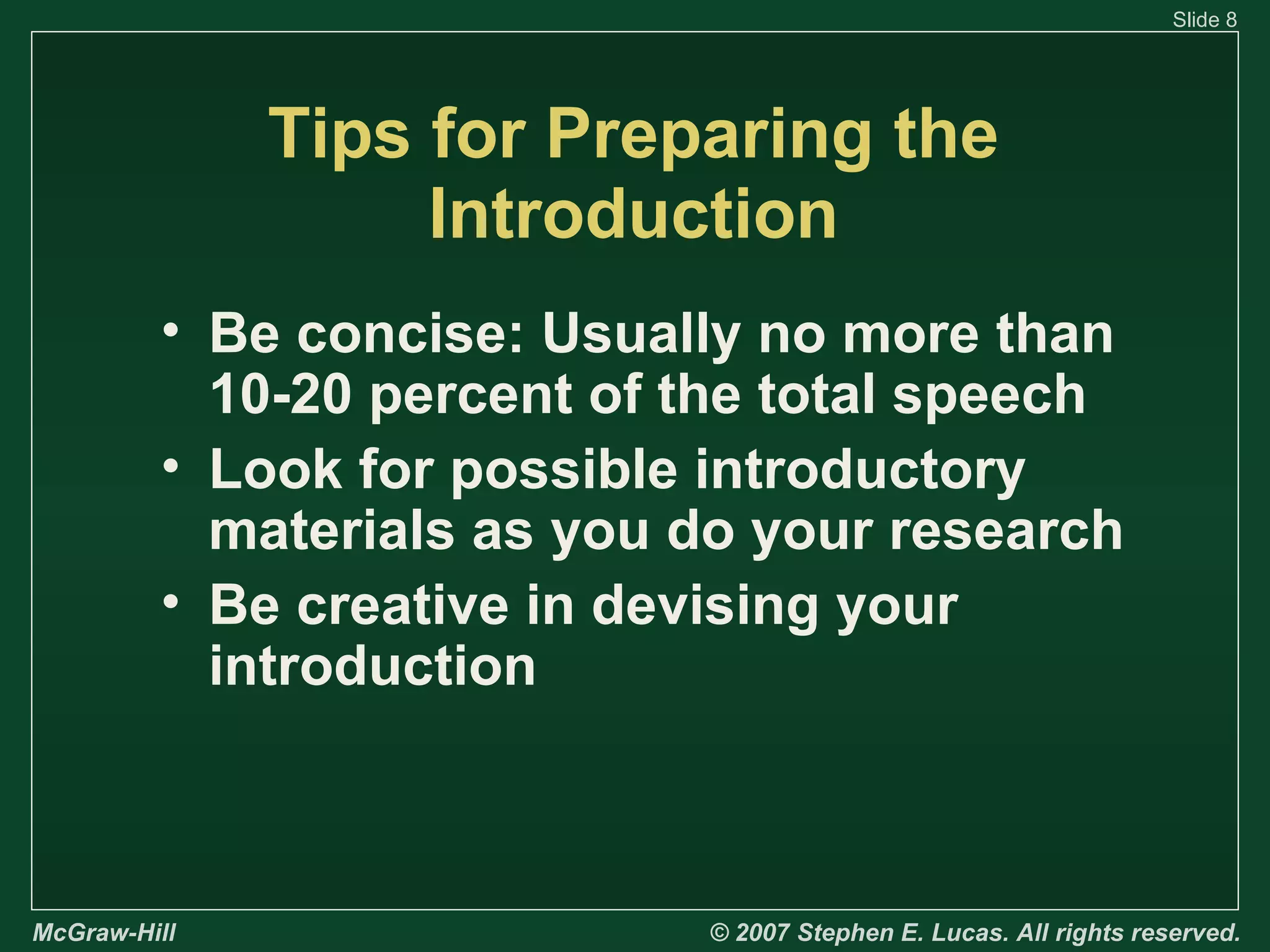
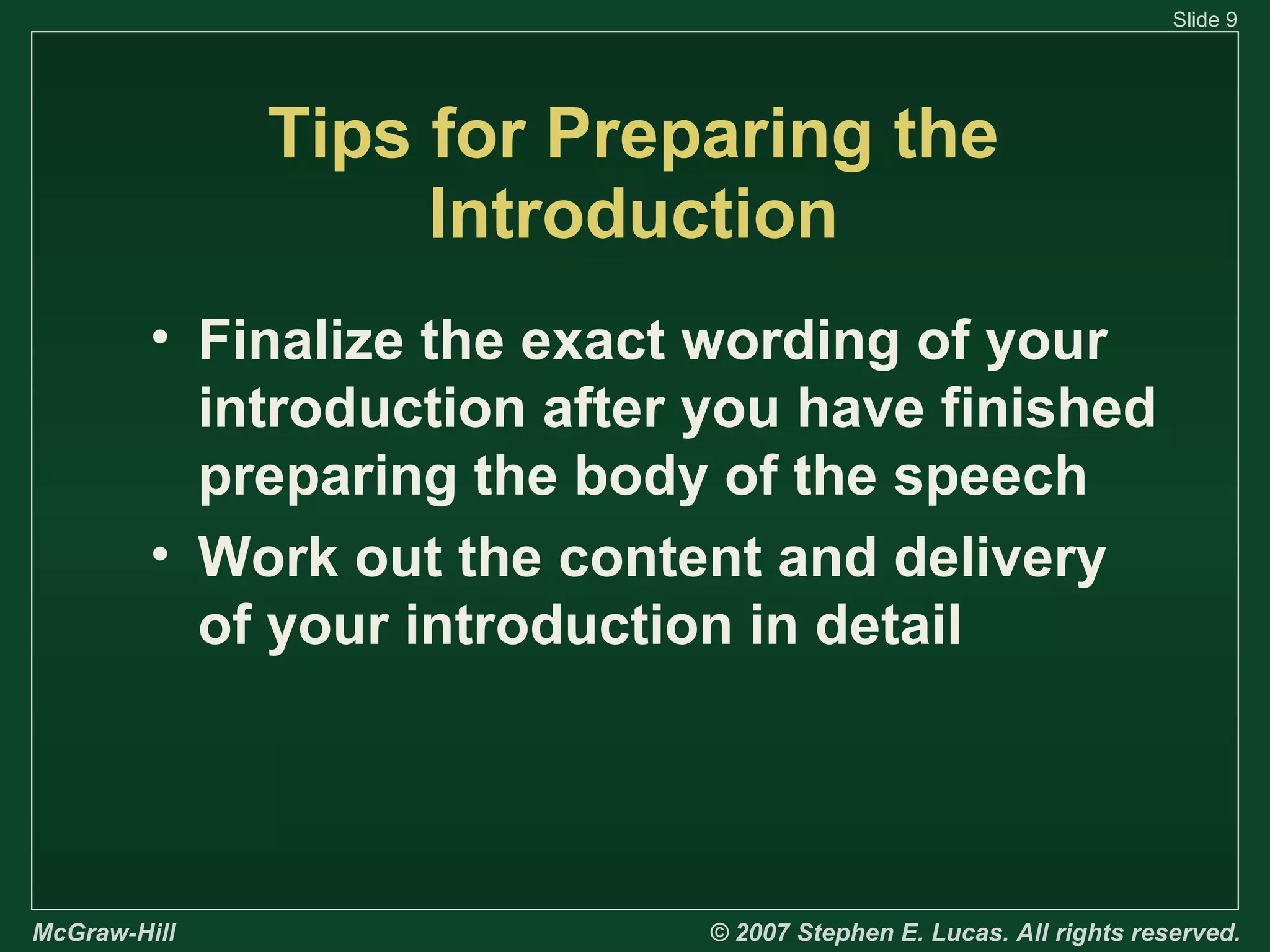
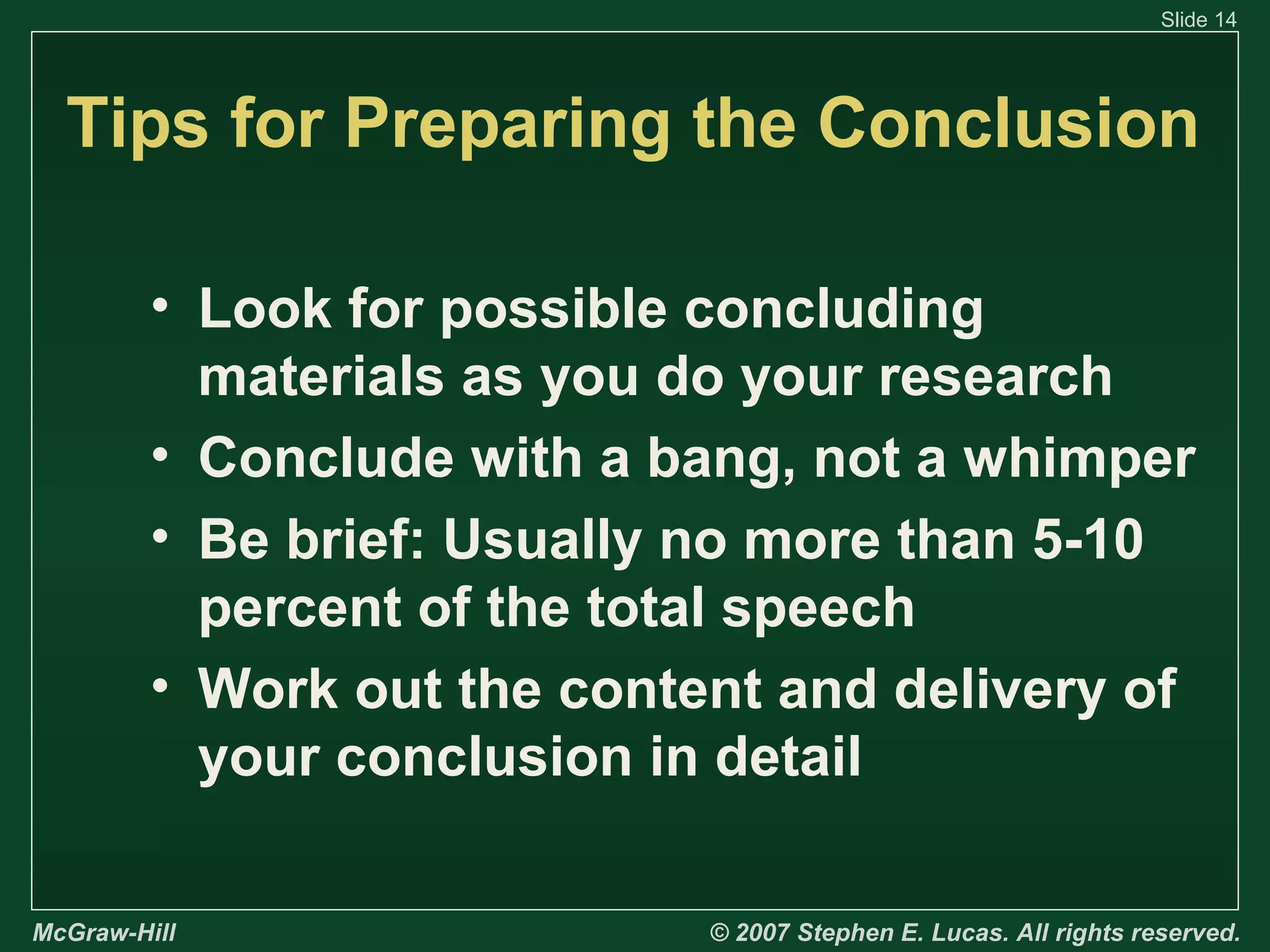


The document discusses techniques for effective introductions and conclusions in speeches. It provides tips for gaining audience attention in introductions, such as relating the topic to the audience or starting with a quotation. Introductions should also establish the speaker's credibility and goodwill, as well as preview the main points. Conclusions should signal the end of the speech and reinforce the central idea, for example by summarizing or ending with a dramatic statement. The document advises spending 10-20% of the speech on the introduction and 5-10% on the conclusion, and to practice both sections in detail.
Discusses key components of introducing a speech: gaining attention, establishing credibility, and previewing content.
Explores how to effectively conclude a speech, including types of endings and summarizing key points.
A note regarding copyright and rights reserved for the content presented.


