Identifying the General Speech Purpose Chapter 7 Professor Tonya Seavers Evans
SPEECH PURPOSE TO INFORM TO PERSUADE FOR SPECIAL OCCASIONS
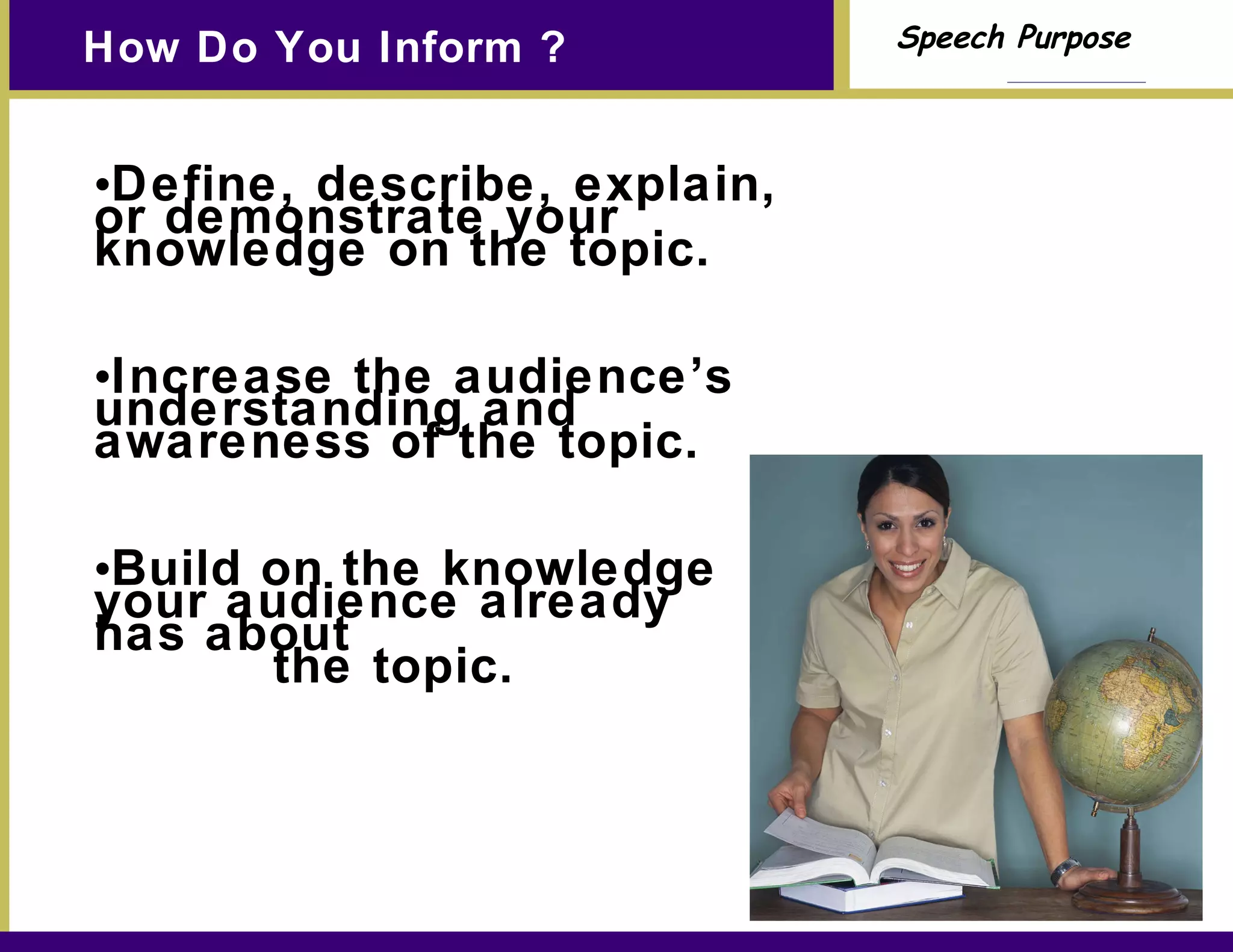
How Do You Inform ? Define, describe, explain, or demonstrate your knowledge on the topic. Increase the audience’s understanding and awareness of the topic. Build on the knowledge your audience already has about  the topic.
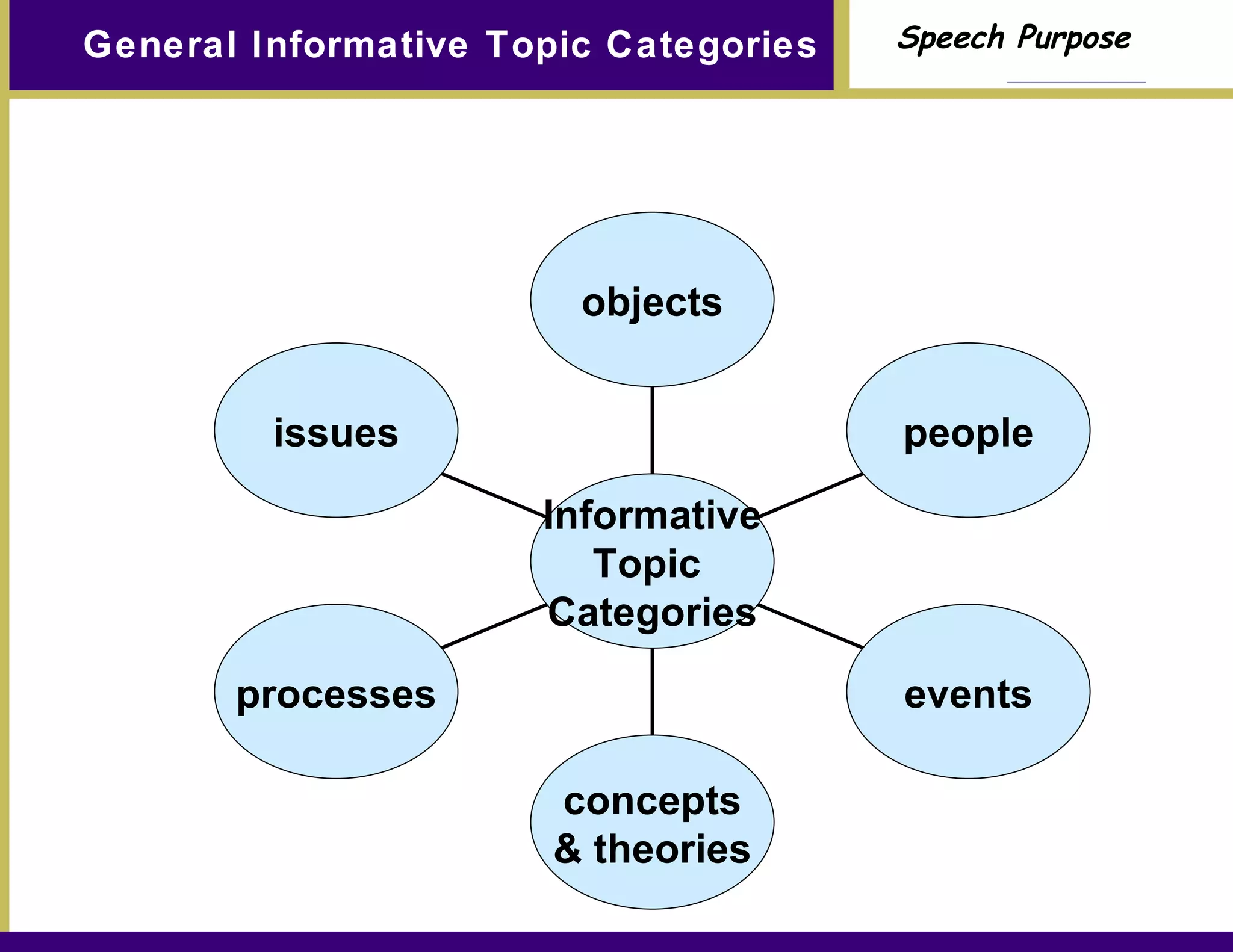
General Informative Topic Categories issues processes concepts & theories events people objects Informative Topic  Categories
From Topic & Purpose to Thesis Step 1:  Determine your topic. Step 2:  Decide on your general purpose. Step 3:  Write down your specific purpose statement. Step 4:  Devise your thesis statement.
Thesis Statement Clearly expresses the central idea of your speech Concisely identifies your speech topic for the audience Typically includes phrases about each of your main points Indicates your perspective on a persuasive topic Guides your speech preparation and keeps you on track while you are writing
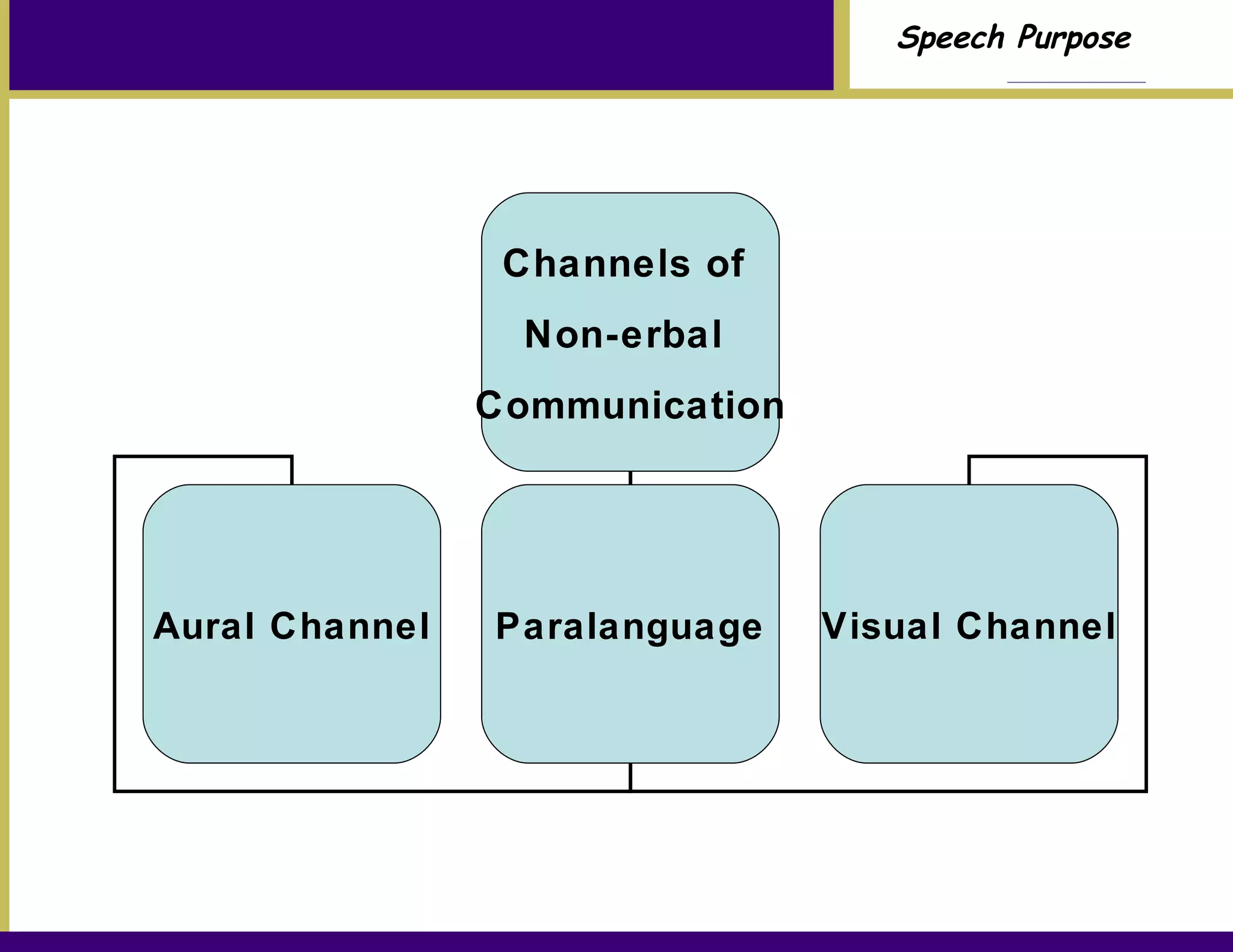
Channels of  Non-erbal  Communication Aural Channel Paralanguage Visual Channel
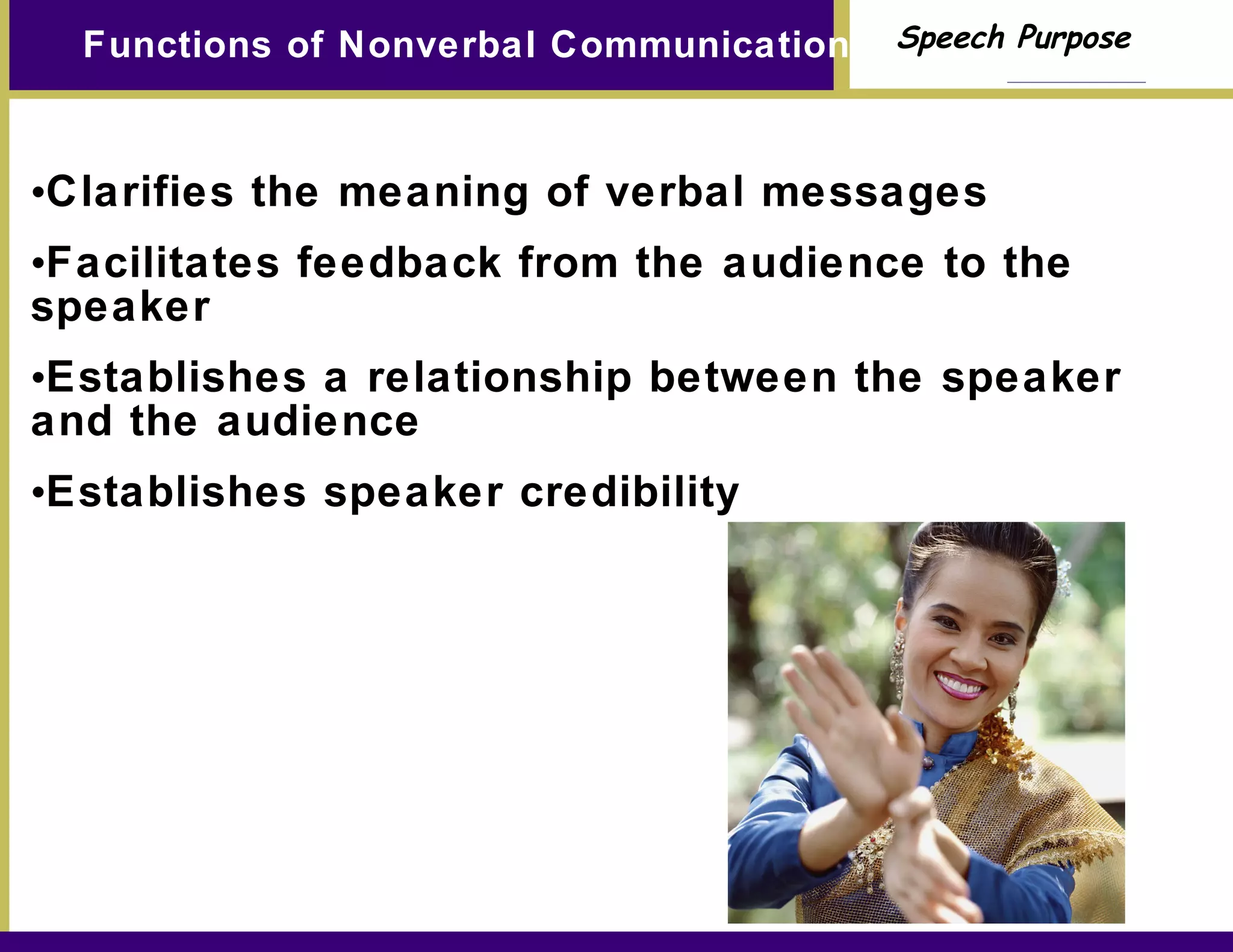
Functions of Nonverbal Communication Clarifies the meaning of verbal messages Facilitates feedback from the audience to the speaker Establishes a relationship between the speaker and the audience Establishes speaker credibility
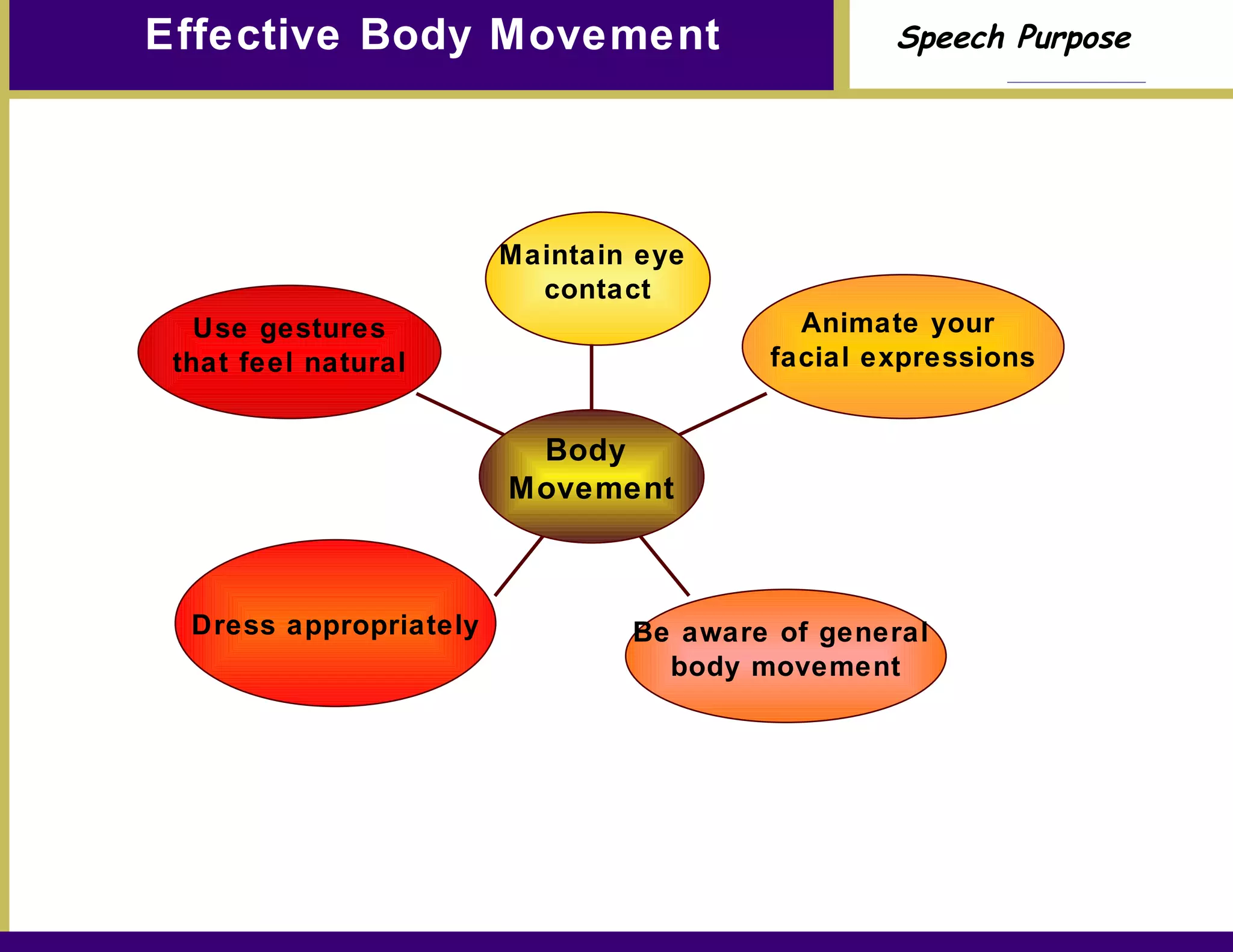
Effective Body Movement Use gestures that feel natural Dress appropriately Be aware of general  body movement Animate your  facial expressions Maintain eye  contact Body  Movement
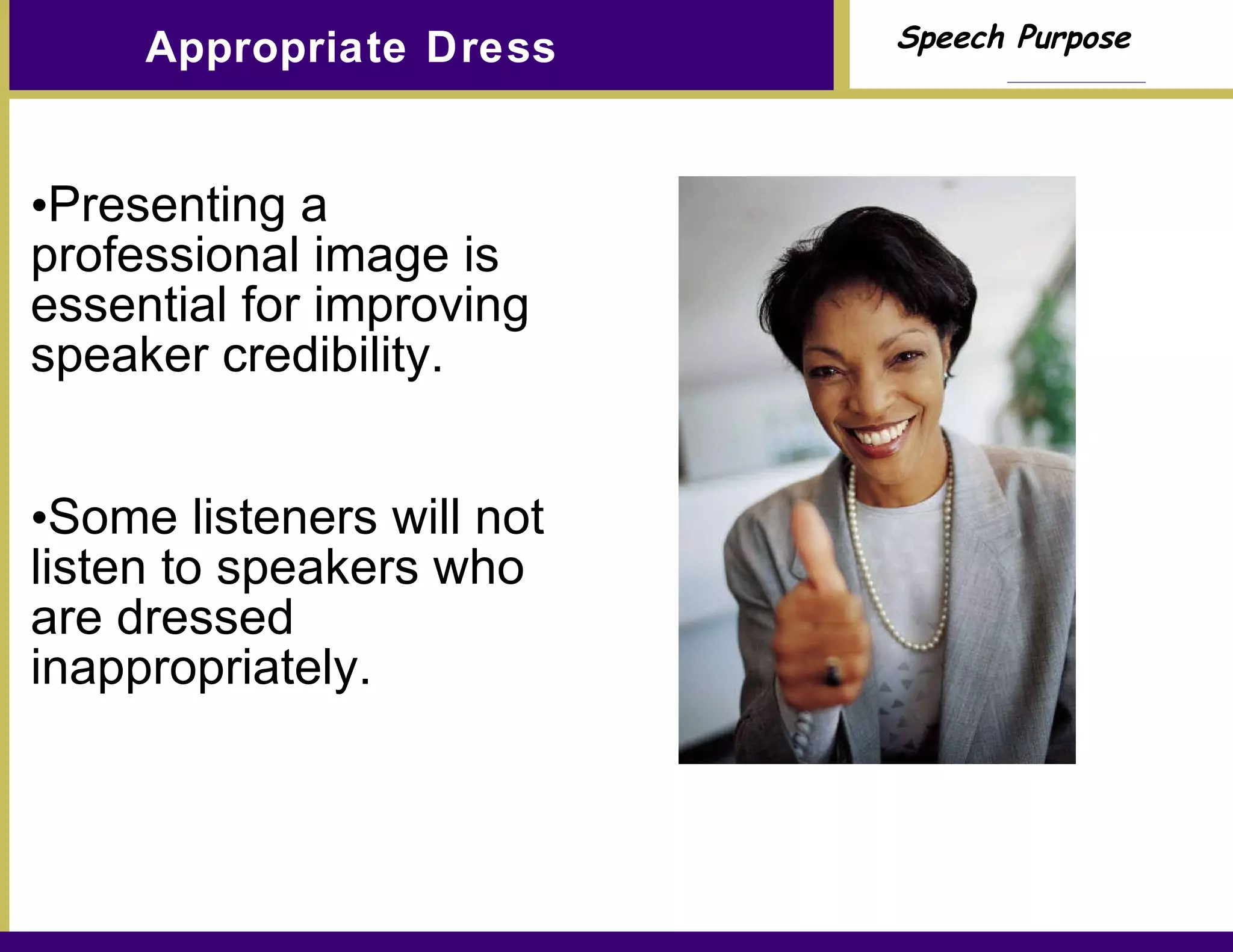
Appropriate Dress Presenting a professional image is essential for improving speaker credibility. Some listeners will not listen to speakers who are dressed inappropriately.
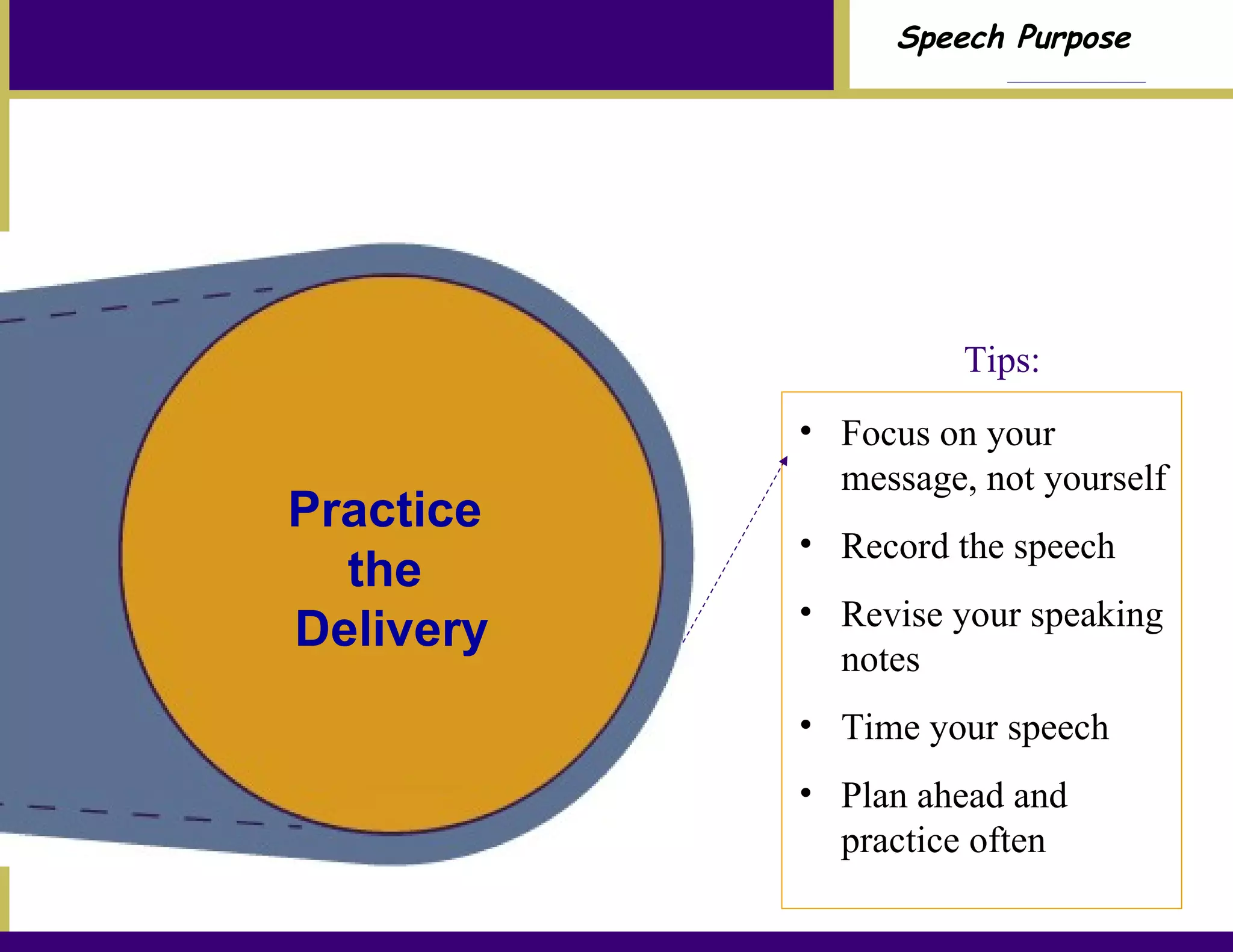
Practice  the  Delivery Focus on your message, not yourself Record the speech Revise your speaking notes Time your speech Plan ahead and practice often Tips:
Bibliography O’ Hair, Dan, Stewart, Rob, Rubenstein, Hannah,  A Speaker’s Guidebook , Bedford St. Martin (2009)

Chap 7 Identifying the general speech purpose

  • 1.
    Identifying the GeneralSpeech Purpose Chapter 7 Professor Tonya Seavers Evans
  • 2.
    SPEECH PURPOSE TOINFORM TO PERSUADE FOR SPECIAL OCCASIONS
  • 3.
    How Do YouInform ? Define, describe, explain, or demonstrate your knowledge on the topic. Increase the audience’s understanding and awareness of the topic. Build on the knowledge your audience already has about the topic.
  • 4.
    General Informative TopicCategories issues processes concepts & theories events people objects Informative Topic Categories
  • 5.
    From Topic &Purpose to Thesis Step 1: Determine your topic. Step 2: Decide on your general purpose. Step 3: Write down your specific purpose statement. Step 4: Devise your thesis statement.
  • 6.
    Thesis Statement Clearlyexpresses the central idea of your speech Concisely identifies your speech topic for the audience Typically includes phrases about each of your main points Indicates your perspective on a persuasive topic Guides your speech preparation and keeps you on track while you are writing
  • 7.
    Channels of Non-erbal Communication Aural Channel Paralanguage Visual Channel
  • 8.
    Functions of NonverbalCommunication Clarifies the meaning of verbal messages Facilitates feedback from the audience to the speaker Establishes a relationship between the speaker and the audience Establishes speaker credibility
  • 9.
    Effective Body MovementUse gestures that feel natural Dress appropriately Be aware of general body movement Animate your facial expressions Maintain eye contact Body Movement
  • 10.
    Appropriate Dress Presentinga professional image is essential for improving speaker credibility. Some listeners will not listen to speakers who are dressed inappropriately.
  • 11.
    Practice the Delivery Focus on your message, not yourself Record the speech Revise your speaking notes Time your speech Plan ahead and practice often Tips:
  • 12.
    Bibliography O’ Hair,Dan, Stewart, Rob, Rubenstein, Hannah, A Speaker’s Guidebook , Bedford St. Martin (2009)