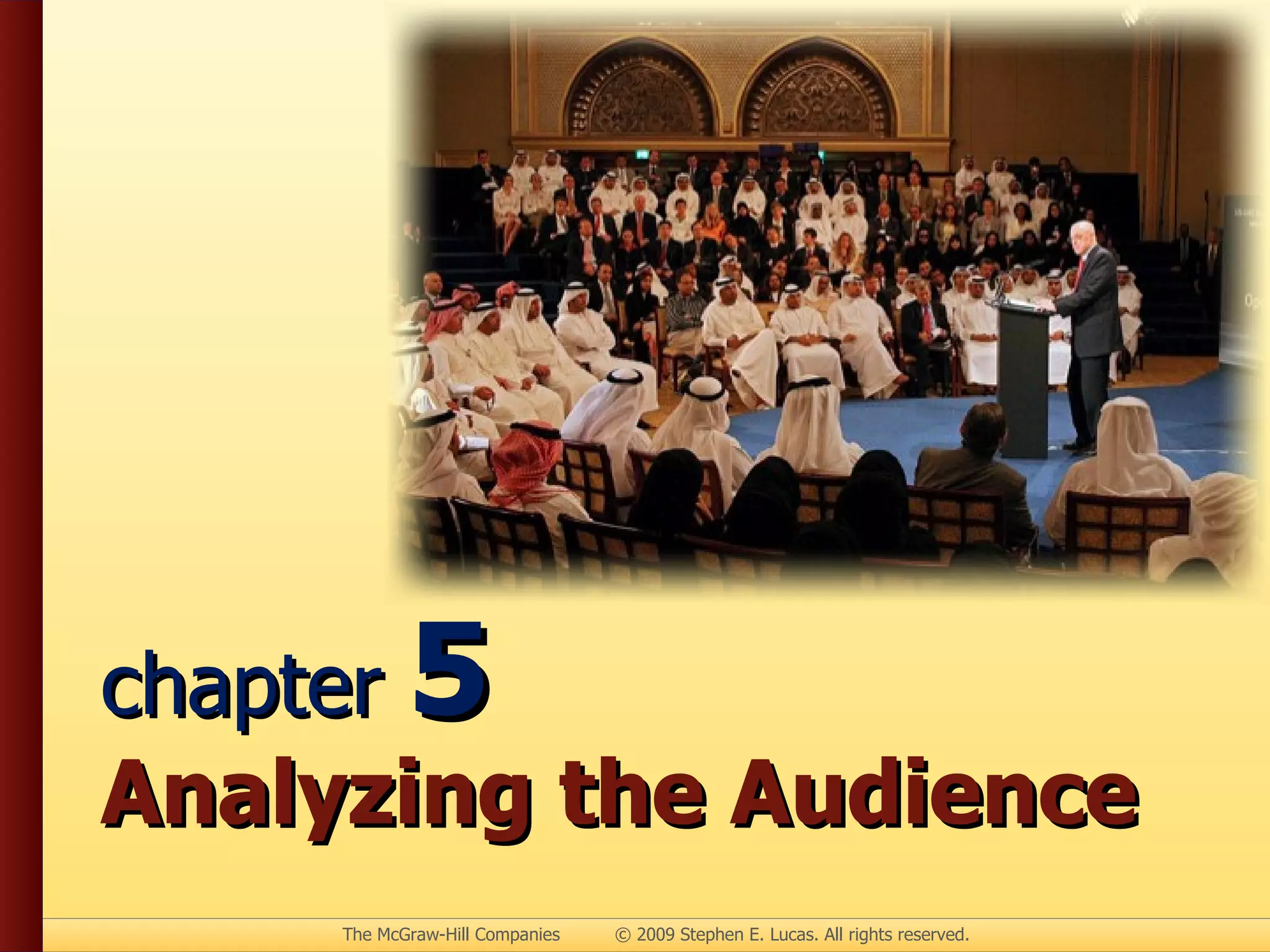
chapter  5 Analyzing the Audience
Audience-Centeredness Keeping audience foremost  in mind during speech preparation, presentation
Audience-Centered Questions To whom am I speaking? What do I want them to know, believe, or do? What is most effective way of accomplishing that aim?
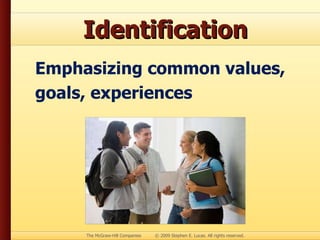
Identification Emphasizing common values, goals, experiences
Egocentrism Tendency of people to be concerned above all with their own values, beliefs, well-being
Demographic Audience Analysis Age Gender Sexual orientation
Demographic Audience Analysis Racial, ethnic, cultural background Religion Group membership
Stereotyping Creating oversimplified image of group Usually done by assuming all members of group are alike
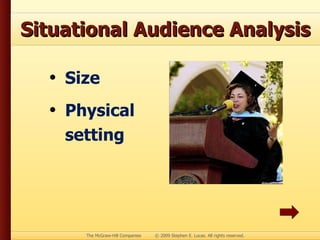
Situational Audience Analysis Size Physical setting
Situational Audience Analysis Disposition toward topic Disposition toward speaker Disposition toward occasion
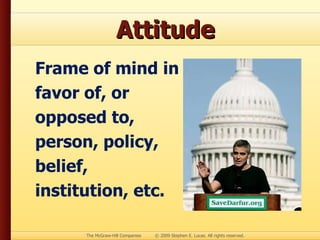
Attitude Frame of mind in favor of, or opposed to, person, policy, belief, institution, etc.
Getting Audience Info Types of questions: Fixed-alternative Scale Open-ended
Fixed-Alternative Question Do you know what the insanity plea is in the U.S. legal system? Yes  _____ No  _____ Not sure  _____
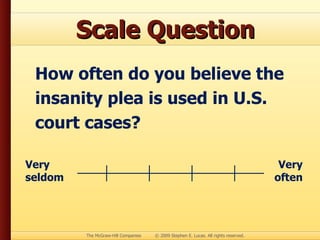
Scale Question How often do you believe the insanity plea is used in U.S. court cases? Very seldom Very often
Open-Ended Question What is your opinion about the insanity plea in U.S. court cases?
Adapting Before Speech Assess how audience will respond to speech Adjust speech to make it clear, convincing
Adapting During Speech Adjust for unexpected circumstances Watch for audience feedback

Chapter 5 - Analyzing the Audience