If They Are Not Making Meaning,
They Are Not Reading!
Chilliwack	
  
April	
  4,	
  2014	
  
Faye	
  Brownlie	
  
Slideshare.net/fayebrownlie/
chilliwack.primary.making	
  meaning	
  
According	
  to	
  teachers,	
  what	
  worked	
  in	
  CR4YR	
  
2012-­‐13?	
  
For	
  students	
  who	
  showed	
  major	
  gains,	
  what	
  worked	
  was:	
  
•  1:1	
  support	
  (this	
  didn’t	
  mean	
  pull	
  out;	
  examples	
  to	
  follow)	
  
•  feeling	
  safe	
  and	
  supported;	
  relaJonships	
  
•  choice/personalizaJon	
  (kids	
  who	
  struggled	
  the	
  most	
  oLen	
  
had	
  the	
  least	
  amount	
  of	
  choice)	
  
•  A	
  focus	
  on	
  purpose	
  and	
  meaning	
  	
  
Sharon	
  Jeroski,	
  August	
  2013	
  
sjeroski@shaw.ca	
  
Our key questions:
Did	
  that	
  make	
  sense?	
  
Our key questions:	
  
How	
  did	
  you	
  figure	
  that	
  out?	
  
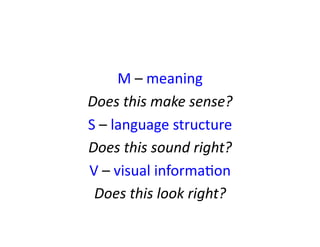
M	
  –	
  meaning	
  
Does	
  this	
  make	
  sense?	
  
S	
  –	
  language	
  structure	
  
Does	
  this	
  sound	
  right?	
  
V	
  –	
  visual	
  informaJon	
  
Does	
  this	
  look	
  right?	
  
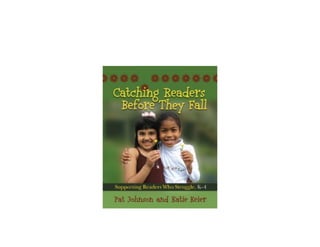
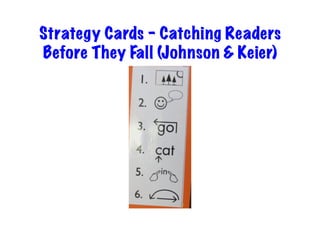
Strategy Cards – Catching Readers
Before They Fall (Johnson & Keier)
“Every	
  Child,	
  Every	
  Day”	
  –	
  Richard	
  Allington	
  and	
  
Rachael	
  Gabriel	
  
In	
  EducaJonal	
  Leadership,	
  March	
  2012	
  
6	
  elements	
  of	
  instrucJon	
  for	
  ALL	
  students!	
  
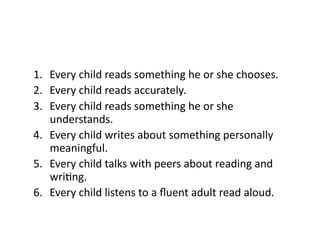
1.  Every	
  child	
  reads	
  something	
  he	
  or	
  she	
  chooses.	
  
2.  Every	
  child	
  reads	
  accurately.	
  
3.  Every	
  child	
  reads	
  something	
  he	
  or	
  she	
  
understands.	
  
4.  Every	
  child	
  writes	
  about	
  something	
  personally	
  
meaningful.	
  
5.  Every	
  child	
  talks	
  with	
  peers	
  about	
  reading	
  and	
  
wriJng.	
  
6.  Every	
  child	
  listens	
  to	
  a	
  fluent	
  adult	
  read	
  aloud.	
  
Small Group Reading/Guided
Reading
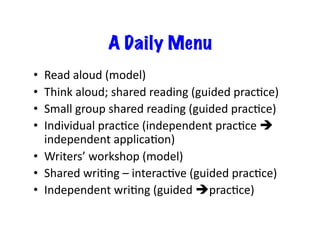
A Daily Menu
•  Read	
  aloud	
  (model)	
  
•  Think	
  aloud;	
  shared	
  reading	
  (guided	
  pracJce)	
  
•  Small	
  group	
  shared	
  reading	
  (guided	
  pracJce)	
  
•  Individual	
  pracJce	
  (independent	
  pracJce	
  
independent	
  applicaJon)	
  
•  Writers’	
  workshop	
  (model)	
  
•  Shared	
  wriJng	
  –	
  interacJve	
  (guided	
  pracJce)	
  
•  Independent	
  wriJng	
  (guided	
  pracJce) 	
  
Michelle Hikida
Diefenbaker Elem., Richmond
•  LIF	
  learning	
  support	
  and	
  teacher	
  librarian	
  
•  School	
  focus	
  on	
  extra	
  support	
  in	
  grade	
  1	
  
•  2	
  classroom	
  teachers	
  in	
  2012-­‐13,	
  3	
  in	
  2013-­‐14	
  
•  Co-­‐plan	
  and	
  adjust	
  according	
  to	
  student	
  need	
  
•  Set	
  up	
  literacy	
  centres,	
  all	
  reading	
  
•  On	
  days	
  with	
  no	
  GR,	
  30	
  minutes	
  of	
  literacy	
  
centres	
  (no	
  RT	
  on	
  these	
  days)	
  
•  Focus	
  on	
  thinking	
  and	
  meaning	
  making	
  
•  Hard	
  –	
  harder	
  –	
  hardest	
  for	
  leveling	
  books	
  
•  Guided	
  Reading:	
  2/week	
  in	
  1	
  grade	
  1	
  class	
  and	
  1/
week	
  in	
  the	
  other	
  
•  Beginning	
  of	
  May,	
  changed	
  to	
  4	
  Jmes	
  a	
  week	
  in	
  
the	
  second	
  class	
  
•  All	
  students	
  now	
  reading	
  within	
  expectaJons	
  
45 min. – Guided Reading
•  Word	
  work	
  
–  Word	
  families,	
  words	
  from	
  text,	
  legers,	
  sounds	


•  Few	
  sight	
  words	
  
–  Word	
  games	
  –	
  5	
  minutes	
  
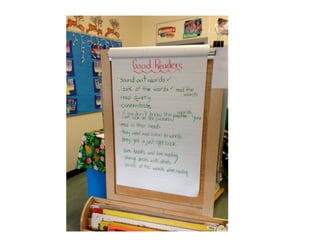
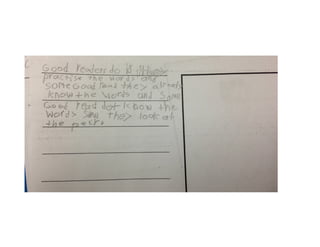
•  Strategies	
  of	
  good	
  readers	
  
–  Build,	
  review,	
  focus	
  on	
  one	
  
•  Picture	
  walk	
  
•  Read	
  alone	
  
•  Read	
  with	
  teacher	
  
•  Choose	
  another	
  book	
  to	
  read	
  
–  From	
  previous	
  texts,	
  shared	
  texts,	
  can	
  reread	
  
•  Eyes	
  on	
  print	
  30	
  minutes/day	
  
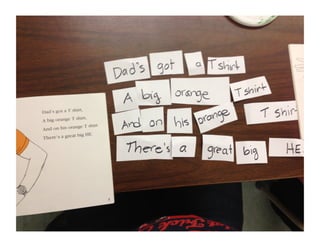
Literacy Centres – Lisa Schwartz
•  Focus	
  on	
  building	
  a	
  balanced	
  and	
  
differenJated	
  literacy	
  program	
  	
  
•  Focus	
  on	
  meaning	
  
•  MulJple	
  opportuniJes	
  to	
  read	
  
Literacy Centres in FI – Brooke
Douglas
•  Focus	
  on	
  building	
  a	
  balanced	
  and	
  
differenJated	
  literacy	
  program	
  	
  
•  Building	
  language	
  skills	
  and	
  vocabulary	
  
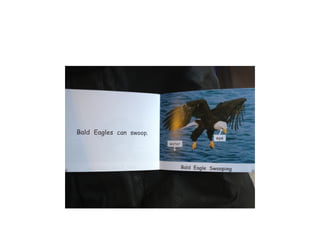
K – Building Connections/Response
to Reading
•  PracJce	
  making	
  connecJons	
  
•  Choose	
  a	
  symbol	
  
•  Talk	
  about	
  how	
  this	
  helps	
  our	
  reading	
  
•  Read	
  together	
  and	
  make	
  connecJons	
  
•  Students	
  show	
  their	
  connecJons	
  by	
  drawing	
  
and	
  wriJng	
  
•  with	
  Jessica	
  Chan,	
  Burnaby	
  
Strong	
  NaJons	
  Publishing	
  
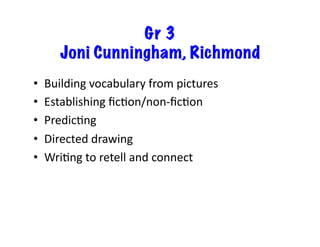
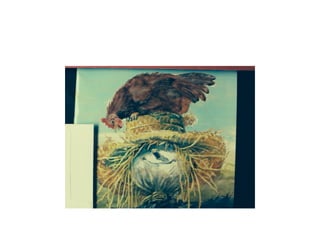
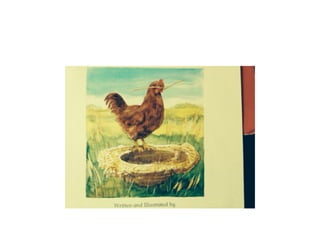
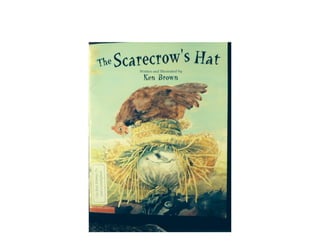
Gr 3
Joni Cunningham, Richmond
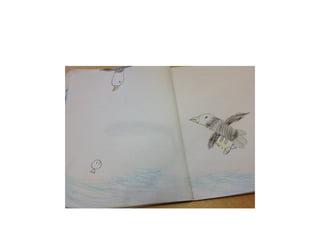
•  Building	
  vocabulary	
  from	
  pictures	
  
•  Establishing	
  ficJon/non-­‐ficJon	
  
•  PredicJng	
  	
  
•  Directed	
  drawing	
  
•  WriJng	
  to	
  retell	
  and	
  connect	
  
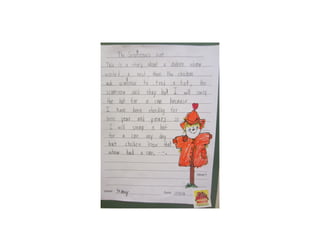
The Swaps
Who	
   Give	
  away	
   Want	
  
scarecrow	
   hat	
   walking	
  sJck	
  
badger	
   walking	
  sJck	
   ribbon	
  
crow	
  
Chilliwack.primary.meaning making

Chilliwack.primary.meaning making

  • 1.
    If They AreNot Making Meaning, They Are Not Reading! Chilliwack   April  4,  2014   Faye  Brownlie   Slideshare.net/fayebrownlie/ chilliwack.primary.making  meaning  
  • 2.
    According  to  teachers,  what  worked  in  CR4YR   2012-­‐13?   For  students  who  showed  major  gains,  what  worked  was:   •  1:1  support  (this  didn’t  mean  pull  out;  examples  to  follow)   •  feeling  safe  and  supported;  relaJonships   •  choice/personalizaJon  (kids  who  struggled  the  most  oLen   had  the  least  amount  of  choice)   •  A  focus  on  purpose  and  meaning     Sharon  Jeroski,  August  2013   sjeroski@shaw.ca  
  • 4.
    Our key questions: Did  that  make  sense?  
  • 5.
    Our key questions:   How  did  you  figure  that  out?  
  • 6.
    M  –  meaning   Does  this  make  sense?   S  –  language  structure   Does  this  sound  right?   V  –  visual  informaJon   Does  this  look  right?  
  • 7.
    Strategy Cards –Catching Readers Before They Fall (Johnson & Keier)
  • 9.
    “Every  Child,  Every  Day”  –  Richard  Allington  and   Rachael  Gabriel   In  EducaJonal  Leadership,  March  2012   6  elements  of  instrucJon  for  ALL  students!  
  • 10.
    1.  Every  child  reads  something  he  or  she  chooses.   2.  Every  child  reads  accurately.   3.  Every  child  reads  something  he  or  she   understands.   4.  Every  child  writes  about  something  personally   meaningful.   5.  Every  child  talks  with  peers  about  reading  and   wriJng.   6.  Every  child  listens  to  a  fluent  adult  read  aloud.  
  • 11.
  • 12.
    A Daily Menu • Read  aloud  (model)   •  Think  aloud;  shared  reading  (guided  pracJce)   •  Small  group  shared  reading  (guided  pracJce)   •  Individual  pracJce  (independent  pracJce   independent  applicaJon)   •  Writers’  workshop  (model)   •  Shared  wriJng  –  interacJve  (guided  pracJce)   •  Independent  wriJng  (guided  pracJce)  
  • 13.
    Michelle Hikida Diefenbaker Elem.,Richmond •  LIF  learning  support  and  teacher  librarian   •  School  focus  on  extra  support  in  grade  1   •  2  classroom  teachers  in  2012-­‐13,  3  in  2013-­‐14   •  Co-­‐plan  and  adjust  according  to  student  need  
  • 14.
    •  Set  up  literacy  centres,  all  reading   •  On  days  with  no  GR,  30  minutes  of  literacy   centres  (no  RT  on  these  days)   •  Focus  on  thinking  and  meaning  making   •  Hard  –  harder  –  hardest  for  leveling  books   •  Guided  Reading:  2/week  in  1  grade  1  class  and  1/ week  in  the  other   •  Beginning  of  May,  changed  to  4  Jmes  a  week  in   the  second  class   •  All  students  now  reading  within  expectaJons  
  • 15.
    45 min. –Guided Reading •  Word  work   –  Word  families,  words  from  text,  legers,  sounds       •  Few  sight  words   –  Word  games  –  5  minutes   •  Strategies  of  good  readers   –  Build,  review,  focus  on  one   •  Picture  walk   •  Read  alone   •  Read  with  teacher   •  Choose  another  book  to  read   –  From  previous  texts,  shared  texts,  can  reread   •  Eyes  on  print  30  minutes/day  
  • 16.
    Literacy Centres –Lisa Schwartz •  Focus  on  building  a  balanced  and   differenJated  literacy  program     •  Focus  on  meaning   •  MulJple  opportuniJes  to  read  
  • 20.
    Literacy Centres inFI – Brooke Douglas •  Focus  on  building  a  balanced  and   differenJated  literacy  program     •  Building  language  skills  and  vocabulary  
  • 23.
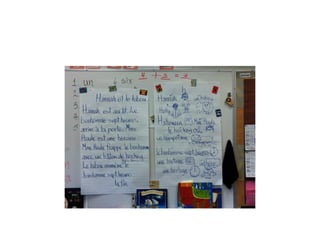
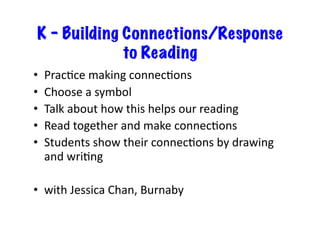
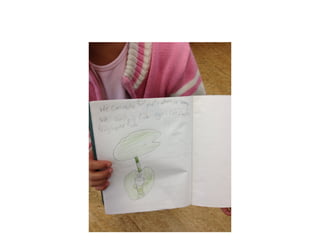
    K – BuildingConnections/Response to Reading •  PracJce  making  connecJons   •  Choose  a  symbol   •  Talk  about  how  this  helps  our  reading   •  Read  together  and  make  connecJons   •  Students  show  their  connecJons  by  drawing   and  wriJng   •  with  Jessica  Chan,  Burnaby  
  • 24.
  • 30.
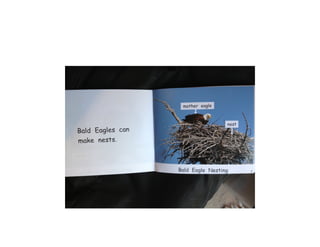
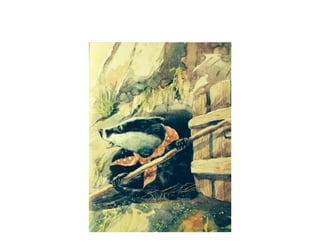
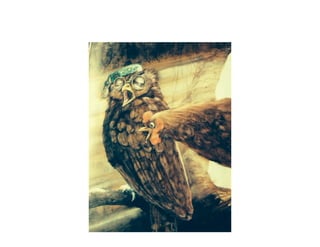
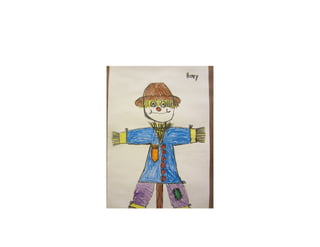
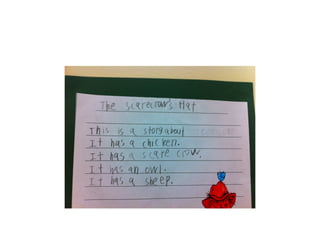
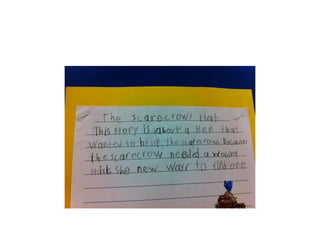
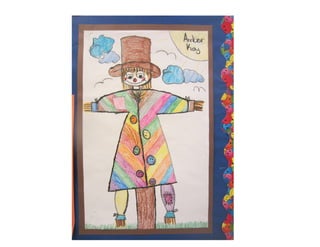
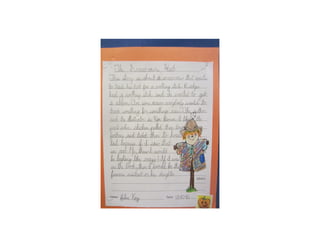
    Gr 3 Joni Cunningham,Richmond •  Building  vocabulary  from  pictures   •  Establishing  ficJon/non-­‐ficJon   •  PredicJng     •  Directed  drawing   •  WriJng  to  retell  and  connect  
  • 37.
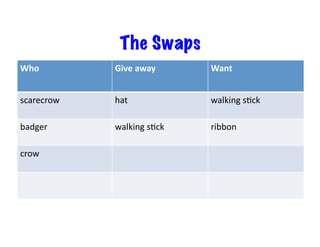
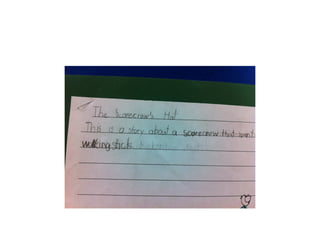
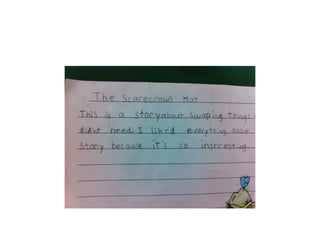
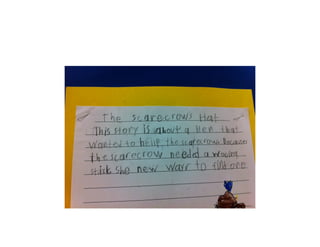
    The Swaps Who  Give  away   Want   scarecrow   hat   walking  sJck   badger   walking  sJck   ribbon   crow